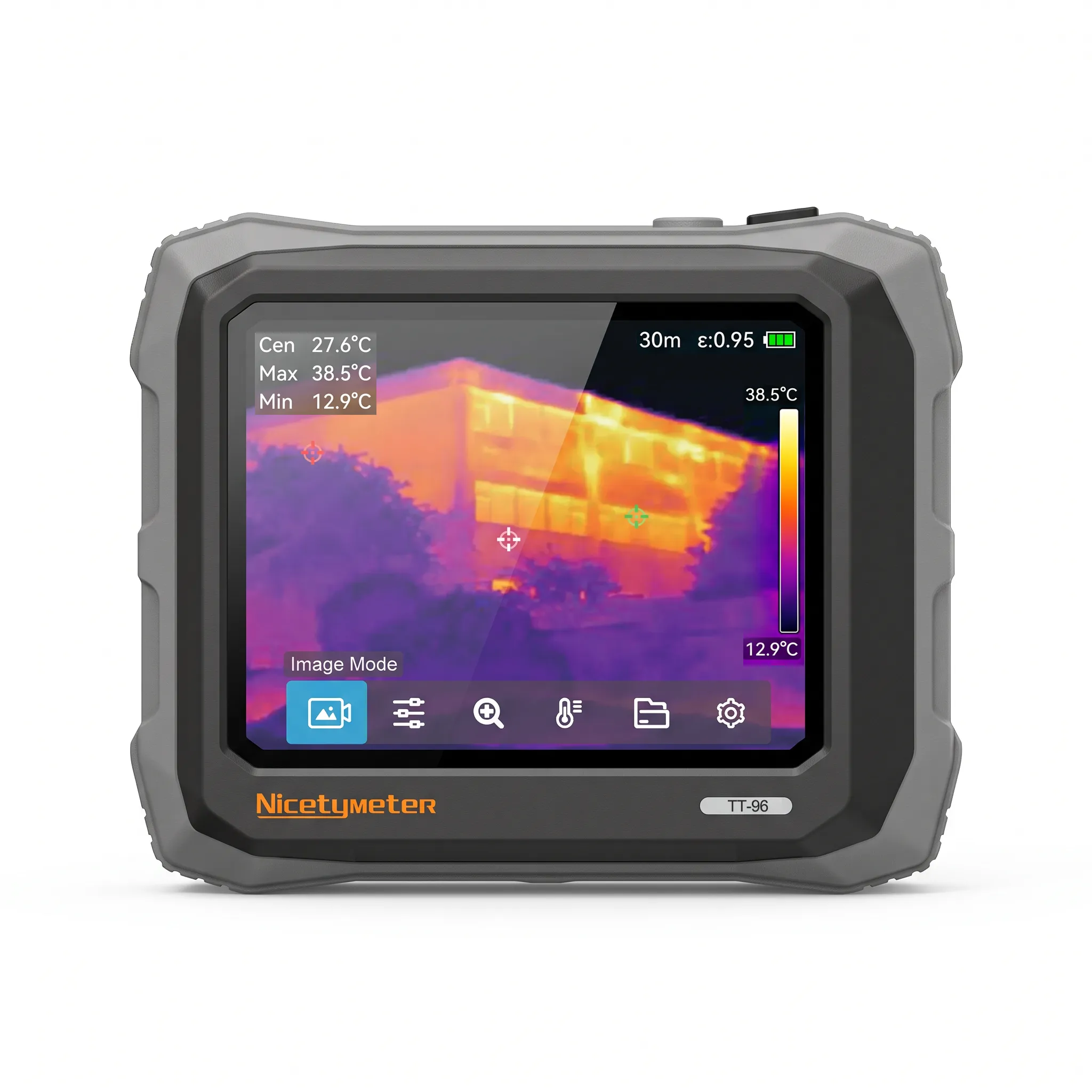
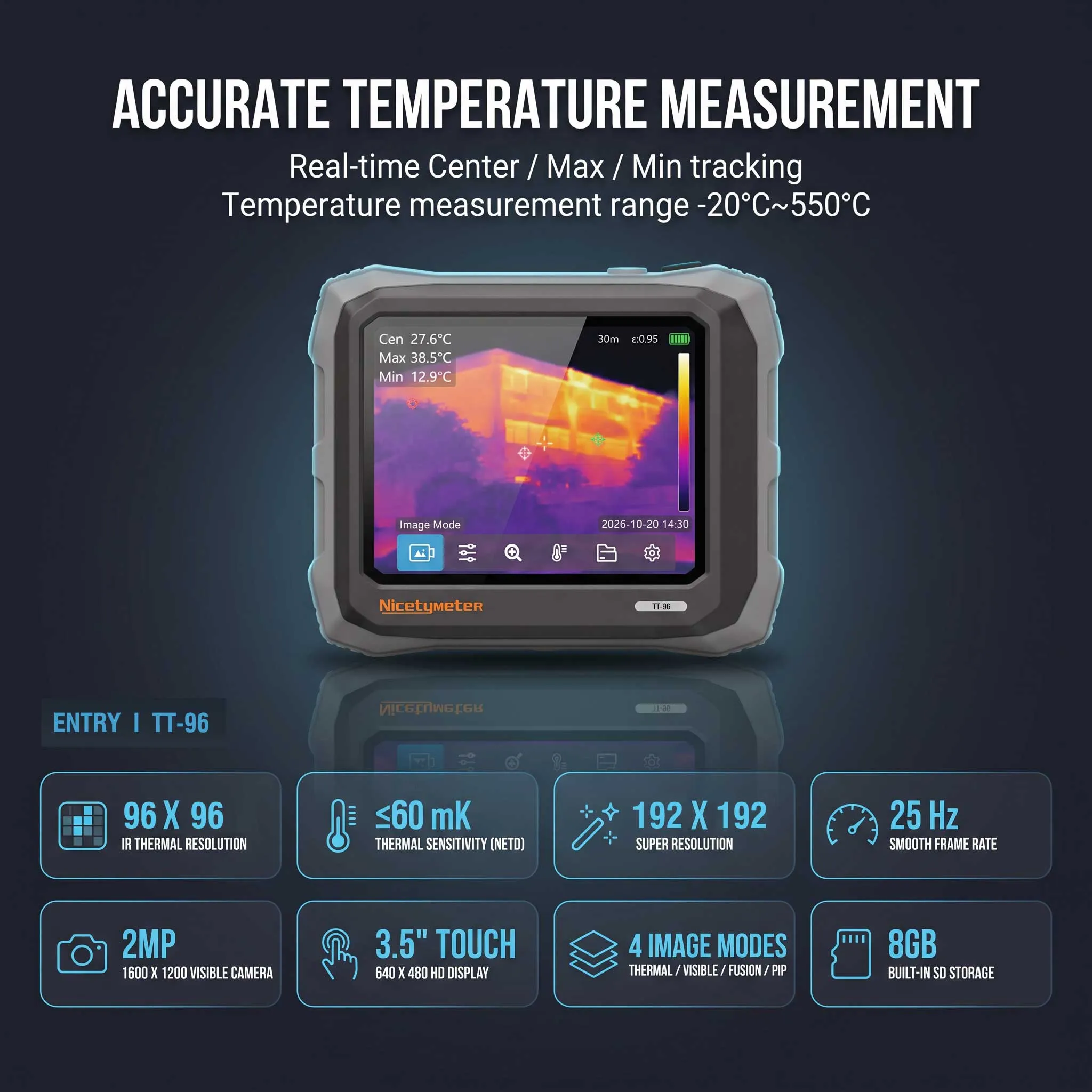
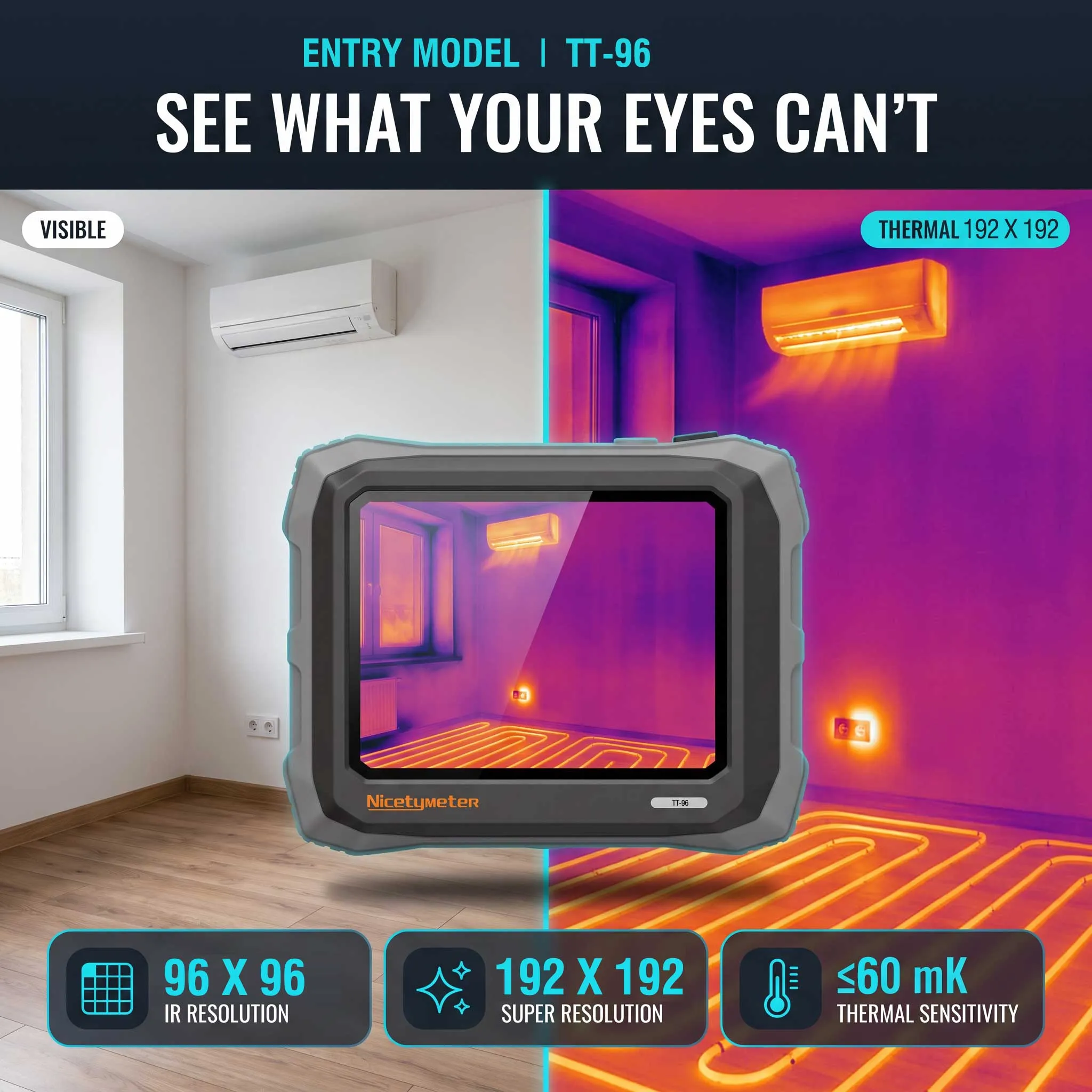
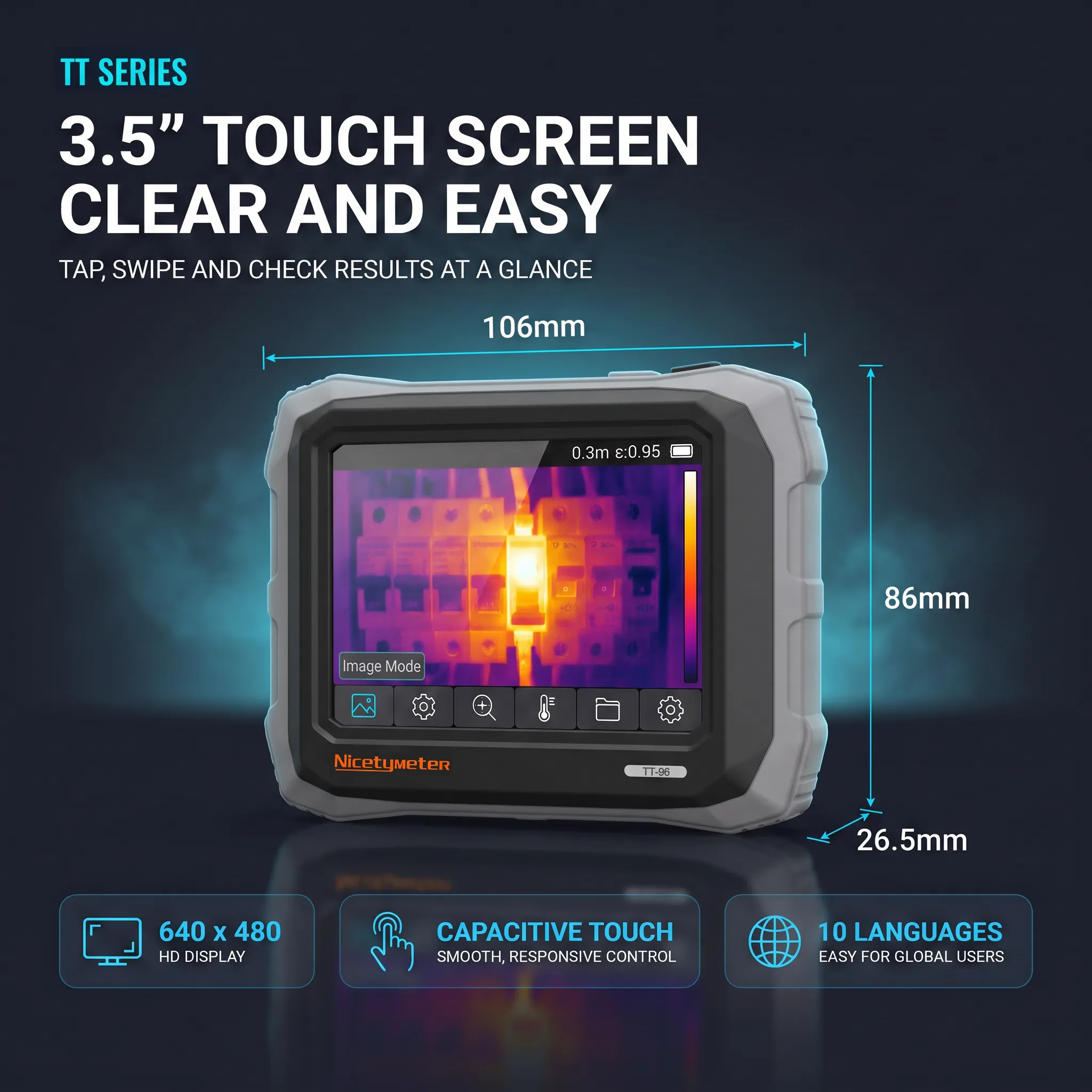
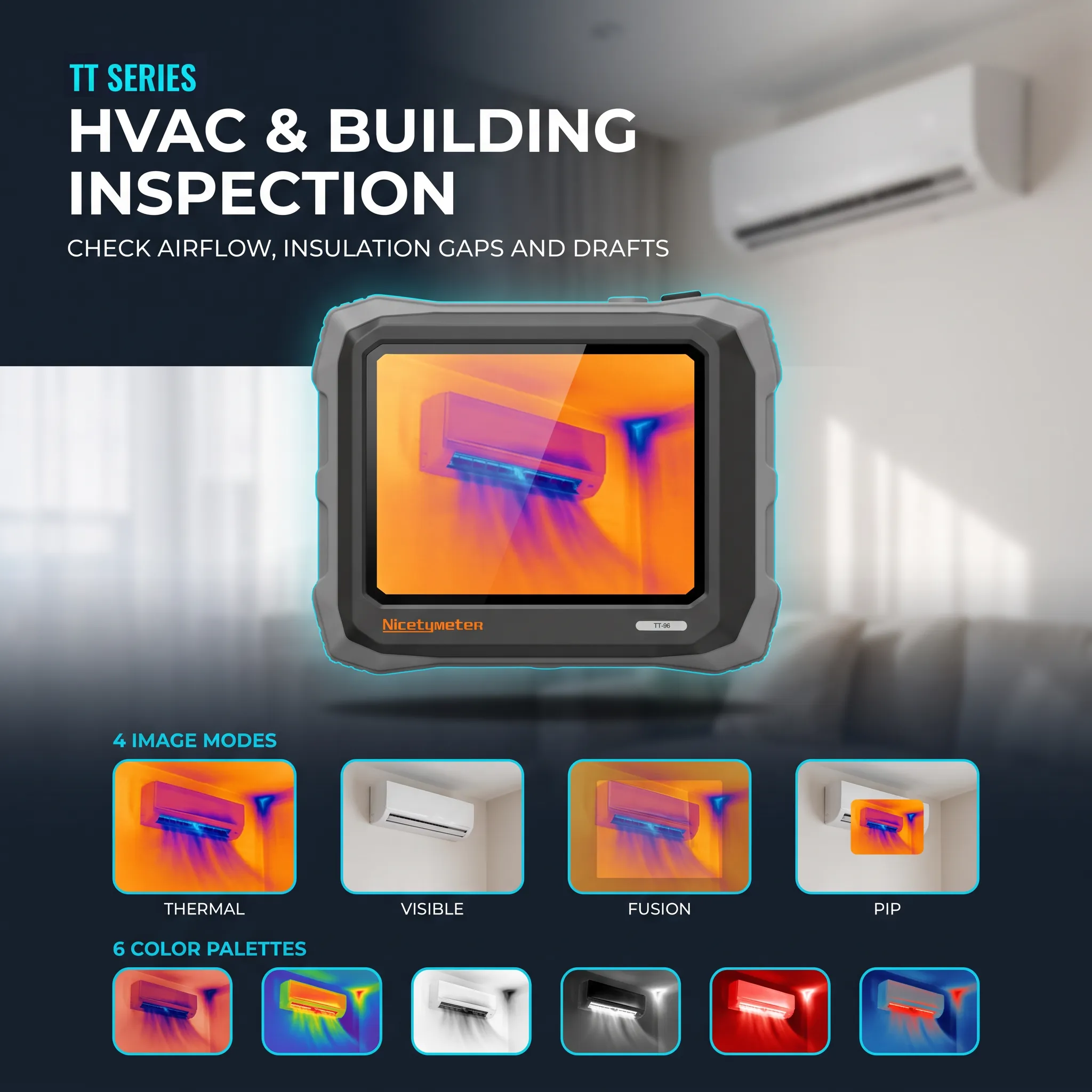
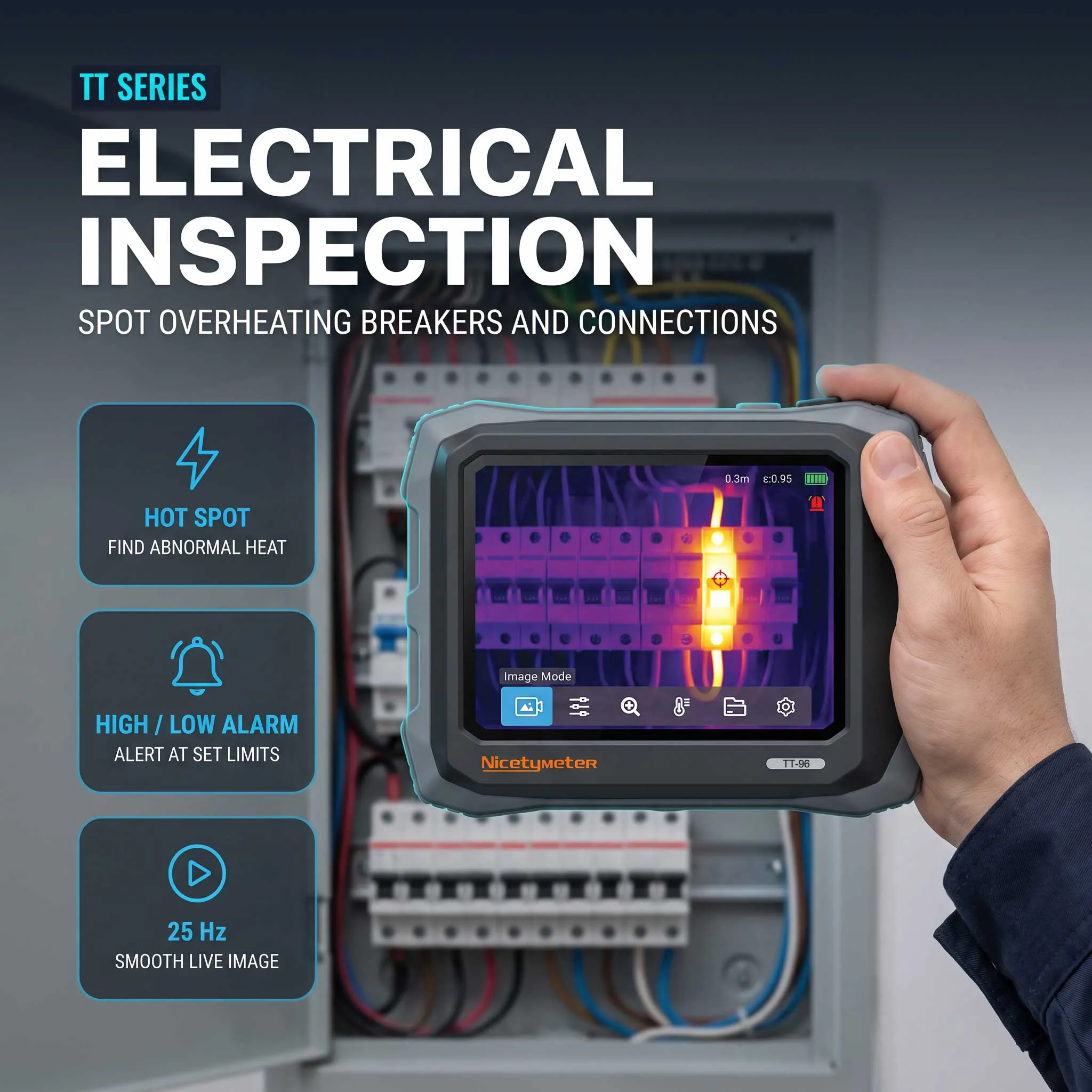
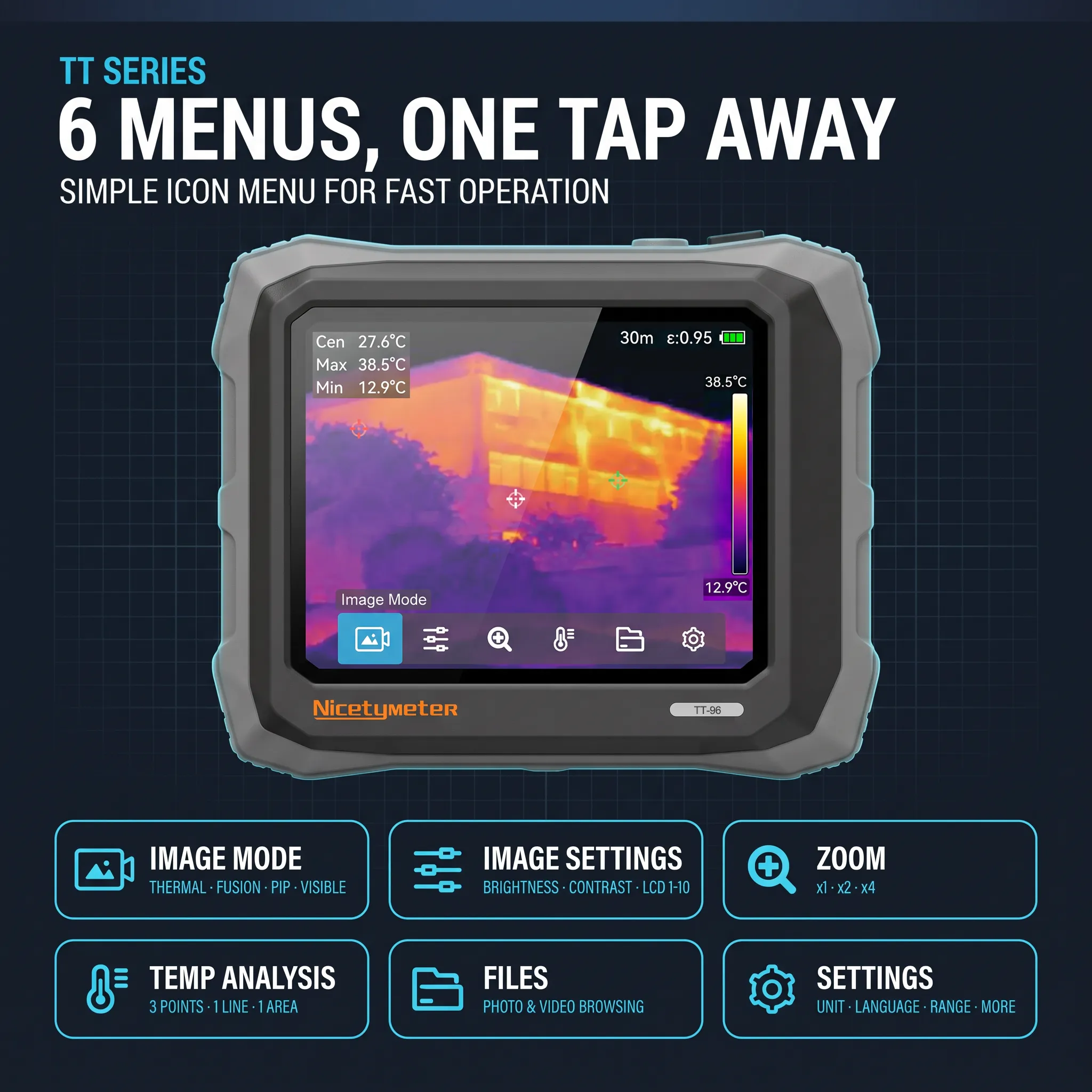
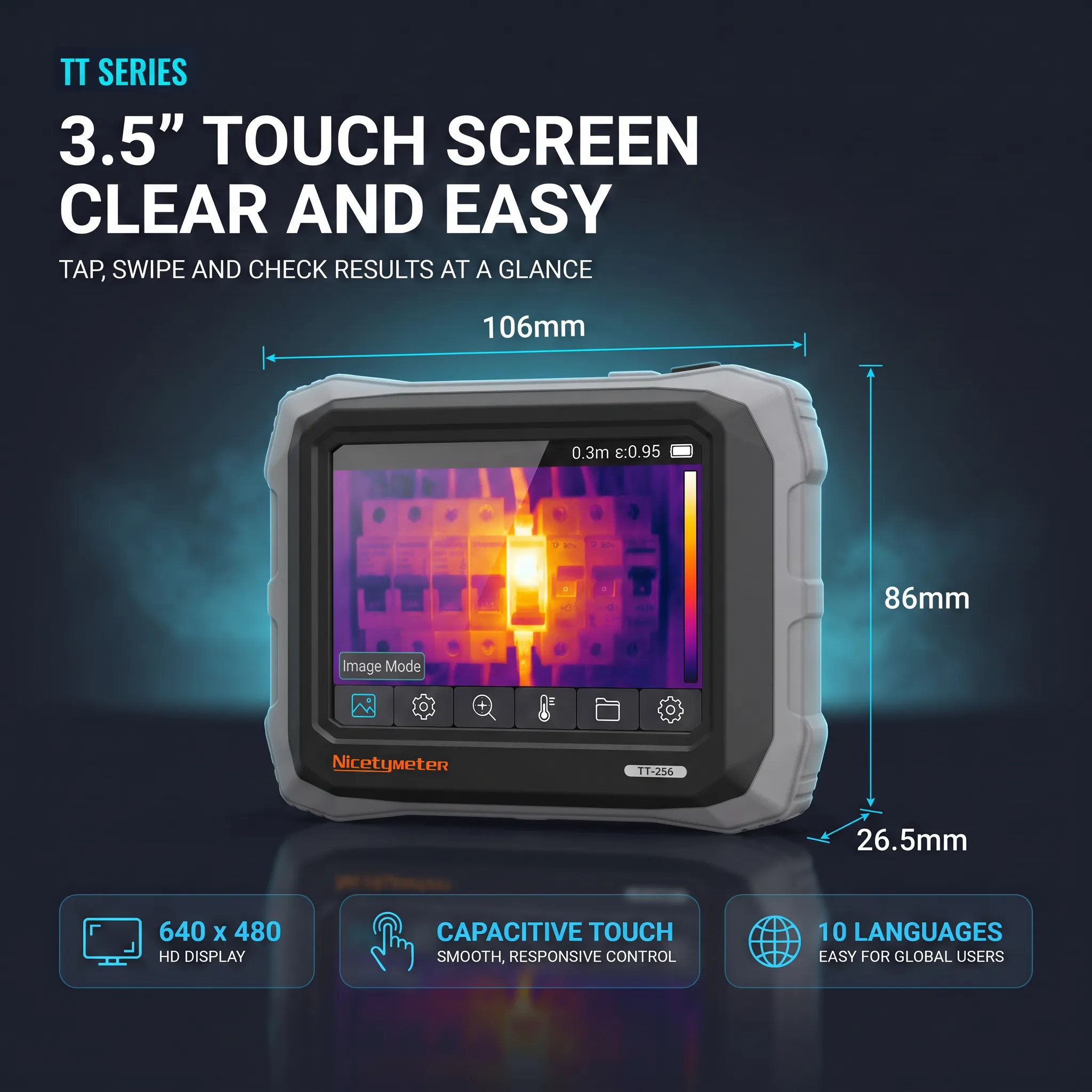
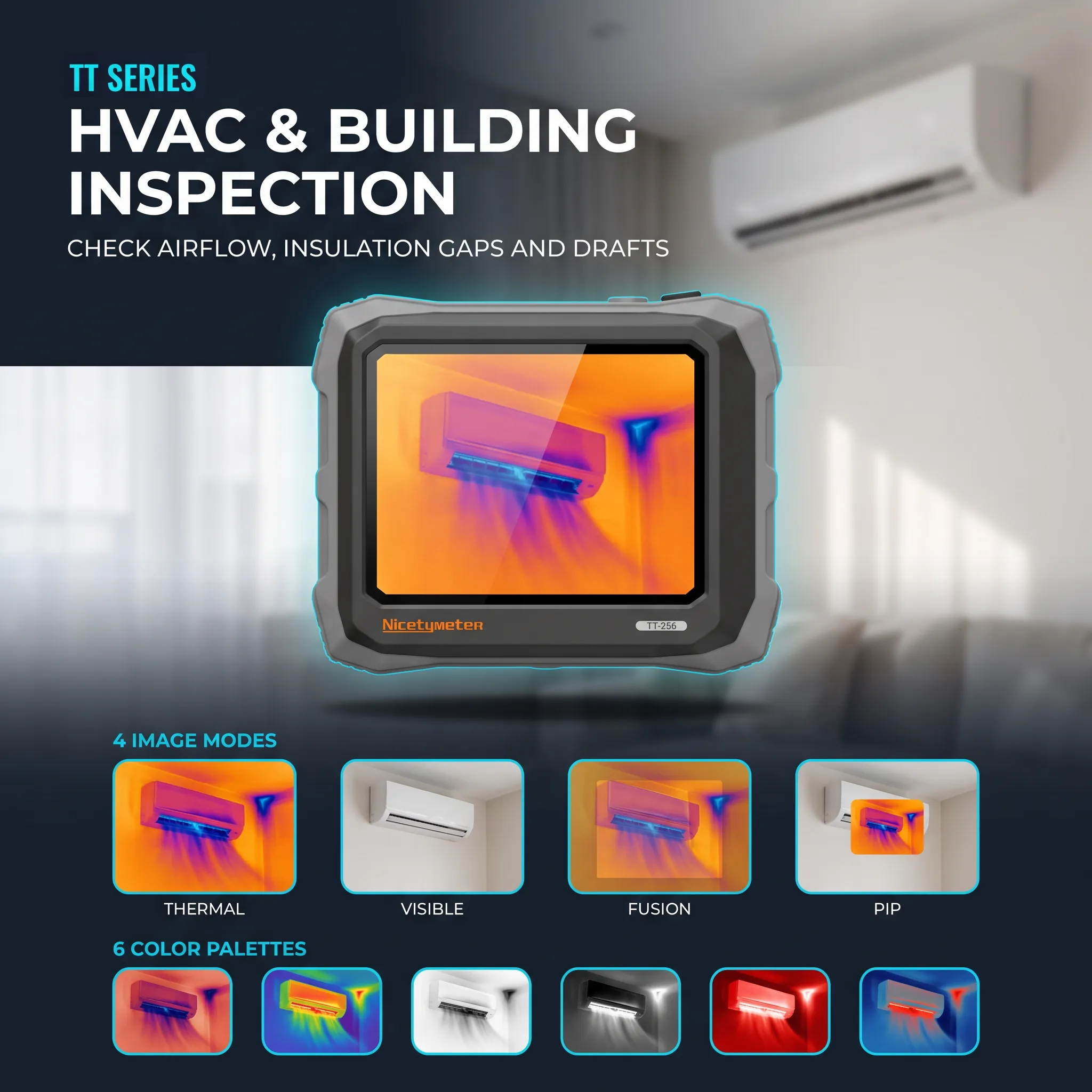
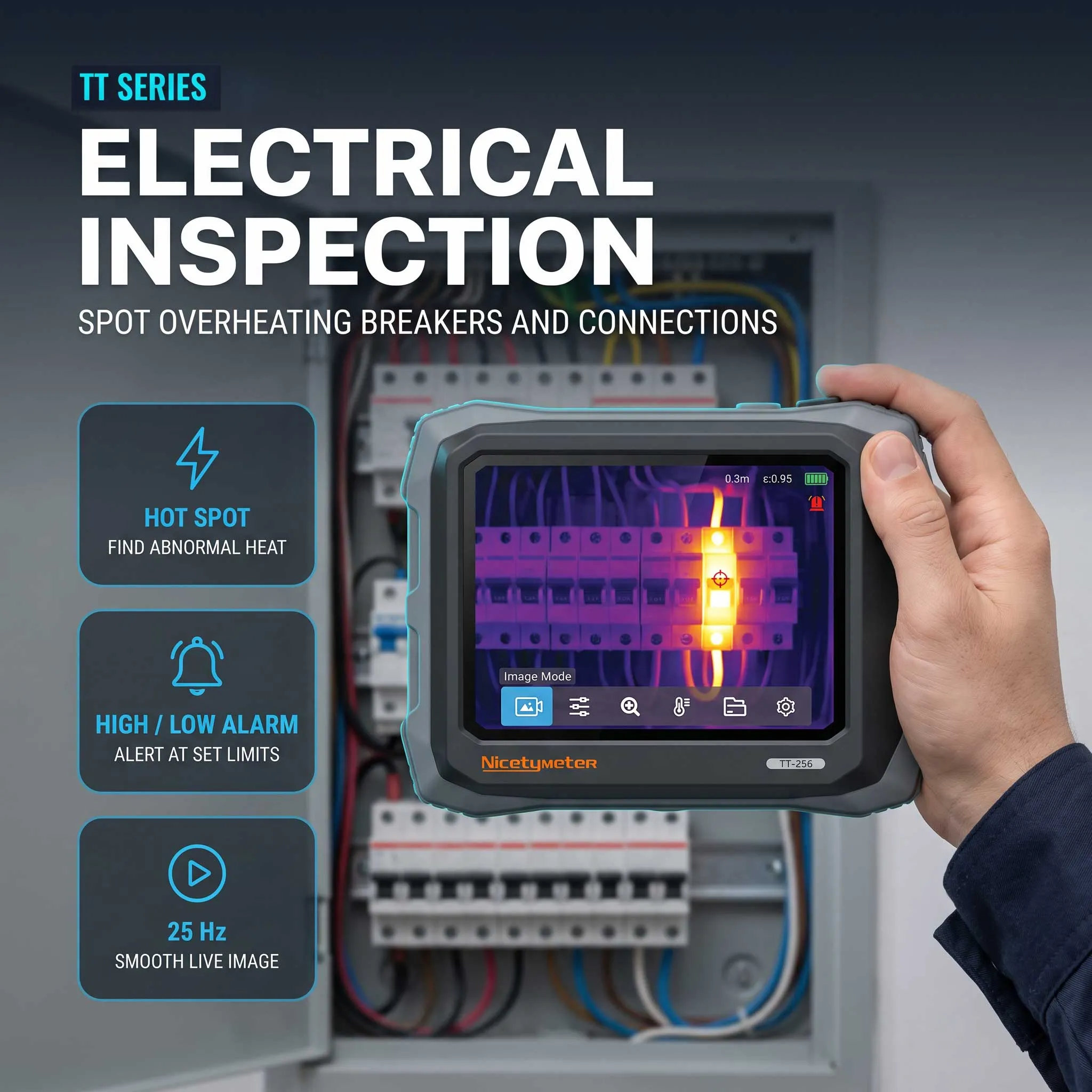
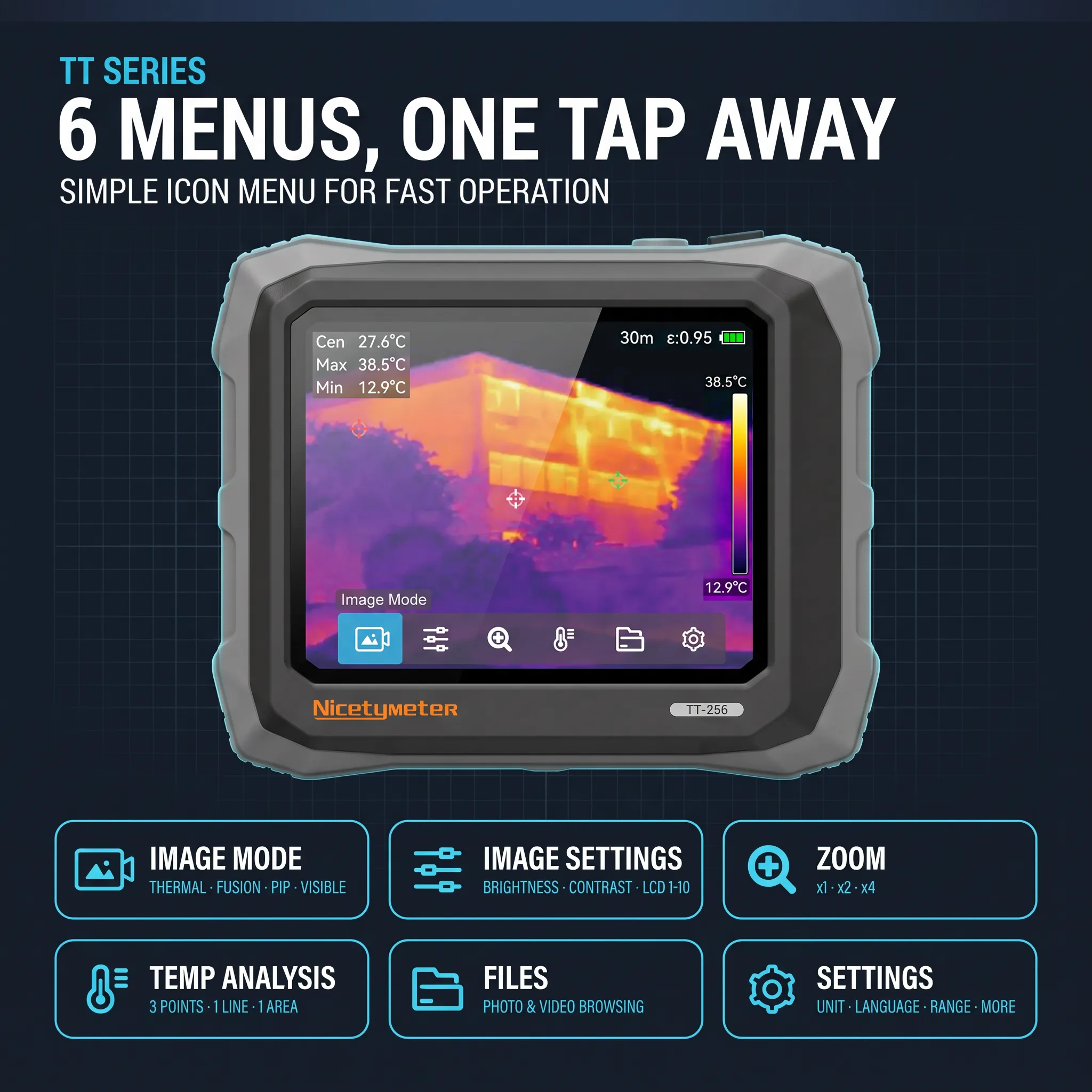
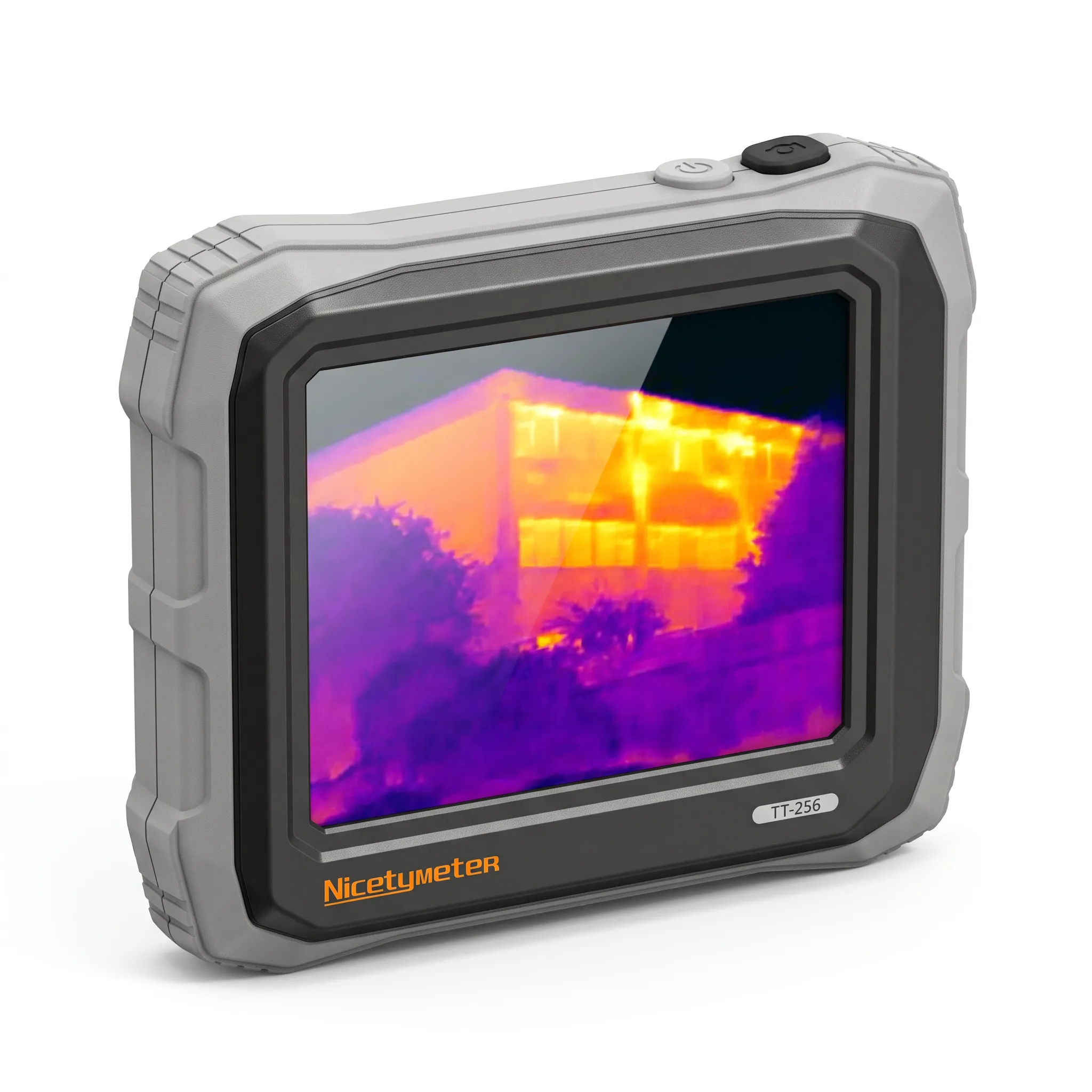
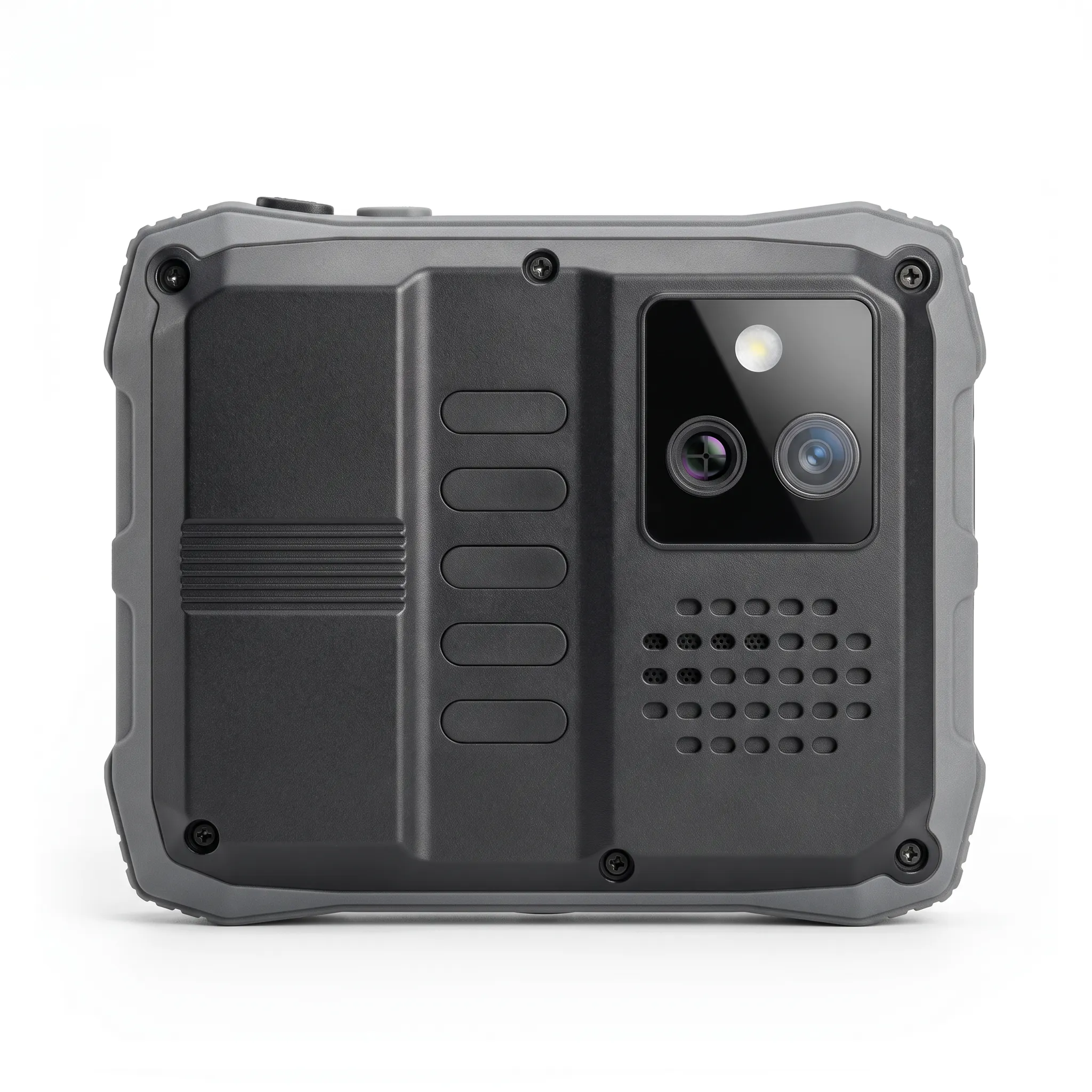
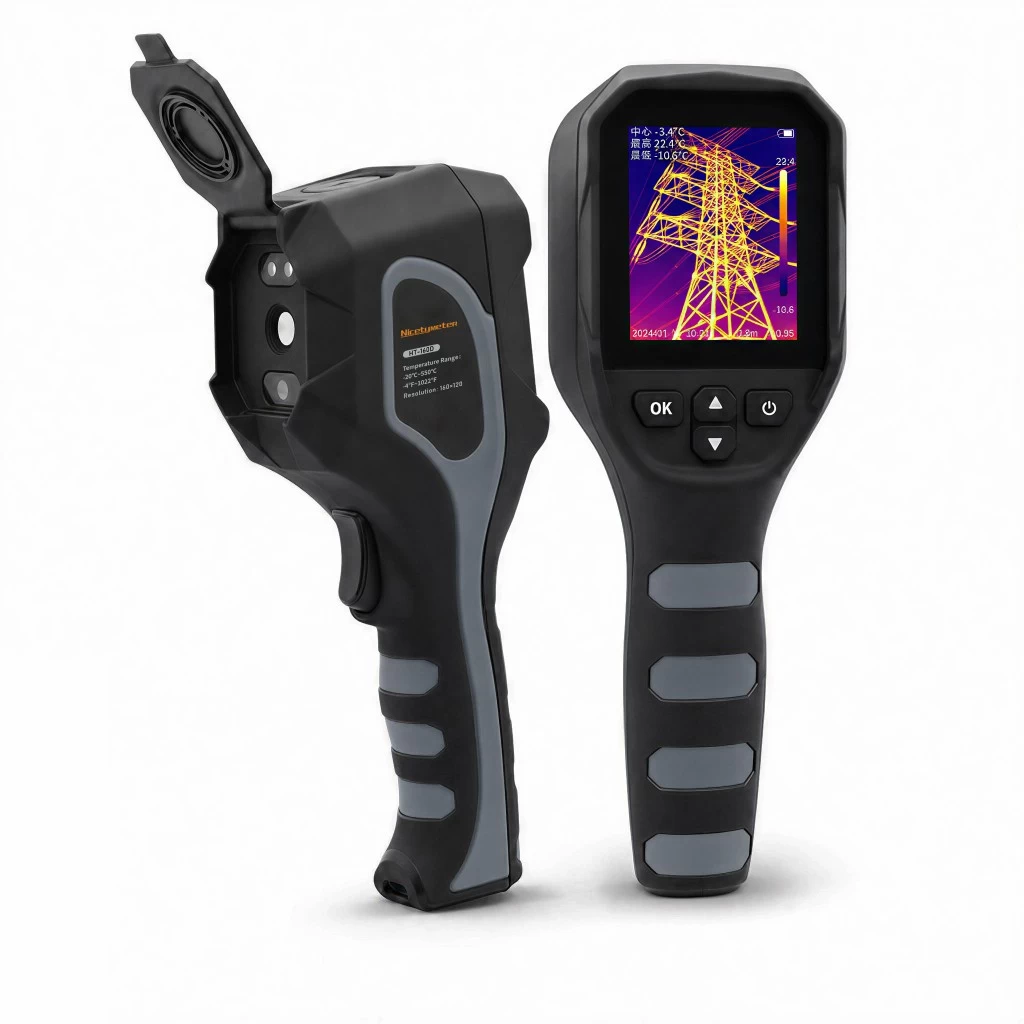
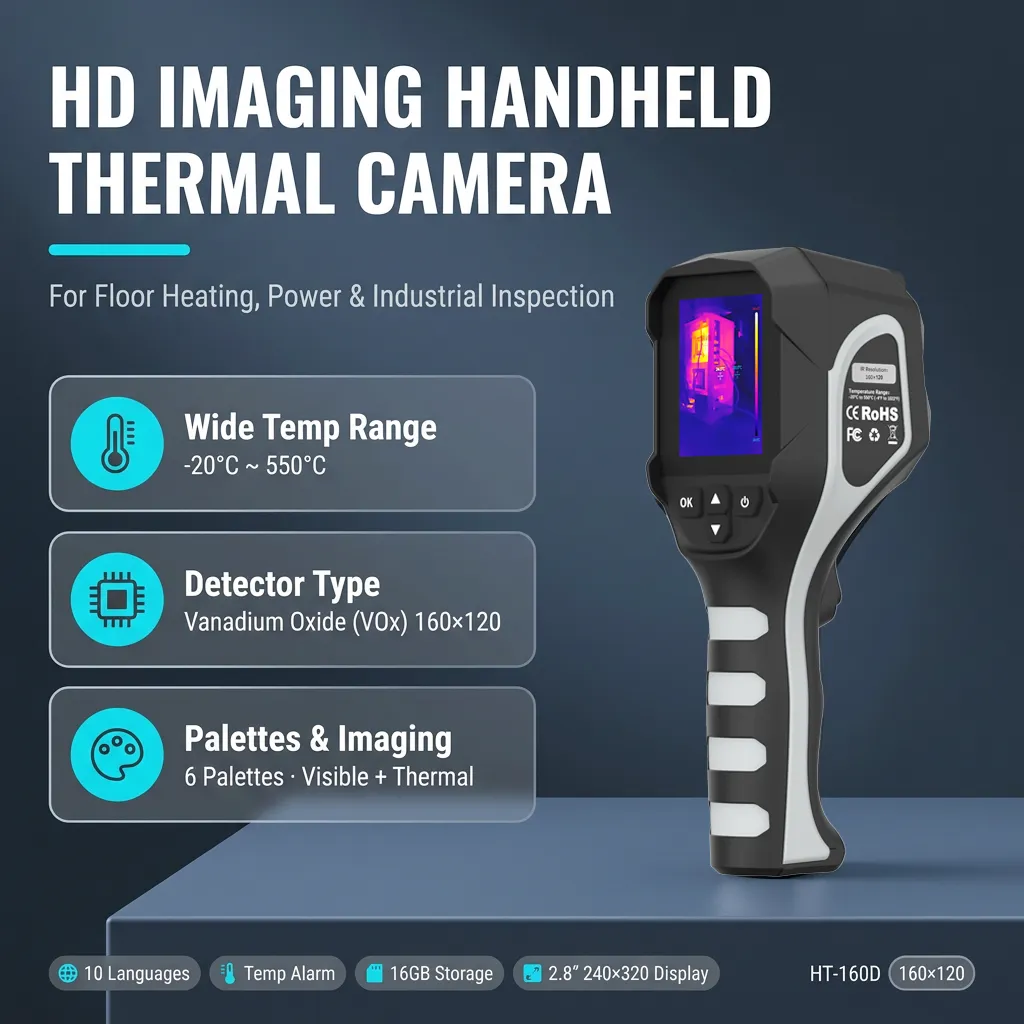
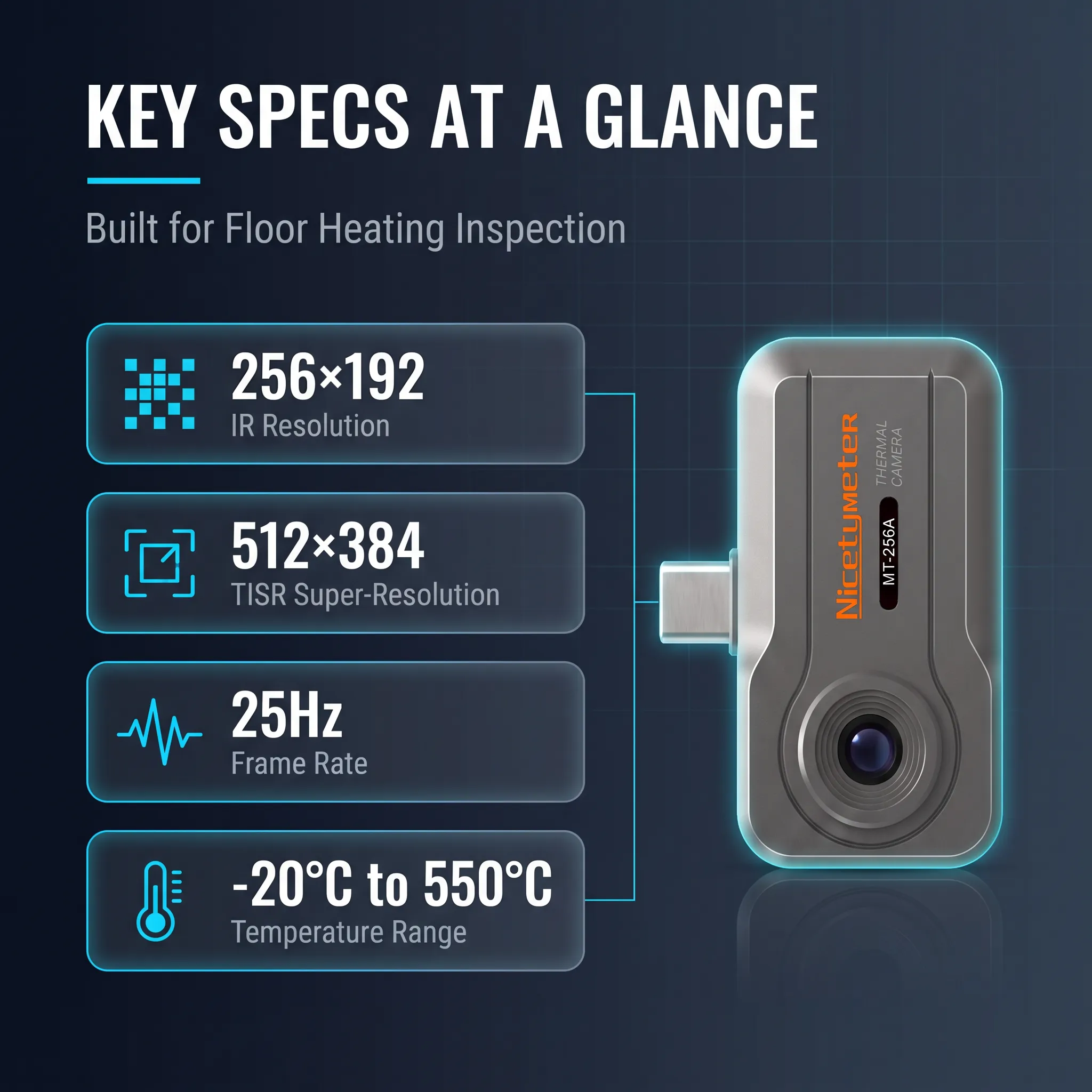
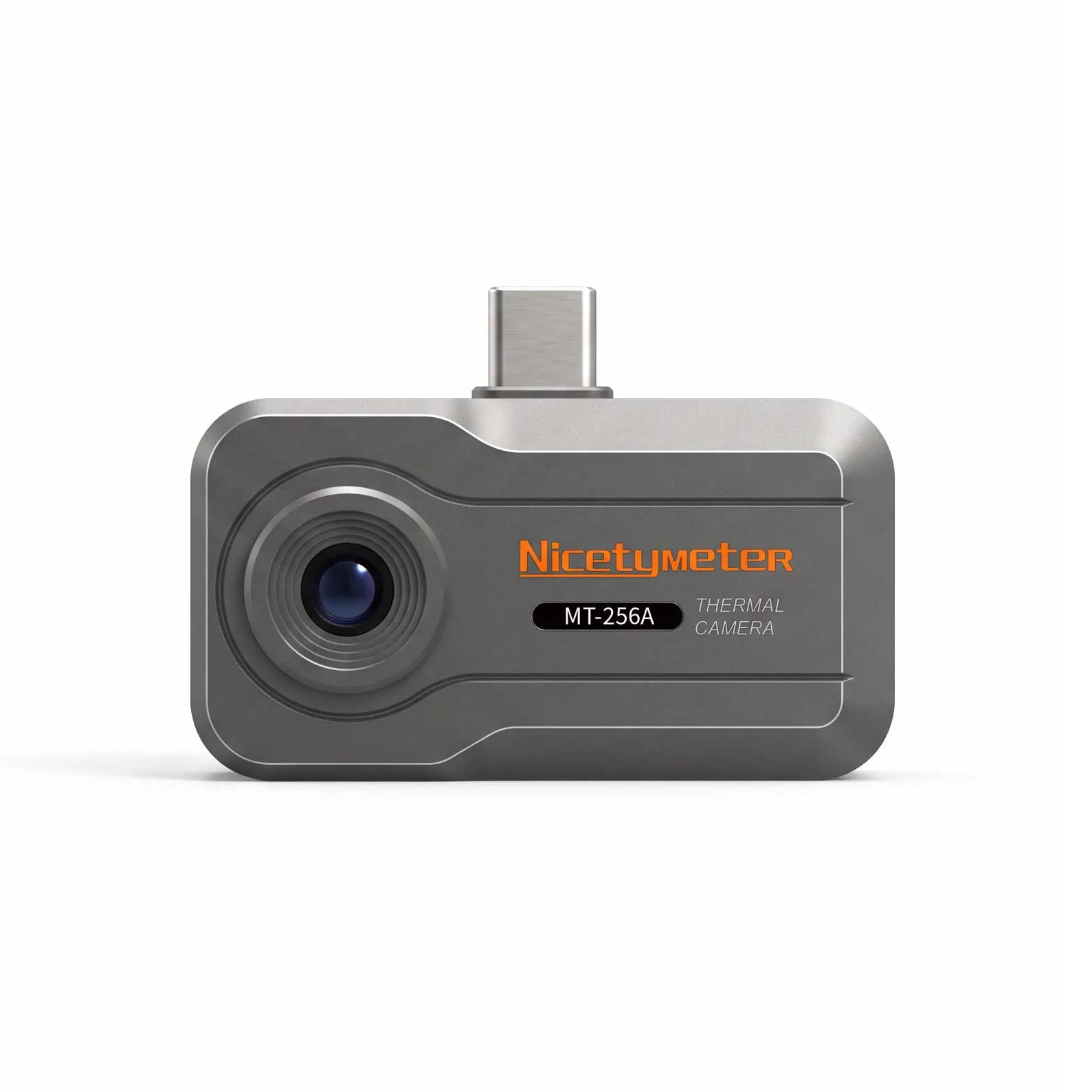
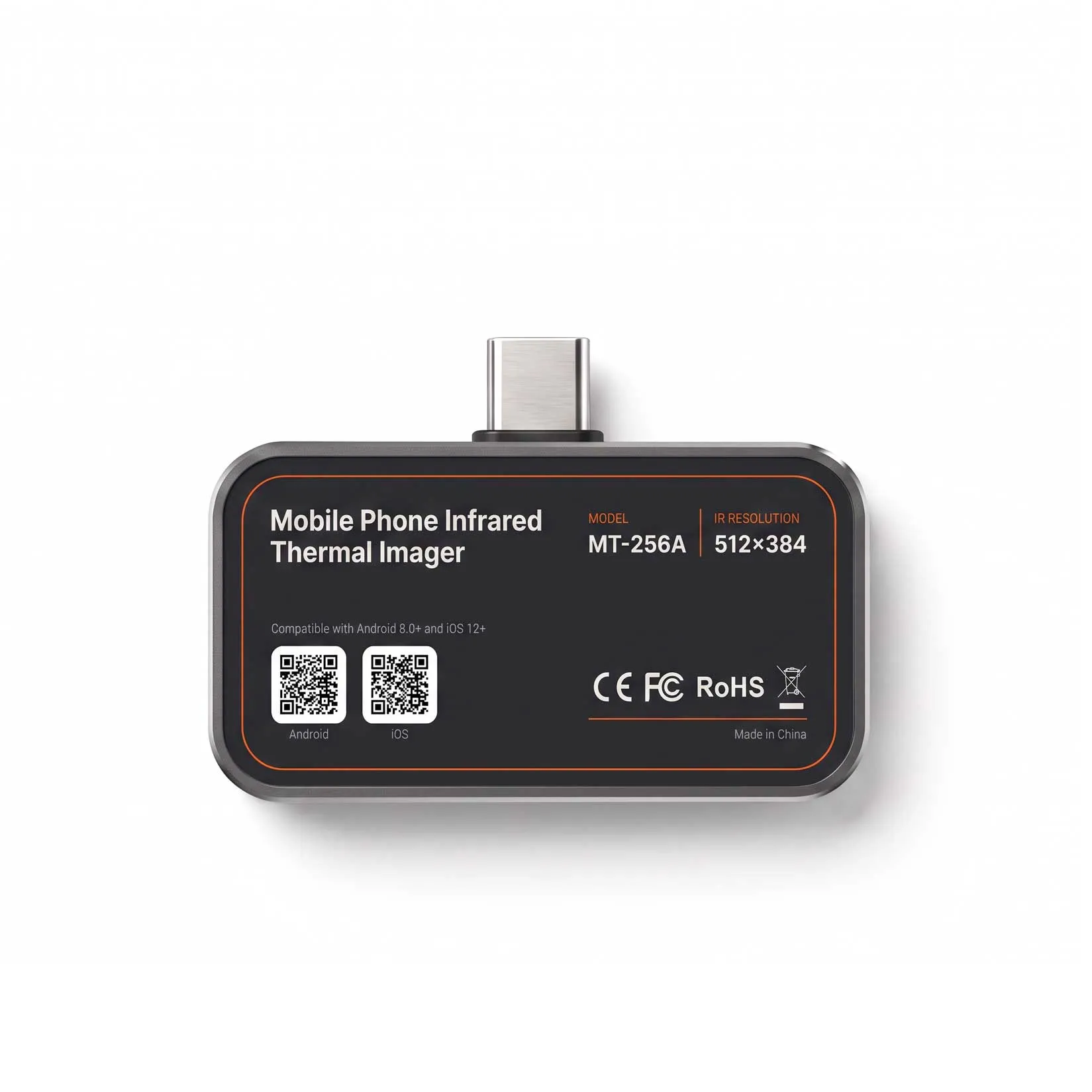
A TT-256 is sold as "256×192, TISR up to 512×384". Those are not two models and not two detectors — it is one physical array and one processed output. Whether the second number is worth paying for depends entirely on what you point the camera at, and the honest answer is that it is worth a lot in some jobs and worth nothing in others.
What TISR actually is
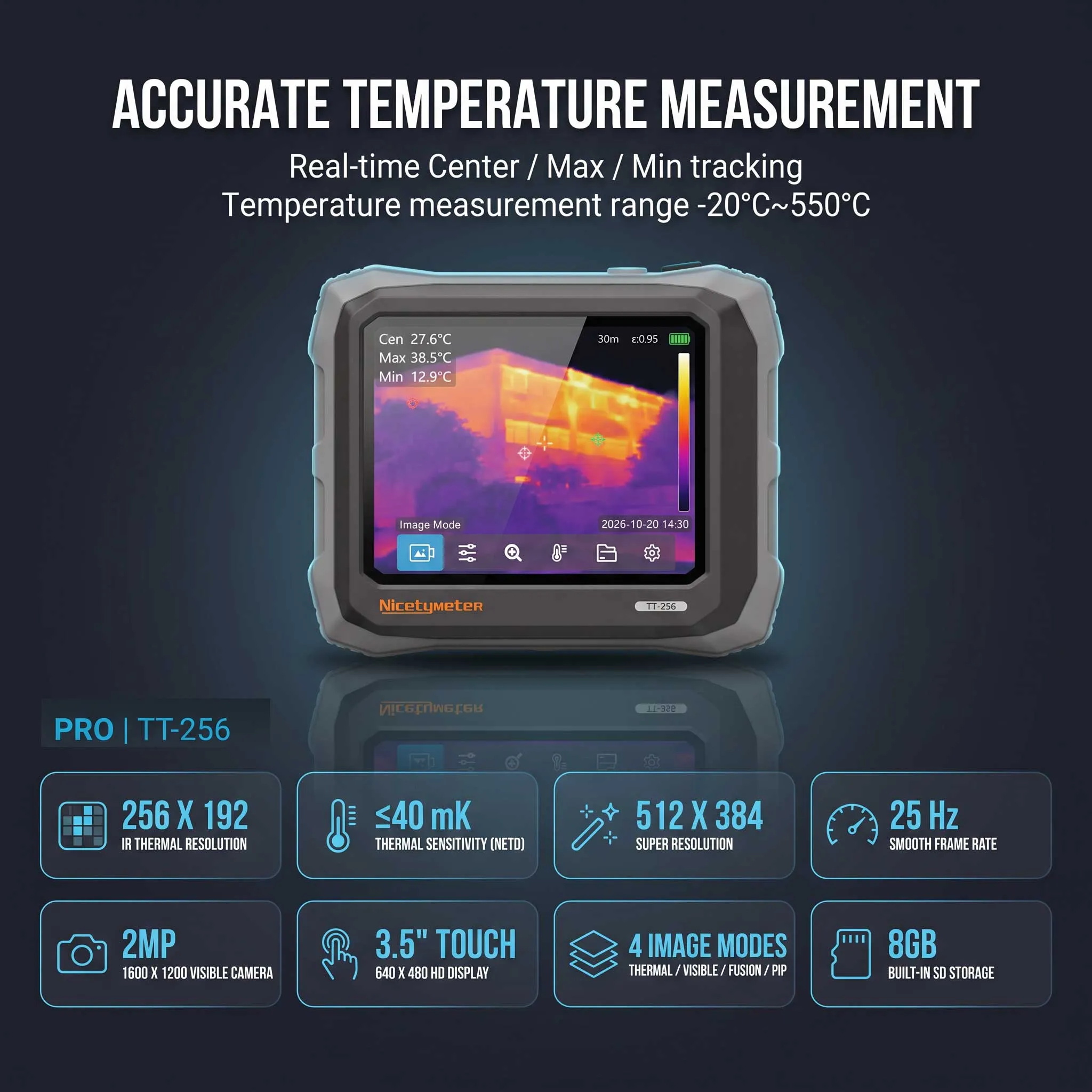
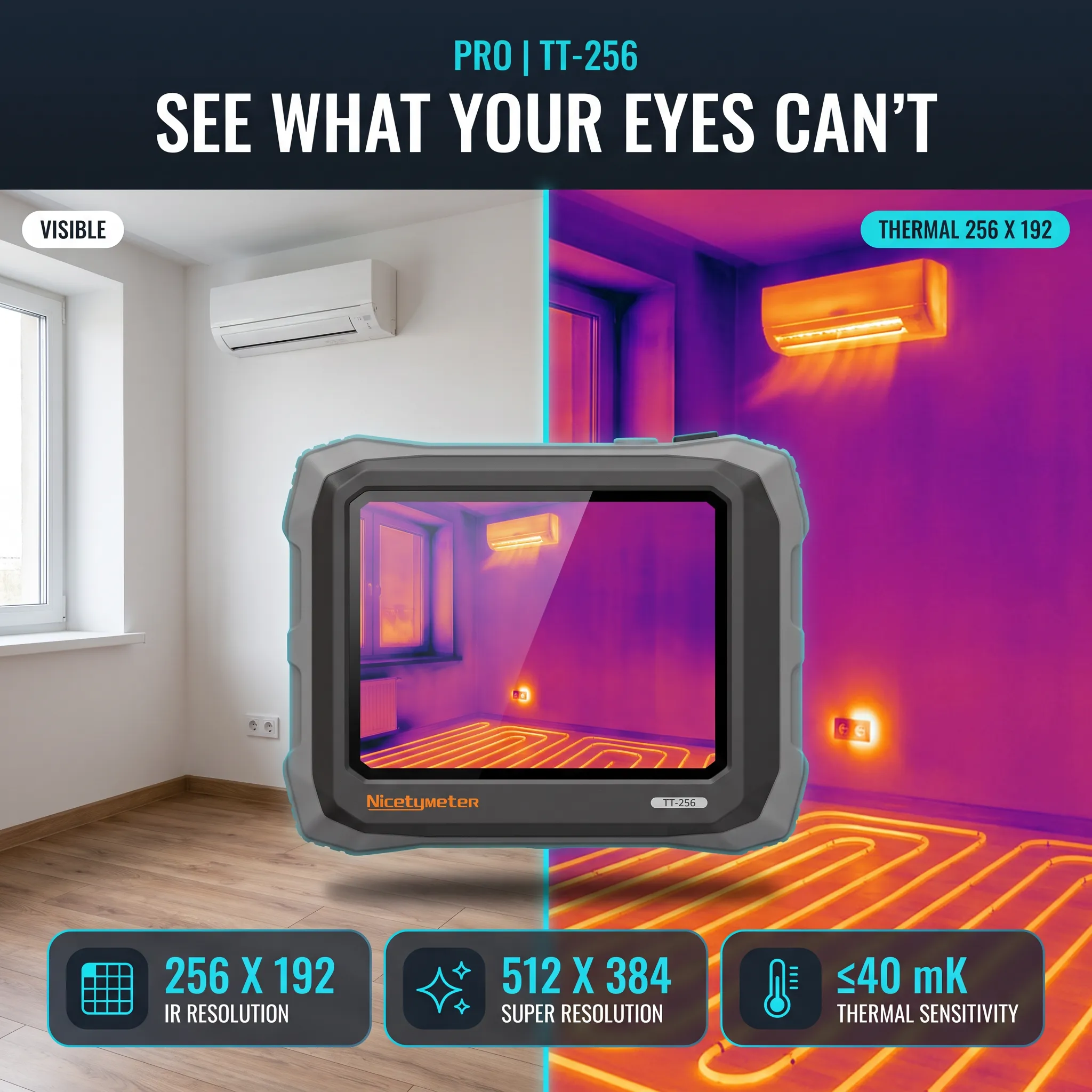
Infrared resolution is the physical pixel count on the detector: a 256×192 sensor has 49,152 individual measurement points. That number is fixed by the hardware and no firmware can change it.
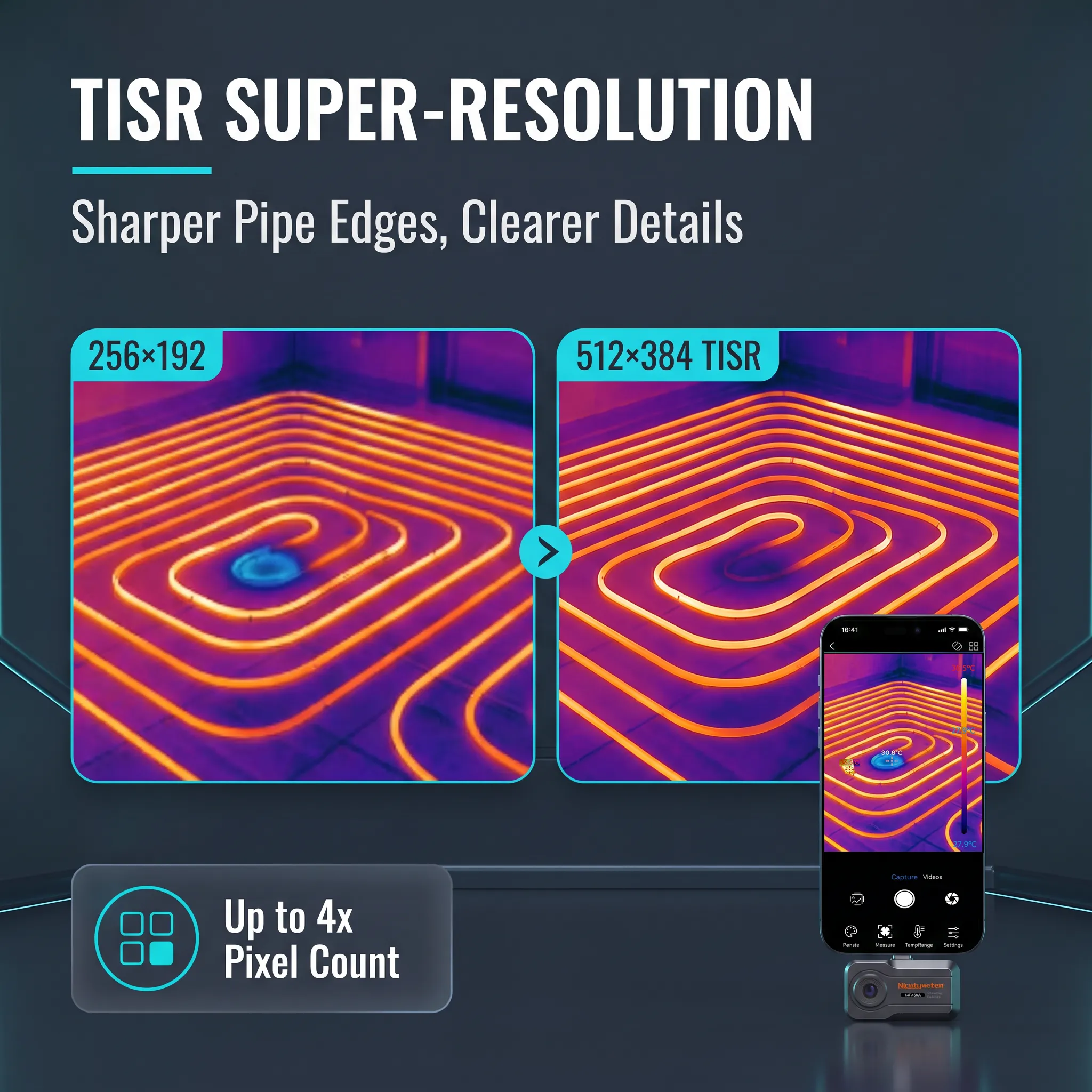
TISR — Turbo In-Sensor Resolution — takes a burst of frames from that array, uses the tiny sub-pixel movement between them, and reconstructs an image at 512×384. It is not digital zoom. Digital zoom enlarges and interpolates the pixels you already have; nothing new enters the image. TISR genuinely gathers extra spatial samples over several frames, which is why the result holds up when you zoom in on a terminal block instead of turning to mush.
One rule worth remembering: TISR improves what you can see, not what the camera can measure. The temperature reading still comes from the native 256×192 samples. Super resolution sharpens your judgement of the image; it does not tighten the ±2 °C accuracy spec.
Why it is not the same as a real 512×384 detector
A true 512×384 array produces 98,304 independent samples in every single frame. TISR needs several frames to build one. That difference shows up in exactly one situation, and it is the one that matters on site.
- Static target, camera held still: TISR converges and the extra detail is real. A breaker lug, a PCB component, a pipe joint 4 m away all resolve noticeably finer.
- Moving target, or you are walking while scanning: the frame-to-frame alignment degrades and the advantage shrinks toward a well-upscaled native image.
So the honest framing is this: a true 512×384 detector is better in every condition. TISR gets you much of that detail on static subjects for a fraction of the cost, and gives it back when the scene moves. For inspection work — where you stop, aim, and look — that is usually a fair trade.
Where the resolution actually pays off
Forget pixel counts for a moment and use spatial resolution instead. Every camera has an IFOV in milliradians, which converts directly into "how many millimetres one pixel covers at a given distance".
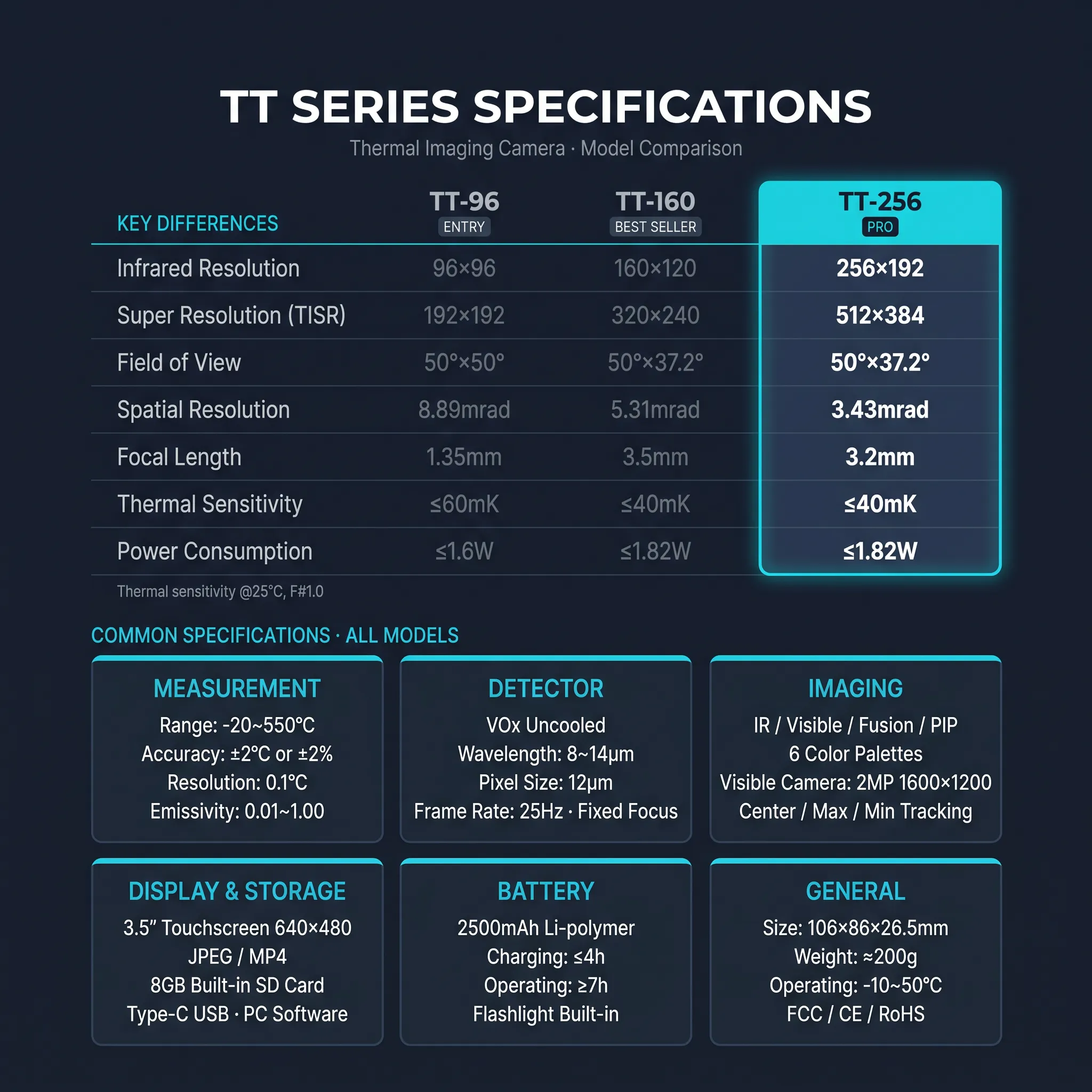
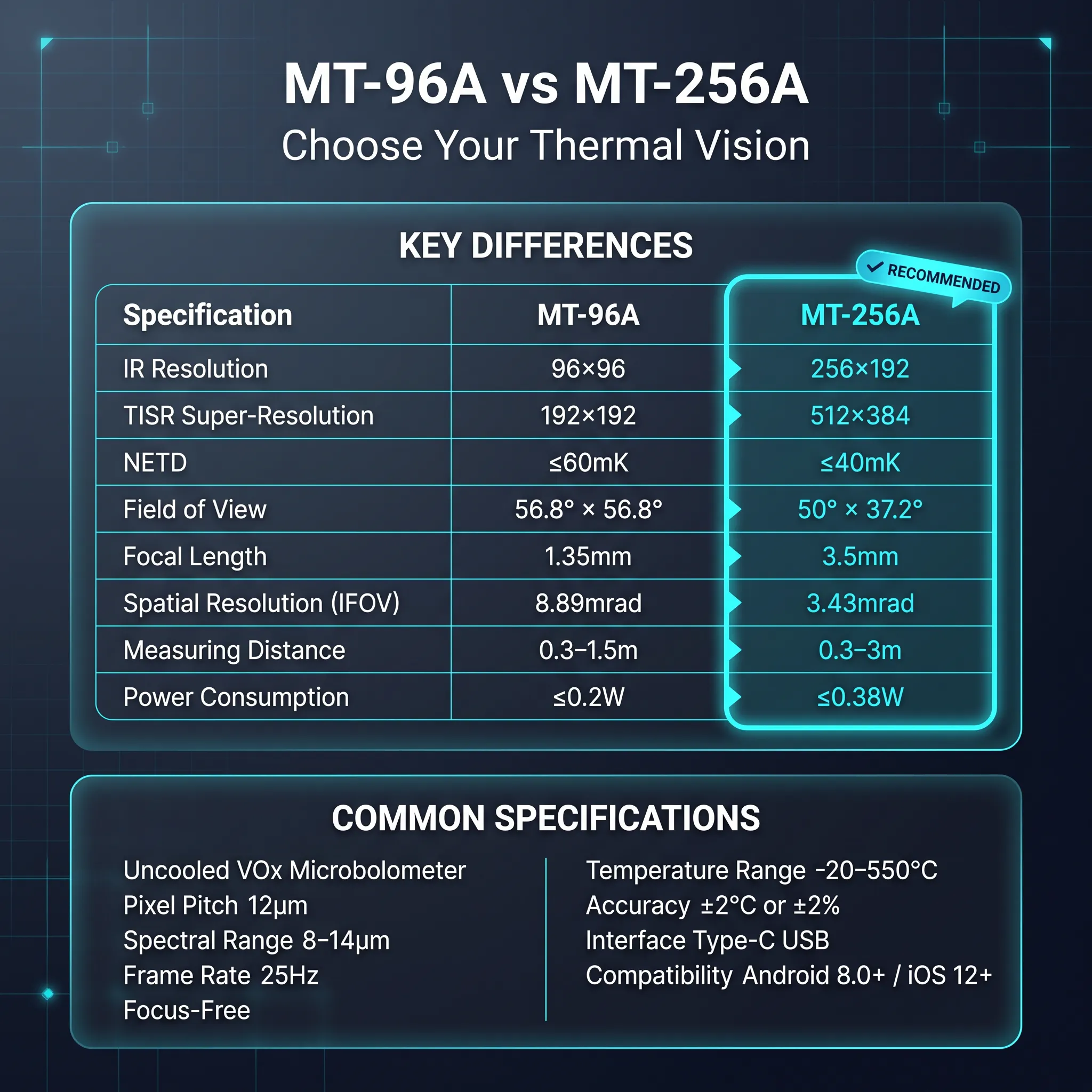
| Camera | Native IR | TISR output | IFOV | 1 px covers at 3 m |
|---|---|---|---|---|
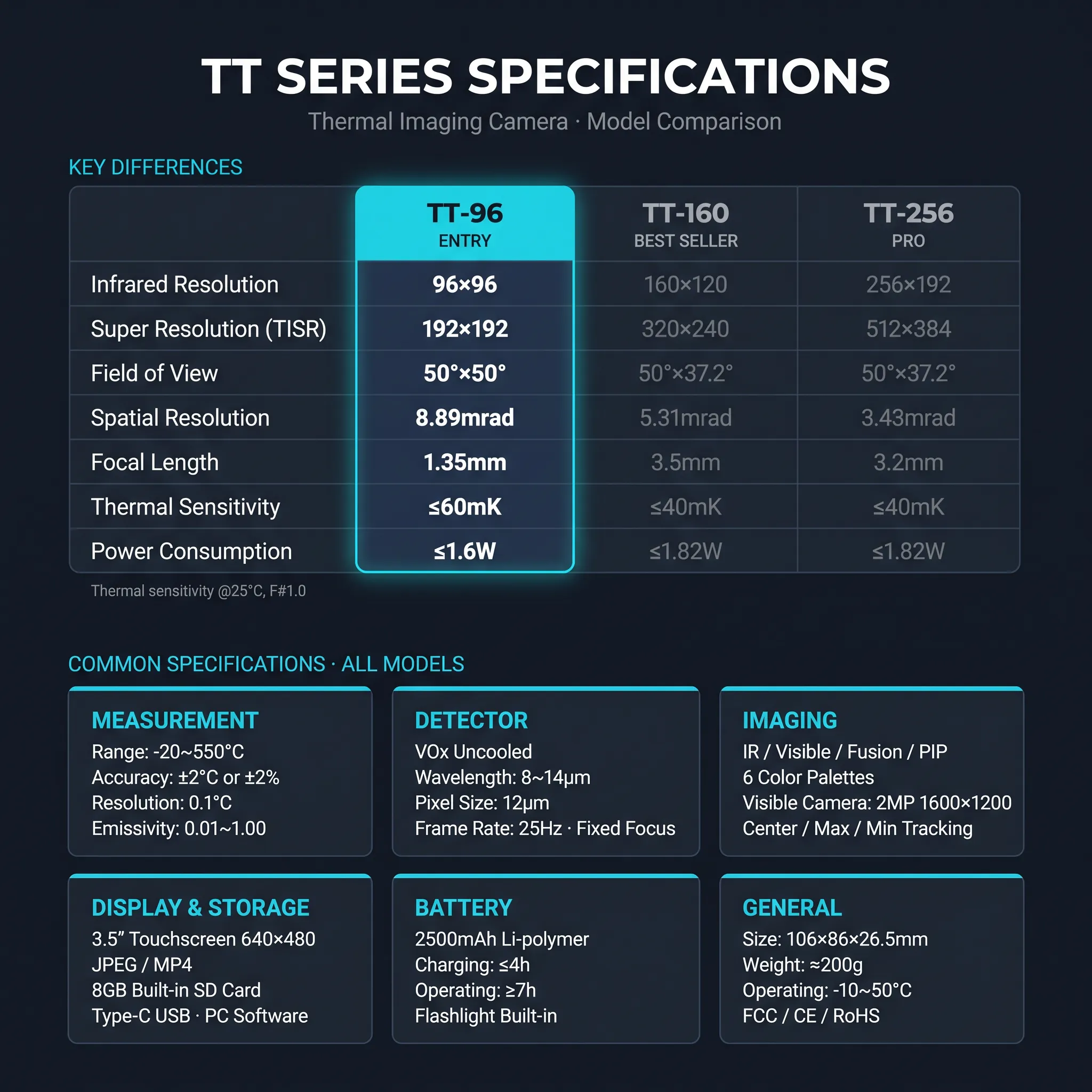
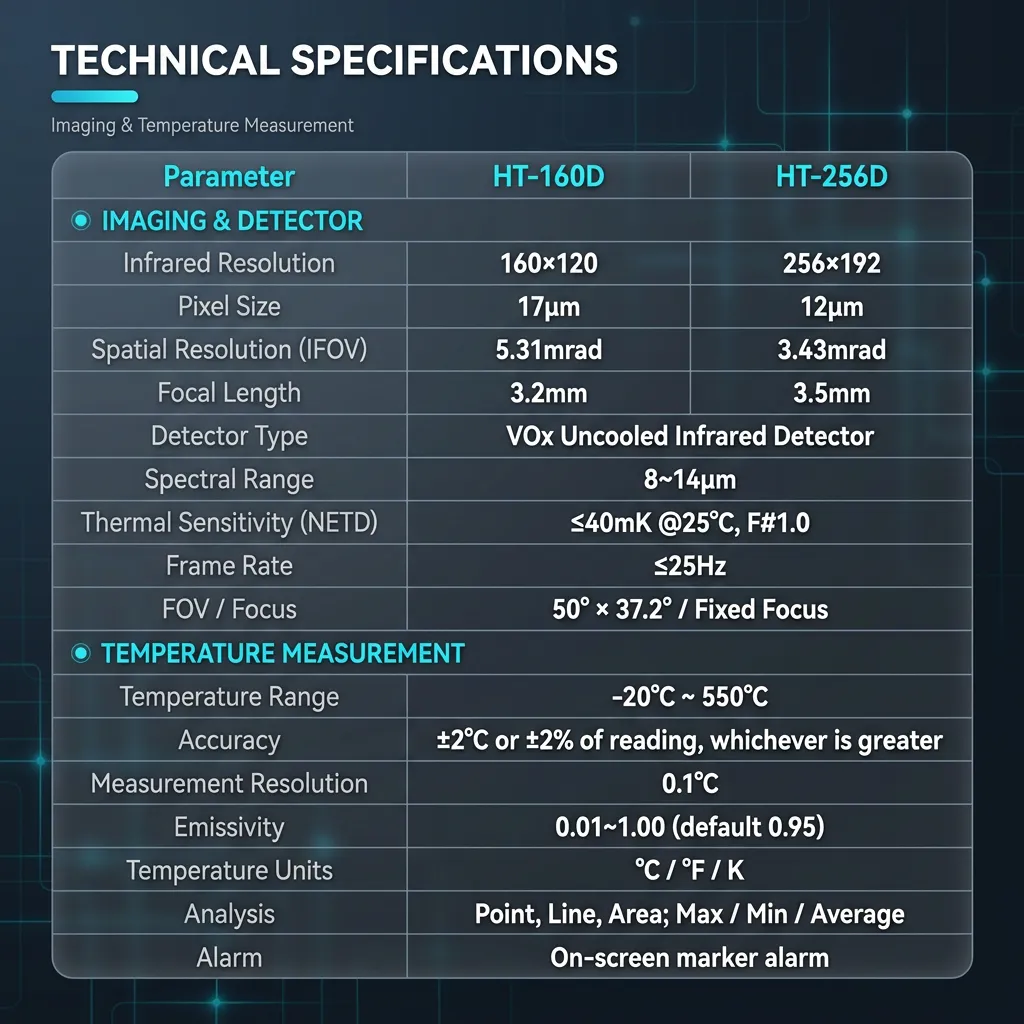
| TT-96 / MT-96A | 96×96 | 192×192 | 8.89 mrad | 26.7 mm |
| TT-160 / HT-160D | 160×120 | 320×240 | 5.31 mrad | 15.9 mm |
| TT-256 / HT-256D / MT-256A | 256×192 | 512×384 | 3.43 mrad | 10.3 mm |
A reliable reading usually needs a target to cover roughly 3×3 pixels, so at 3 m the 3.43 mrad camera resolves objects down to about 31 mm while the 8.89 mrad camera needs something around 80 mm. That single comparison answers most buying questions:
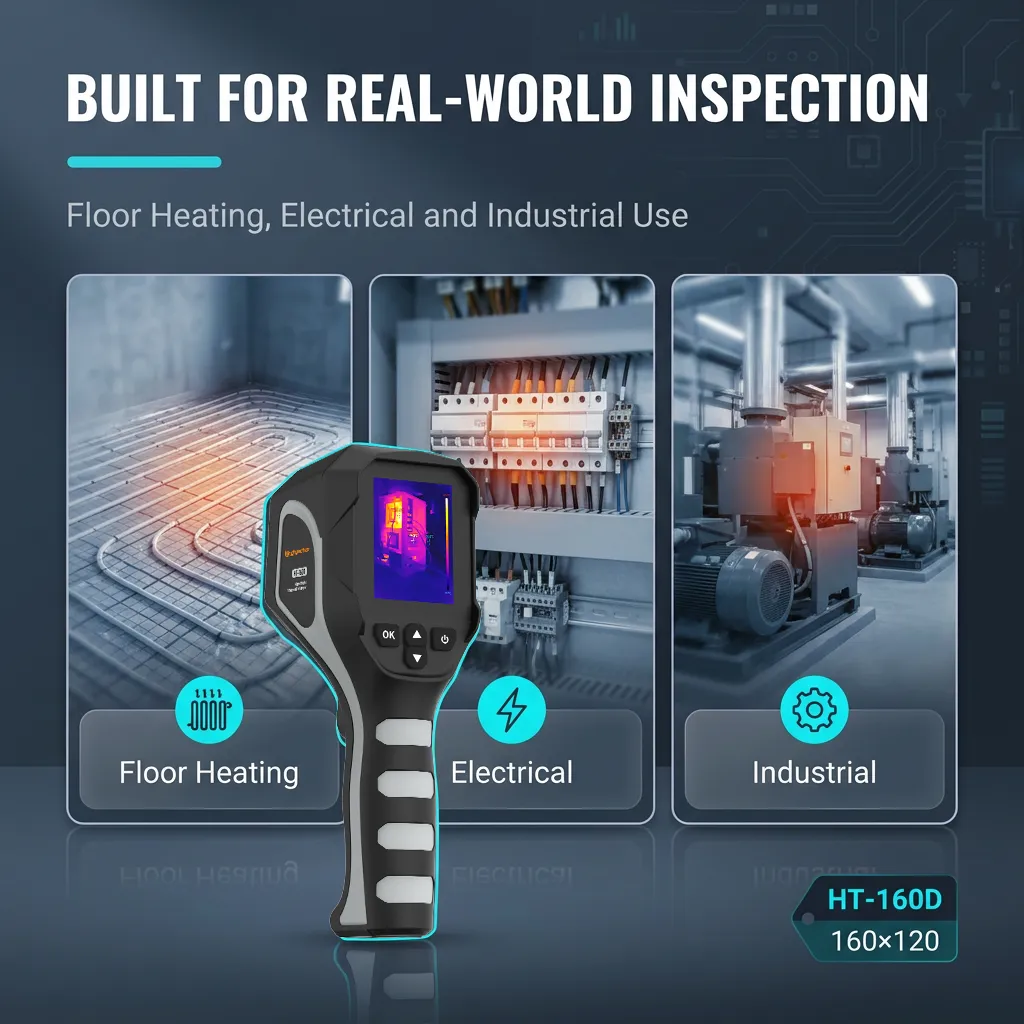
- Individual lugs and terminals in a control cabinet — the 3.43 mrad camera sees the bad one. The 8.89 mrad camera sees the whole block.
- Refrigerant line joints, hydronic manifolds, small bearings — same story.
- Wall insulation loss, roof moisture, a whole radiator — any of the three works, and the extra resolution buys you nothing you will use.
Where the extra resolution is wasted
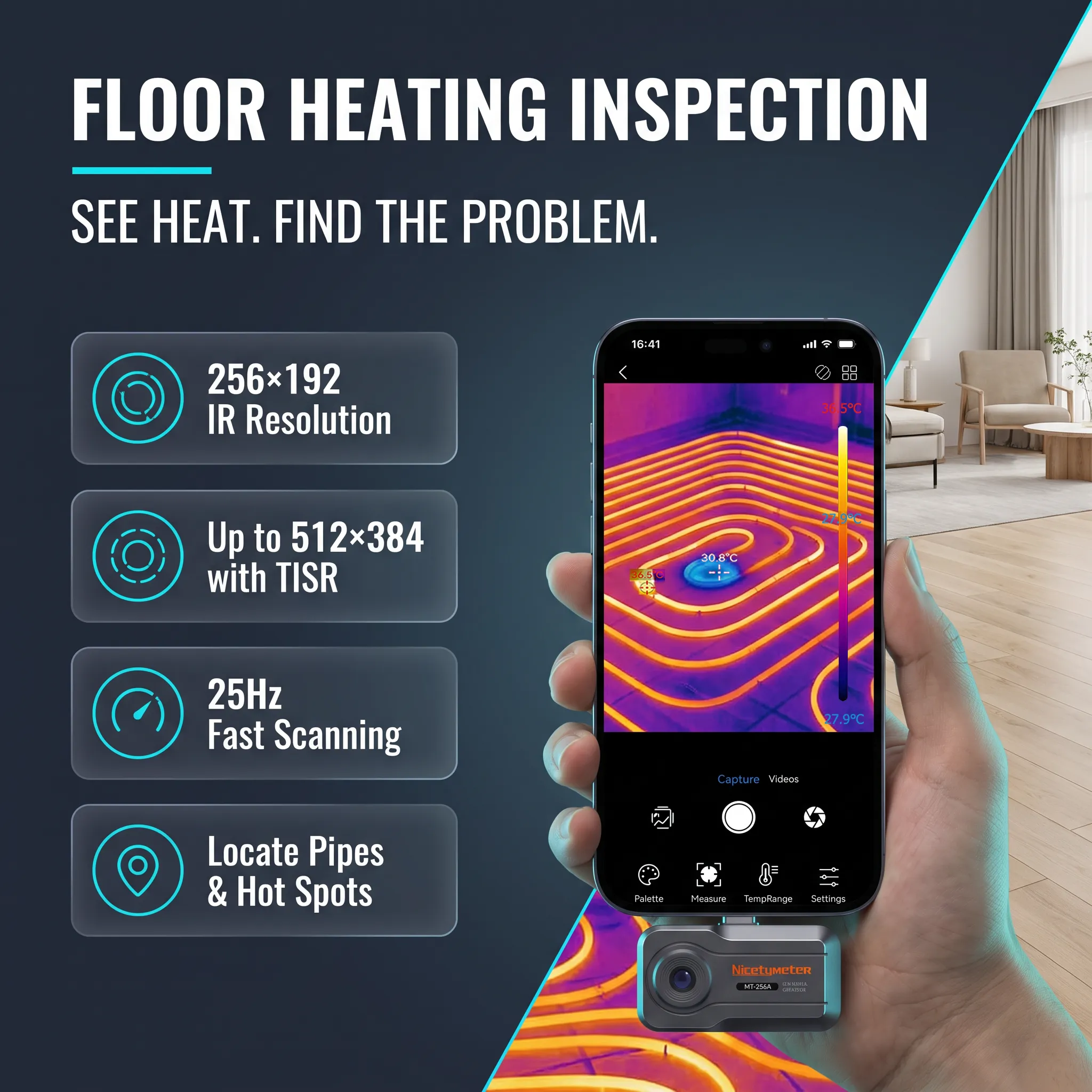
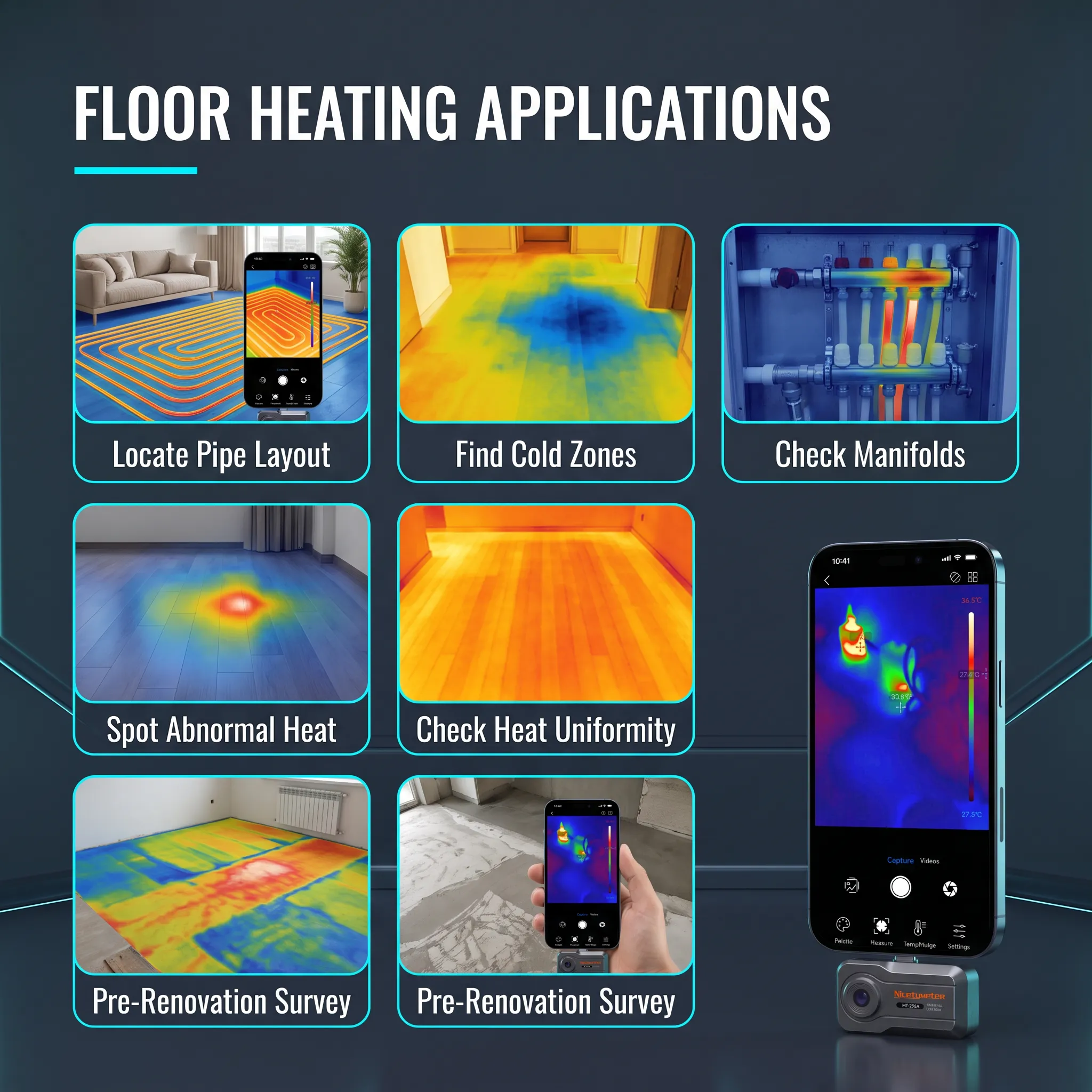
Large targets do not reward fine pixels. Heat loss across a wall, a wet patch on a flat roof, an underfloor loop that is not warming, a blocked duct run — these are metre-scale patterns. A 96×96 or 160×120 detector displays them perfectly well, and the money is better spent on a second tool.
The same applies if you scan continuously rather than stopping to examine: TISR's advantage lives in held, still frames, and a walking survey never gives it that.
If wall, roof and insulation surveys are your main work, resolution is not the constraint — what a cold patch can and cannot tell you is the thing worth reading first.
Three questions before you pay for it
- What is the smallest target, at what distance? Multiply IFOV by distance to get millimetres per pixel, then multiply by 3. If the answer is smaller than your target, you need the resolution — otherwise you are buying a nicer screen.
- Does the target move? Motors, belts, spinning shafts and hot gas all cost you the super-resolution benefit. Static cabinets and building fabric do not.
- Who reads the image afterwards? If a customer or a compliance file gets the shot, detail you can zoom into without artefacts has real value. If you are standing there deciding whether to open a panel, the native image is often enough.
How the range lines up
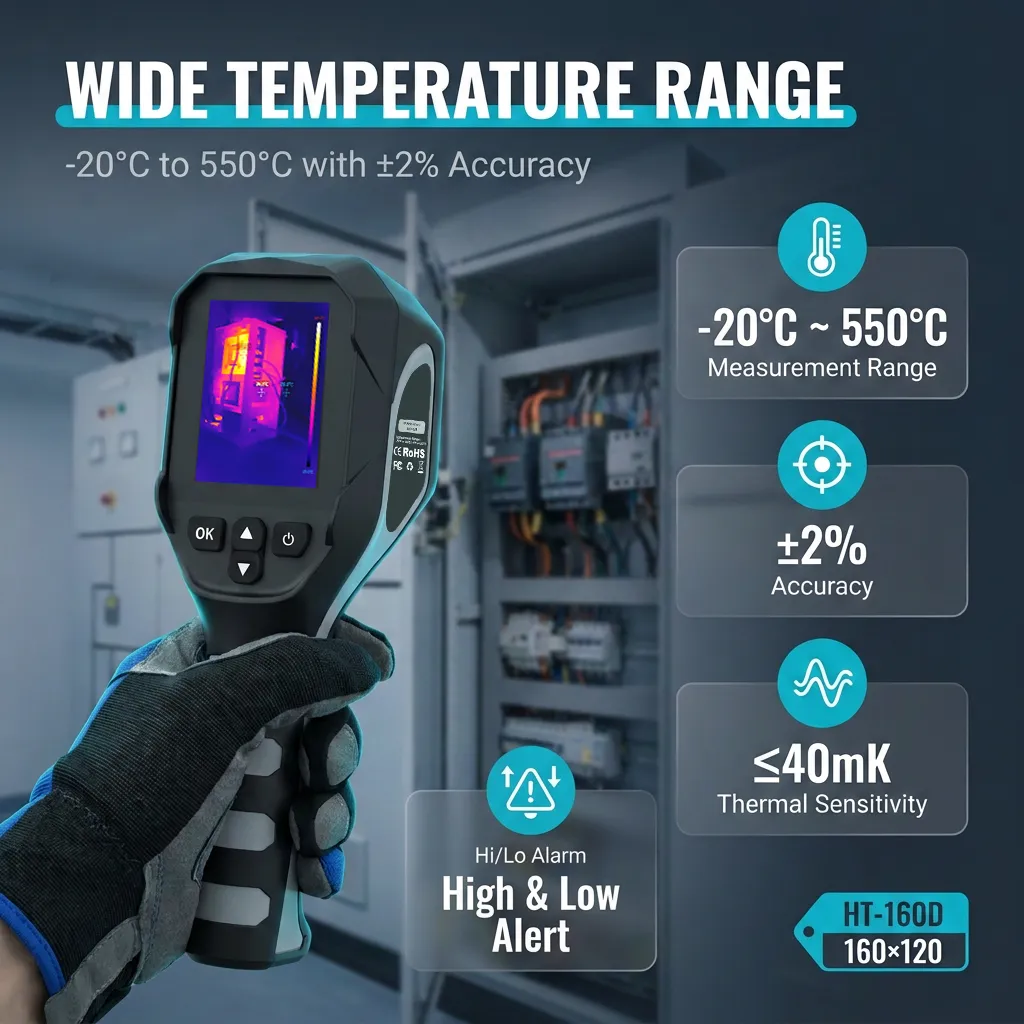
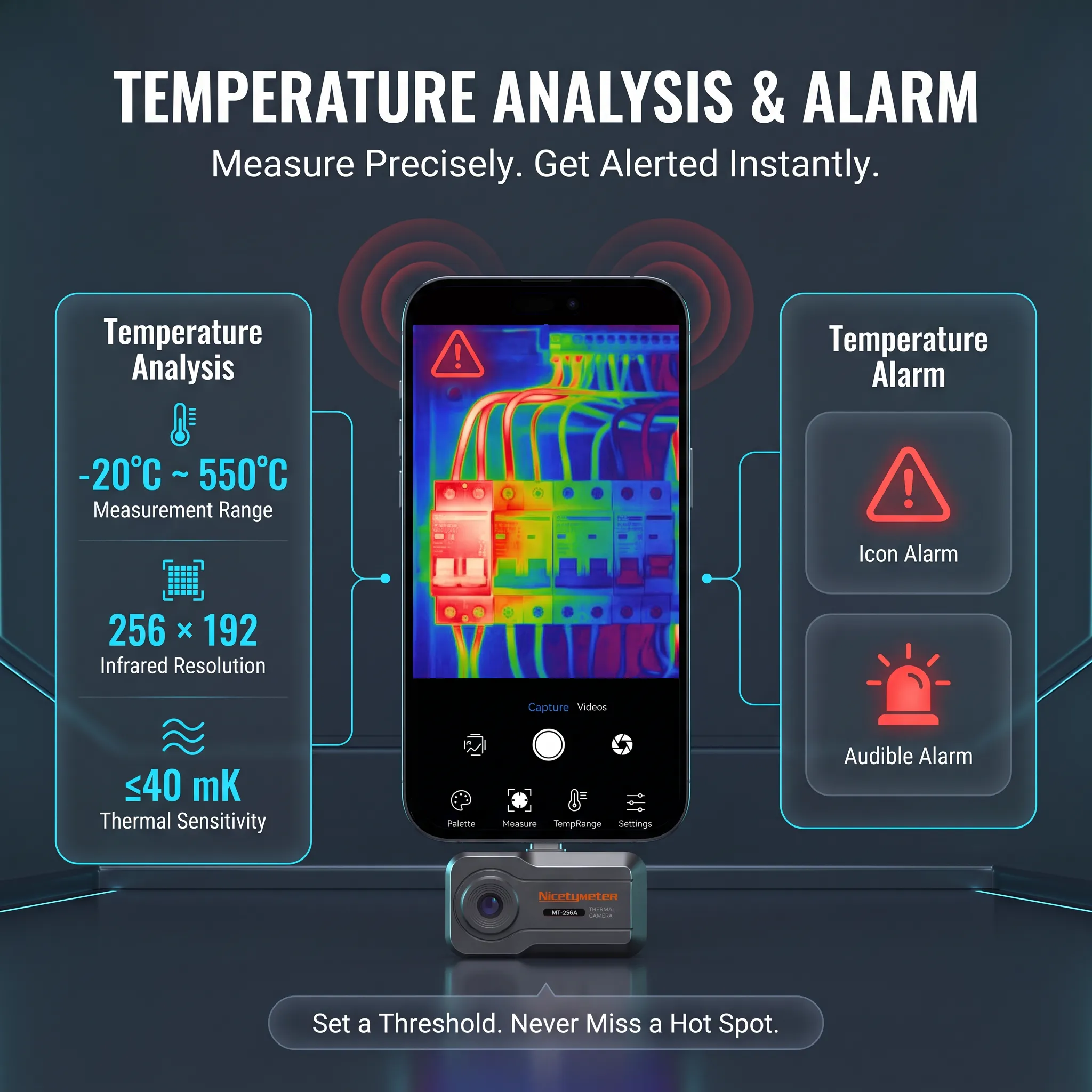
Every handheld model in the TT and HT series runs the same 25 Hz frame rate, ±2 °C or ±2% accuracy, 0.01–1.00 adjustable emissivity and a −20 to 550 °C range — so resolution, thermal sensitivity and field of view are the only real variables.
| Model | Native / TISR | NETD | Best for |
|---|---|---|---|
| TT-96 | 96×96 / 192×192 | ≤60 mK | Building fabric, ducts, coarse electrical scans |
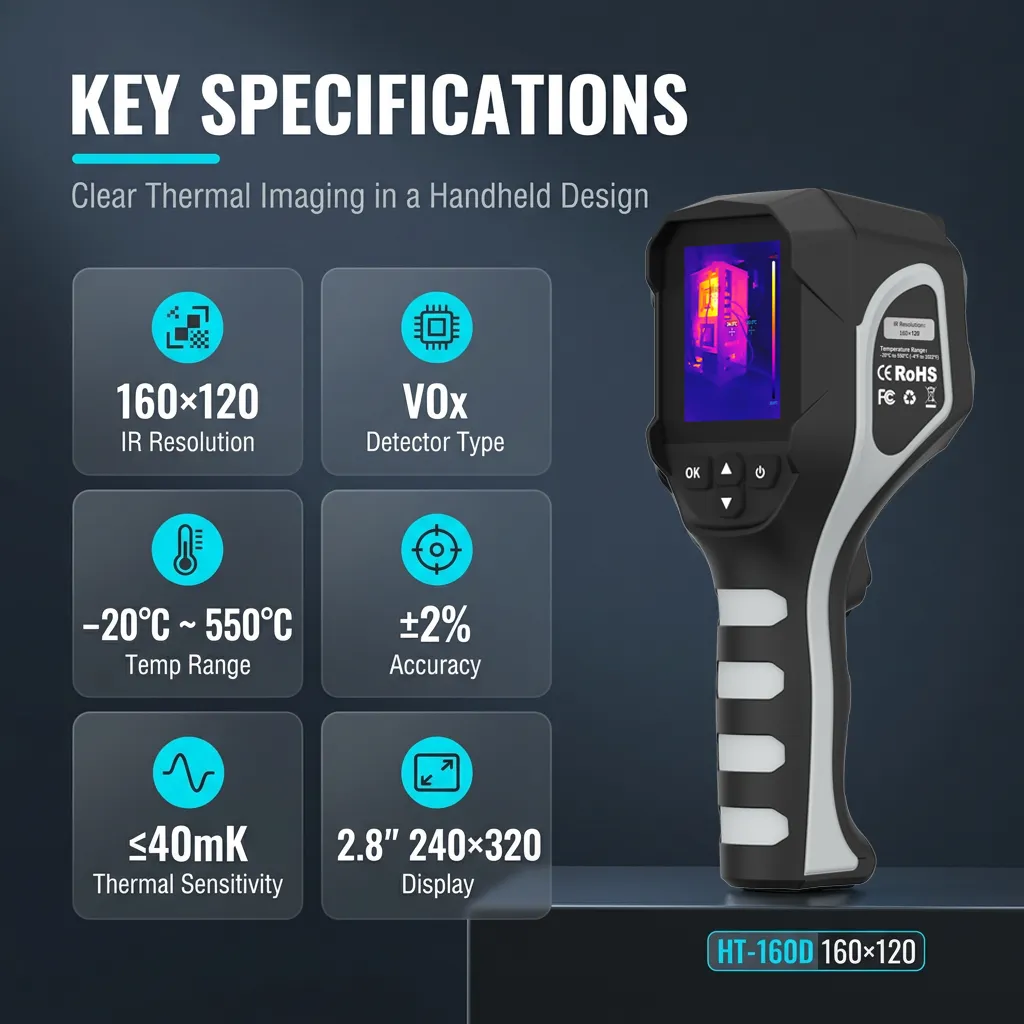
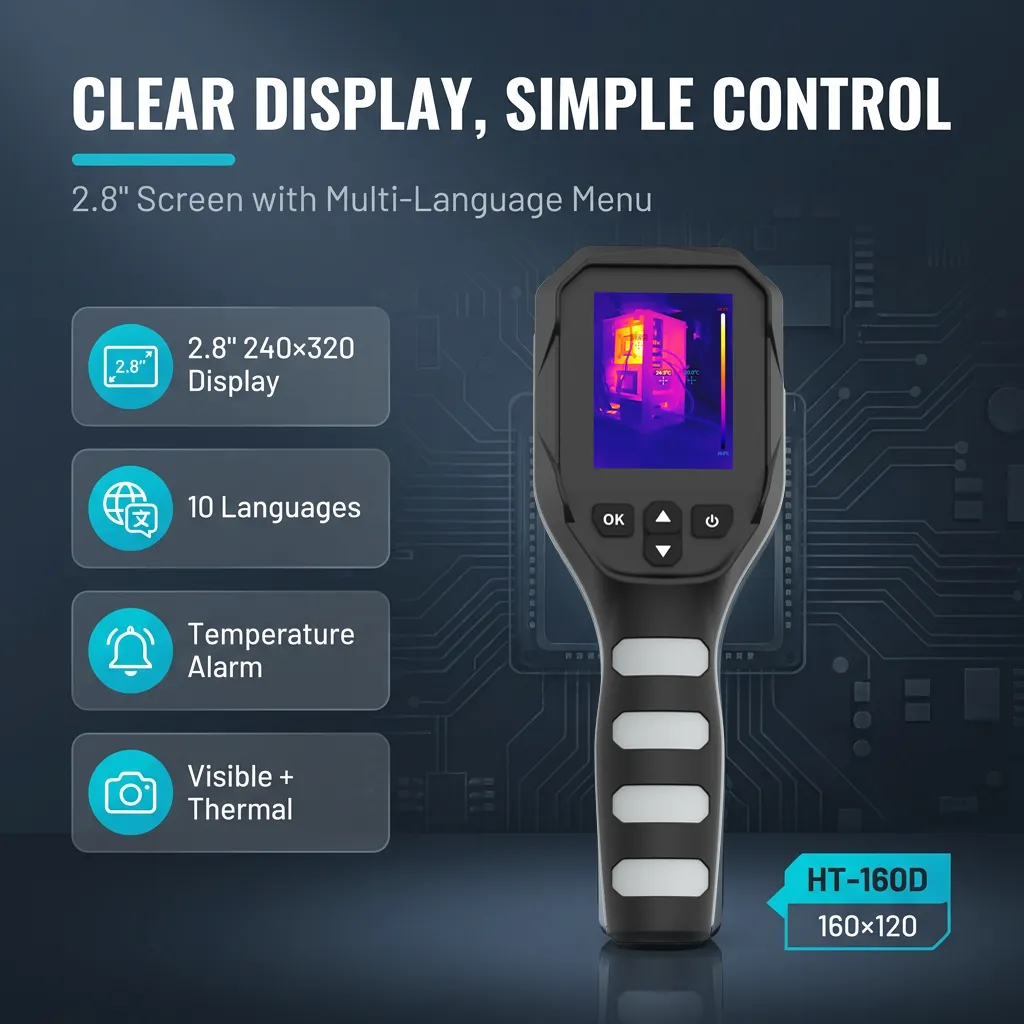
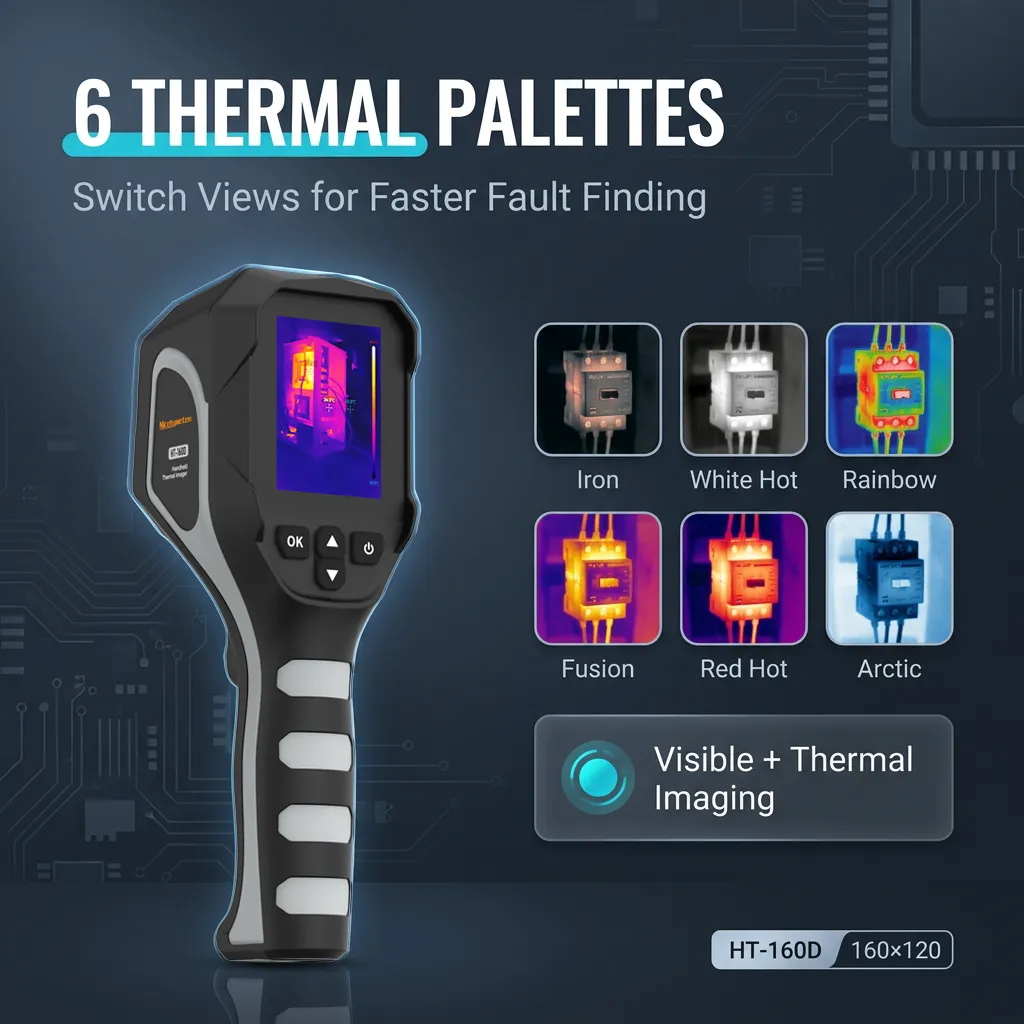
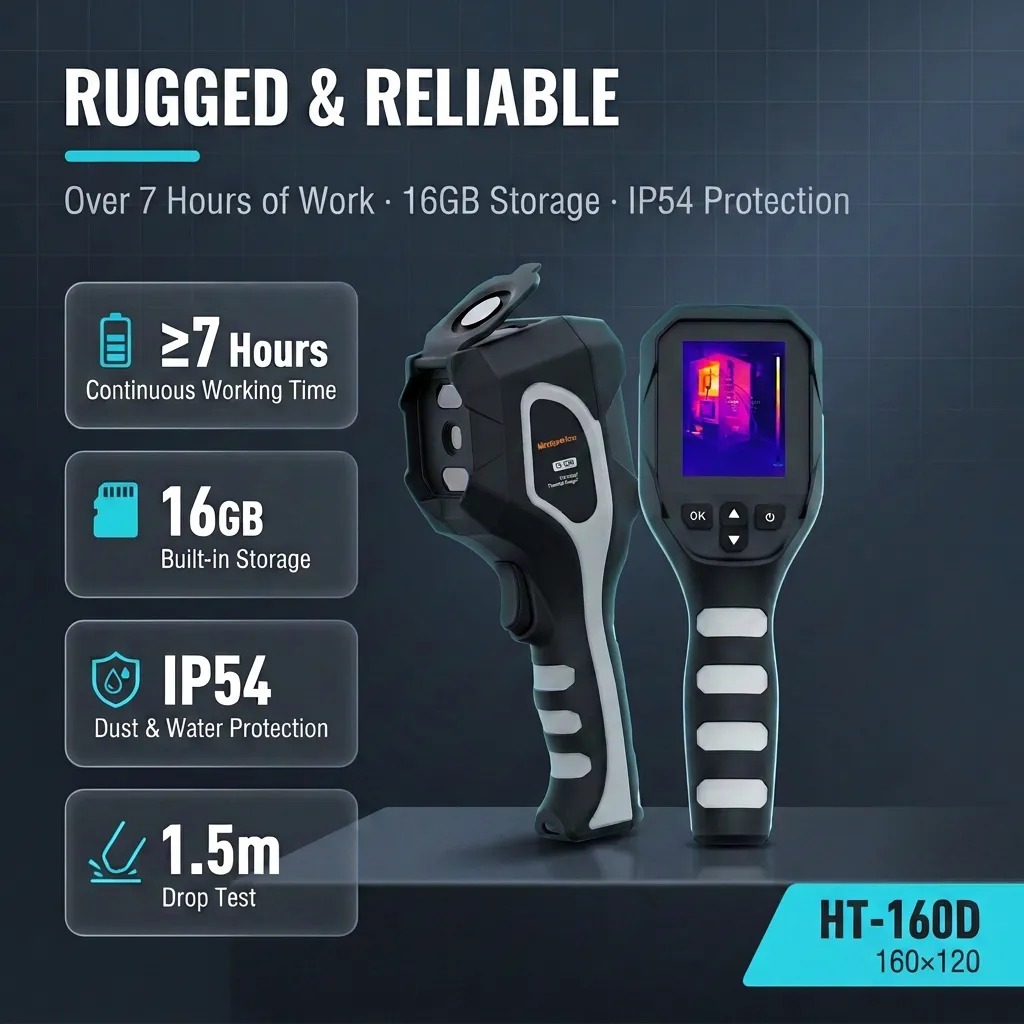
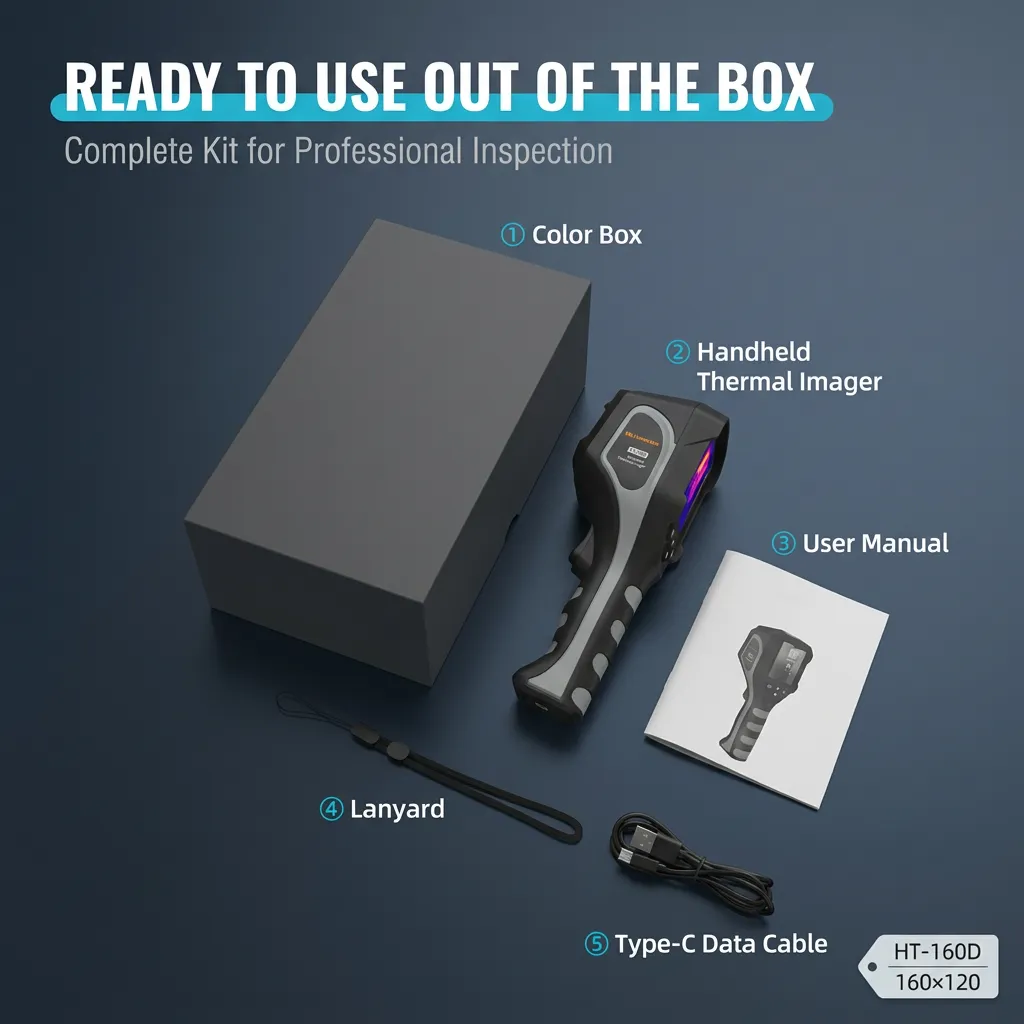
| HT-160D | 160×120 / — | ≤40 mK | General electrical and HVAC, 2 MP visible fusion |
| TT-256 | 256×192 / 512×384 | ≤40 mK | Control cabinets, busbars, distant small targets |
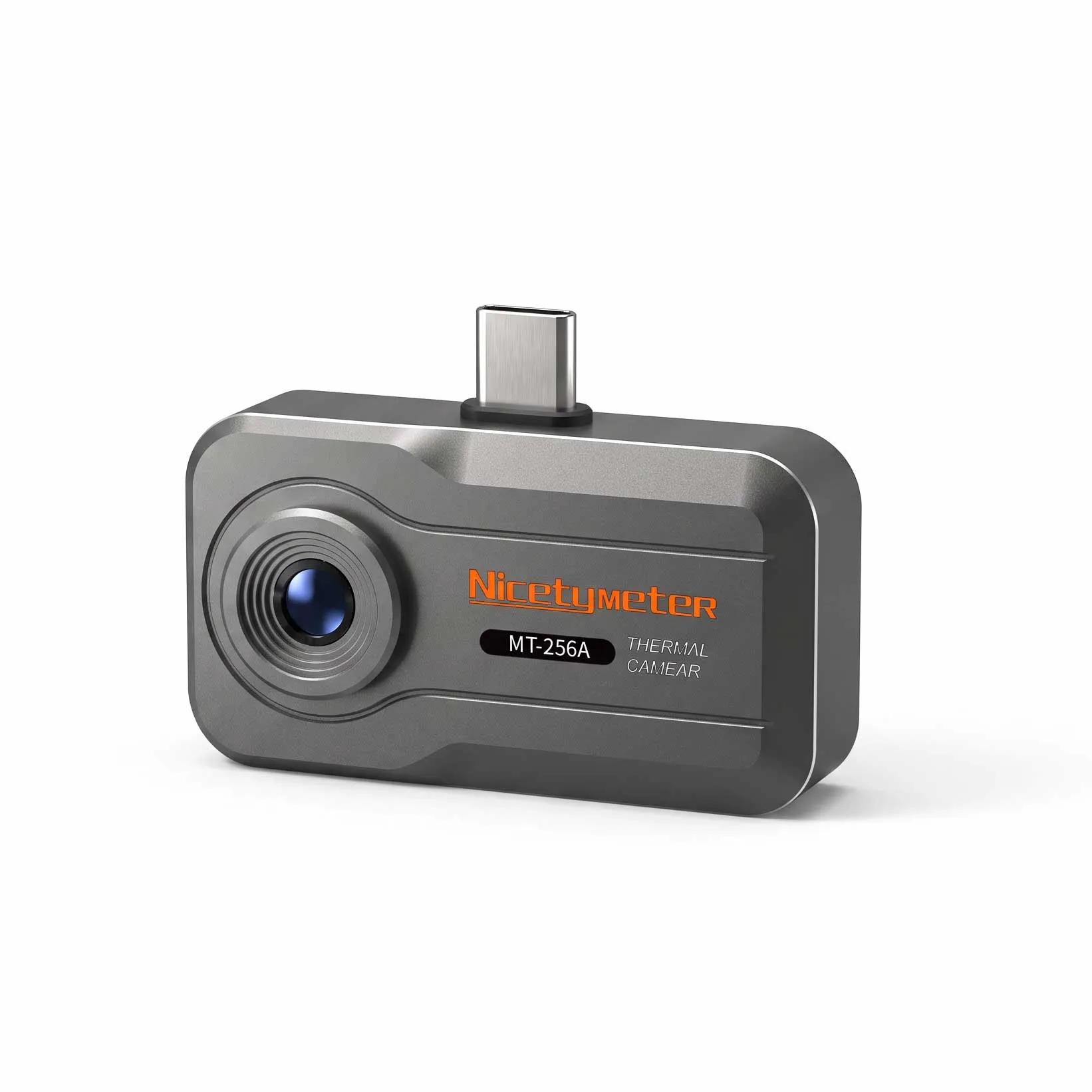
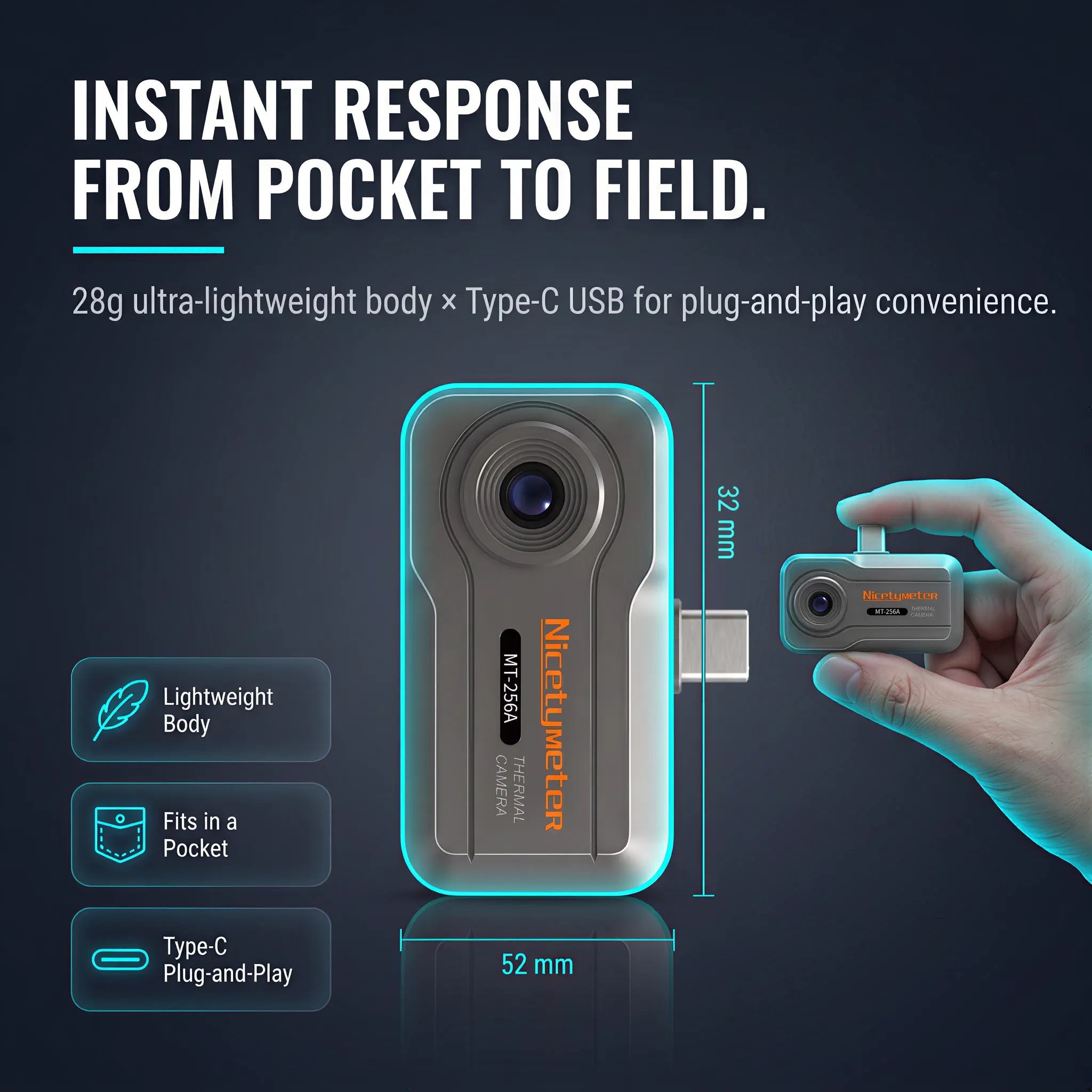
| MT-256A | 256×192 / 512×384 | ≤40 mK | Same detail in a pocket Type-C plug-in for a phone |
So is 512×384 worth it
If your work is finding the one warm lug in a cabinet, checking a joint four metres up a wall, or producing images someone else will zoom into — yes, and the IFOV table above is the reason. That is a genuine capability difference, not a spec-sheet garnish.
If your work is scanning walls for insulation gaps, tracing underfloor loops or confirming that a duct is cold, the answer is no. A 96×96 or 160×120 camera shows those patterns clearly, and the saving is better spent on a moisture meter or a second pair of hands.
The mistake to avoid is buying resolution for its own sake. Buy the spatial resolution your smallest real target demands, and ignore everything above that line.
FAQ
Is TISR the same as digital zoom?
No. Digital zoom enlarges pixels that already exist. TISR samples the scene across several frames, uses the sub-pixel differences between them and reconstructs a higher-resolution image, so the detail is gathered rather than invented.
Does TISR make the temperature reading more accurate?
No. Accuracy stays at ±2 °C or ±2% of reading, set by the detector and calibration. TISR changes how clearly you can see the target, which helps you place a measurement point correctly — that is an indirect gain, not a change in the accuracy specification.
Will 160×120 be enough for home inspection work?
For insulation, damp patterns, roof moisture and duct problems, yes. For reading individual components inside a panel, no — that is where 256×192 earns its price.
What is NETD and does it matter more than resolution?
NETD is thermal sensitivity: the smallest temperature difference the detector can register. Lower is better, and ≤40 mK is a good working figure. Resolution decides how small a target you can see; NETD decides whether a faint temperature difference shows up at all. For building work NETD often matters more; for component-level electrical work resolution usually does.