No. A thermal camera cannot see through a wall, a floor, or a pane of glass, and no amount of resolution changes that. What it does instead is more useful and less magical: it shows you the temperature of every surface in front of it, so you can work out what is happening behind without opening anything. The skill is not in the camera. It is in knowing what a cold patch actually means.
Why it is physically impossible
A thermal imager detects long-wave infrared in the 8–14 µm band, which is the radiation every object at room temperature emits by itself. That is a completely different phenomenon from X-rays or millimetre waves, which pass through matter.
Building materials are opaque to 8–14 µm radiation. Concrete, brick, plasterboard, timber and insulation all block it. So does ordinary window glass — a fact that catches people out, because a thermal image of a window is showing you the surface temperature of the glass, not the room beyond it. What you see is always a surface, never a volume.
So where does the cold patch come from
It comes from the wall doing something slightly different from its neighbours. Three mechanisms cover almost every case:
- Moisture. Wet material conducts heat faster than dry material, and evaporation pulls more heat out of the surface. The wet area reads cooler than the dry area around it.
- Missing insulation. With a real temperature difference across the envelope, an uninsulated stud bay or a gap in the batts shows up as a colder strip or patch.
- Air movement. Leakage at a joint, a seal or a service penetration drags outside air in and shifts the local surface temperature.
The sentence worth carrying onto site: you are not seeing water — you are seeing the temperature change that water causes. A cold patch is evidence of a mechanism, not proof of a cause. Everything else in this article follows from that one distinction.
What it genuinely does well
- Missing insulation. Needs a real temperature difference across the building fabric — roughly 10 °C between inside and out is the usual working threshold. In summer, run the air conditioning and scan from the warm side inward.
- Air leakage. Far more reliable with a blower door running, because the pressure difference makes the leak path obvious. Without one, you are guessing at draughts.
- Moisture location. It narrows the search area fast. It cannot tell you how wet, only where to put a meter.
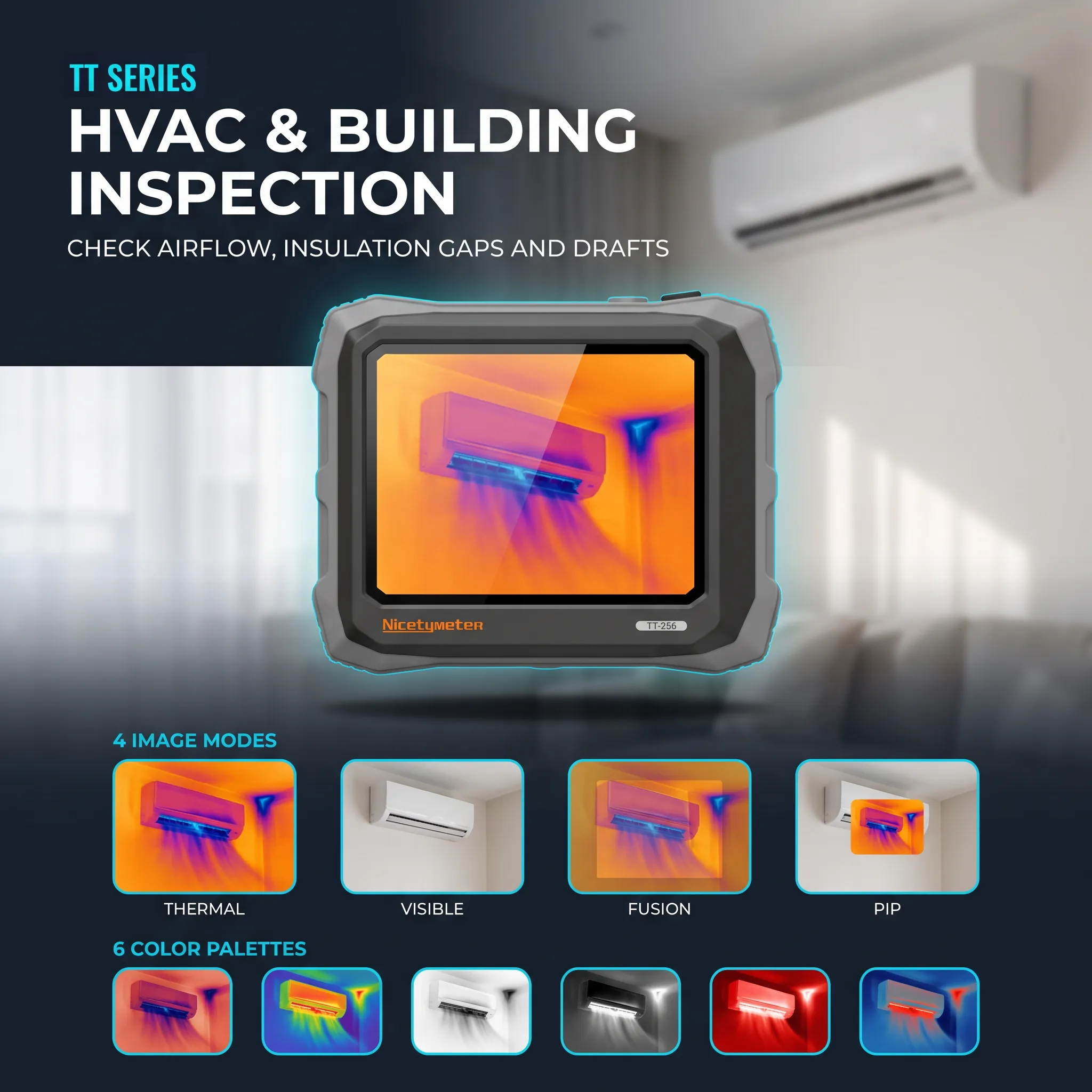
- Duct leakage and poor distribution. A run that is losing air or dumping it in the wrong place shows a clear thermal signature, especially at joints and boots.
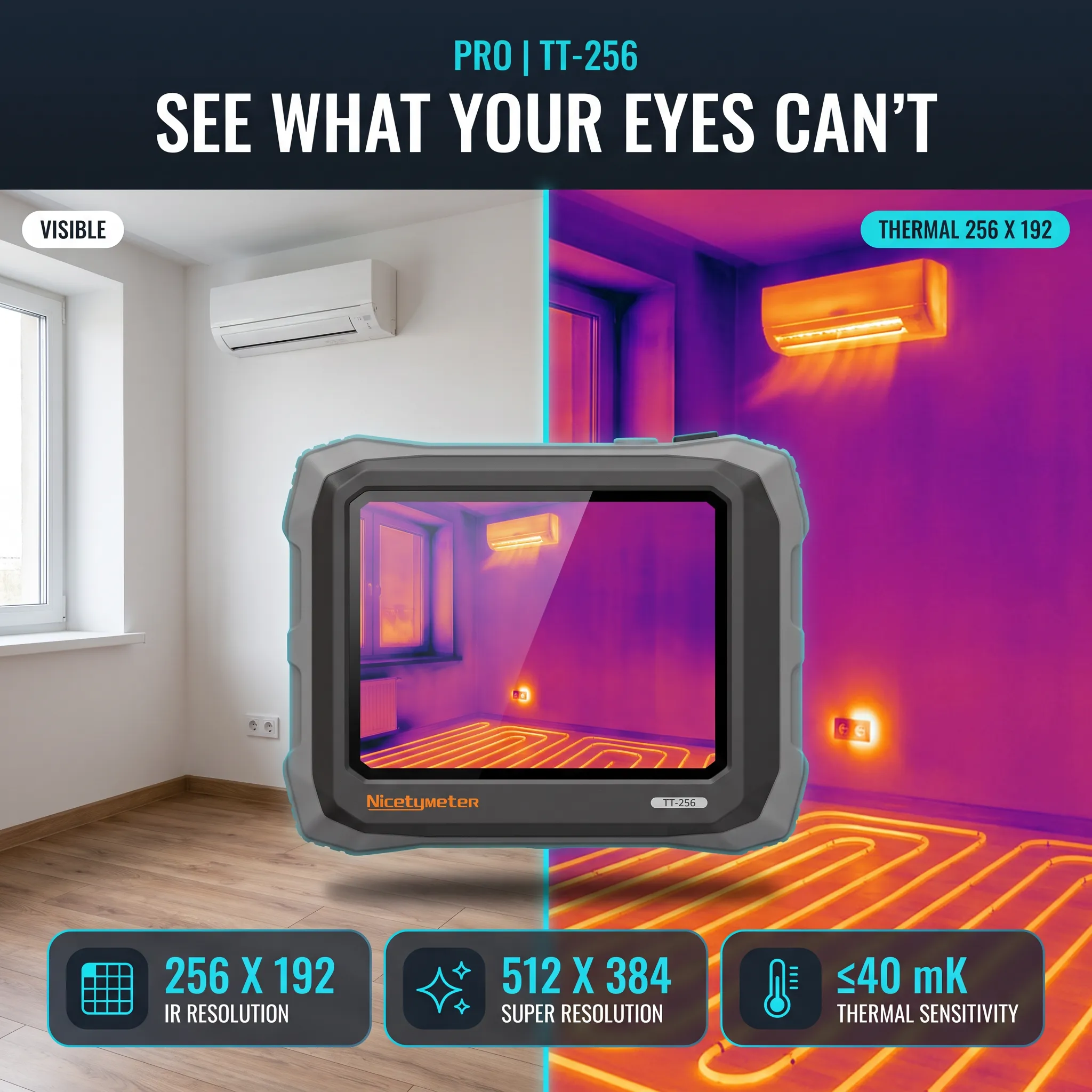
- Underfloor heating loops. The warm lines map the pipe route directly — but only while the system is running and has been for long enough to stabilise.
- Electrical hot spots. Effective only under load. A de-energised panel tells you nothing, and a lightly loaded one can hide a marginal joint.
What it cannot do
- Pinpoint a pipe. It shows you a line of warmth, not the pipe's depth or its exact centreline.
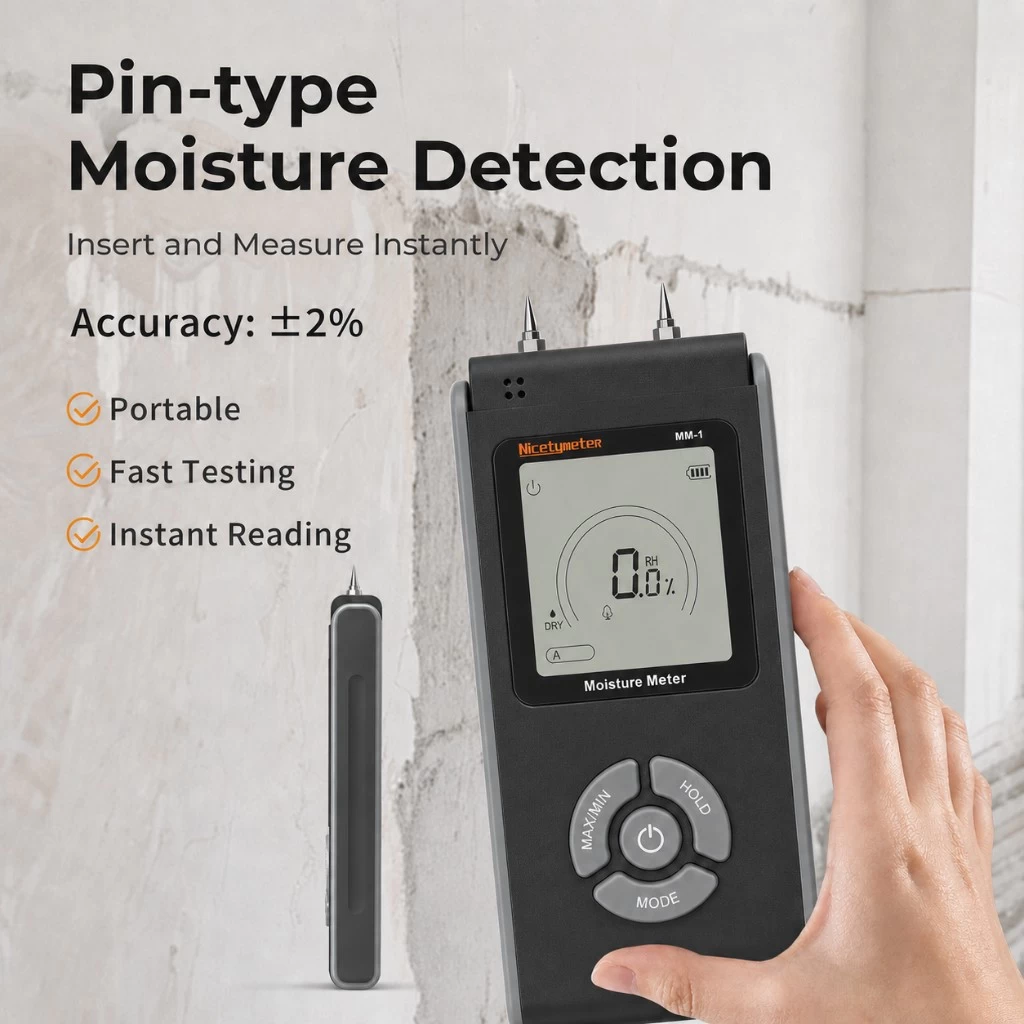
- Give you a moisture percentage. There is no number. You need a pin-type moisture meter for that.
- See through glass, foil-faced board or a metal panel. All opaque at these wavelengths.
- Replace a pressure test or a structural survey. A thermal scan is a screening tool, not a diagnosis.
Four things that will make you read it wrong
Reflections
Shiny metal, glazed tile and glass behave like mirrors in the thermal band. A cold rectangle on a stainless splashback is very often the reflection of a person standing in the room, not a defect. Move two steps sideways and see whether the anomaly moves with you.
Emissivity
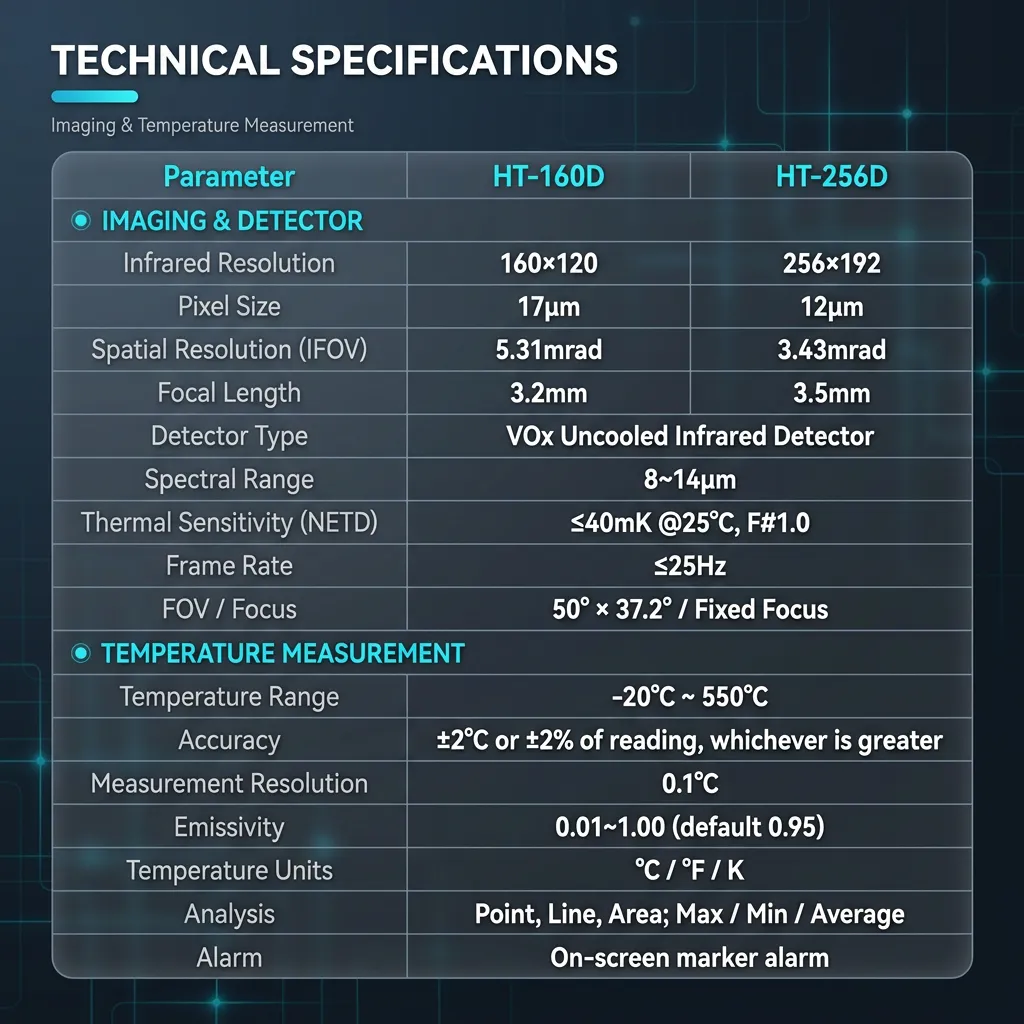
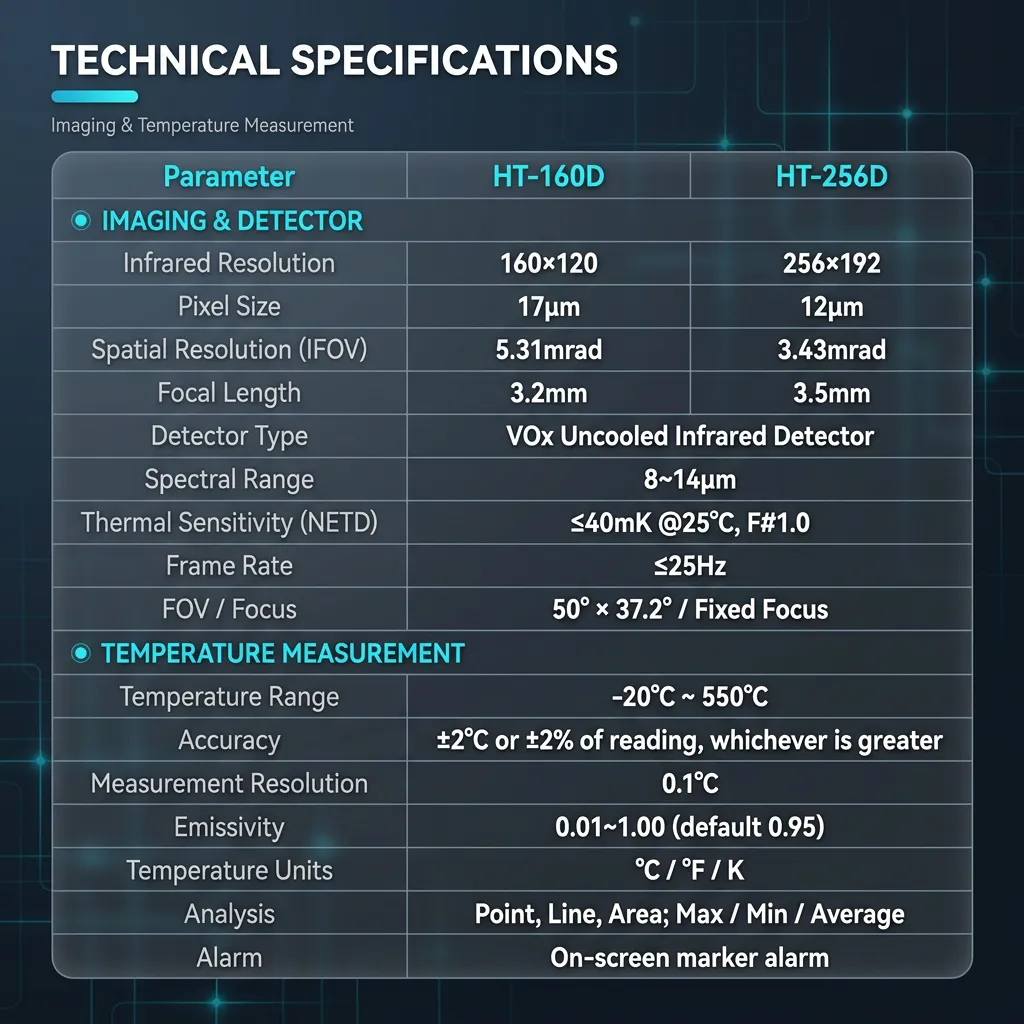
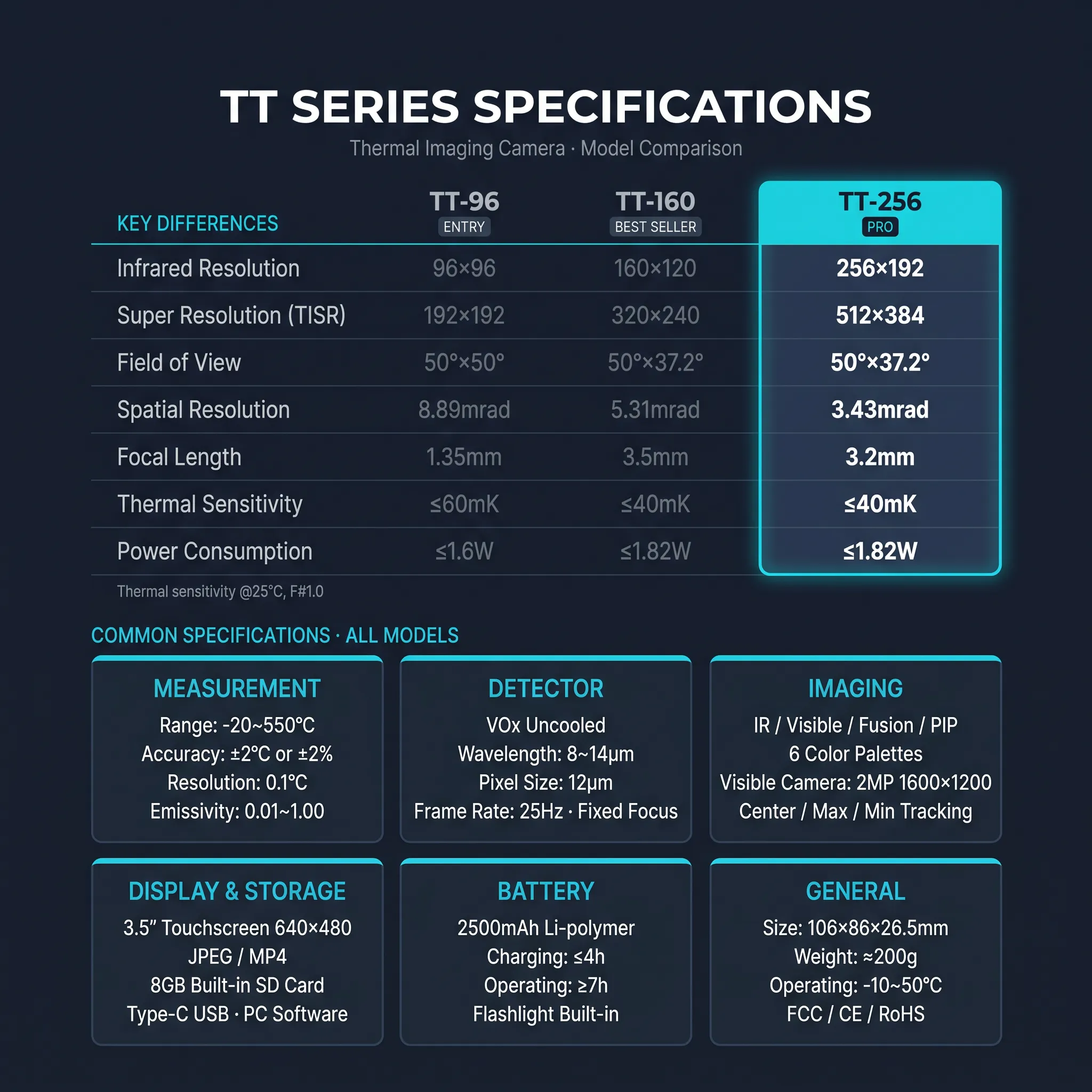
Polished metal emits very little and reflects a lot, so its apparent temperature is wrong unless emissivity is set correctly. Every camera in this range lets you adjust from 0.01 to 1.00 with a built-in reference table — bare aluminium sits near 0.05, oxidised surfaces and most building materials sit above 0.85. When in doubt, put a piece of matte tape on the target and measure the tape.
Solar gain
An exterior wall that caught sun two hours ago is still releasing stored heat. Scan it and you will find convincing patterns that mean nothing. Wait for the wall to come back into equilibrium, or work on a shaded elevation.
Air movement
Wind, a fan or an open door forces convection and flattens the very differences you are looking for. Indoor scans want still air; outdoor scans want a calm day.
The workflow that makes findings stand up
Scan, form a hypothesis, then confirm it with something that measures the thing directly. A camera gets you to the right square metre; it does not close the case.
| What you see | What confirms it |
|---|---|
| Cold patch on a ceiling or wall | Pin-type moisture meter reading against a dry reference area |
| Cold strip along a stud bay | Compare with adjacent bays under the same conditions; check insulation from the other side if reachable |
| Draught signature at a joint | Blower door with smoke pencil |
| Warm line under a floor | Flow and return temperature at the manifold |
| Hot lug in a panel | Clamp meter under the same load, then re-torque or replace |
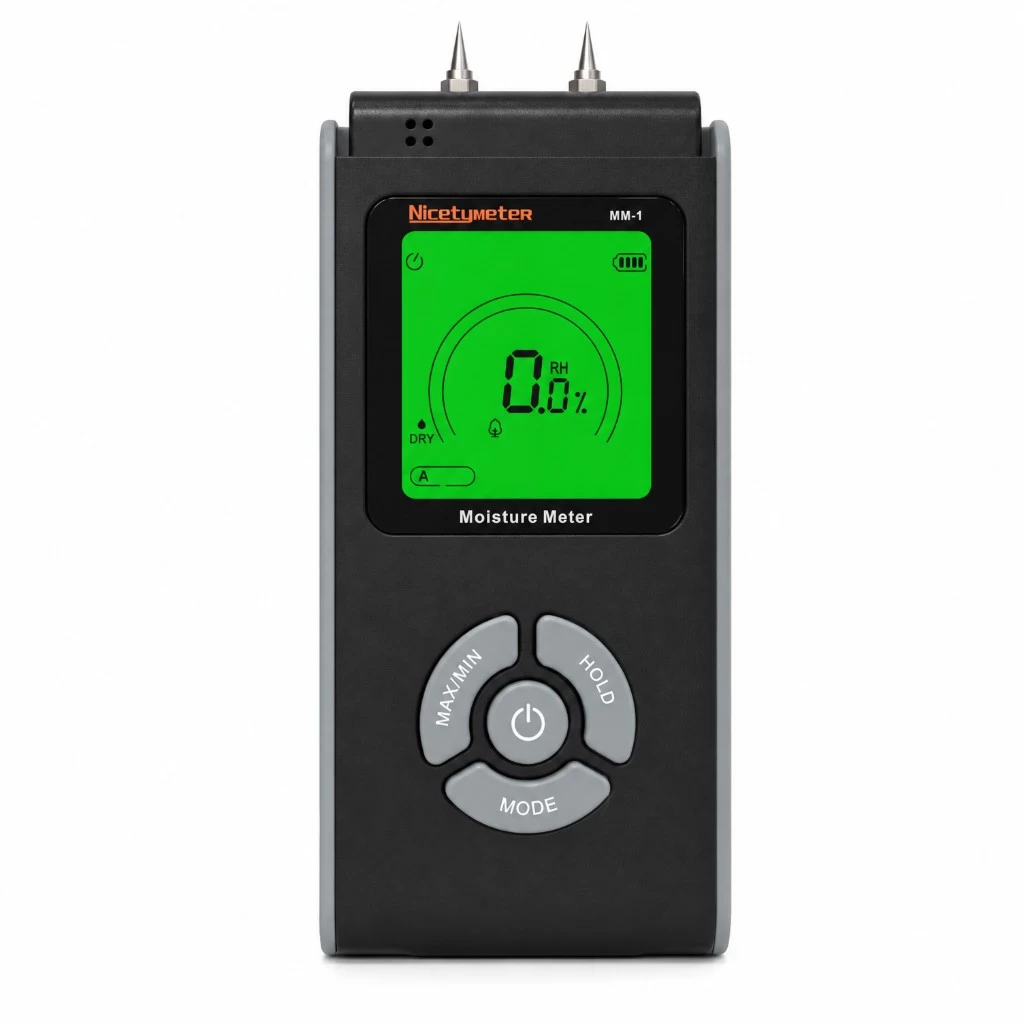
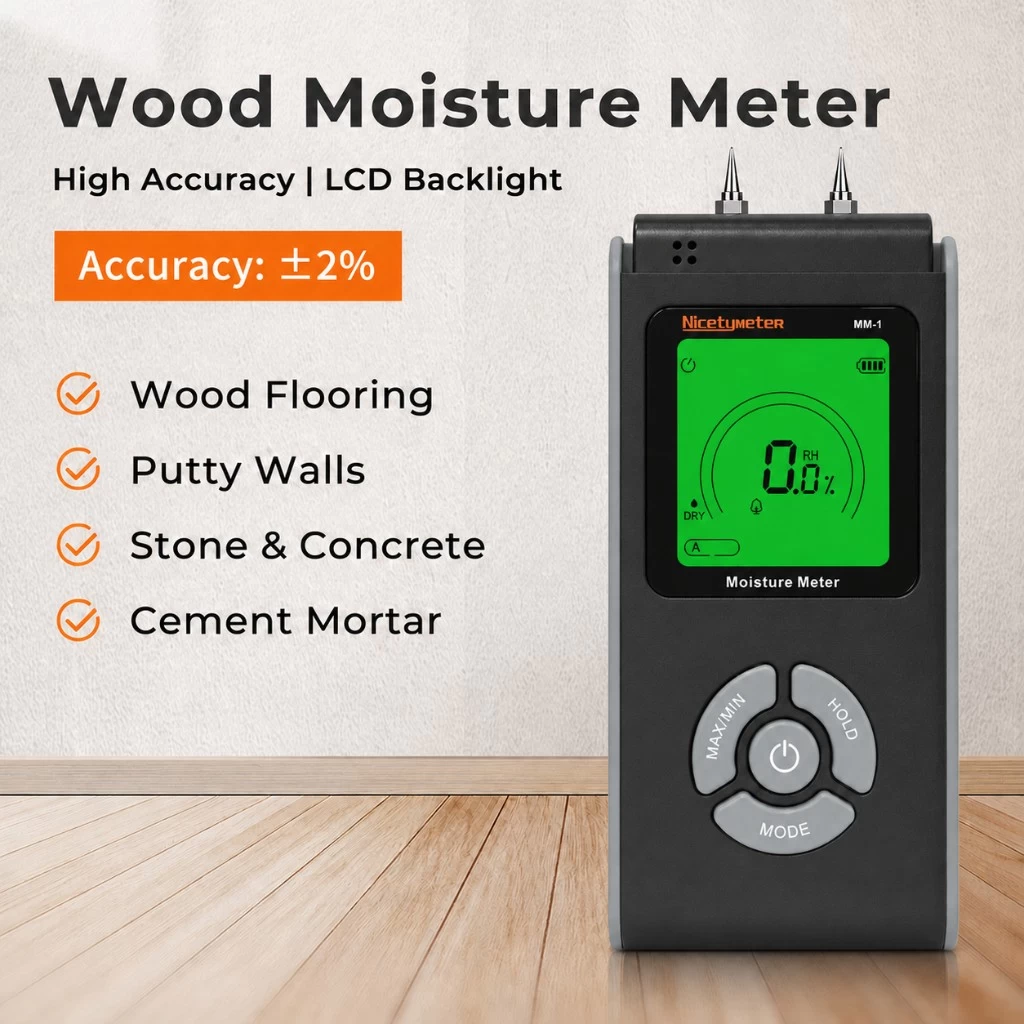
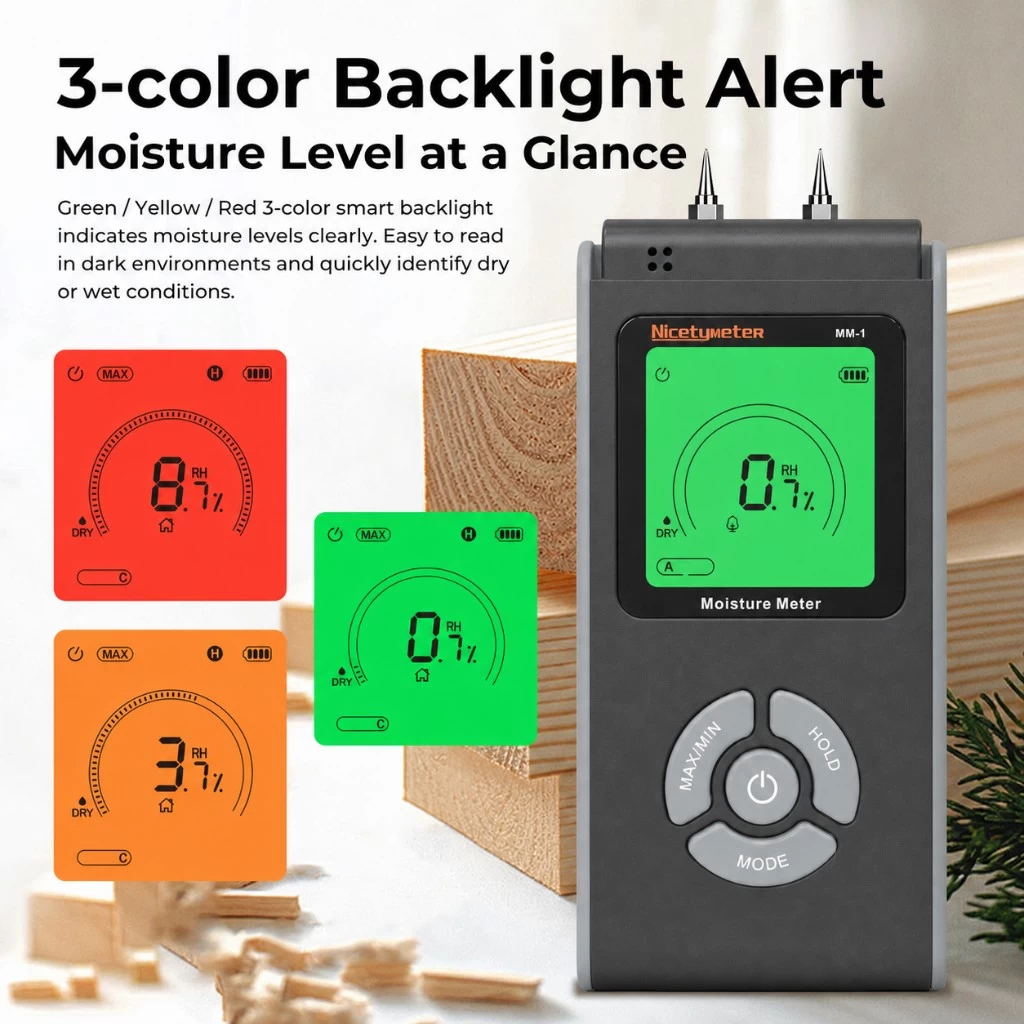
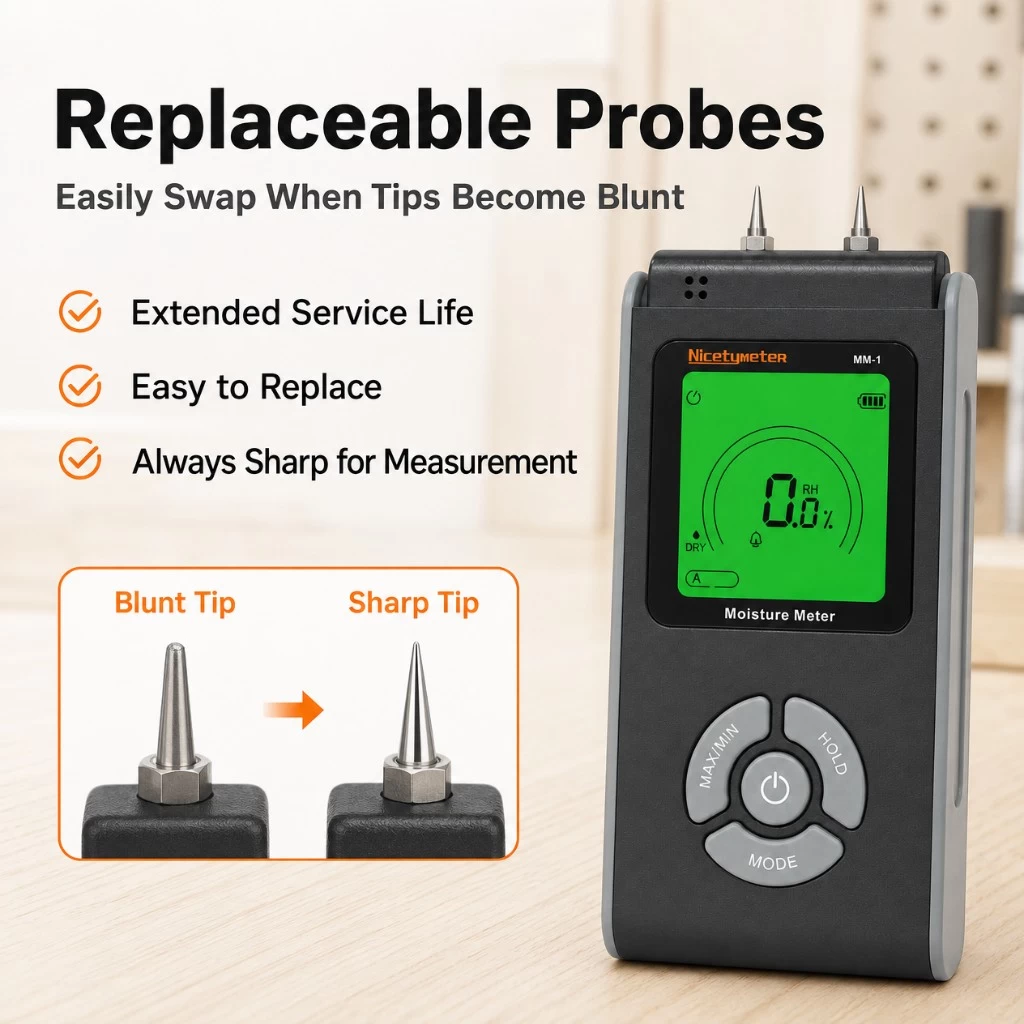
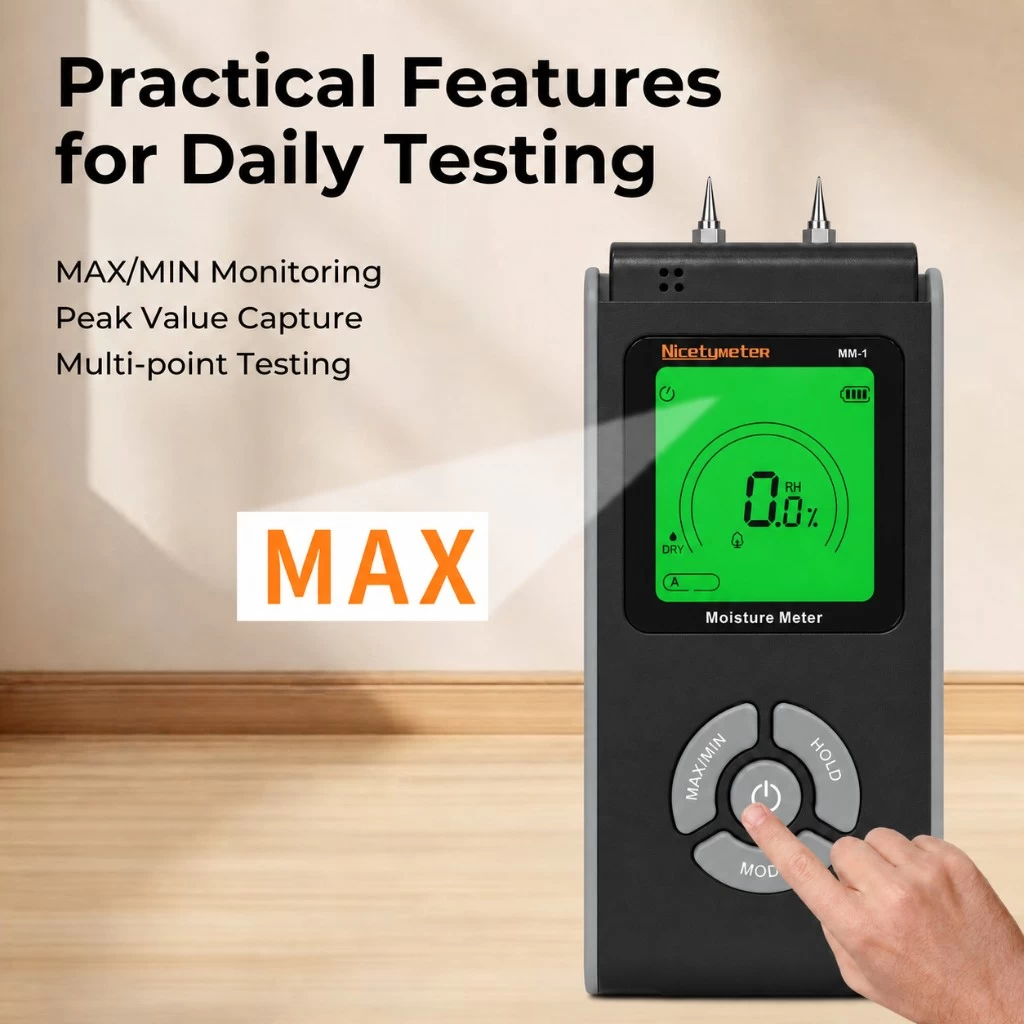
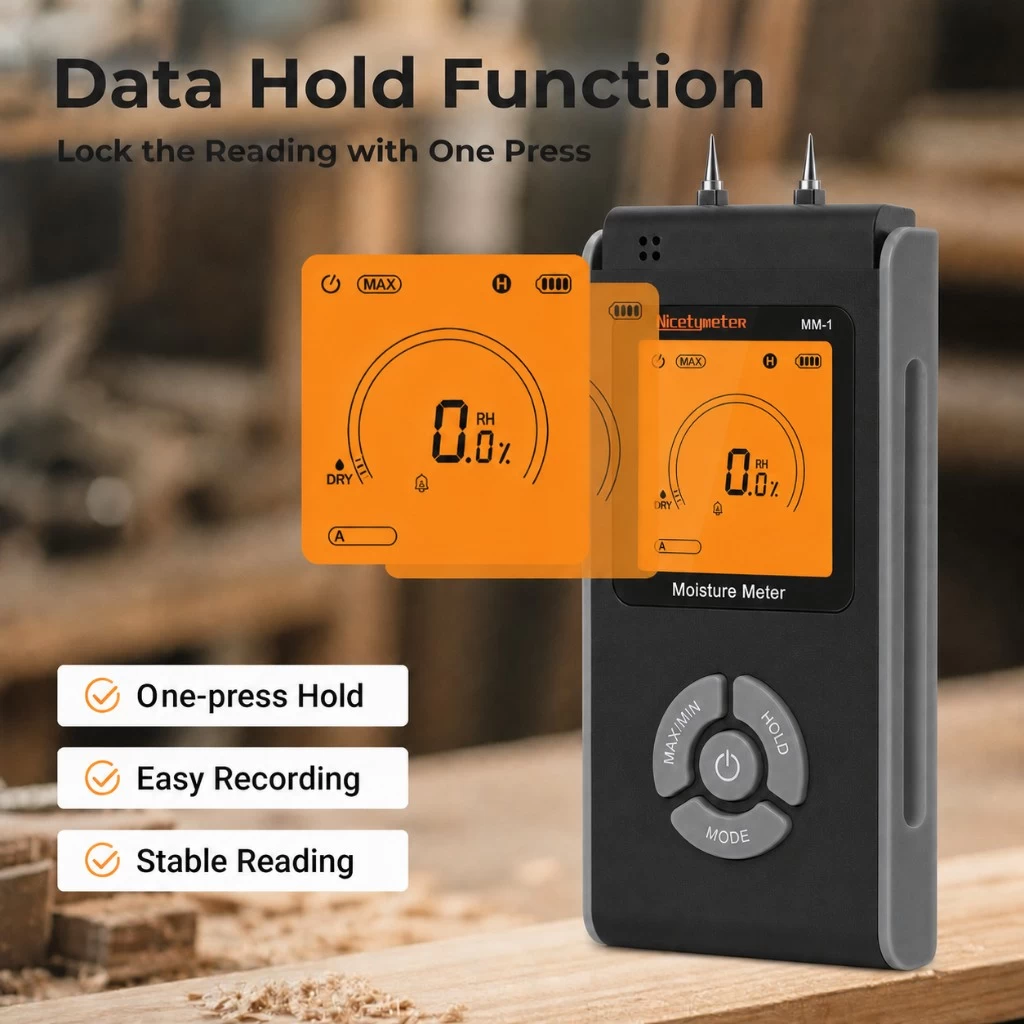
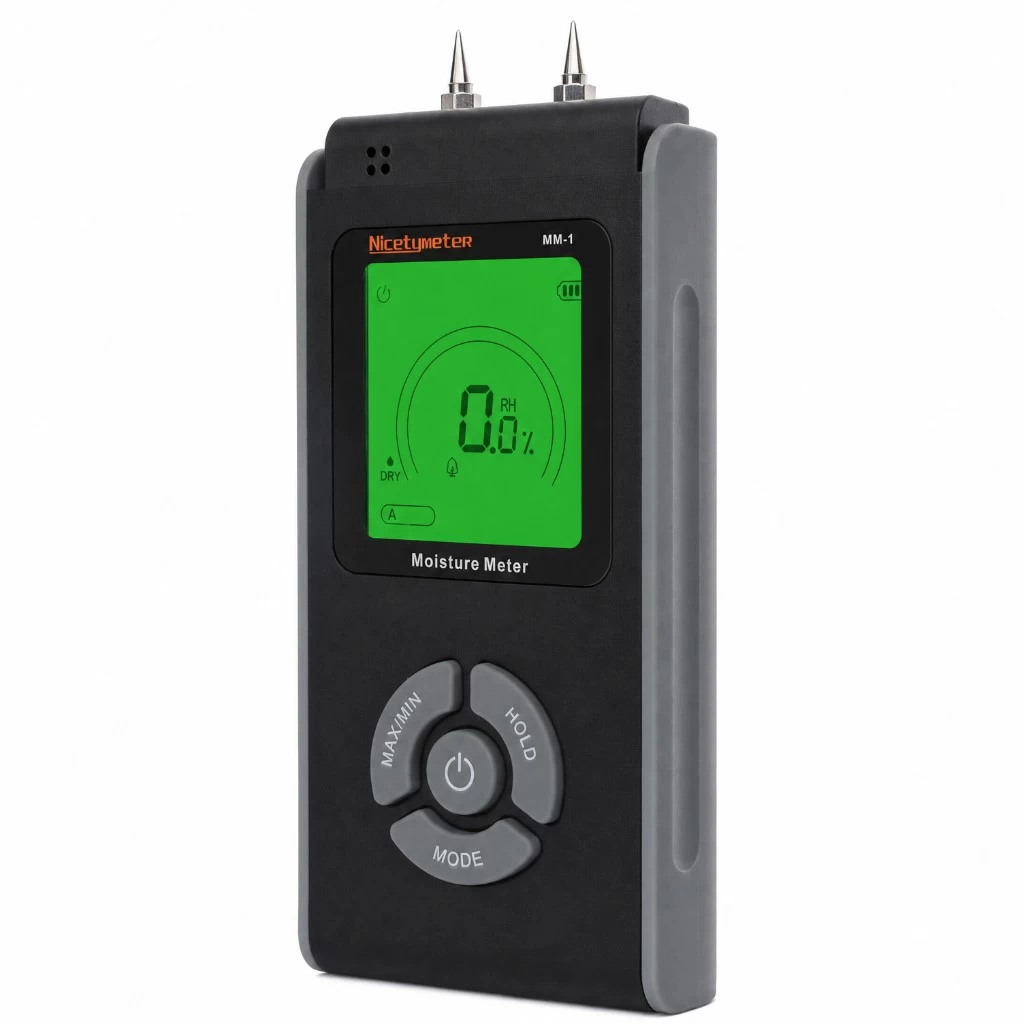
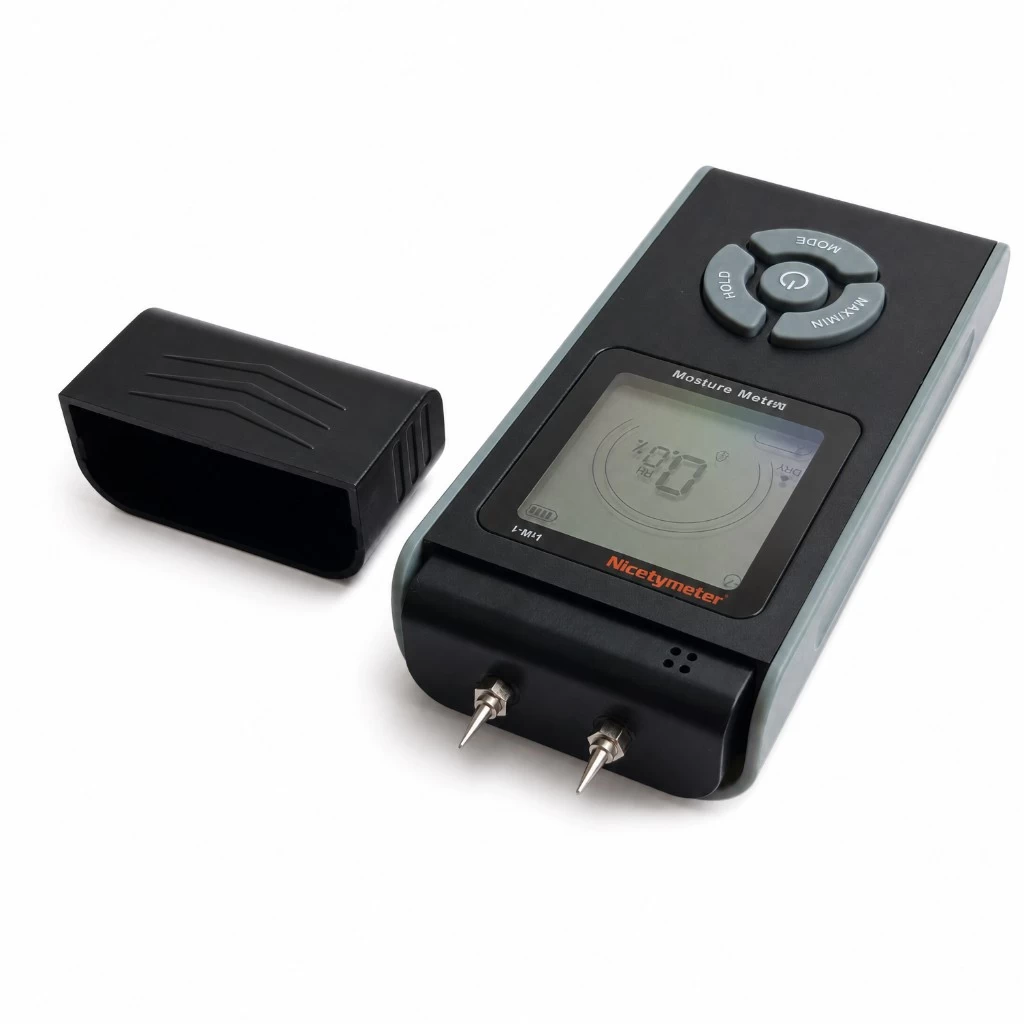
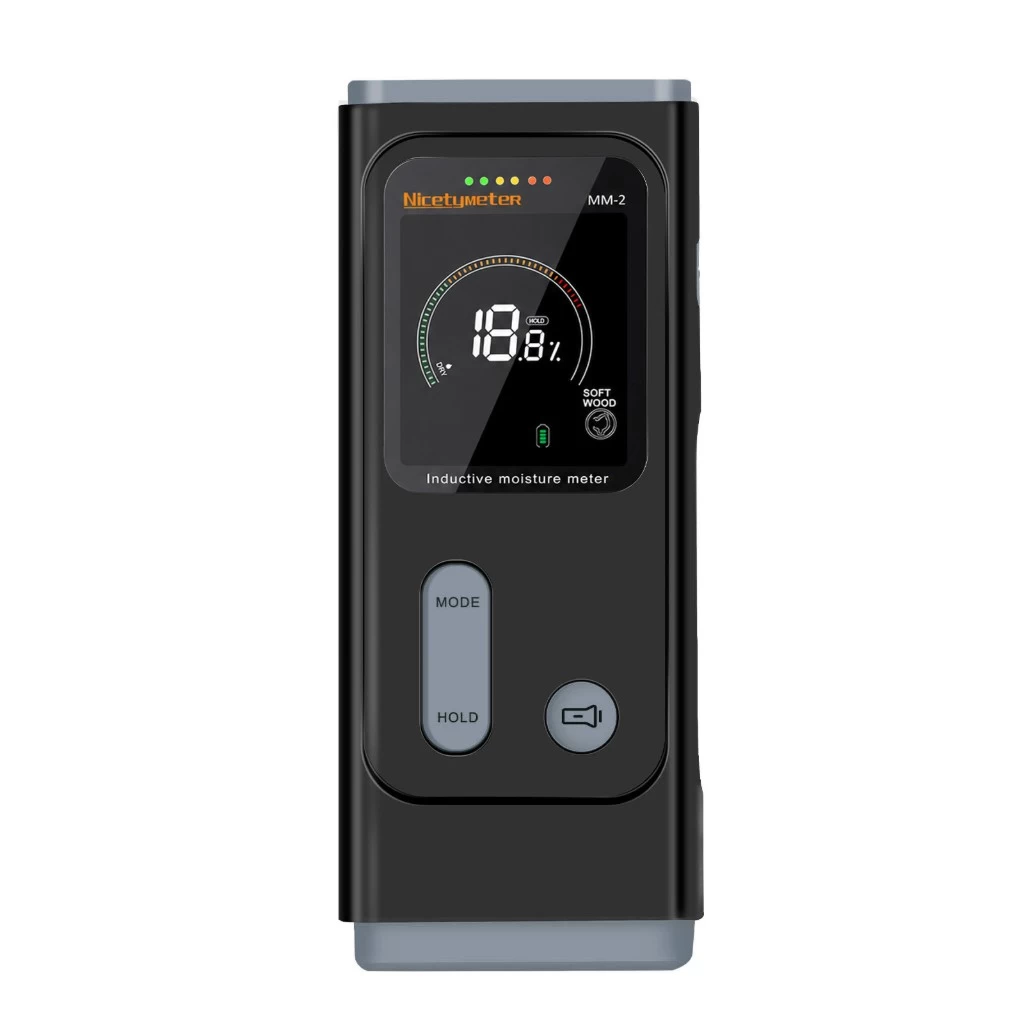
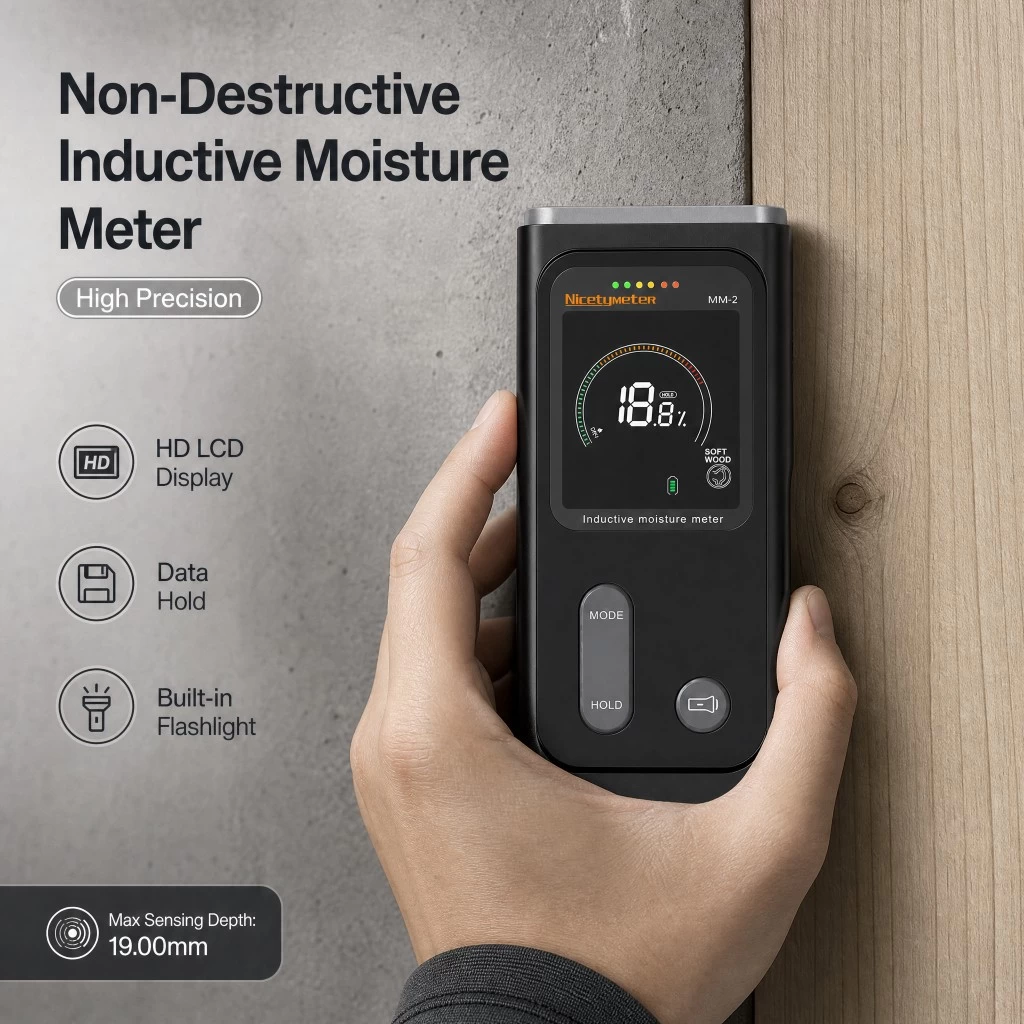
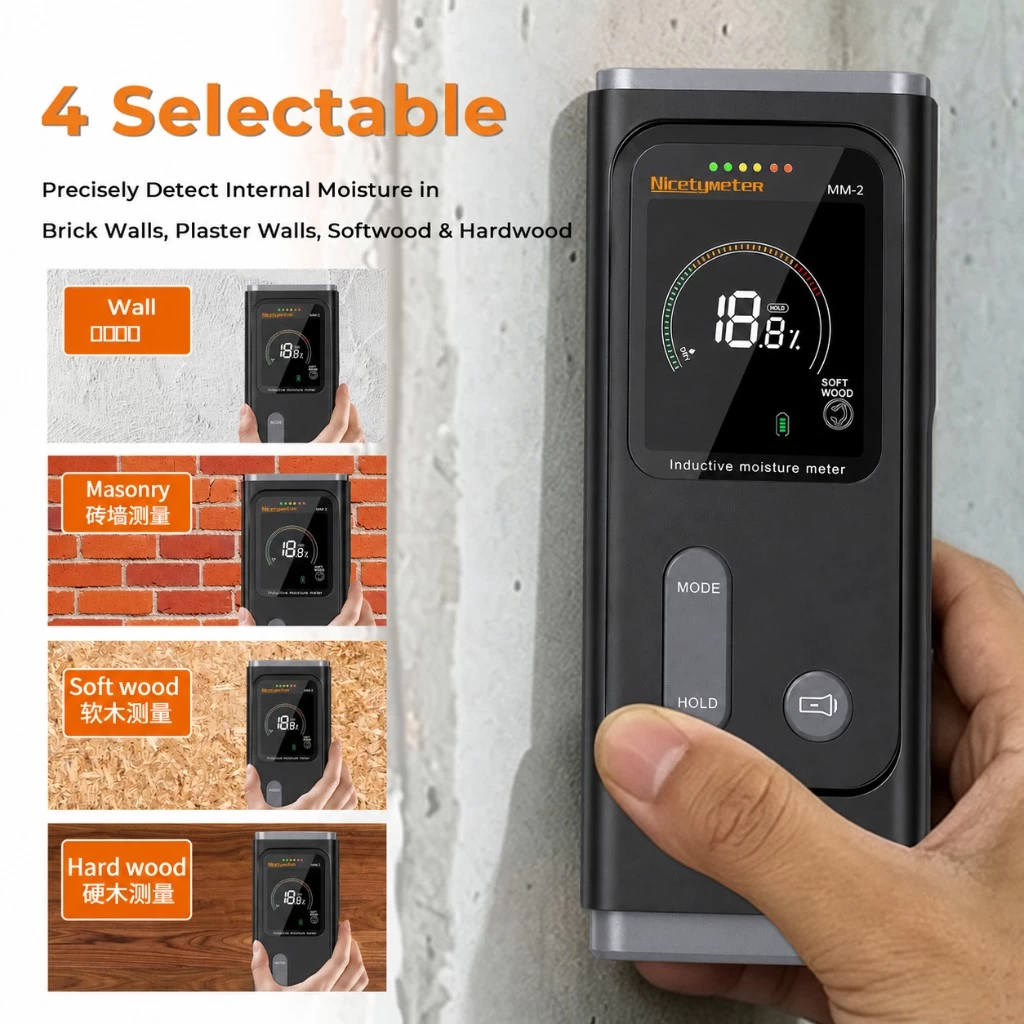
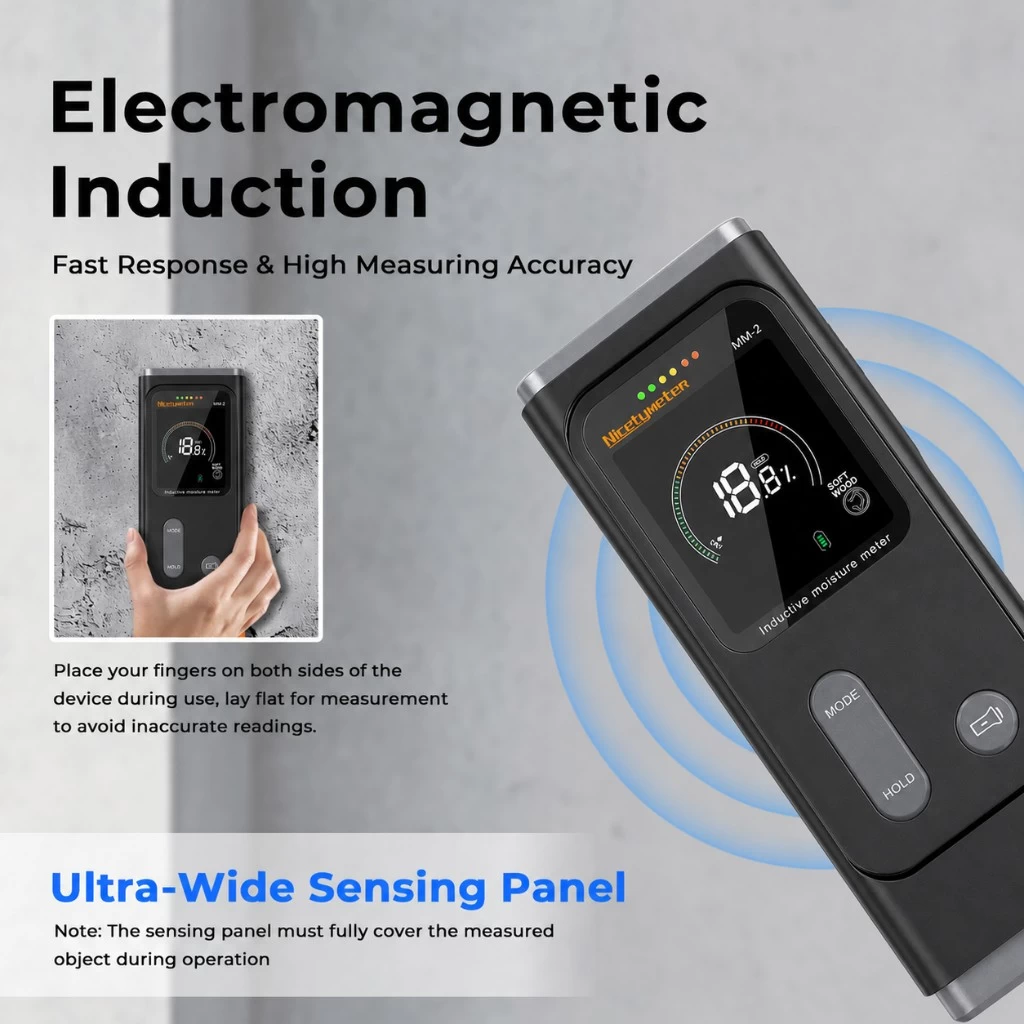
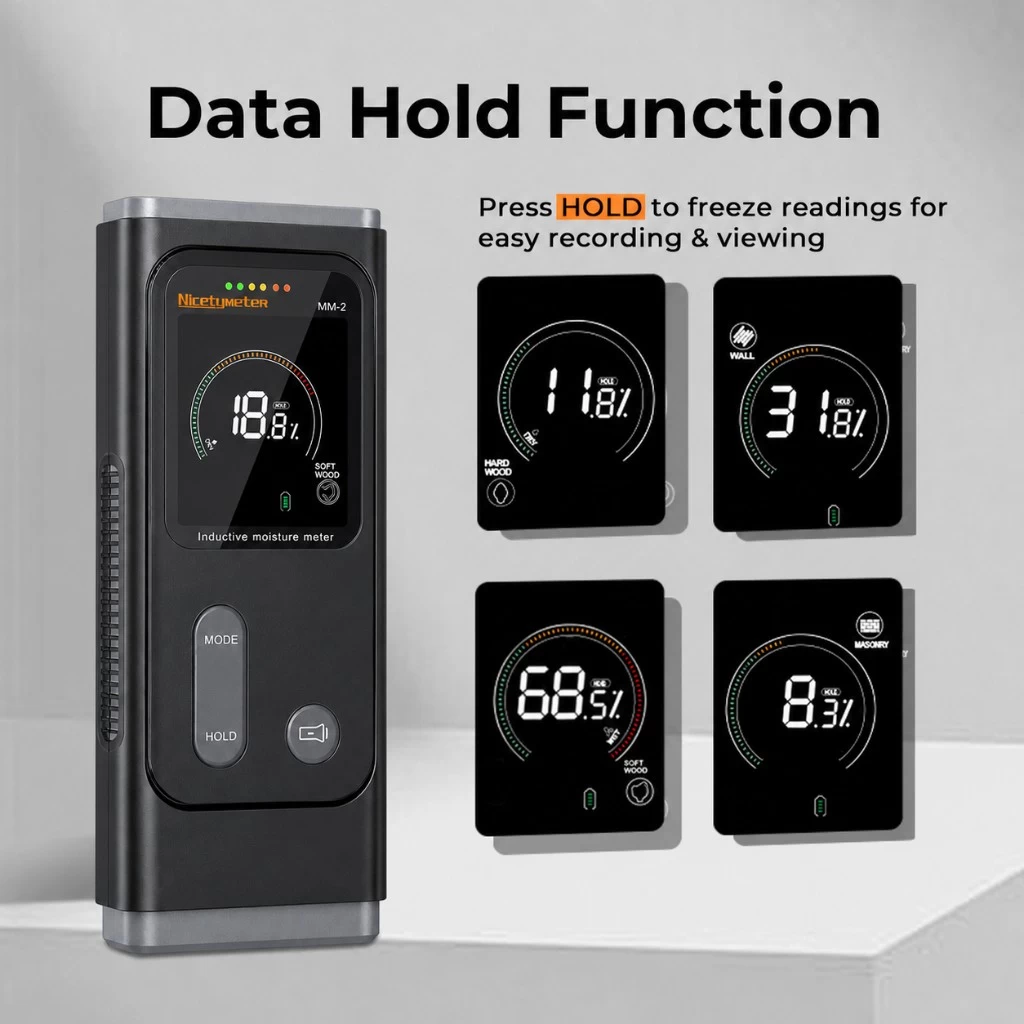
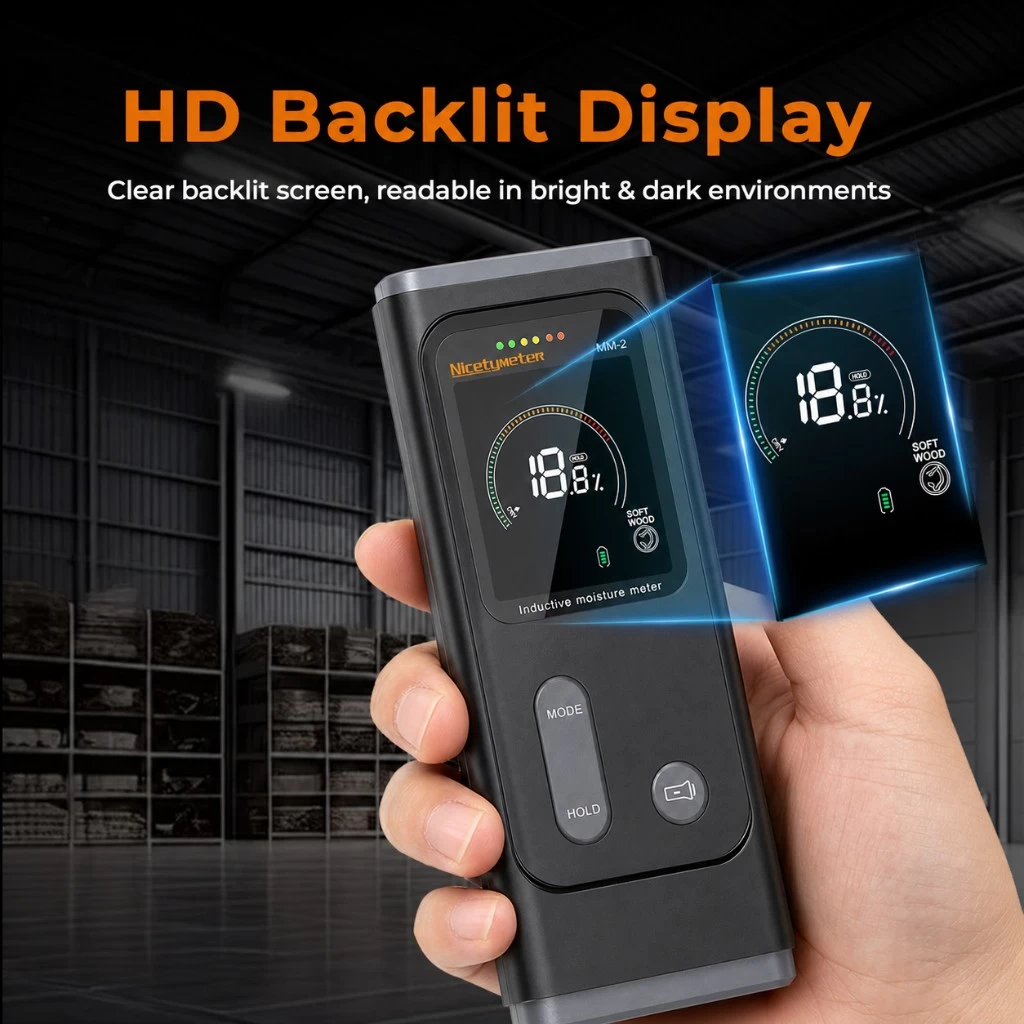
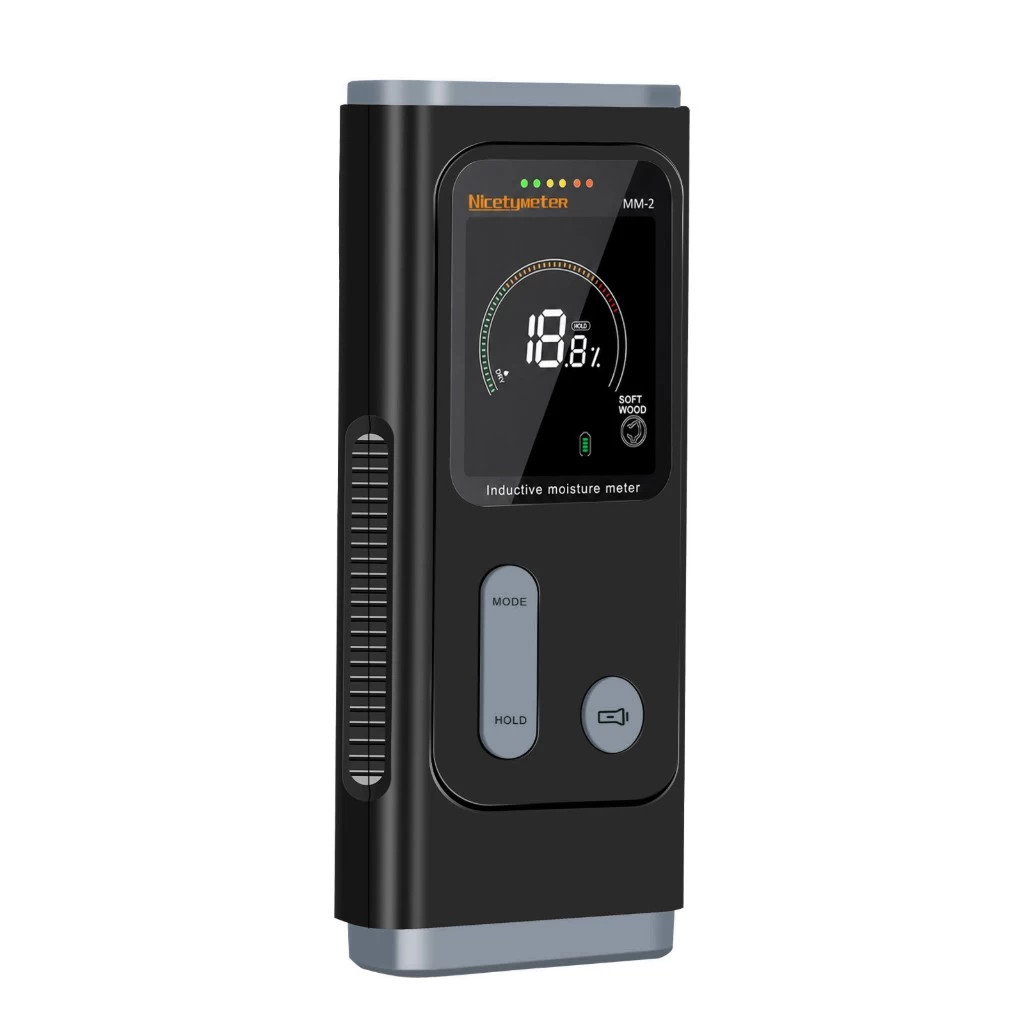
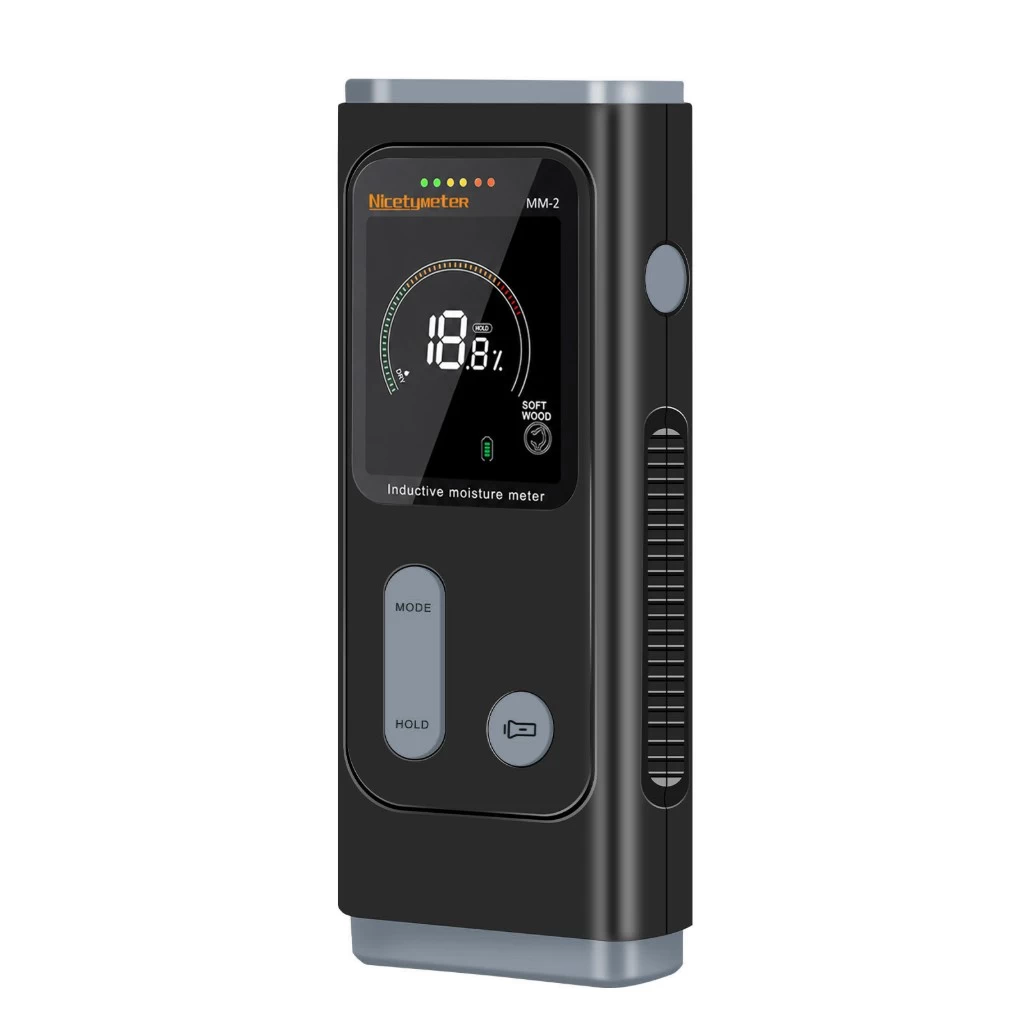
For building work this is why the camera and a moisture meter belong in the same bag. The MM-1 pin-type meter reads moisture content in timber, plasterboard and rendered surfaces where you need an actual figure; the MM-2 inductive meter covers finished surfaces you cannot puncture. One finds the area, the other produces the number.
What a defensible image contains
If the picture is going into a report, it needs four things or it is only an illustration: a visible-light shot of the same view for context, the thermal frame, the measured temperature difference rather than a single absolute number, and the conditions at the time — indoor and outdoor air temperature, and how long the system had been running. A cold spot with no ambient conditions attached cannot be defended six months later.
Which camera suits building work
| Model | IR resolution | Why it fits |
|---|---|---|
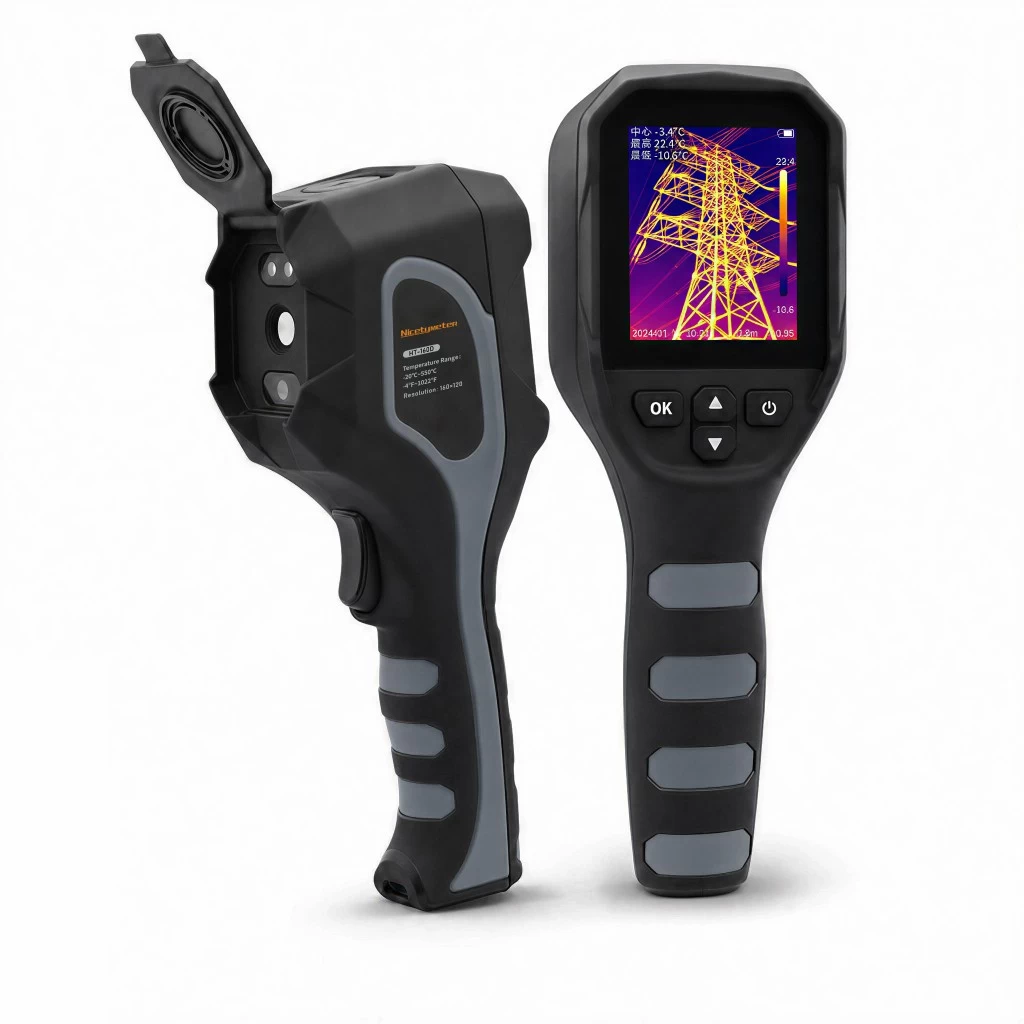
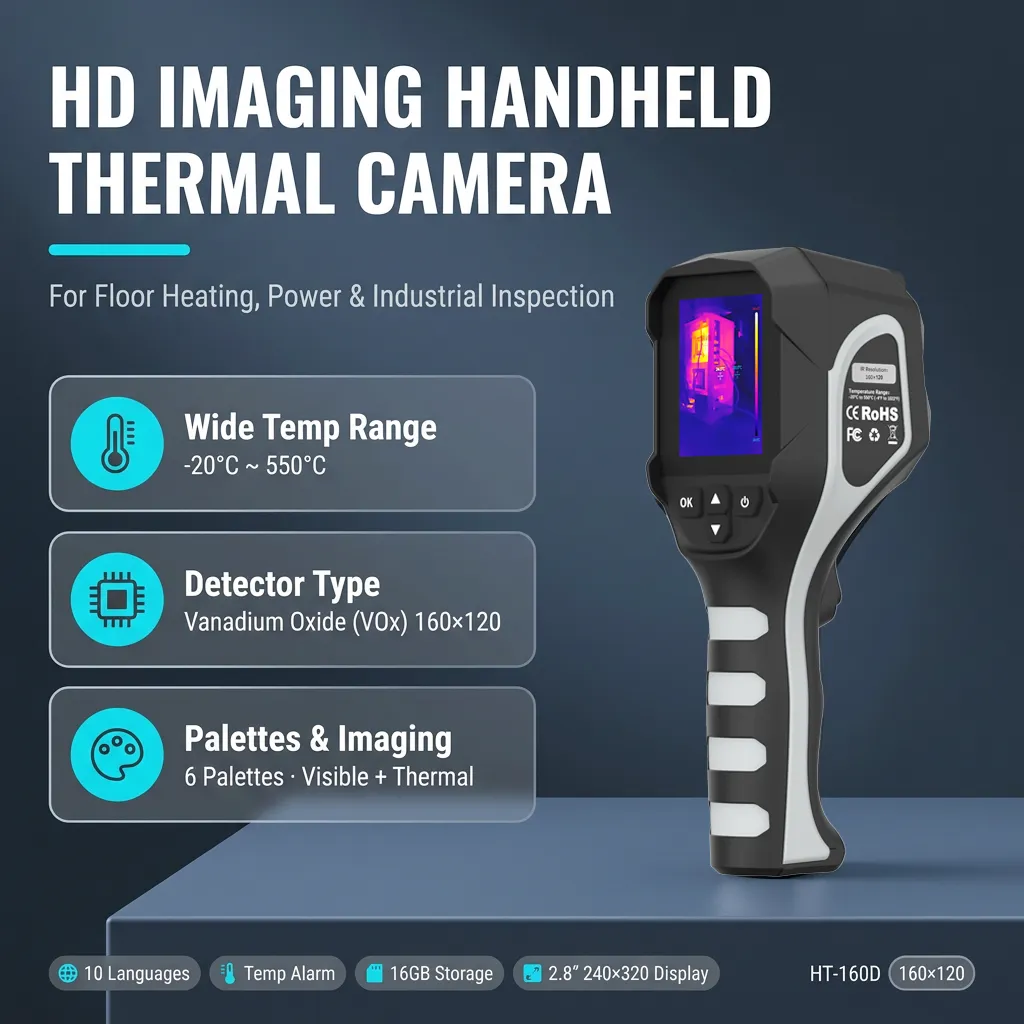
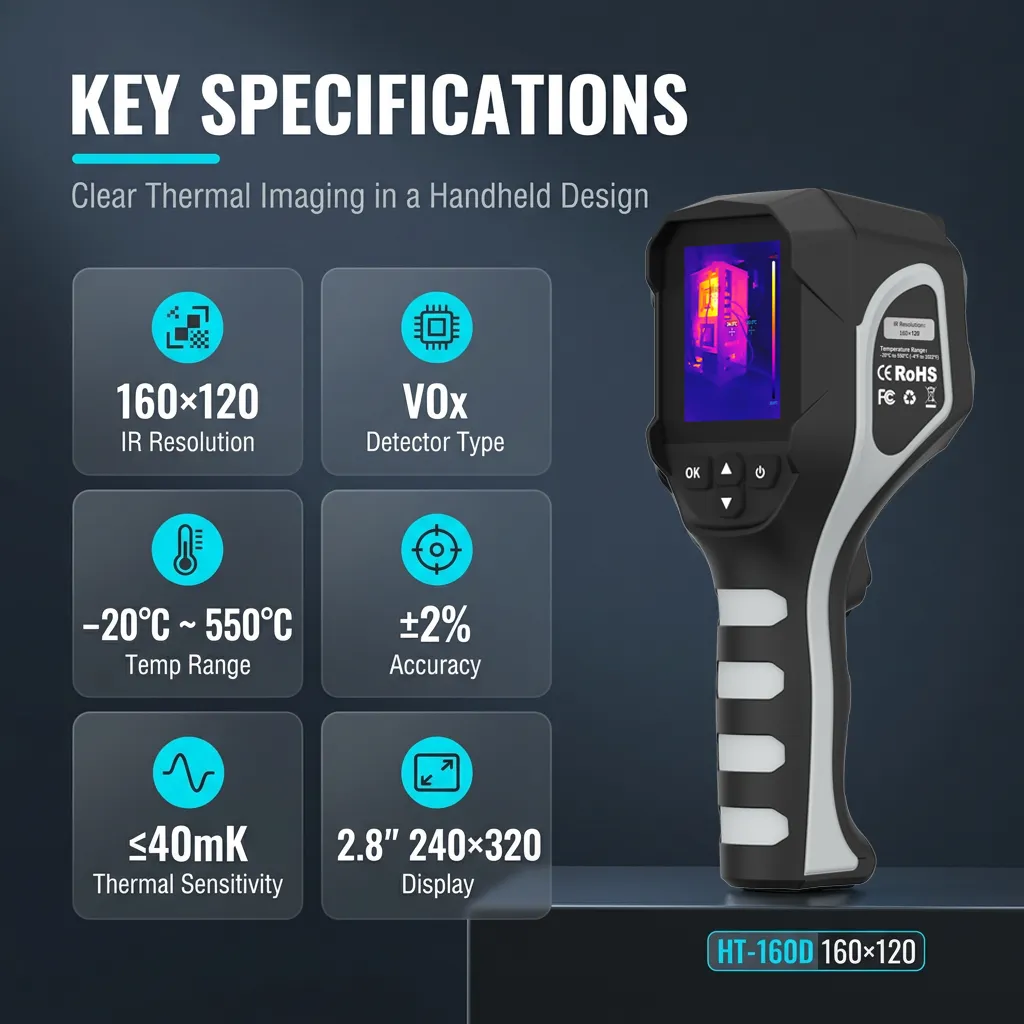
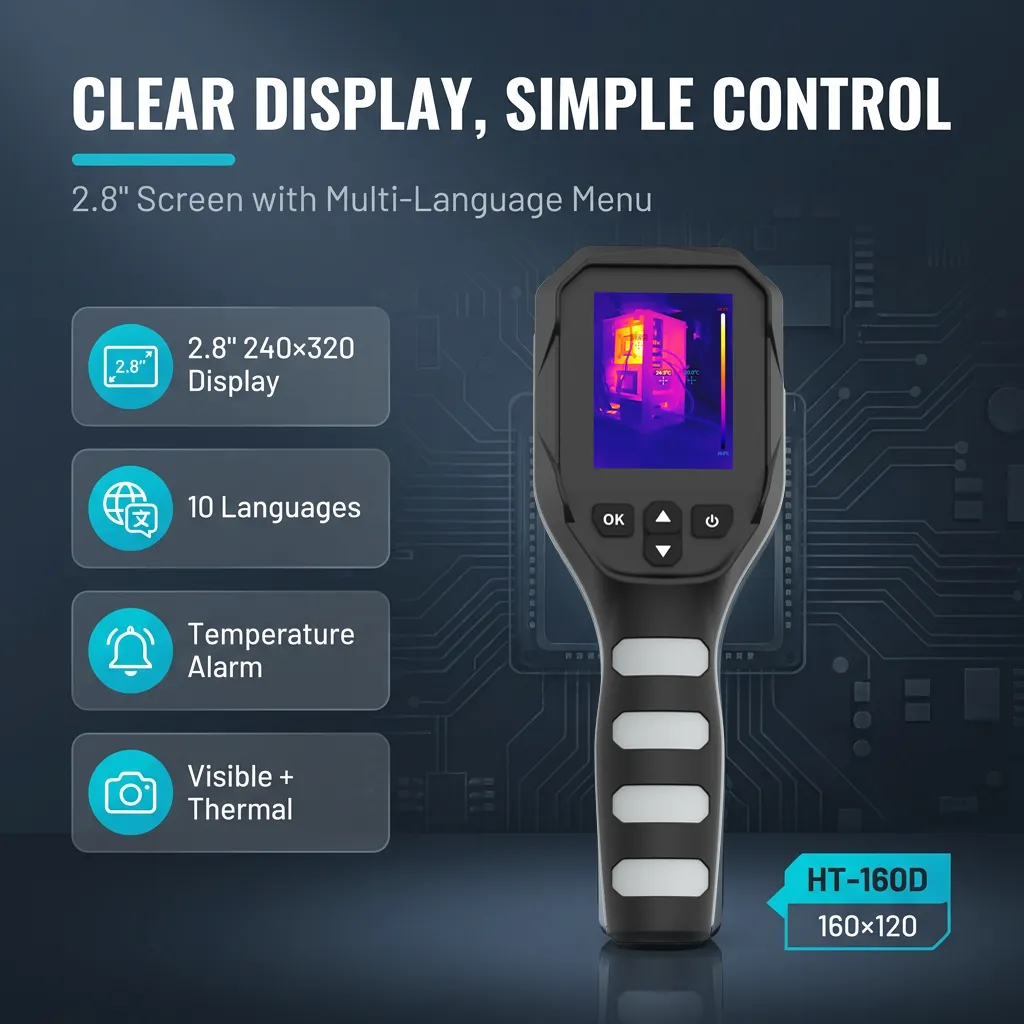
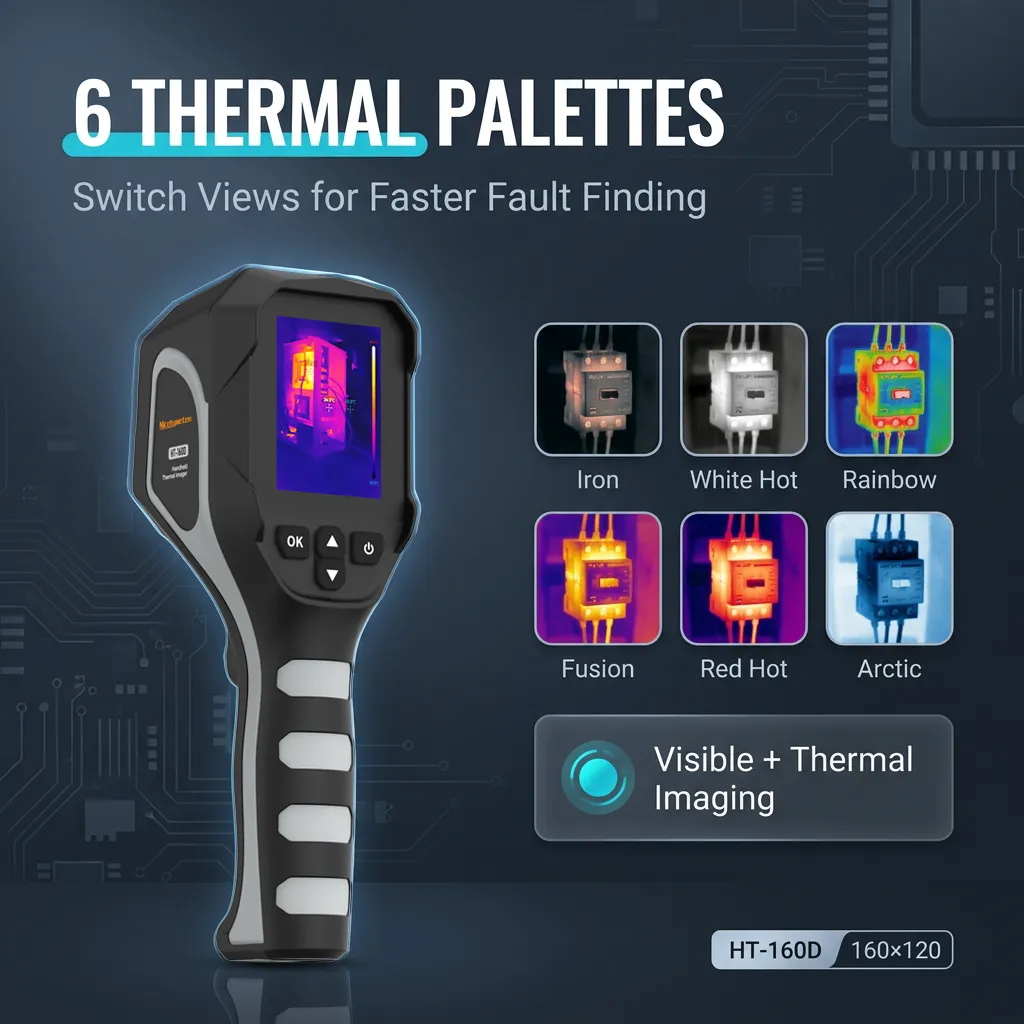
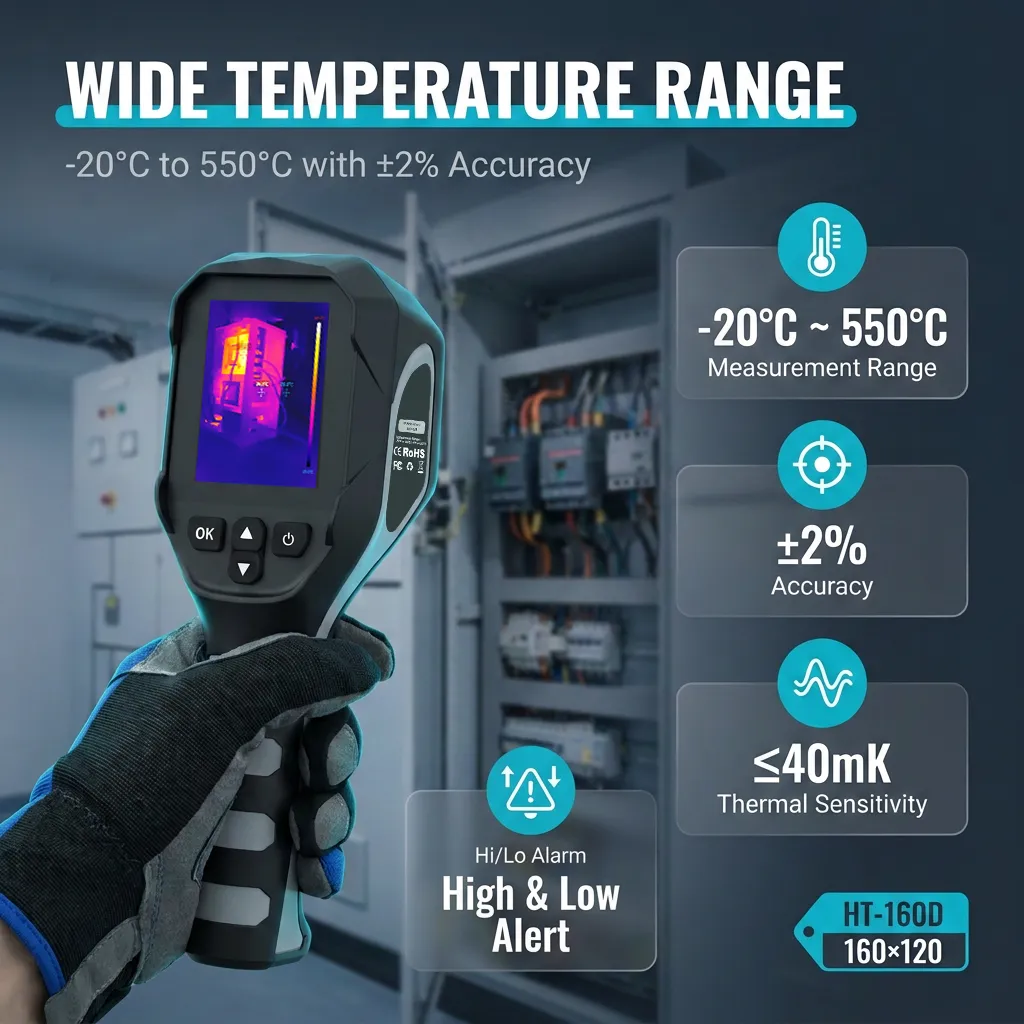
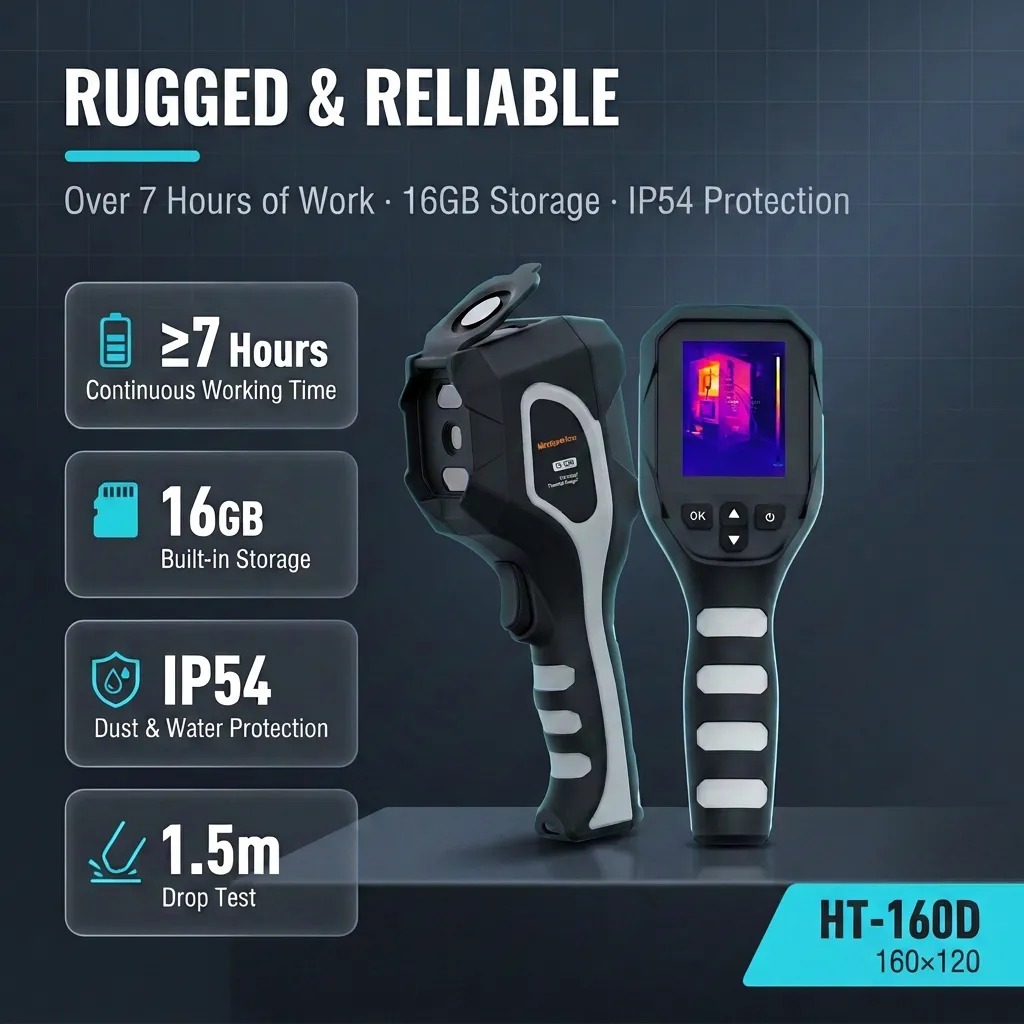
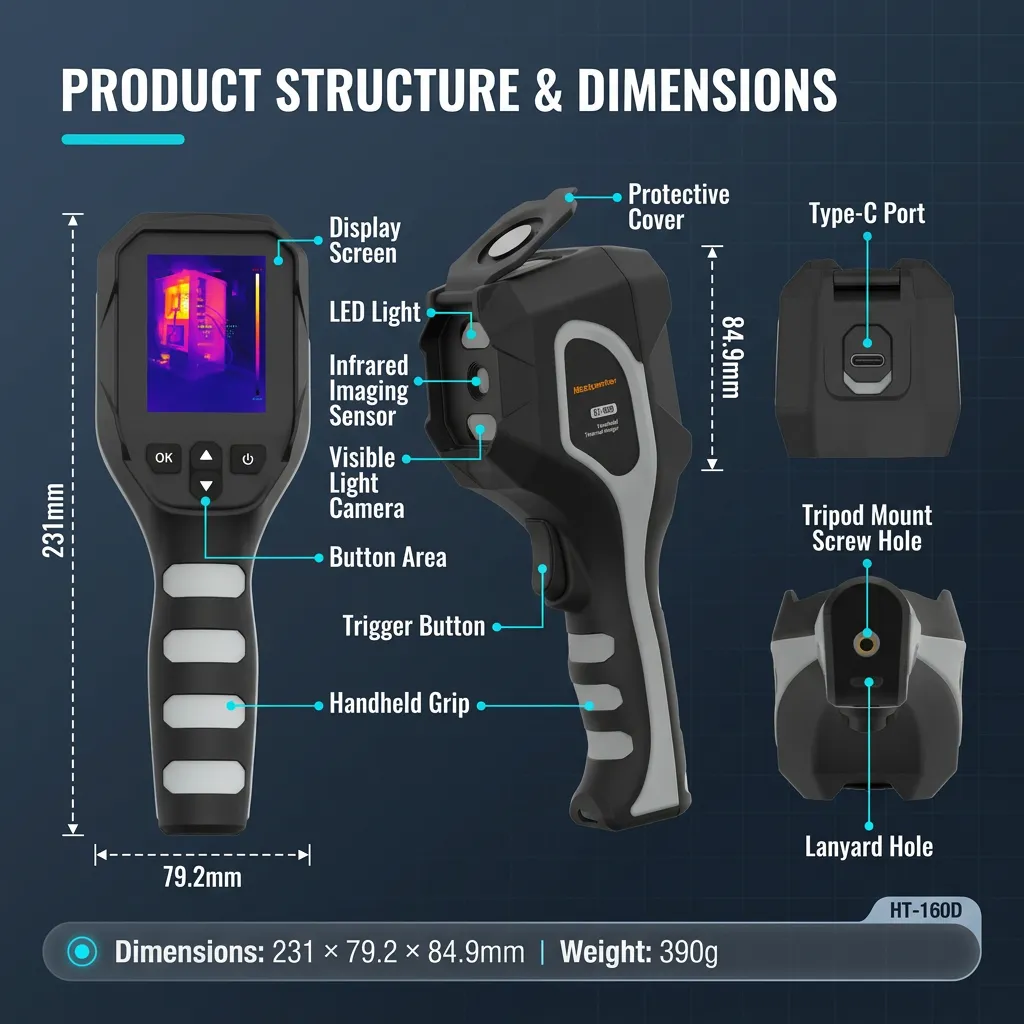
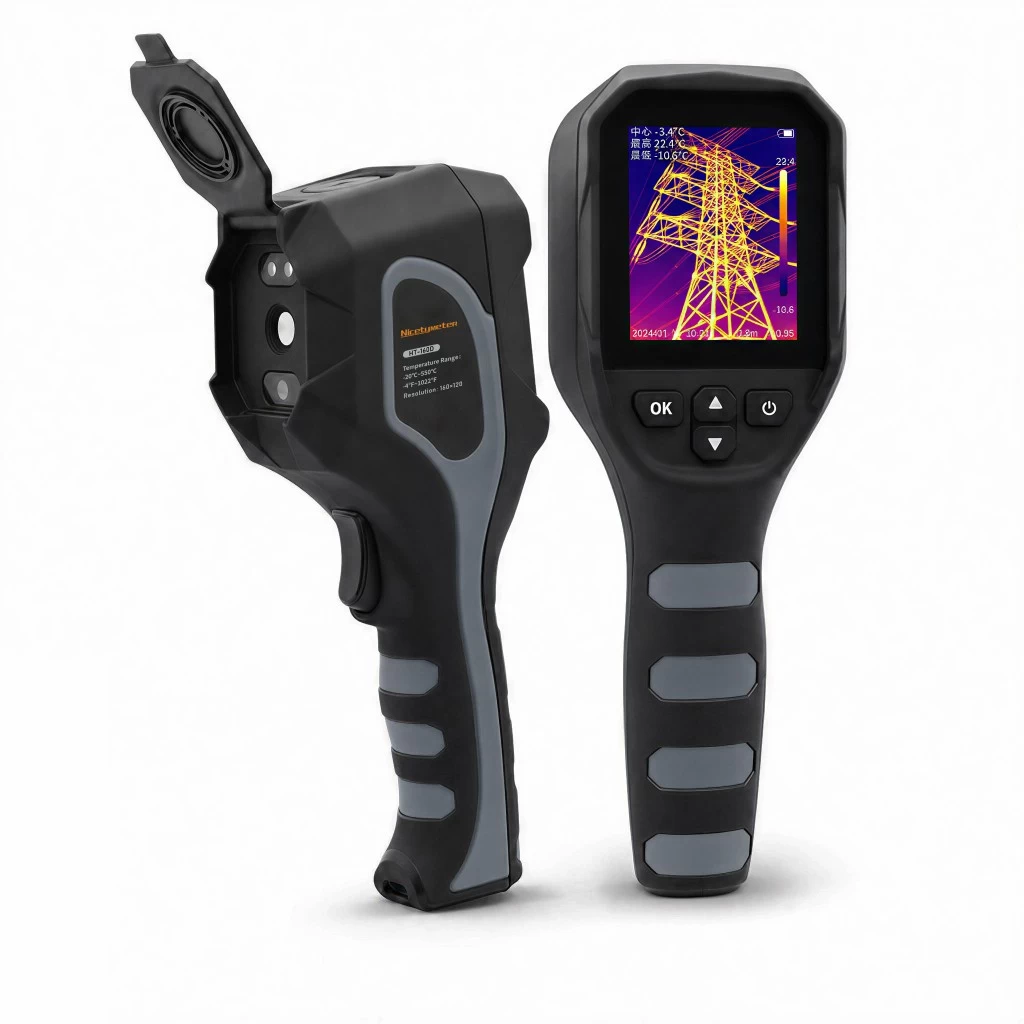
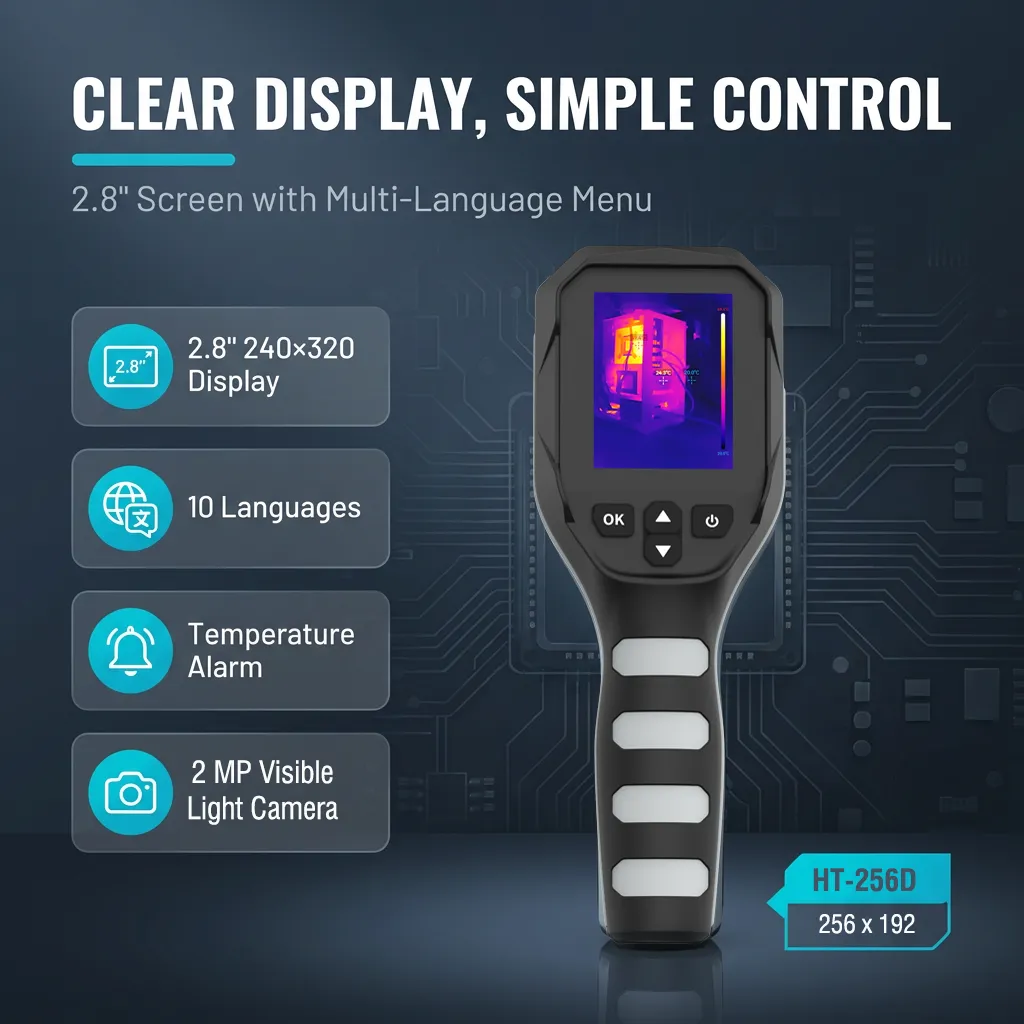
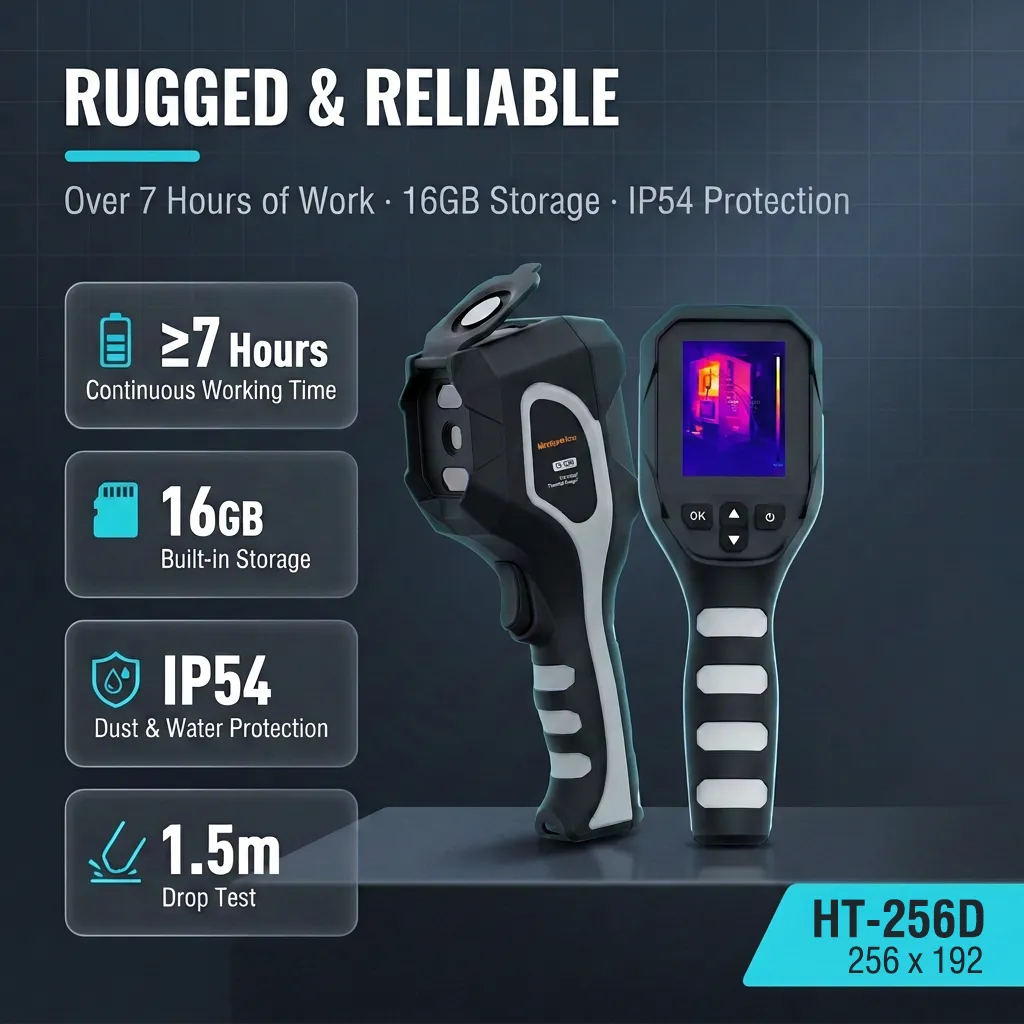
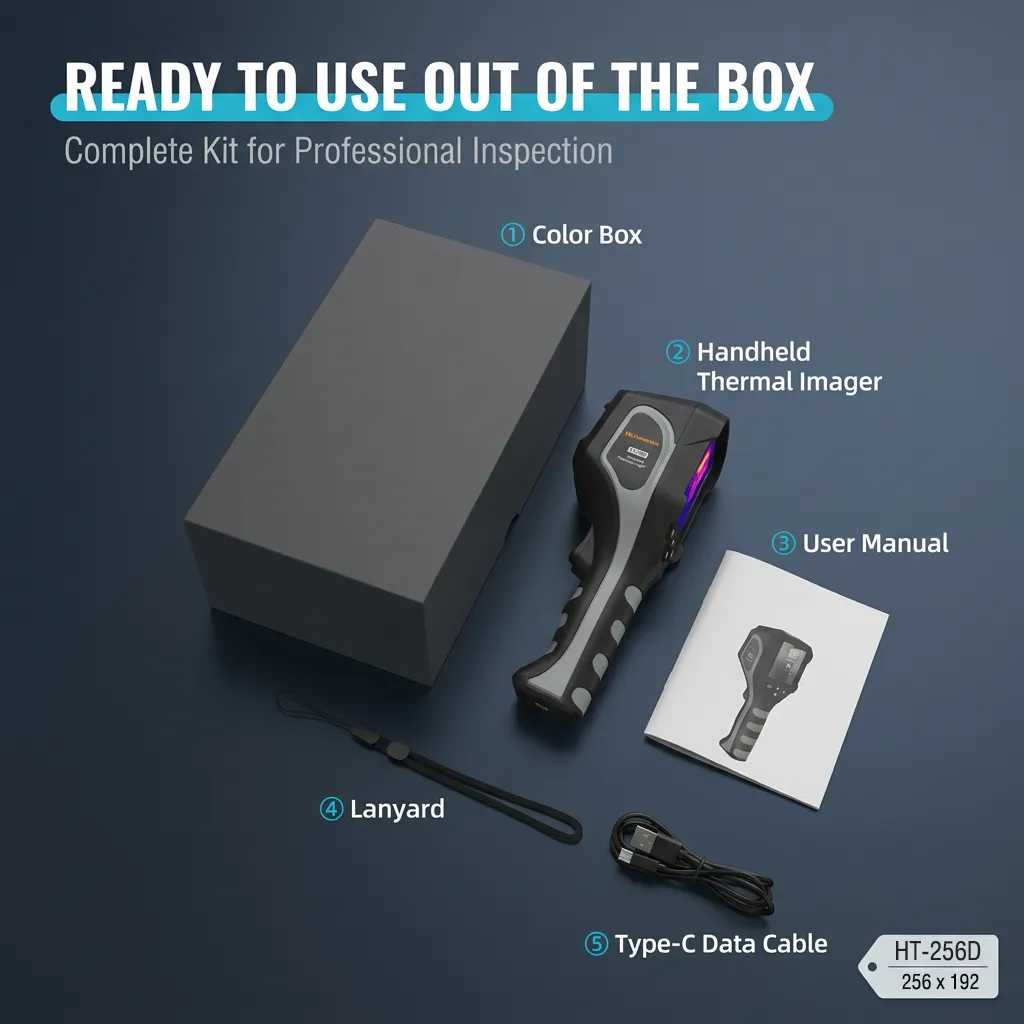
| HT-160D | 160×120 | 2 MP visible fusion for report images, IP54, 8 GB, about 9 hours per charge — enough for a full day of envelope work |
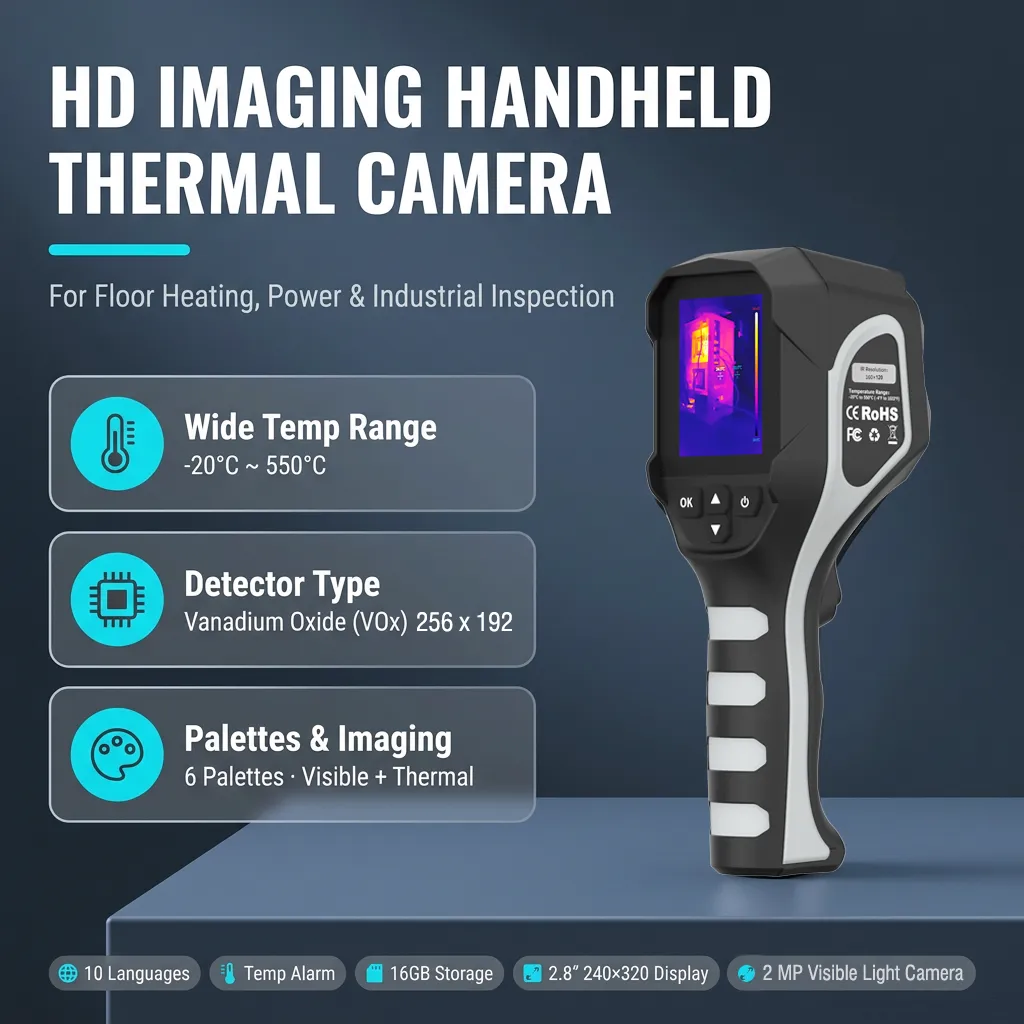
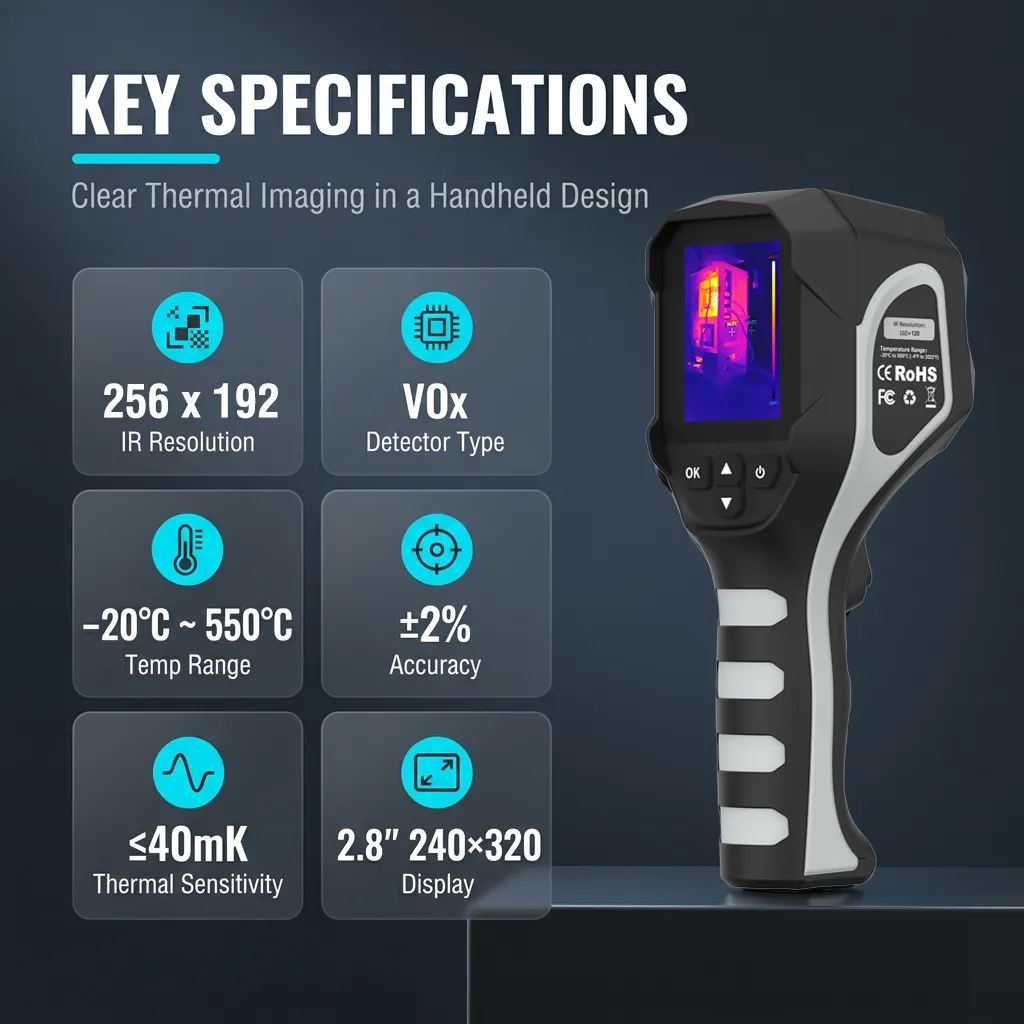
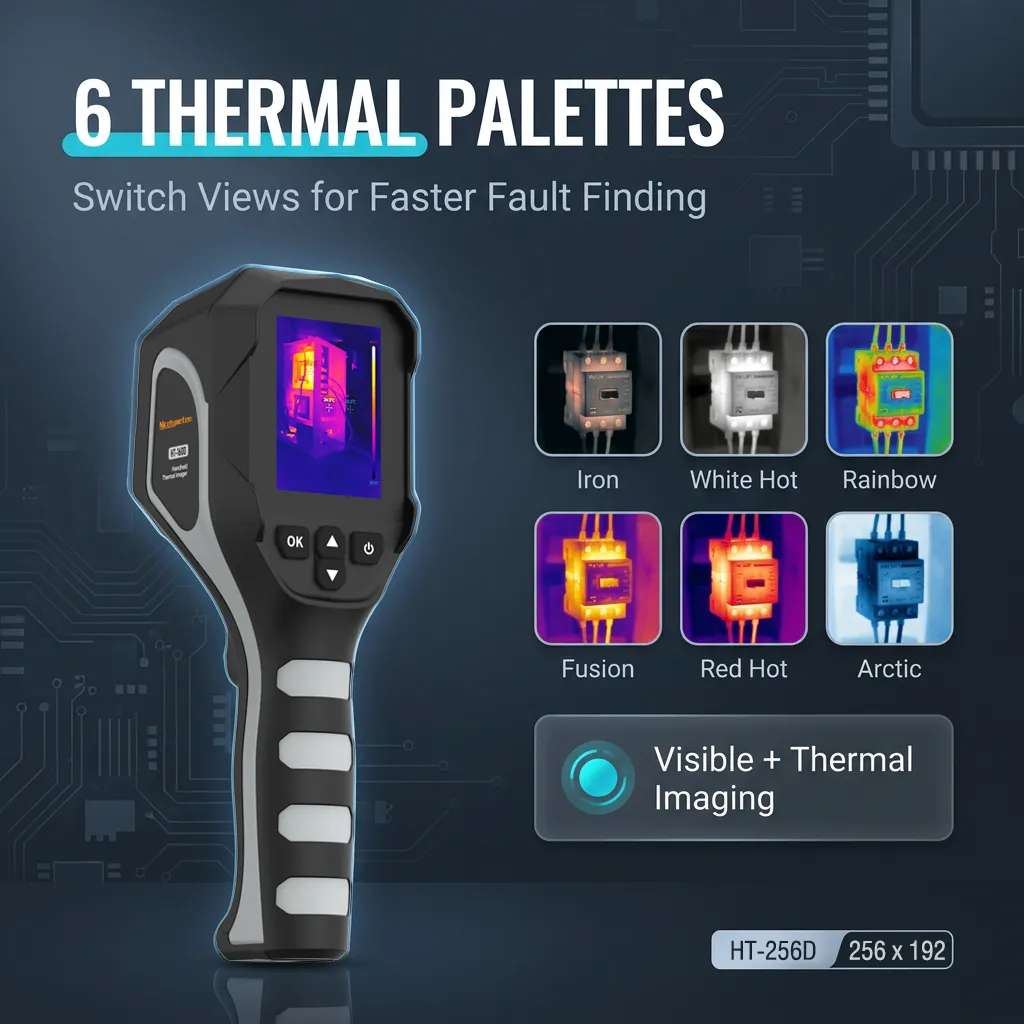
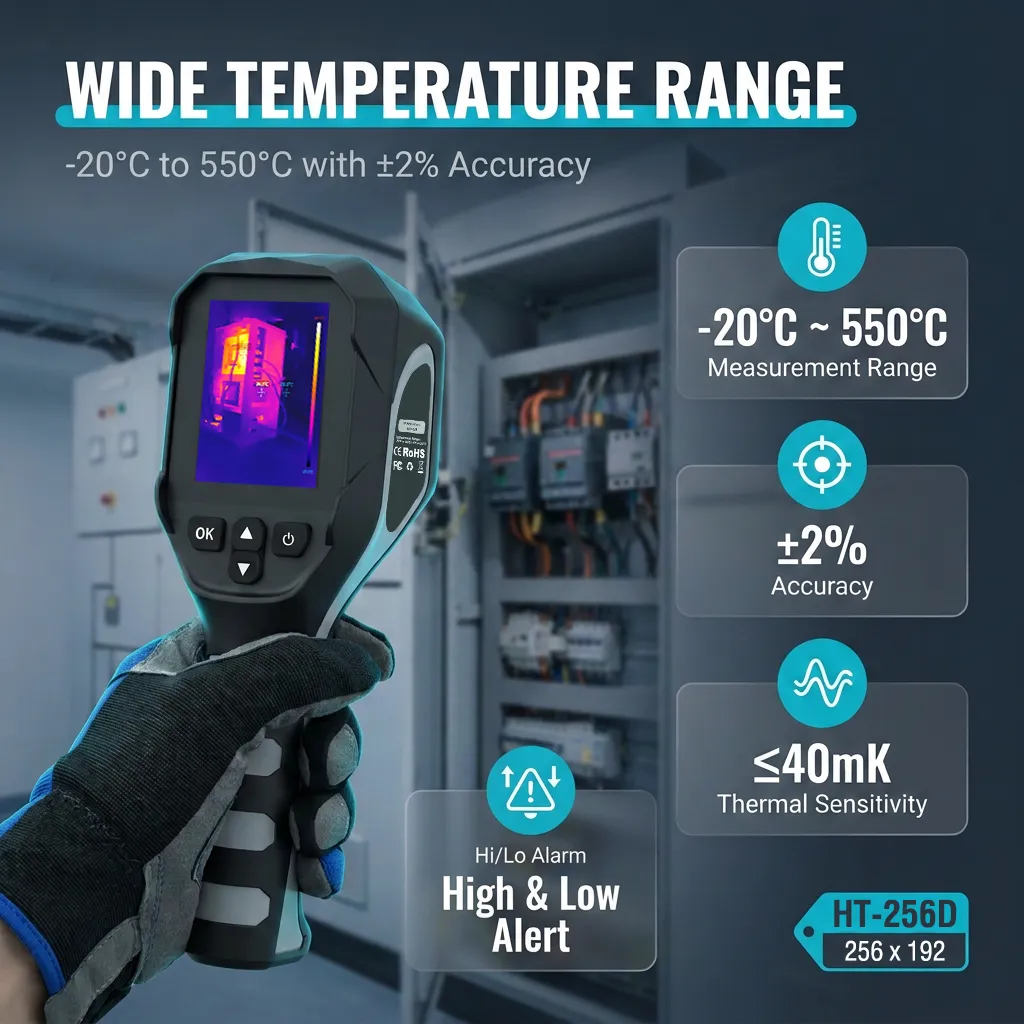
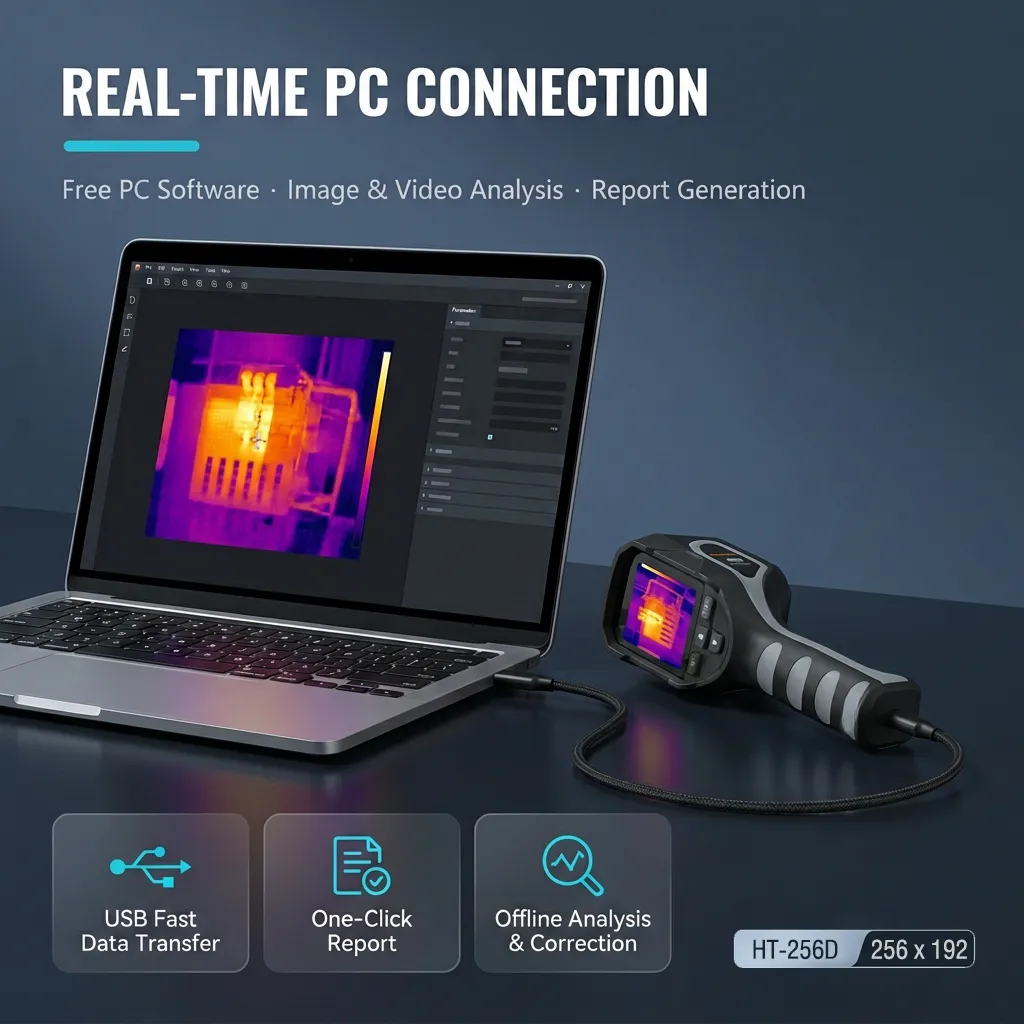
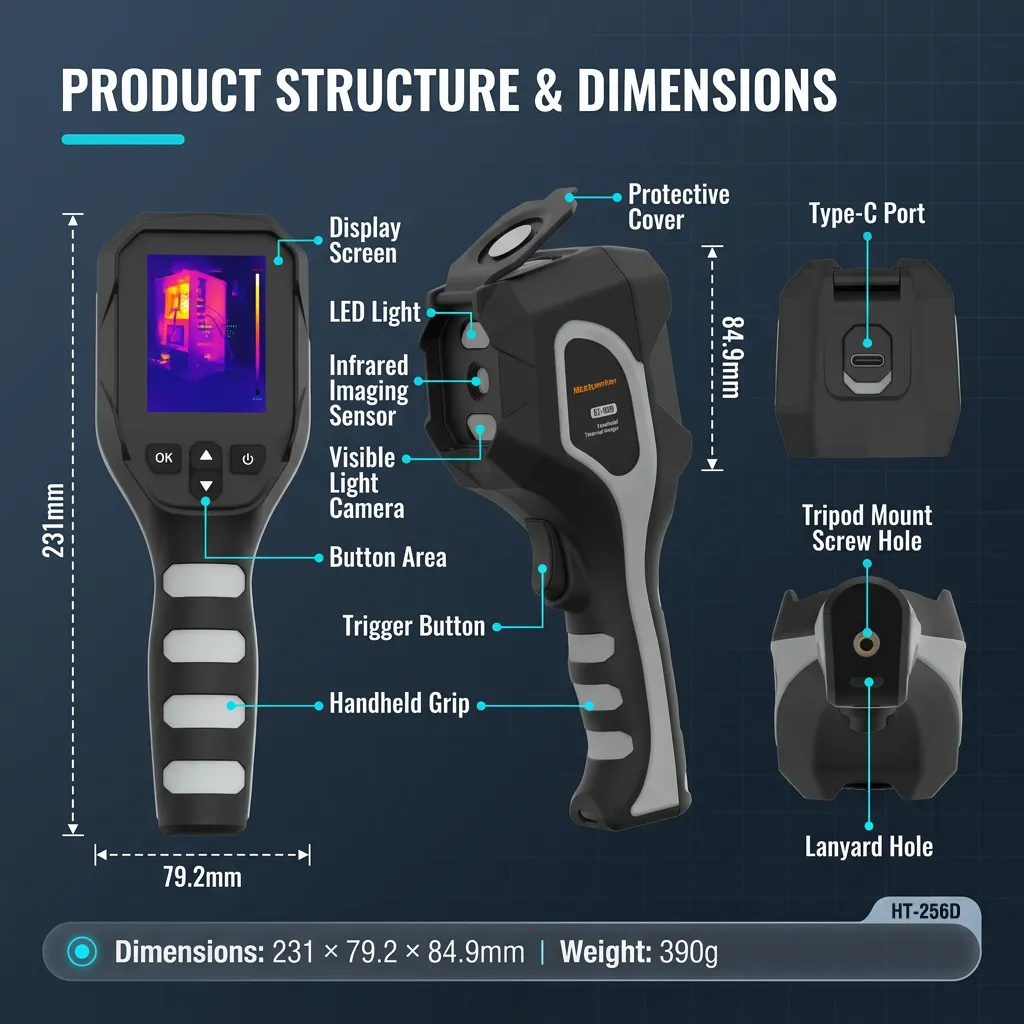
| HT-256D | 256×192 | Finer detail for small targets and longer stand-off distances, 16 GB, about 7 hours |
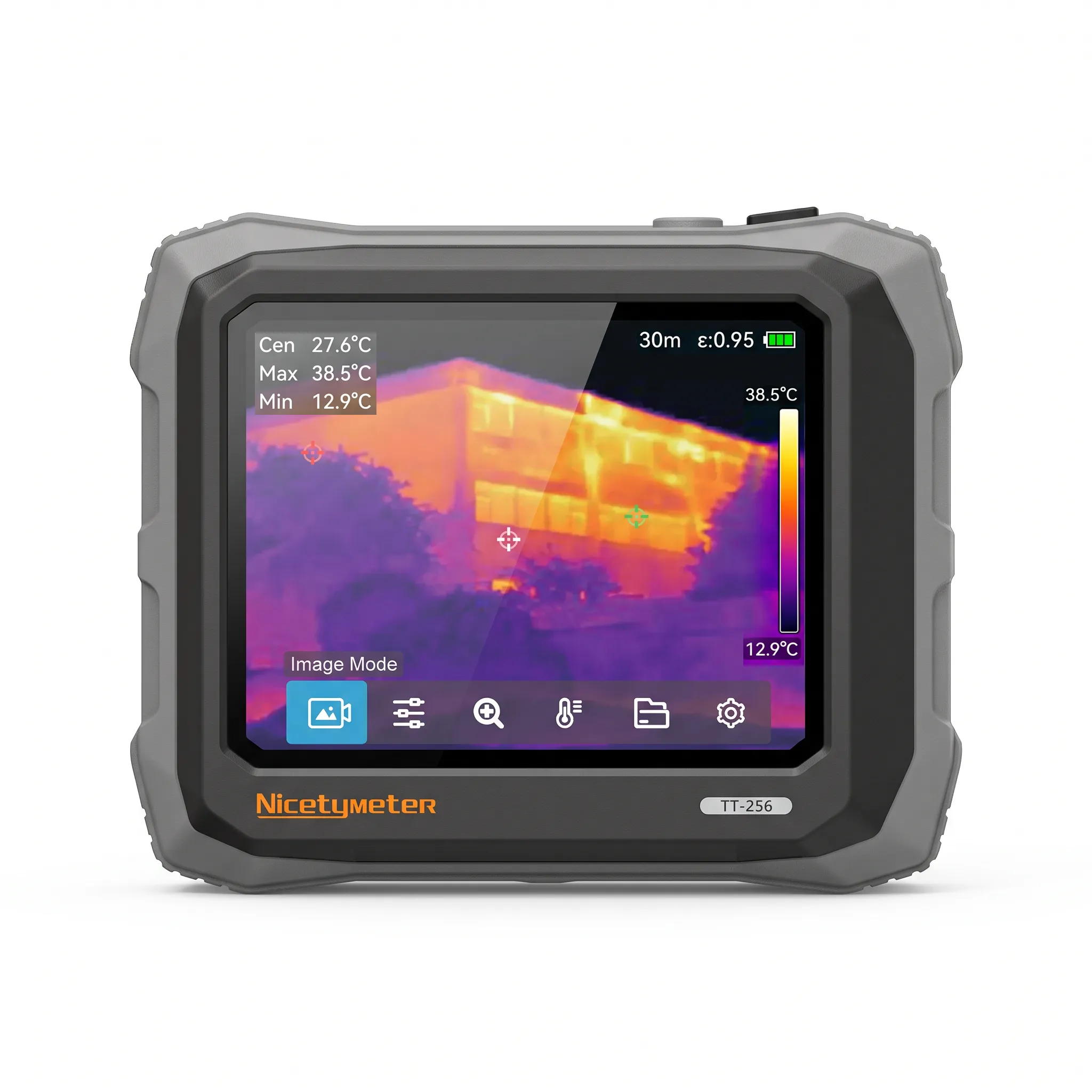
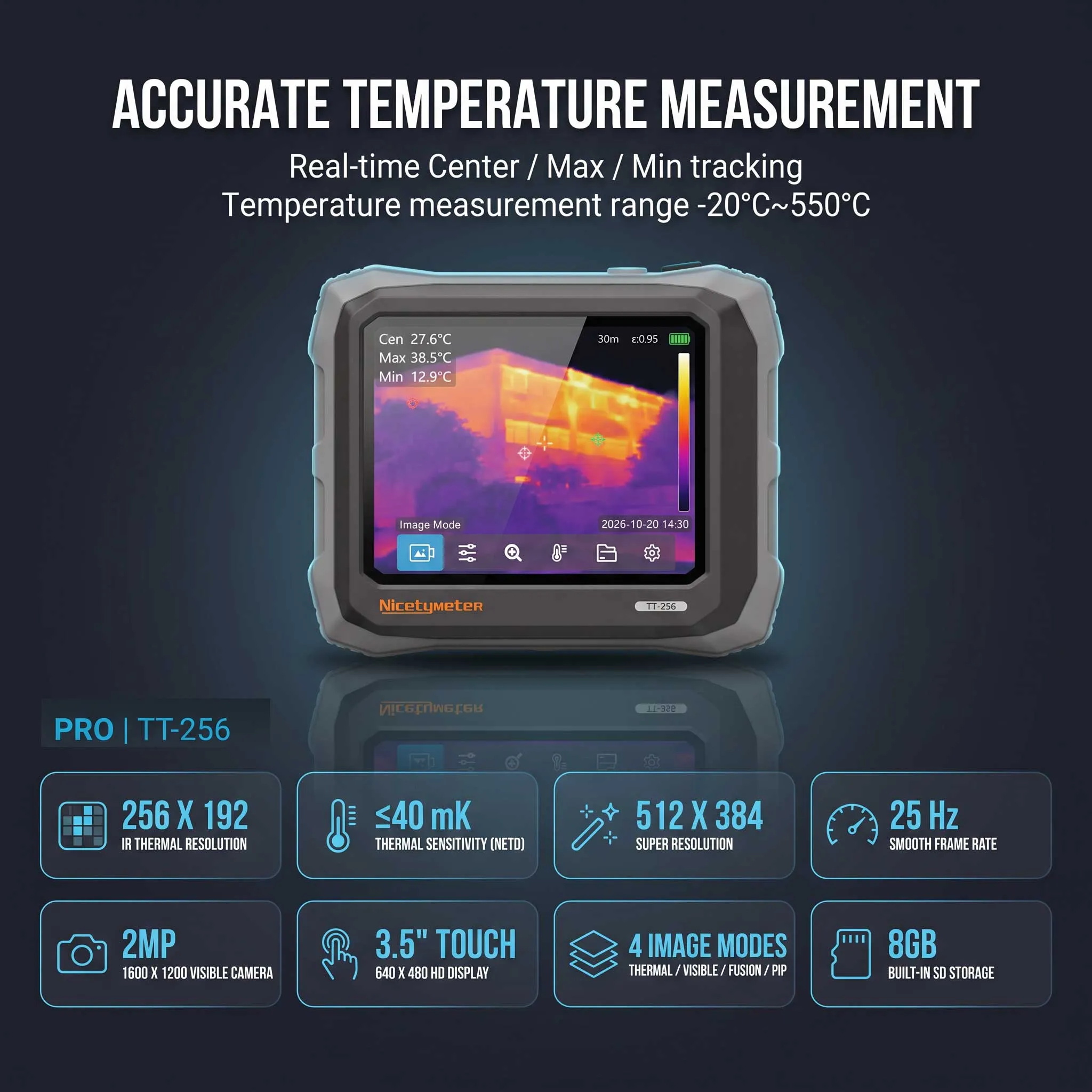
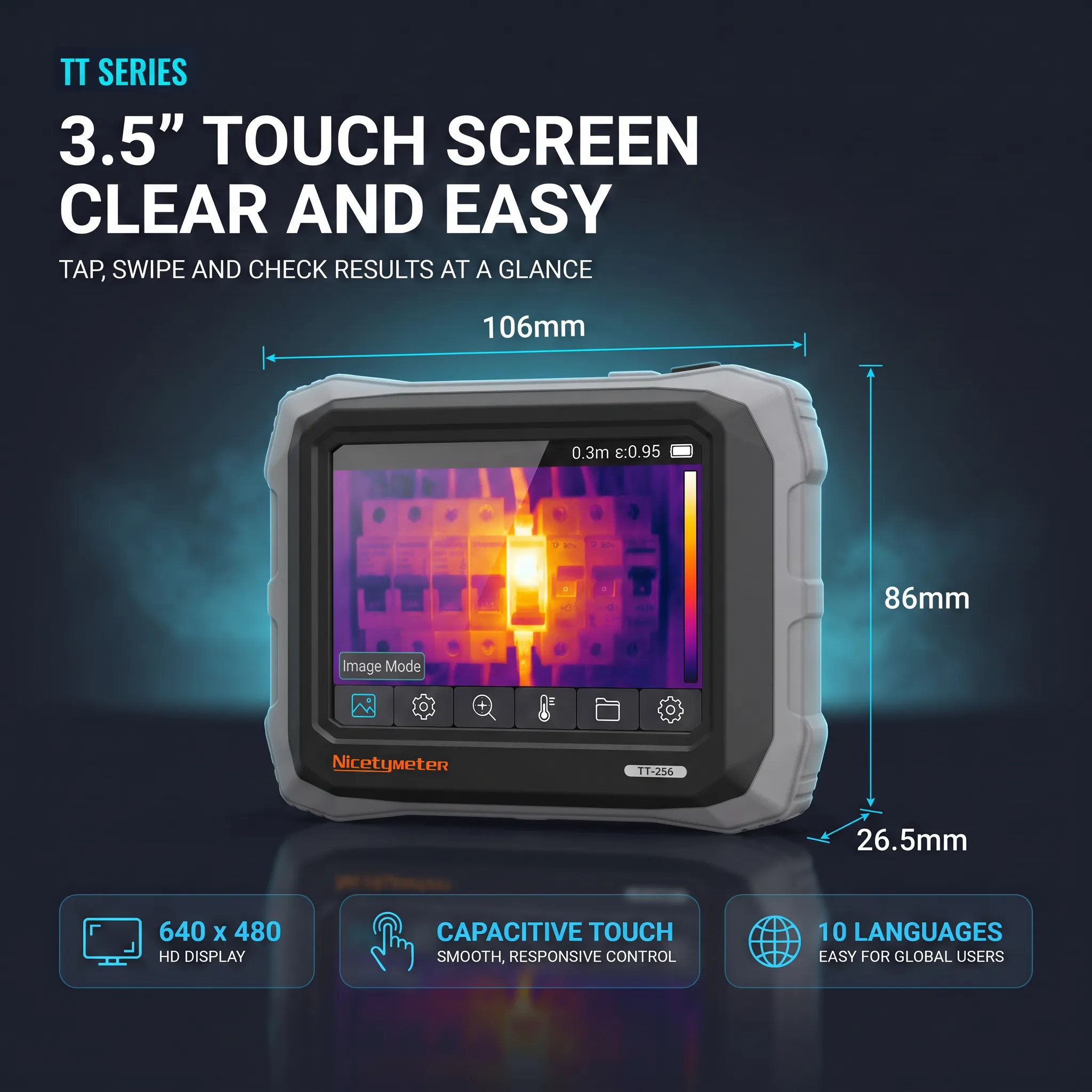
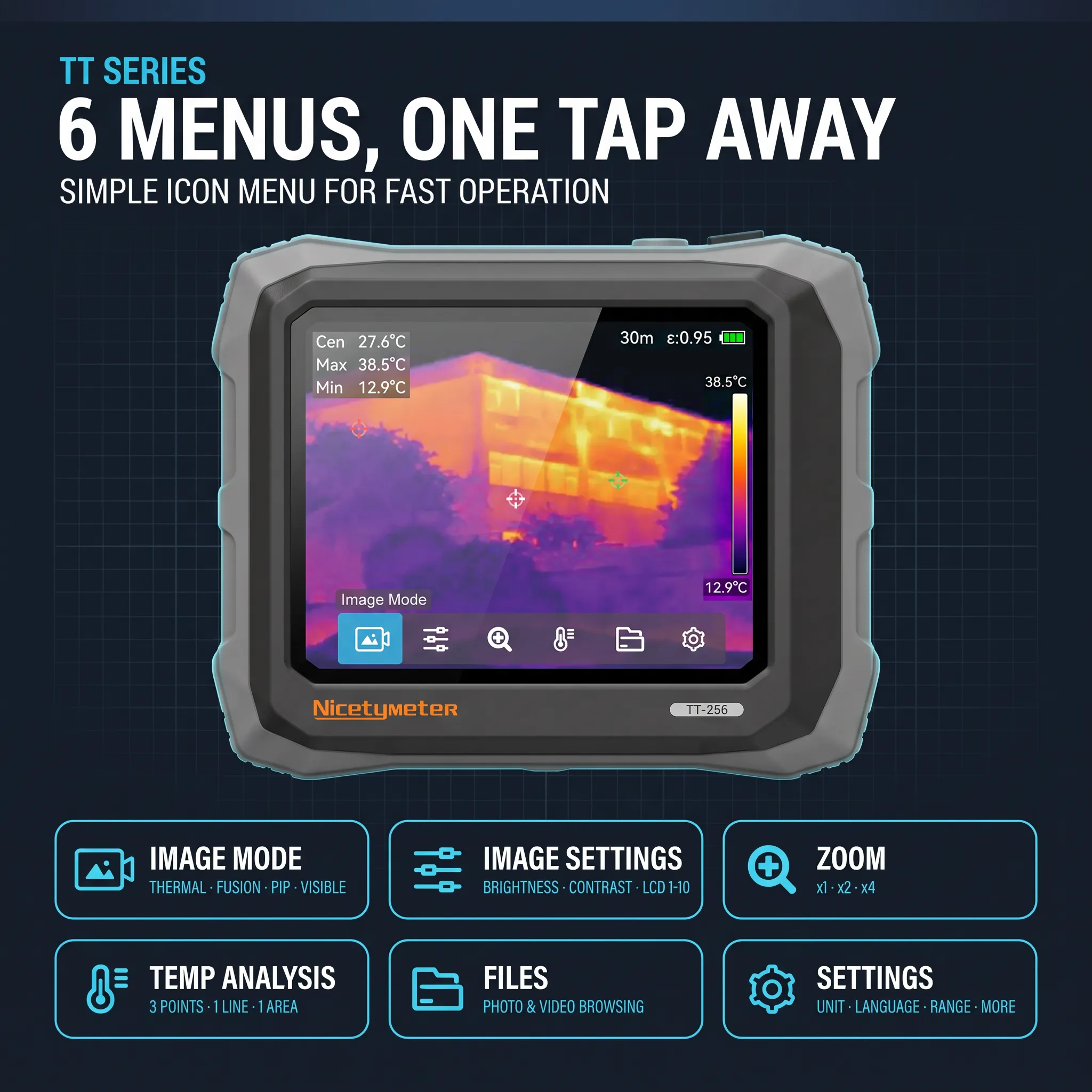
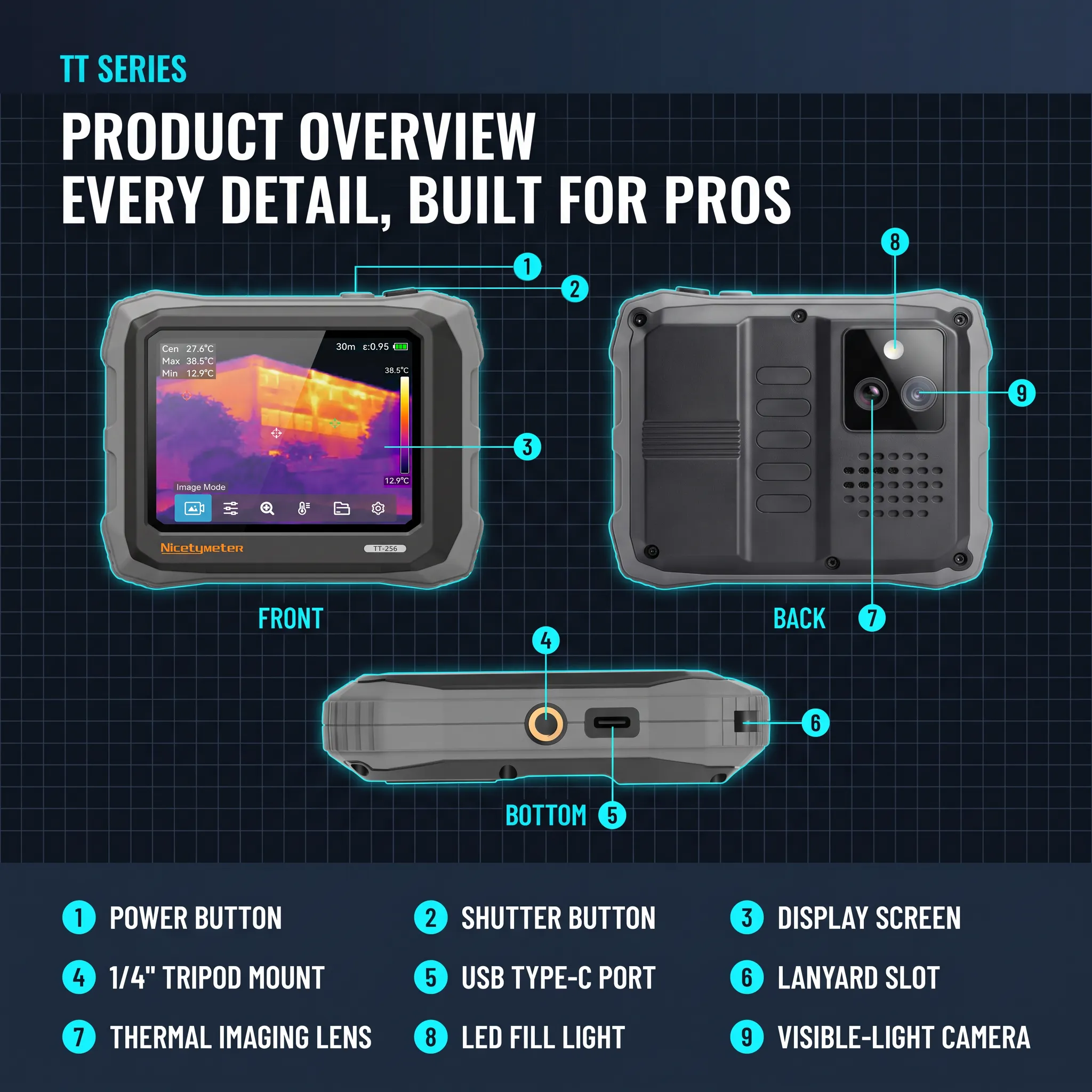
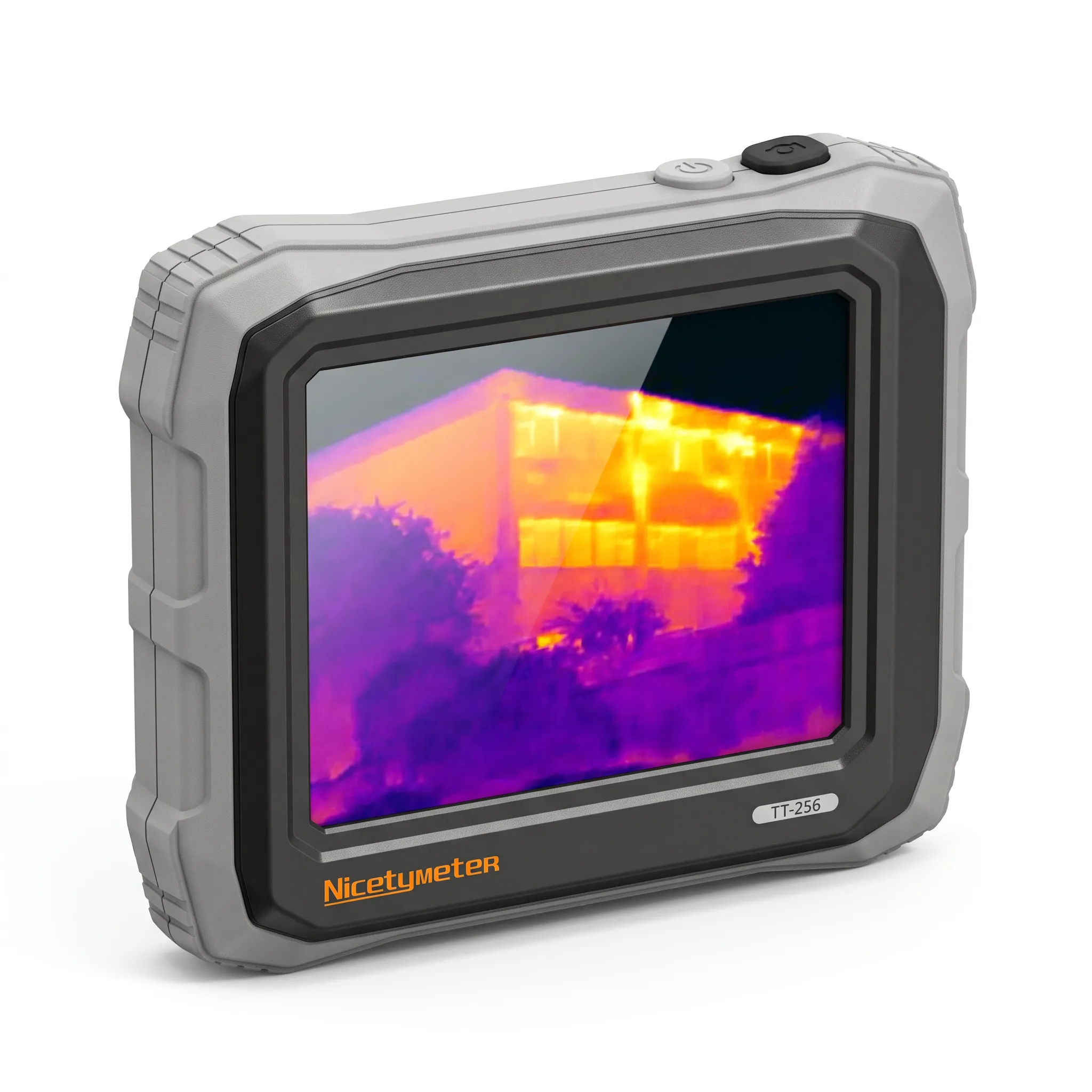
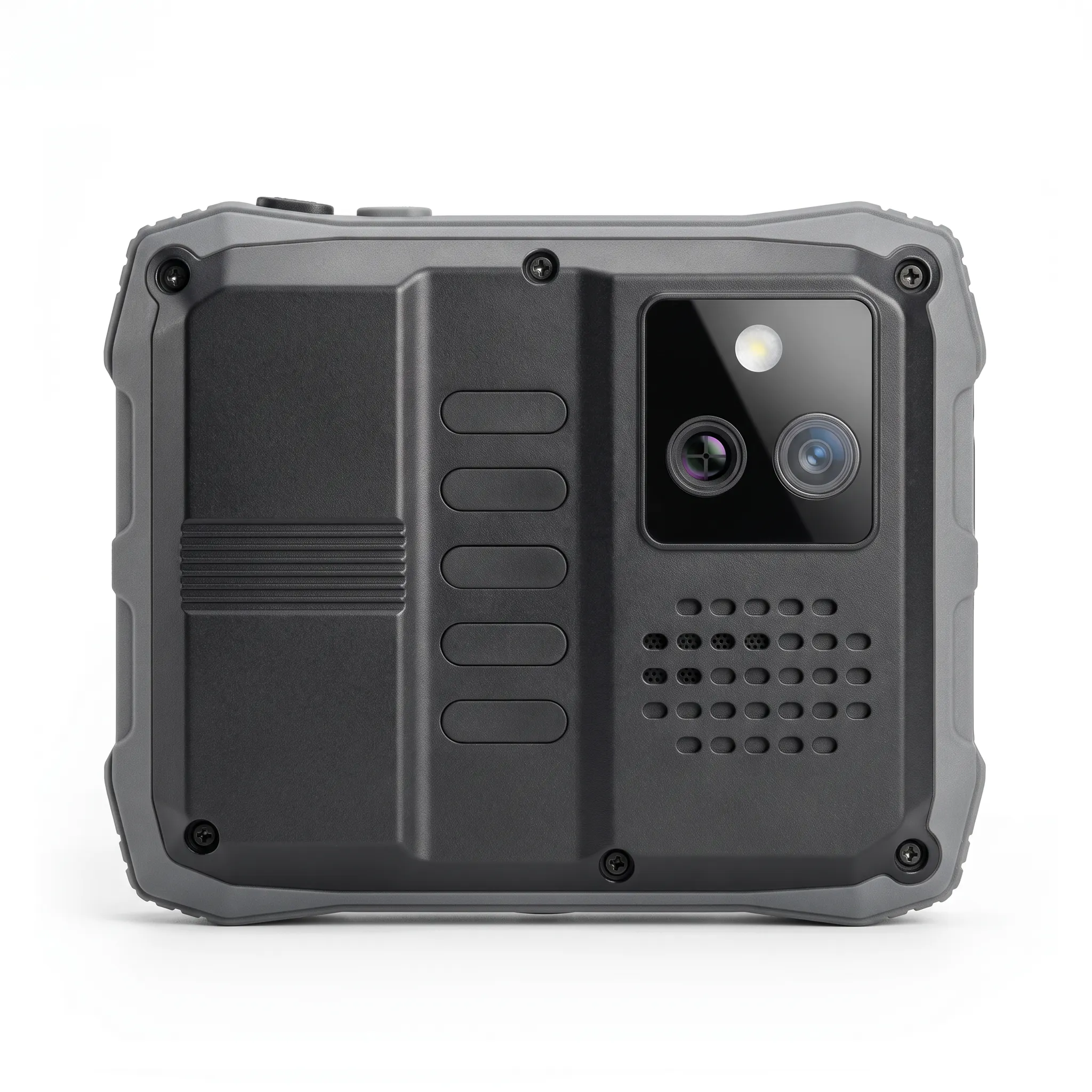
| TT-256 | 256×192 (TISR 512×384) | 3.5-inch touchscreen for on-site marking without a phone or PC |
FAQ
Can a thermal camera find a hidden water leak?
It can point you at the likely area within a minute or two, which is most of the value. It cannot tell you whether the material is wet or merely cool, or how wet it is. Confirm with a moisture meter before you quote for a repair.
Can it see pipes or wiring inside a wall?
It sees the thermal effect they produce on the surface. A hot-water pipe under a floor shows a warm line; a cable under load may show a faint trace. In both cases you are inferring the position from a surface pattern, not viewing the object, and the pattern is only as good as the temperature difference driving it.
Why can't I measure through a window?
Ordinary glass blocks the 8–14 µm band. The camera reads the glass surface, which is usually close to indoor air temperature and tells you nothing about what is outside. Measuring through glass is one of the most common beginner errors.
Do I need a high-resolution camera for building inspection?
Not usually. Insulation gaps, damp patches and duct leaks are metre-scale patterns, and 160×120 resolves them comfortably. Resolution matters when you move to component-level electrical work, where the targets are a few millimetres across.