Relative humidity is the number everyone reads and almost nobody should trust on its own. A room at 60% humidity can be perfectly comfortable at 20 °C and oppressive at 30 °C — same percentage, completely different air. Dew point, wet bulb and heat index each answer a different question about that air, and once you know which one you need, humidity stops being confusing.
Why relative humidity alone misleads
Relative humidity is a percentage of how much water the air could hold at its current temperature. Heat the air and the same amount of water becomes a smaller percentage; cool it and the percentage climbs without a drop of water being added.
So 60% tells you nothing about how much water is actually there. That is what the other three numbers fix.
Dew point — how much water is in the air
Dew point is the temperature the air would have to cool to before it can hold no more water and starts condensing. It is a direct measure of absolute moisture: dew point does not change when the temperature changes, which is exactly why it is more useful than RH for judging how humid it really is.
Rough feel for outdoor dew point:
- Below 10 °C — dry, comfortable
- 10–16 °C — pleasant
- 16–20 °C — noticeably humid
- Above 20 °C — oppressive, and surfaces start condensing
The practical use is prediction. If the dew point is 12 °C and the overnight forecast low is 11 °C, you can expect condensation — on grass, on glass, on leaves, on a cold water pipe. If it is 12 °C and the low is 18 °C, nothing will condense no matter how high the percentage climbs.
Wet bulb — how much cooling evaporation can give you
Wet bulb is the lowest temperature reachable by evaporating water into the air. It is measured with a thermometer wrapped in wet cloth, which is where the name comes from. The gap between the dry bulb (normal air temperature) and the wet bulb is the evaporative cooling potential.
This is the number behind evaporative coolers, greenhouse wet pads and misting systems. A dry climate might have a wet bulb 15 °C below air temperature — a swamp cooler works brilliantly. A humid climate might only reach 5 °C below — the same cooler barely helps, no matter how powerful the fan.
Heat index — how hot a person feels
Heat index combines air temperature and relative humidity into a single "feels like" number for the human body. It works on the high-temperature side: when it is hot and humid, sweat evaporates slowly, so the body cannot shed heat and the perceived temperature runs above the actual reading.
Below about 27 °C, heat index is close to the air temperature and not worth much attention. Above 32 °C with high humidity it becomes the number that matters for outdoor work, sport and anyone vulnerable to heat.
The relationship in one line: dry bulb ≥ wet bulb ≥ dew point. They are equal only when the air is fully saturated — fog, or rain. The wider the gaps, the drier the air.
Side by side
| Dew point | Wet bulb | Heat index | |
|---|---|---|---|
| Answers | How much water is in the air? | How much can evaporation cool things? | How hot does a person feel? |
| Changes with temperature? | No — depends on moisture only | Yes | Yes |
| Typical unit | °C | °C | °C (feels-like) |
| Use it for | Condensation, frost, drying, disease risk | Evaporative cooling, pad sizing, heat stress | Heat safety, work scheduling |
| Ignore it when | You only care about comfort at one temperature | You are not using evaporation to cool | Below roughly 27 °C |
Three situations, three different numbers
A greenhouse at dawn
Condensation on leaves is a disease problem, and it is predicted by dew point versus leaf temperature — not by humidity percentage. If the dew point sits above the overnight leaf temperature, the crop is wet before sunrise. That is the number to watch, and it is why growers care about dew point more than RH.
Sizing a pad-and-fan cooling system
The wet bulb depression decides whether evaporative cooling will work at your site at all. Measure it during the hottest, driest part of the day, over several days — a single afternoon will mislead you.
Planning outdoor work in summer
Heat index is the practical one. Two days at the same 34 °C can differ by several degrees of felt heat depending on humidity, and the work/rest schedule should follow the felt number, not the air temperature.
What our instruments show
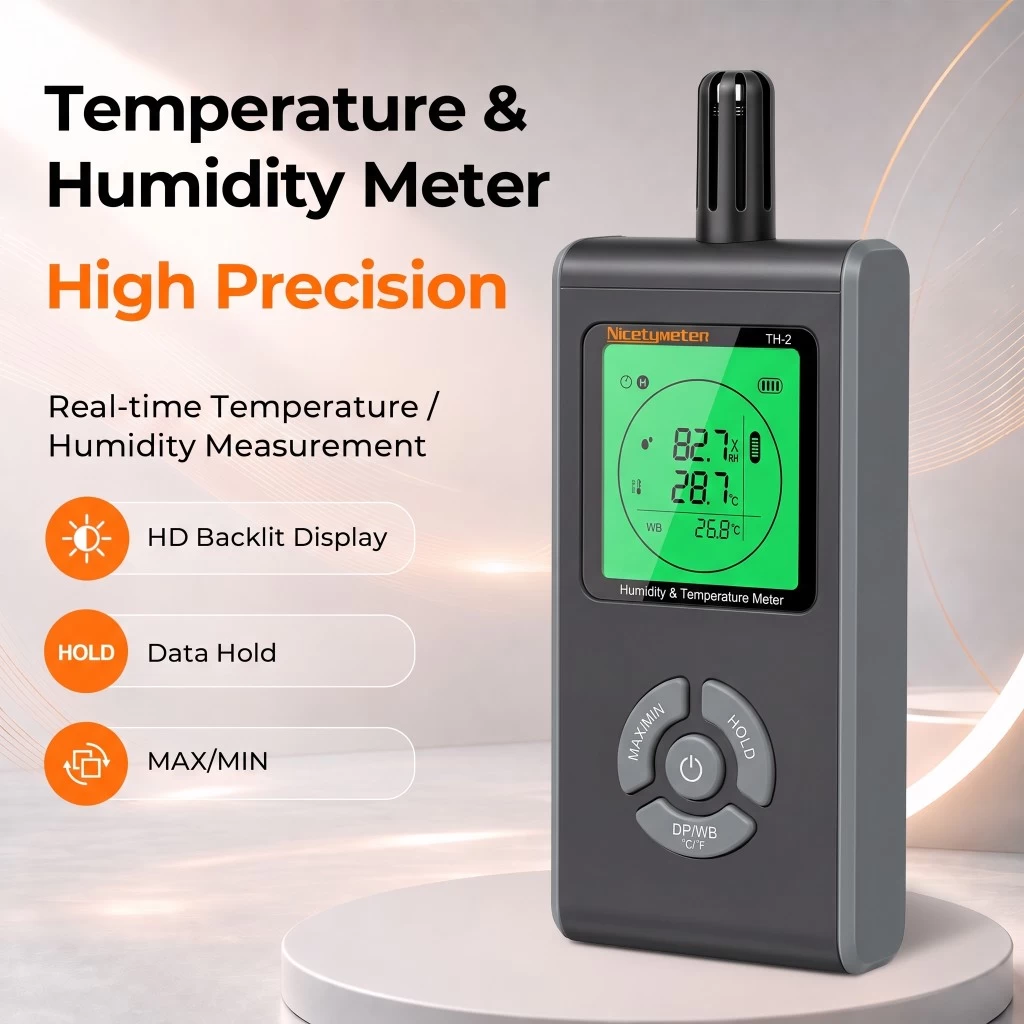
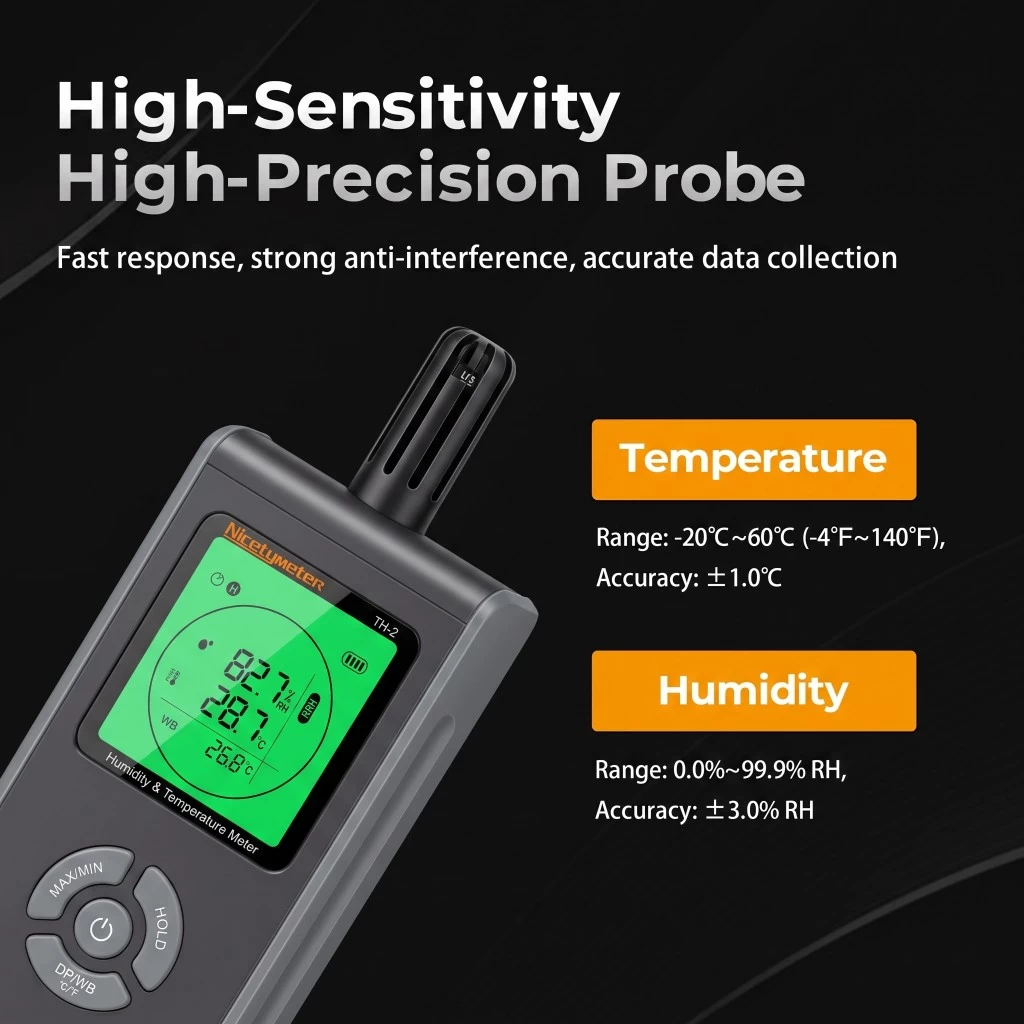
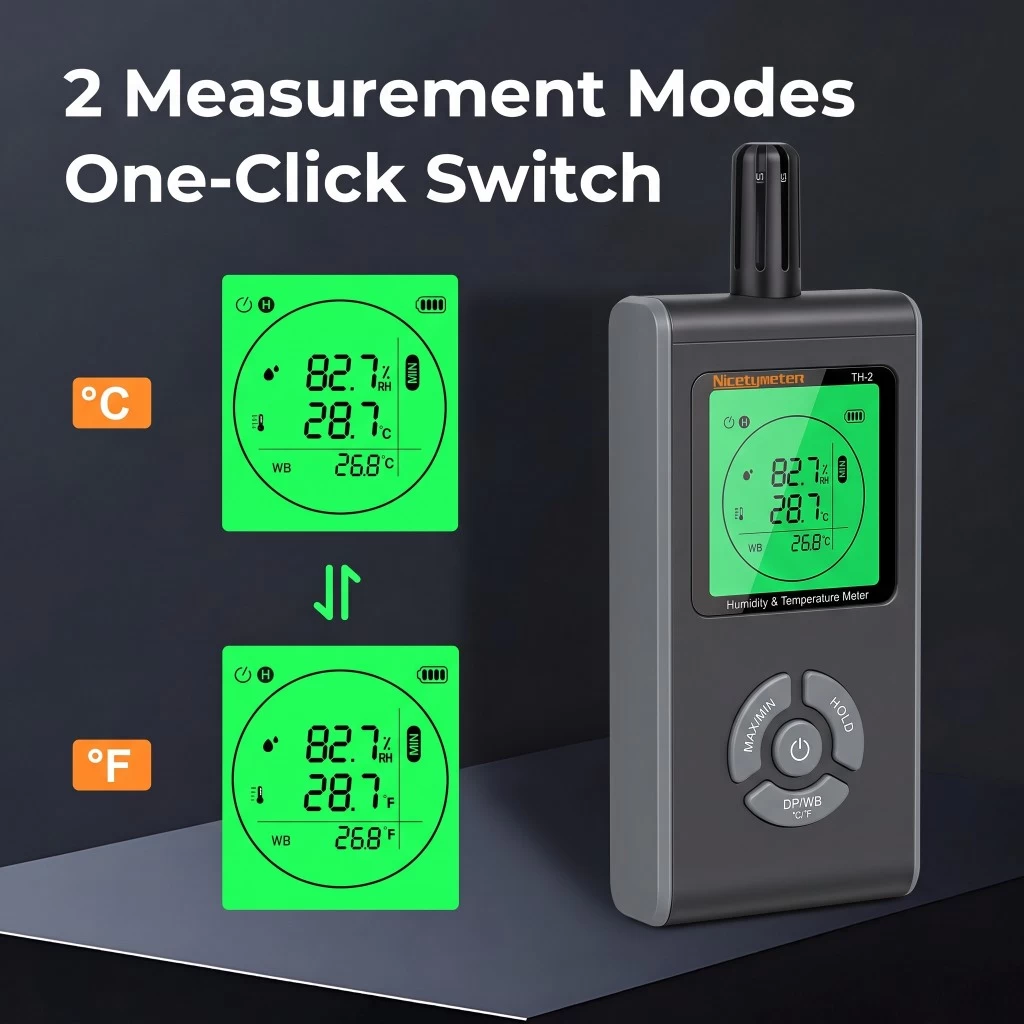
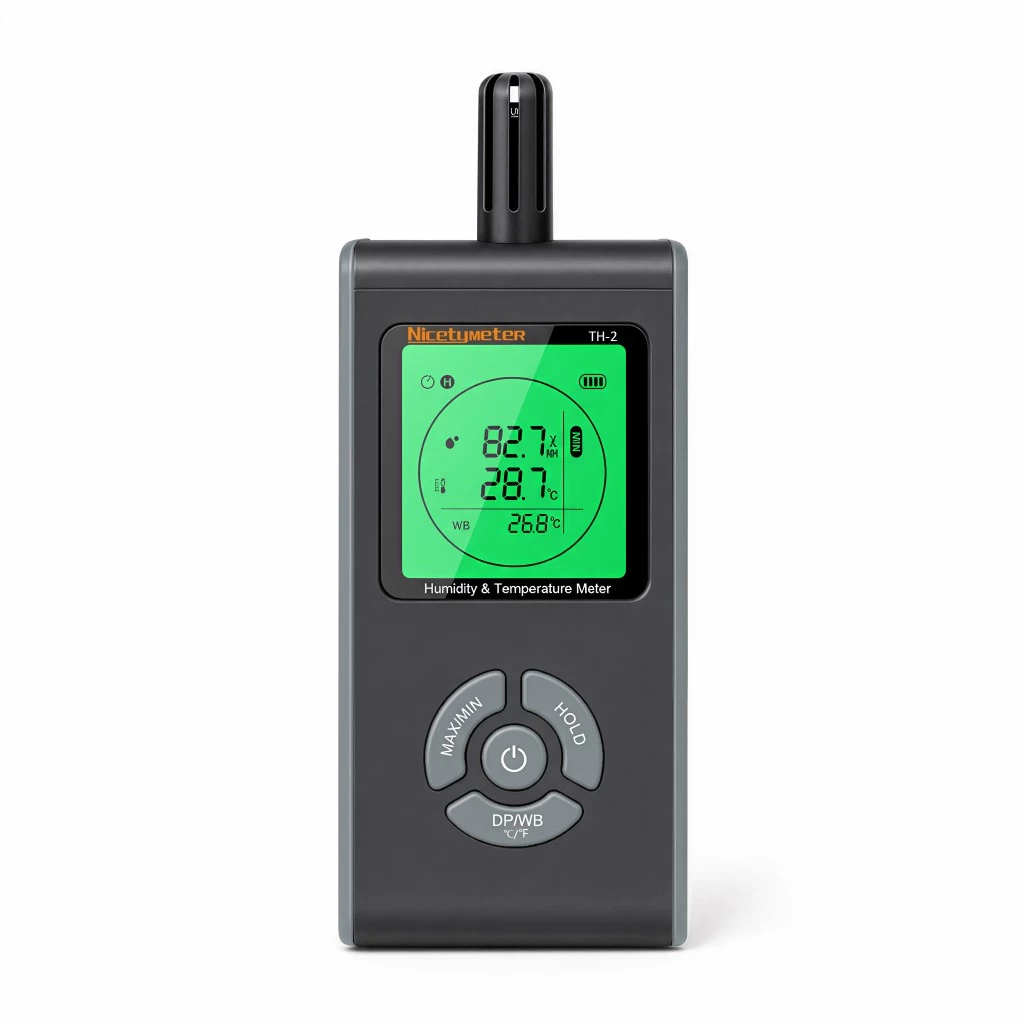
The TH-2 thermo-hygrometer displays dew point and wet bulb directly alongside temperature and humidity — press DP/WB to switch between them, so you do not have to calculate anything.
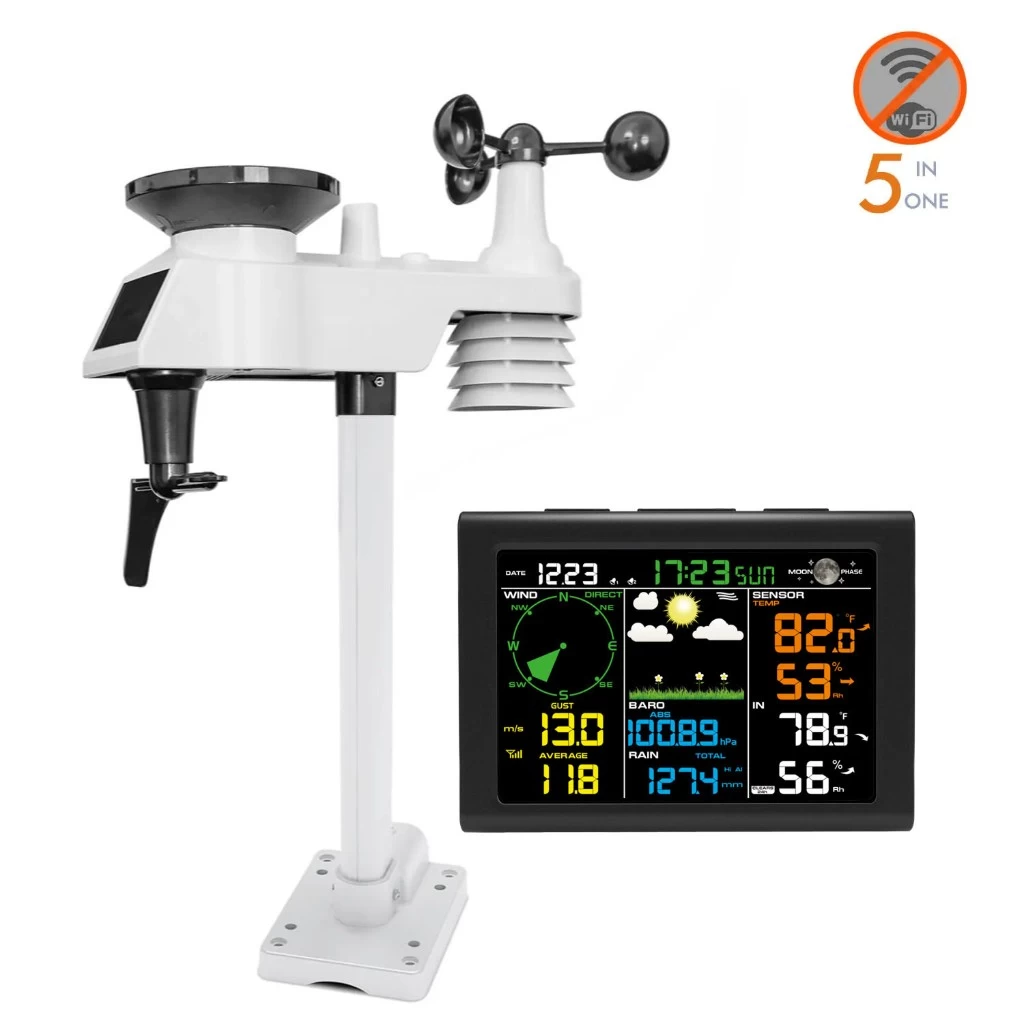
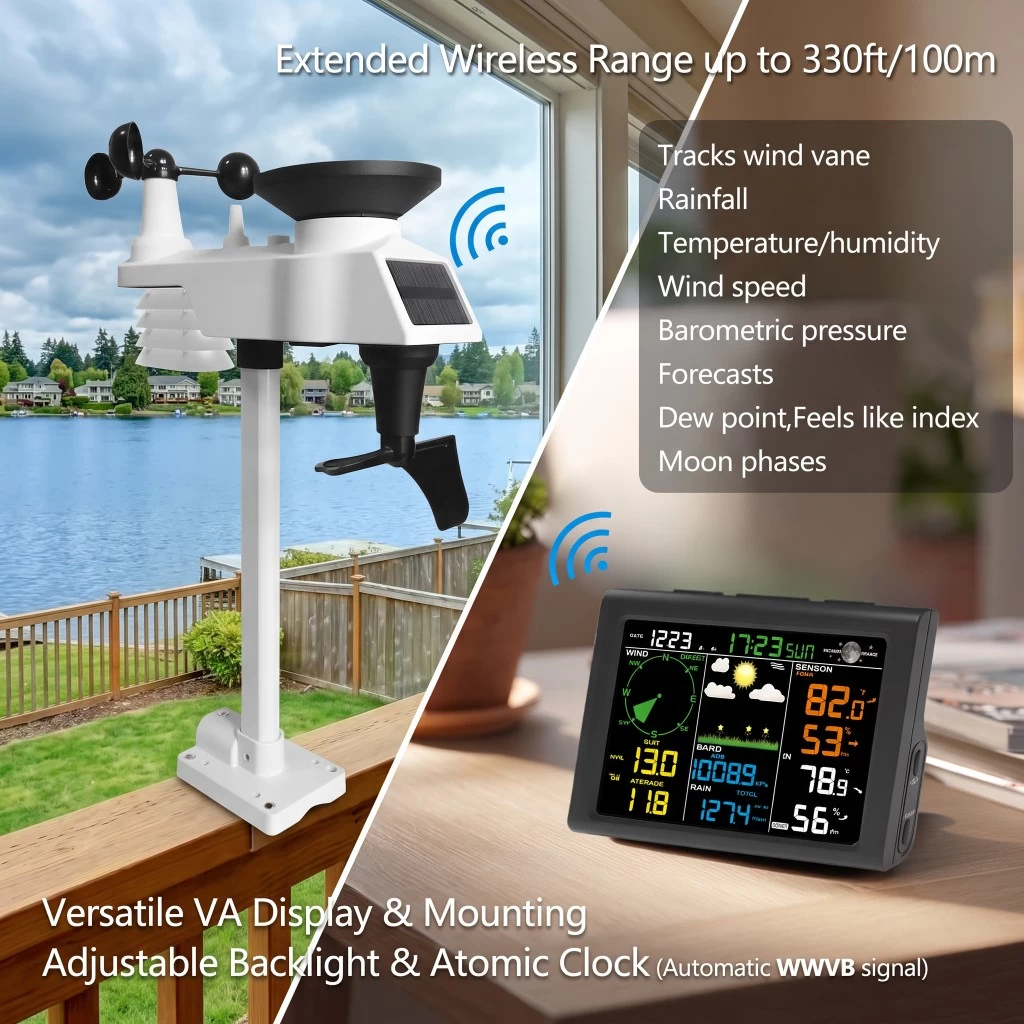
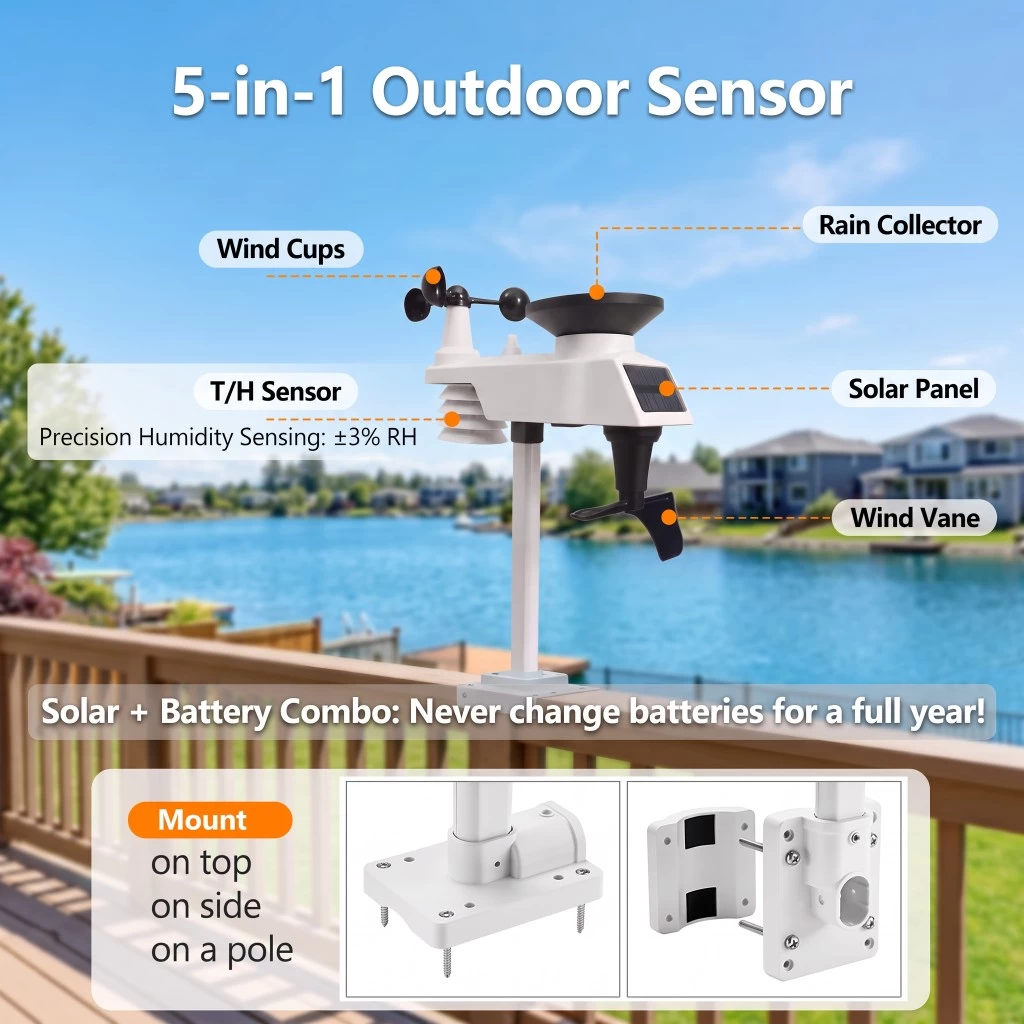
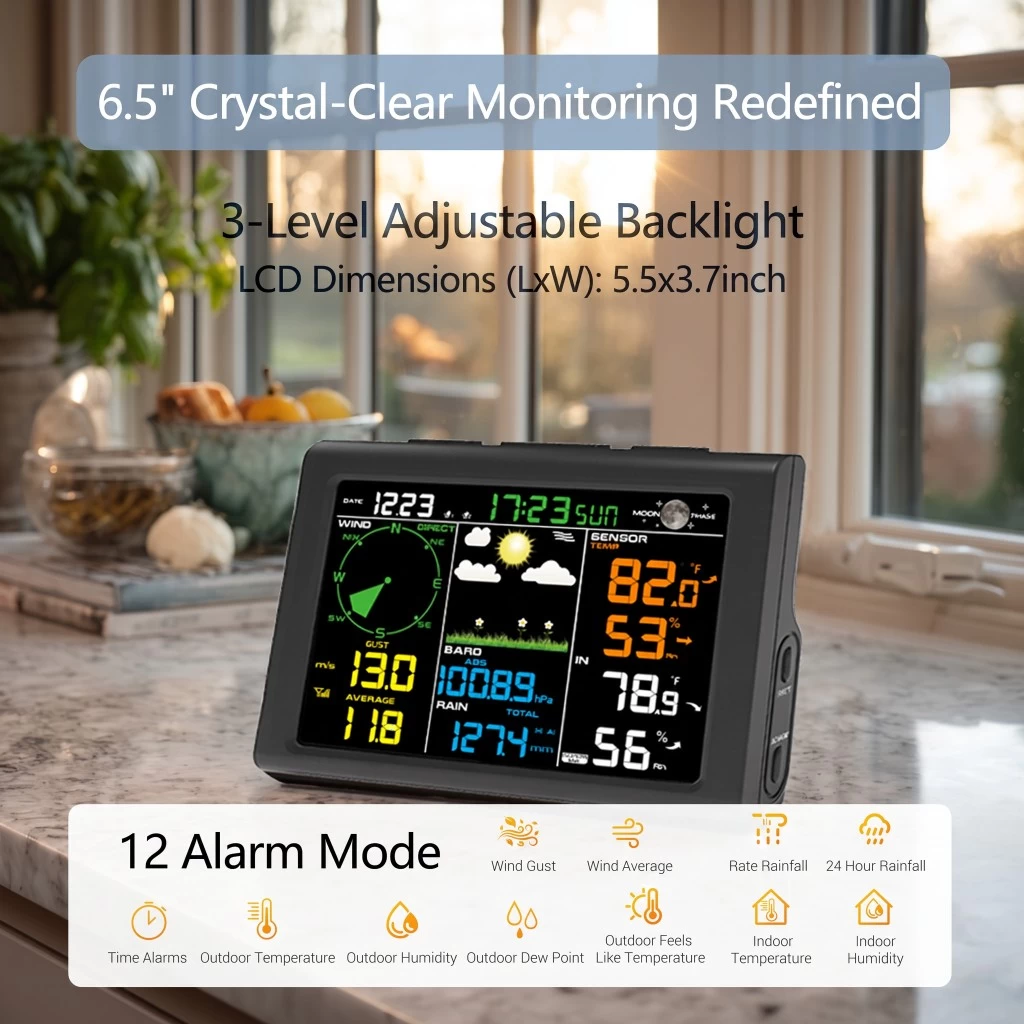
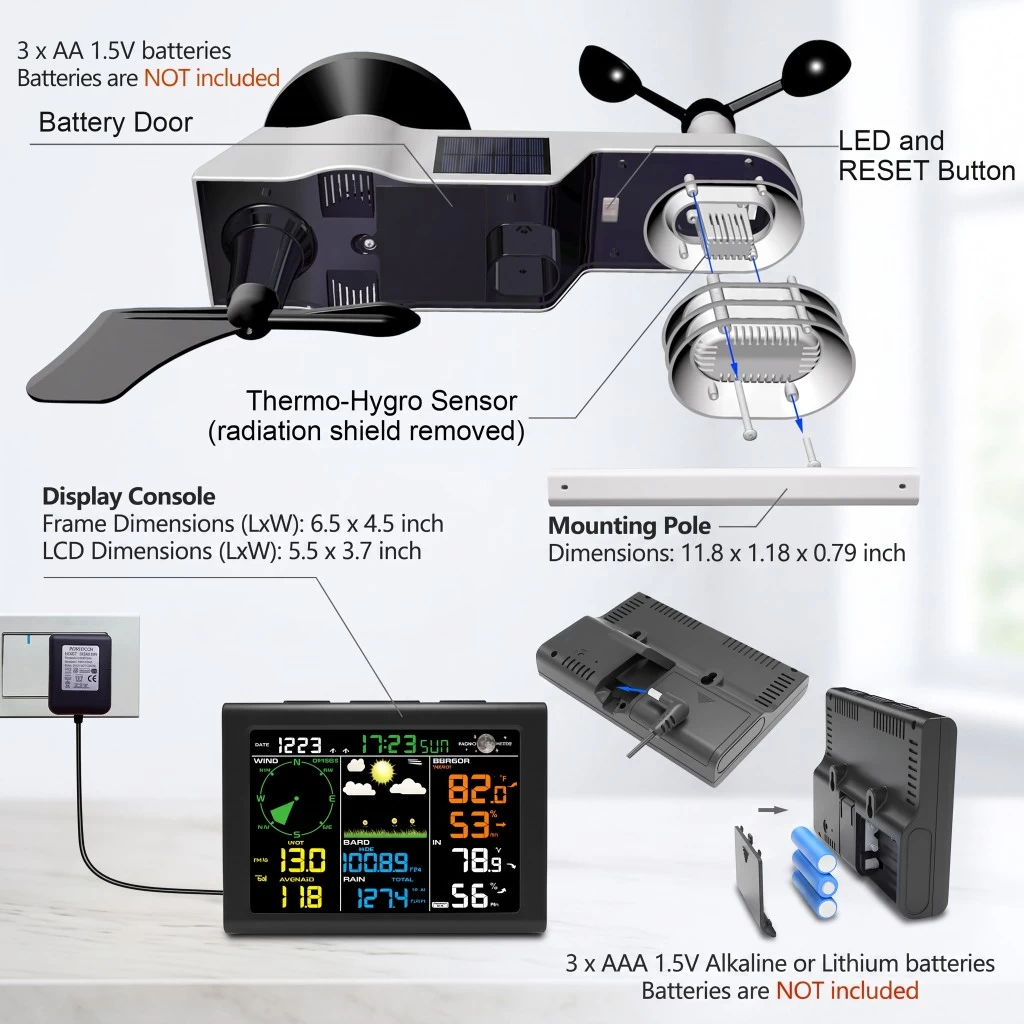
Our weather station consoles display a feels-like value, which uses wind chill on the cold side and heat index on the warm side, so the same reading makes sense in winter and summer.
FAQ
Can dew point be higher than the air temperature?
No. By definition dew point is the temperature at which the air becomes saturated, so it can never exceed the current air temperature. When the two are equal, you are in fog or rain.
Is wet bulb the same as dew point?
No, though they are often confused. Wet bulb sits between the air temperature and the dew point. They only coincide when the air is fully saturated.
Why does my weather station show a feels-like value below the air temperature?
That is wind chill, the cold-side equivalent of heat index. Moving air strips heat from skin, so the felt temperature drops below the measured one.
Which one should I record for long-term data?
Dew point, if you can only keep one. It reflects actual moisture content and does not swing with the daily temperature cycle, which makes long records far easier to compare.