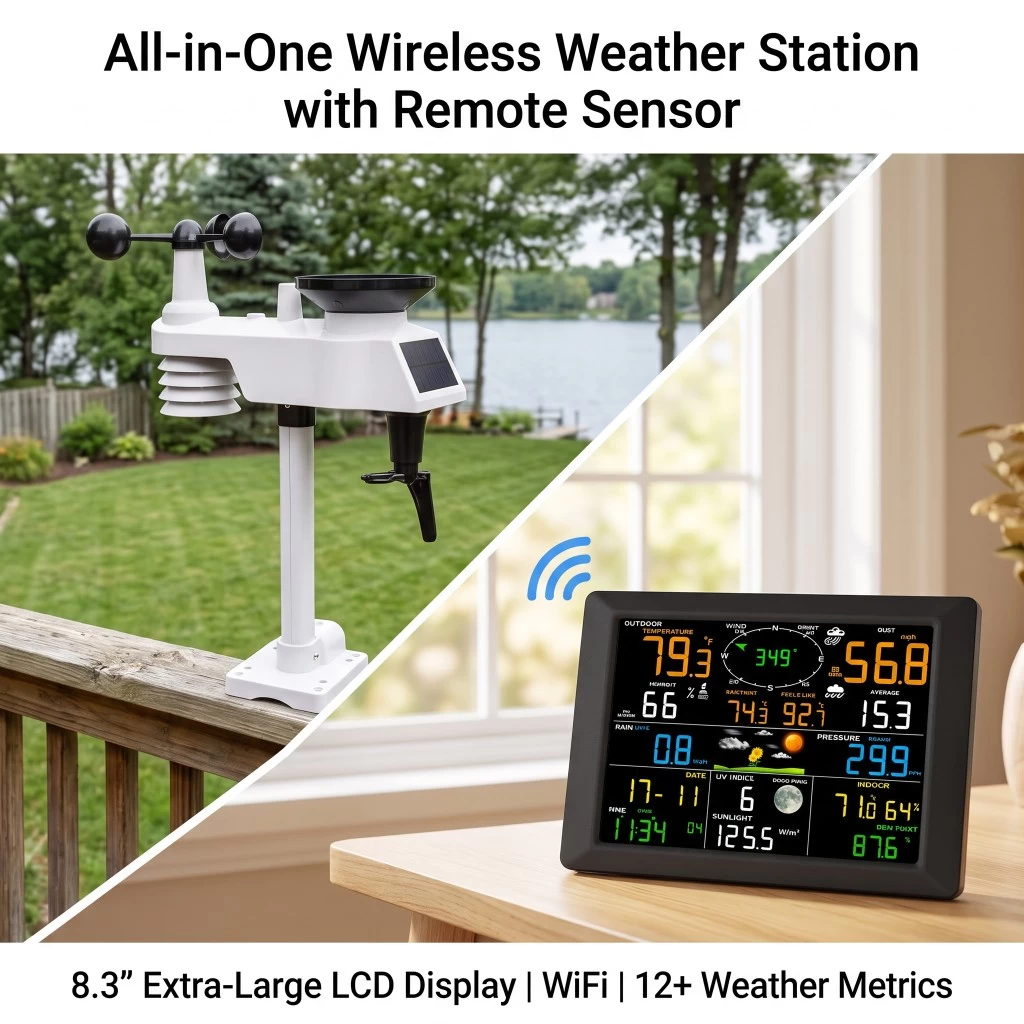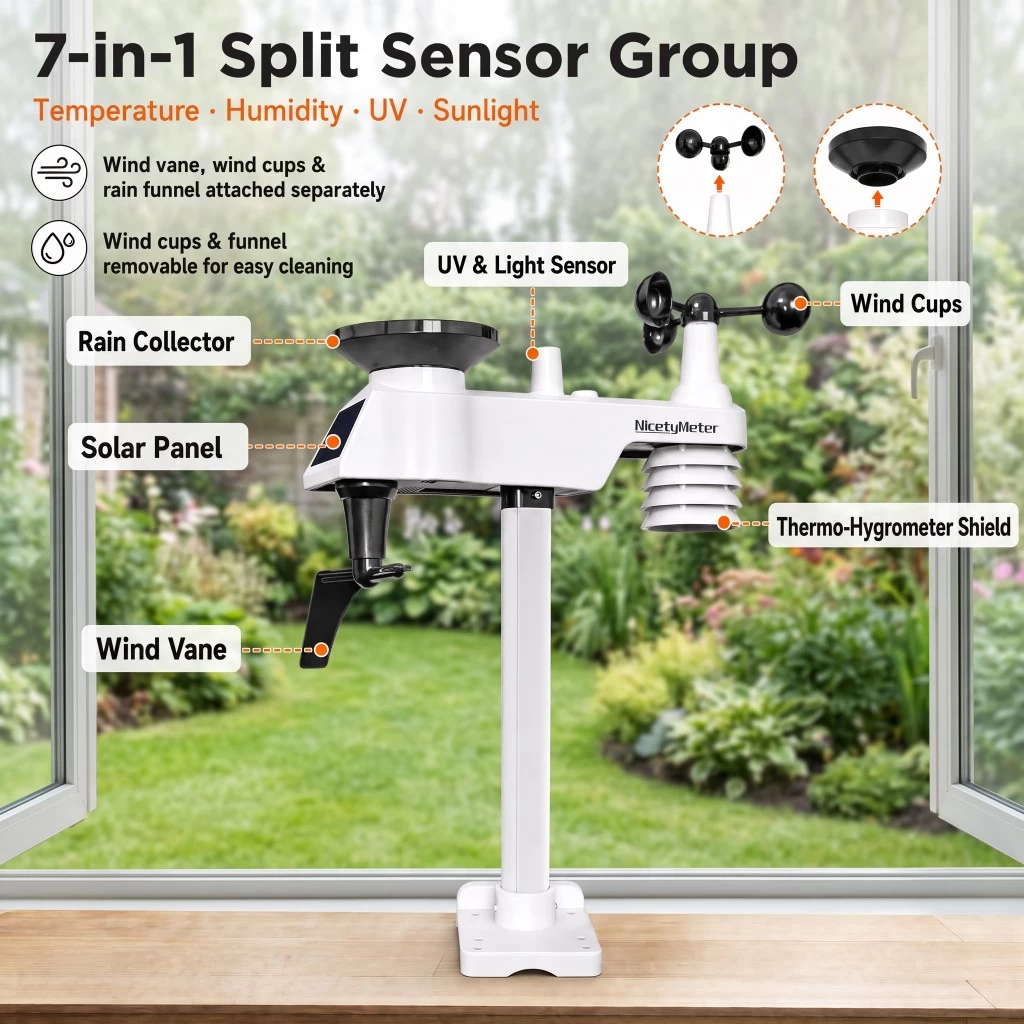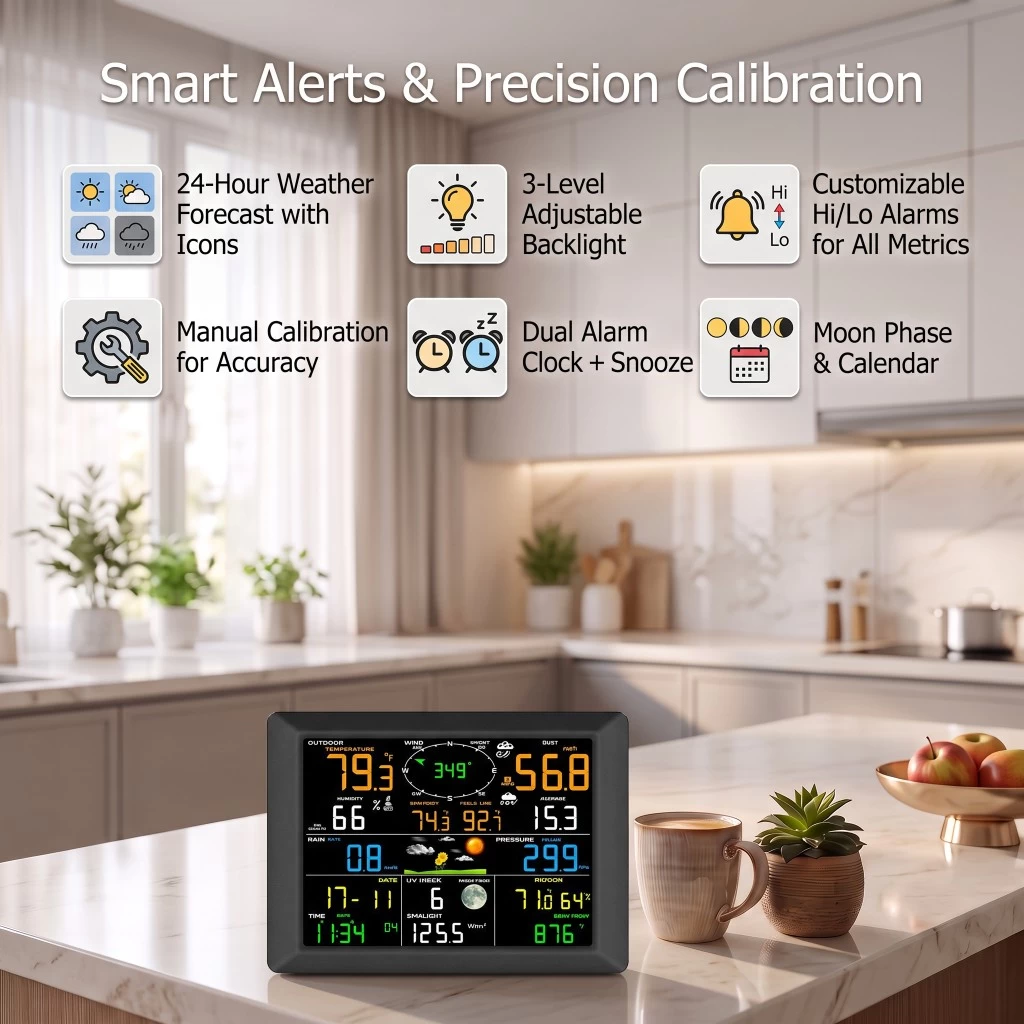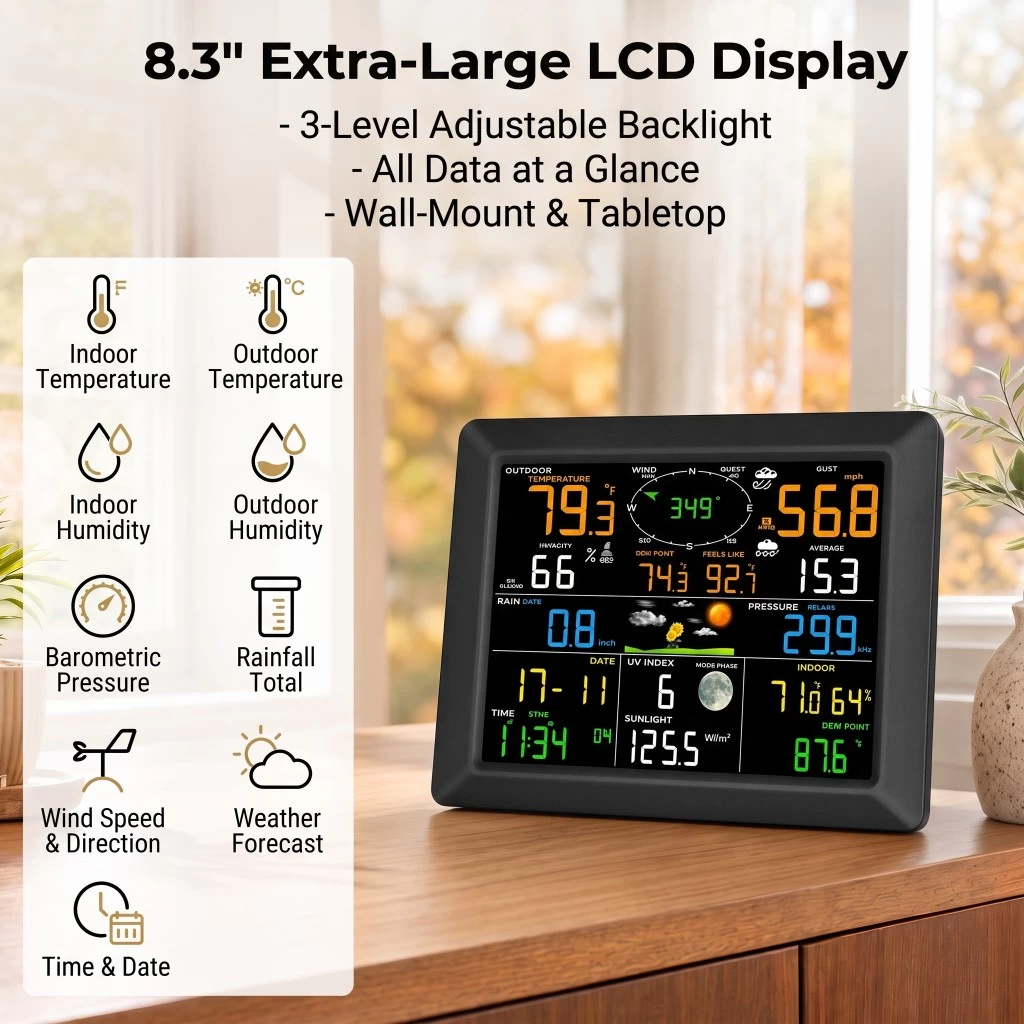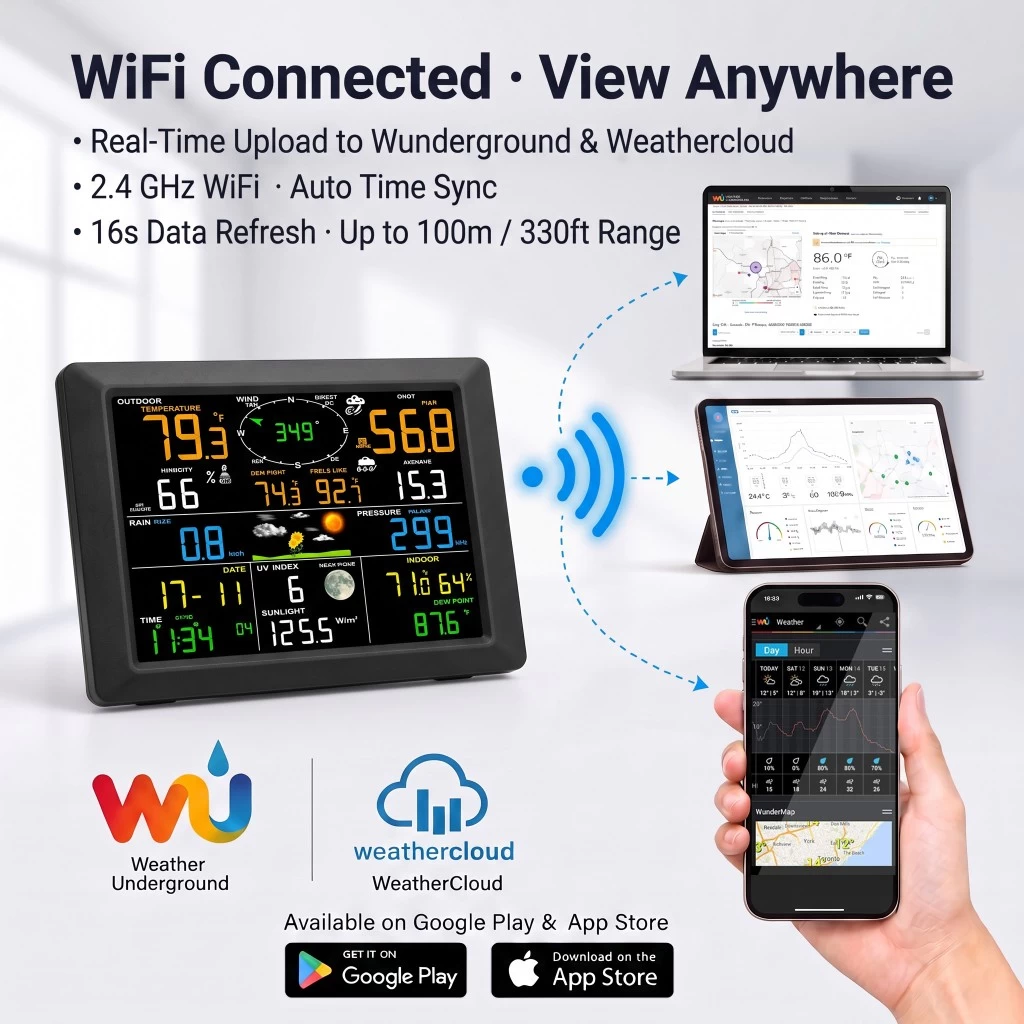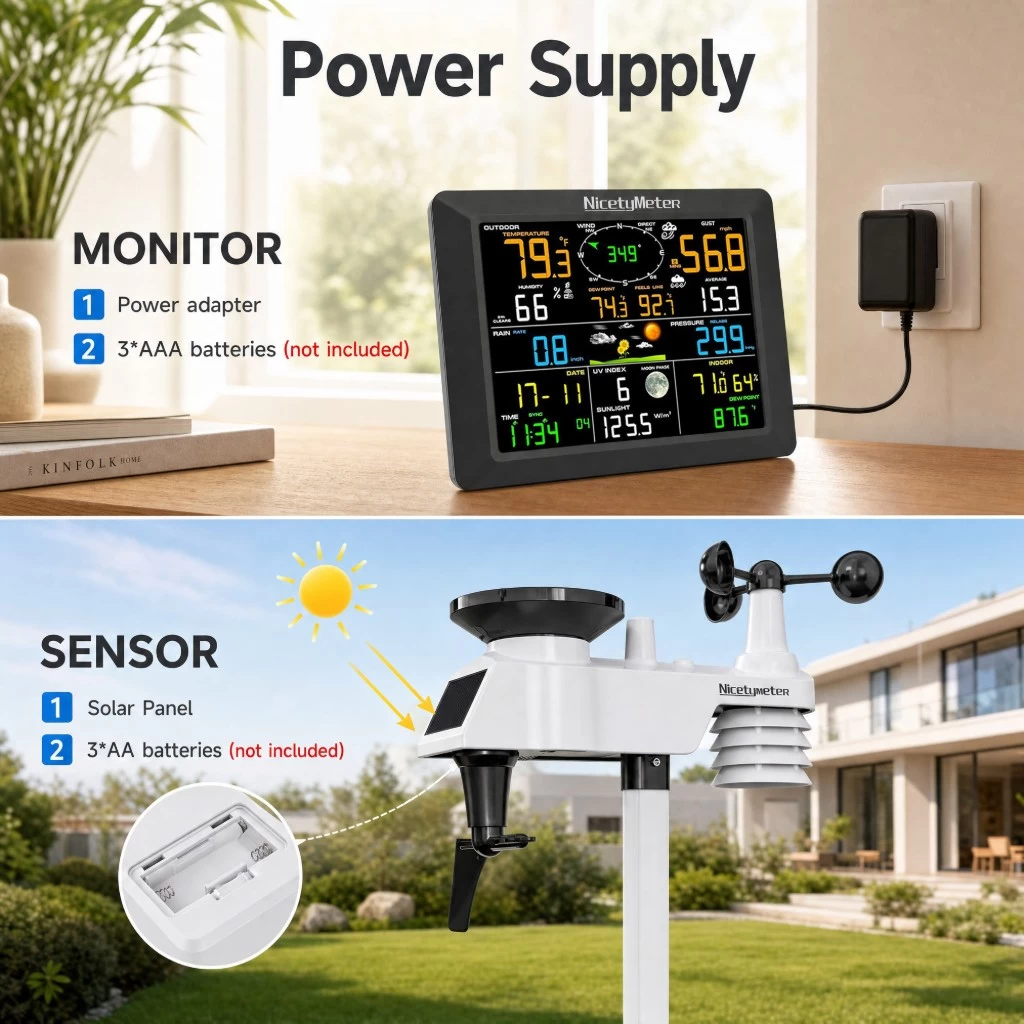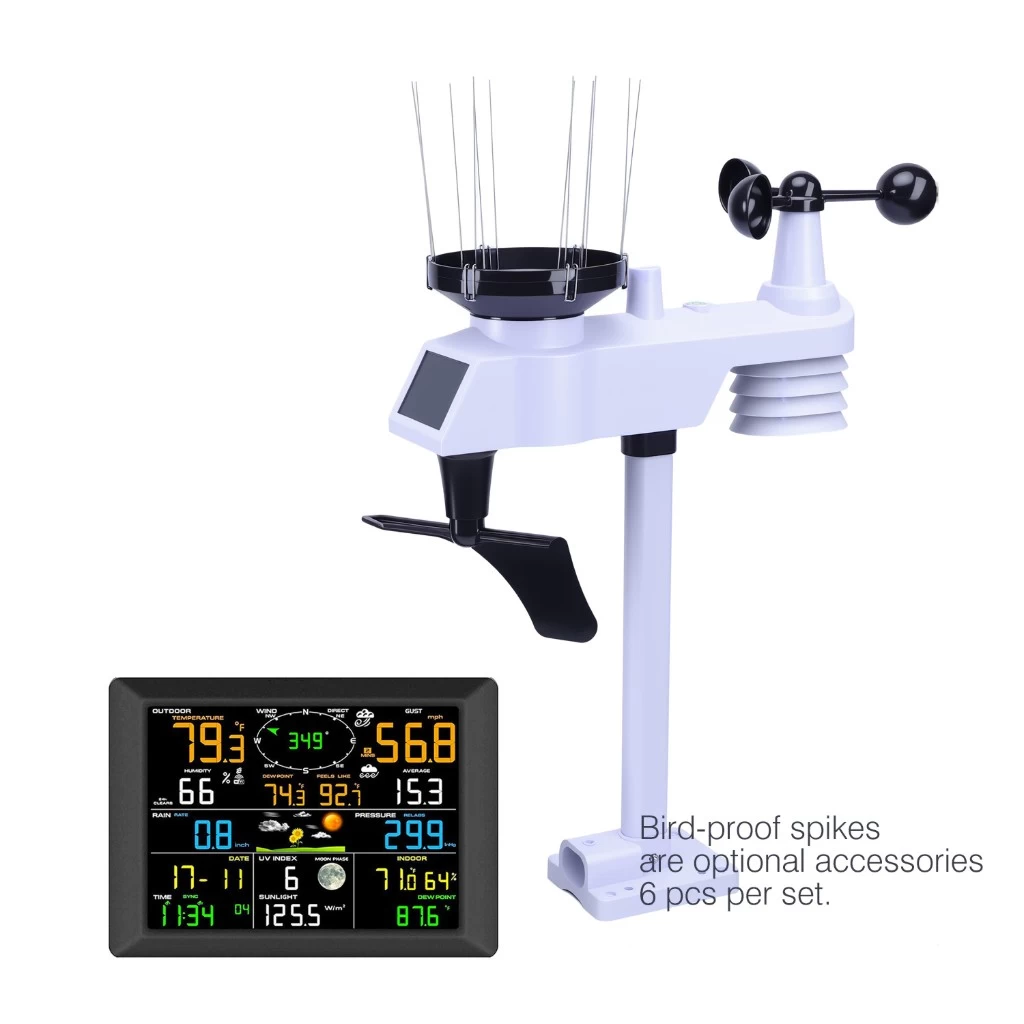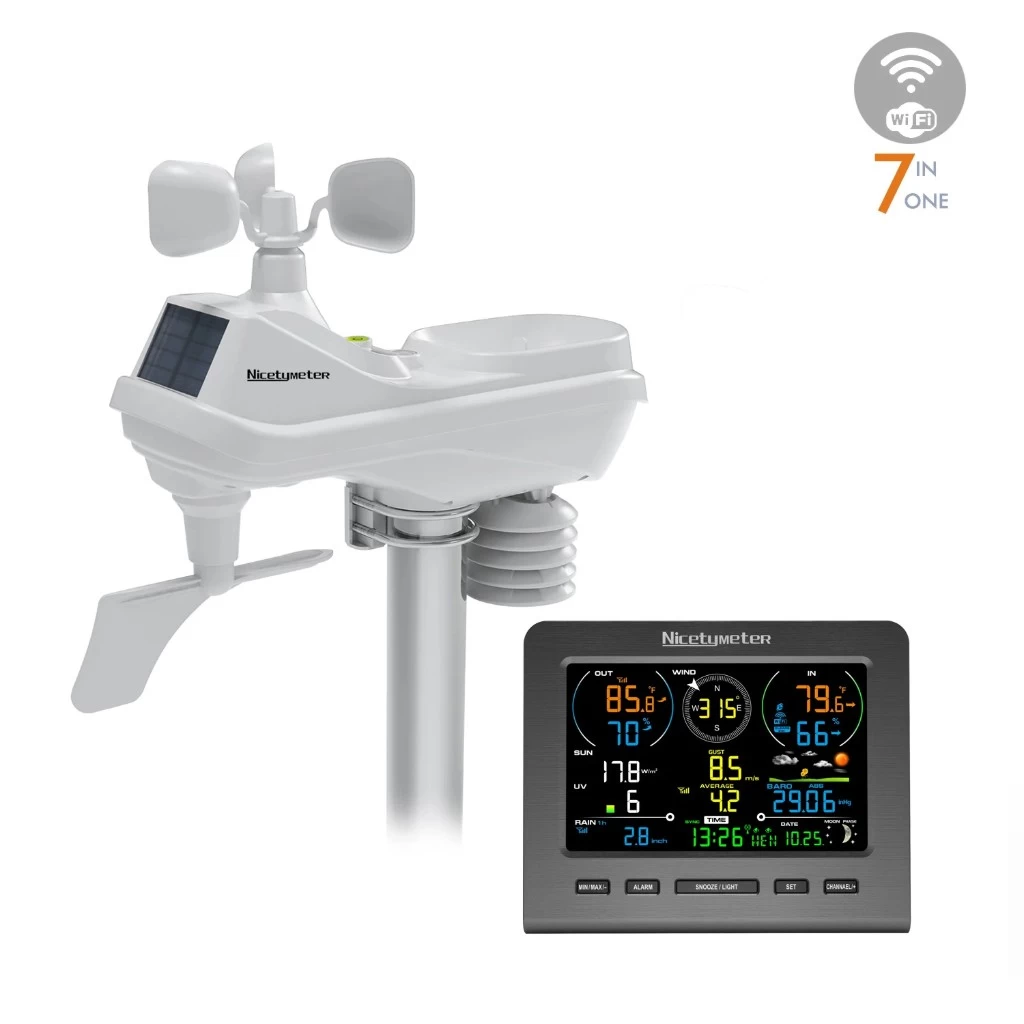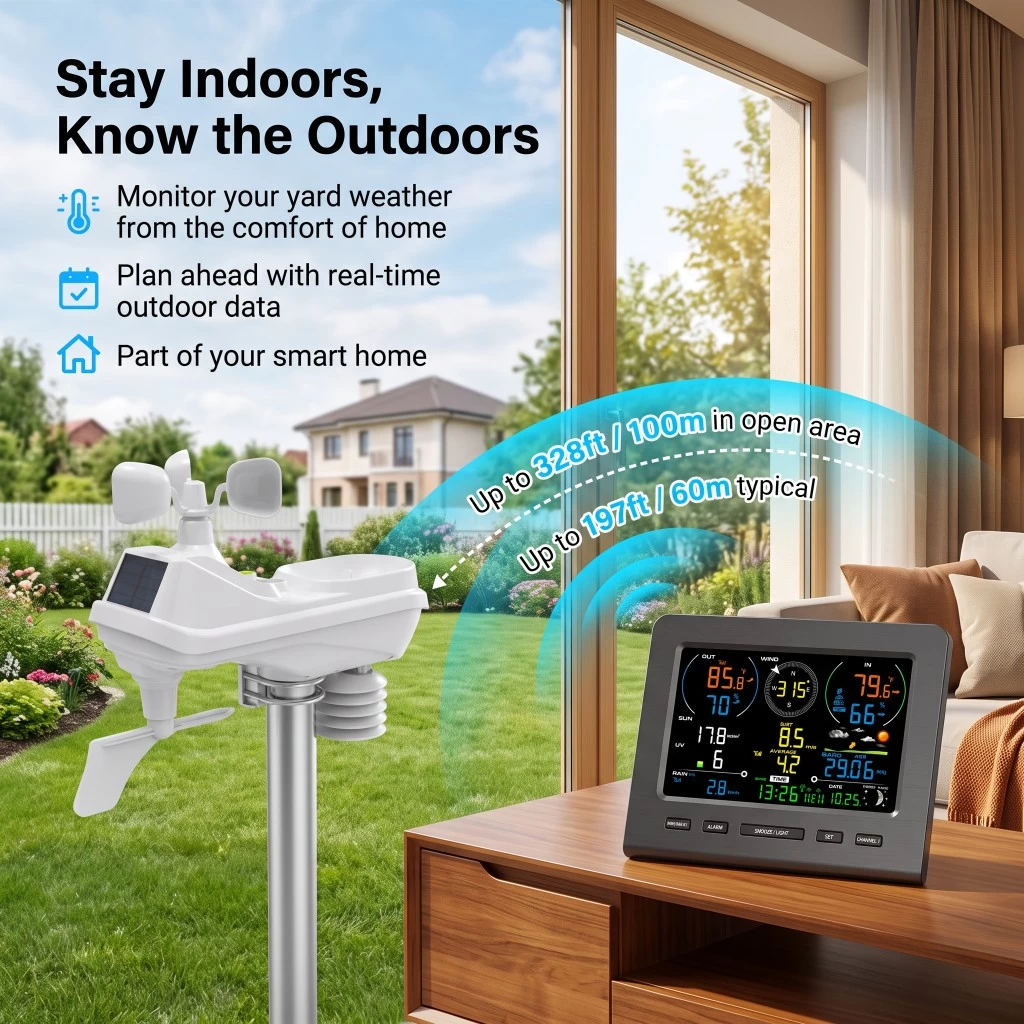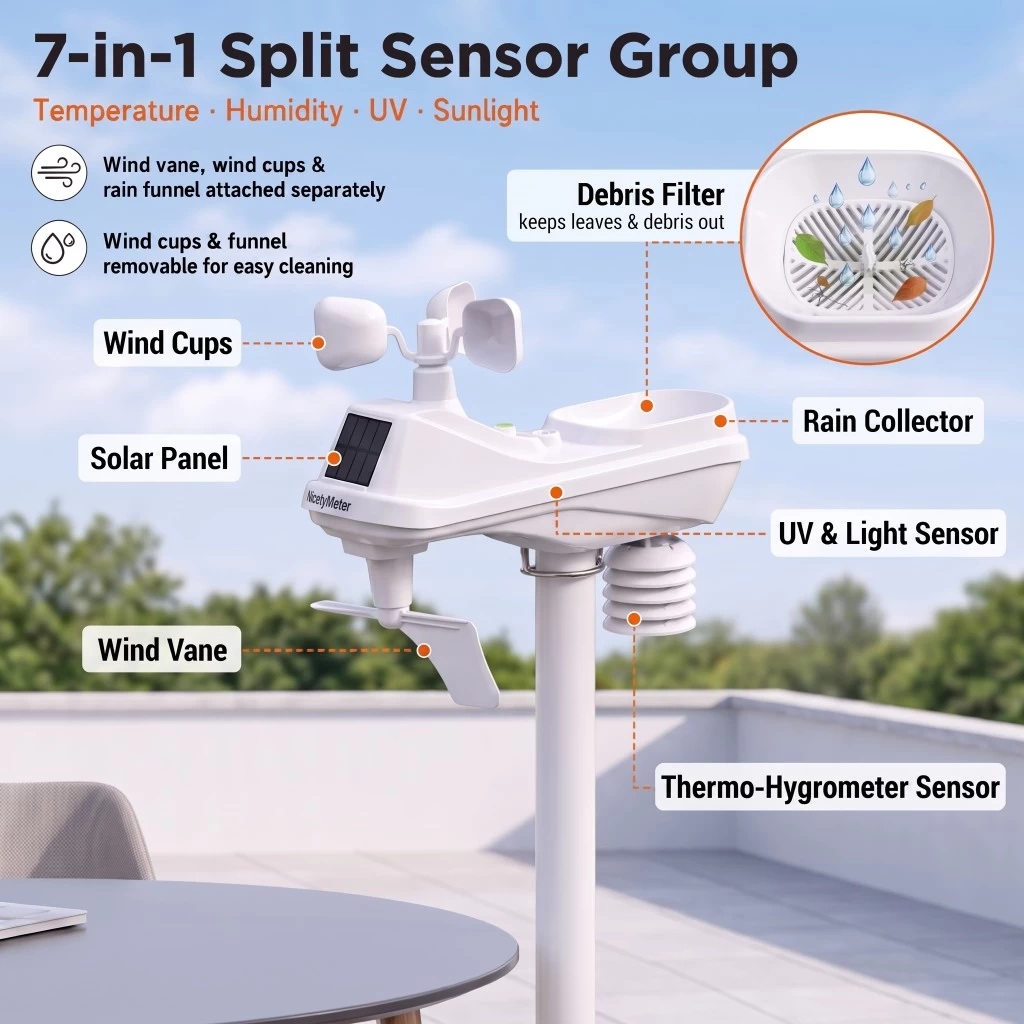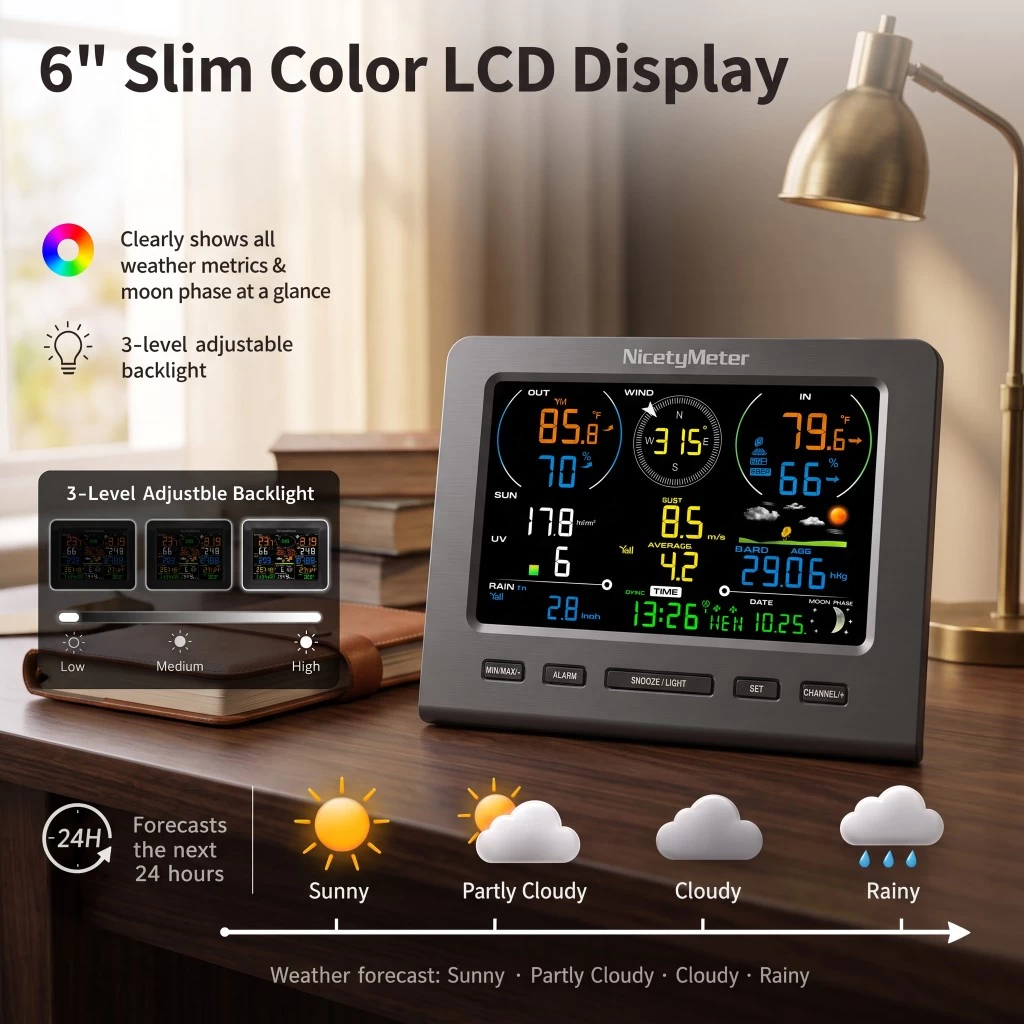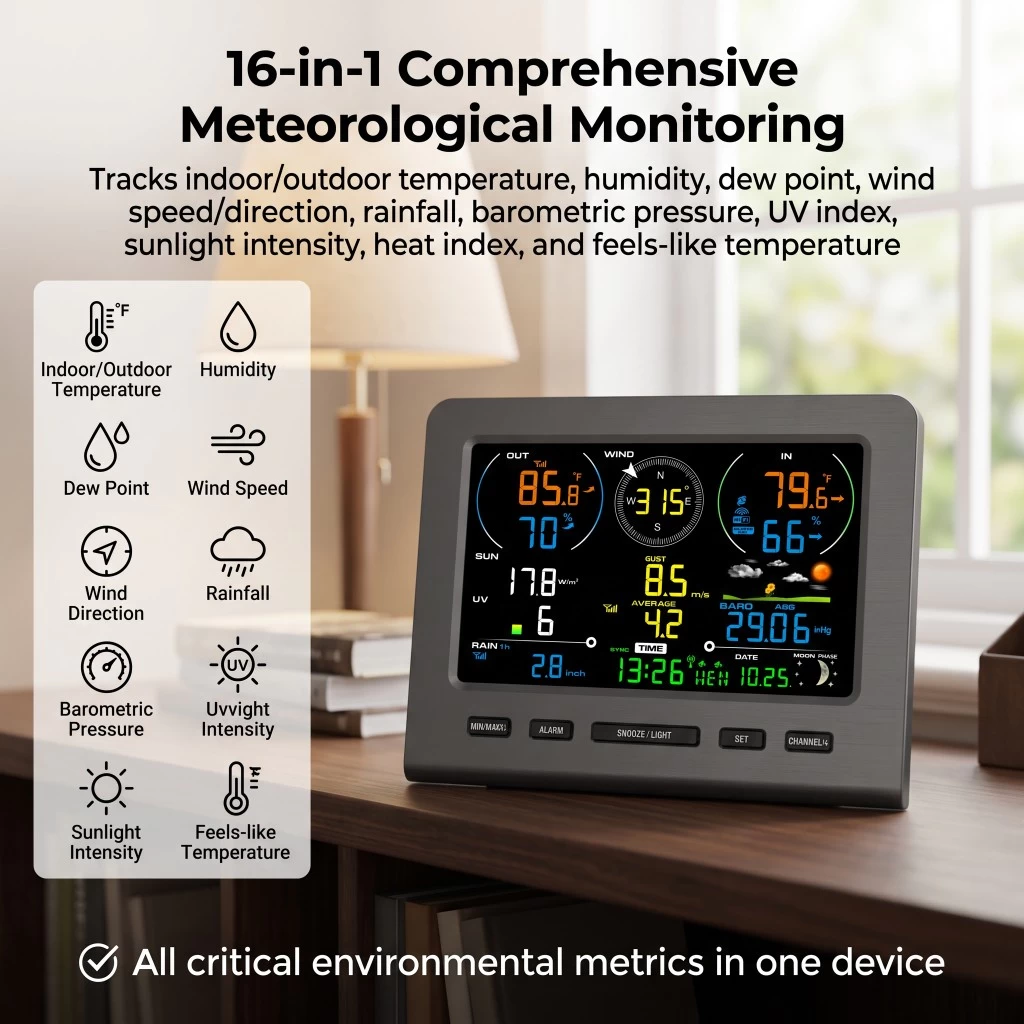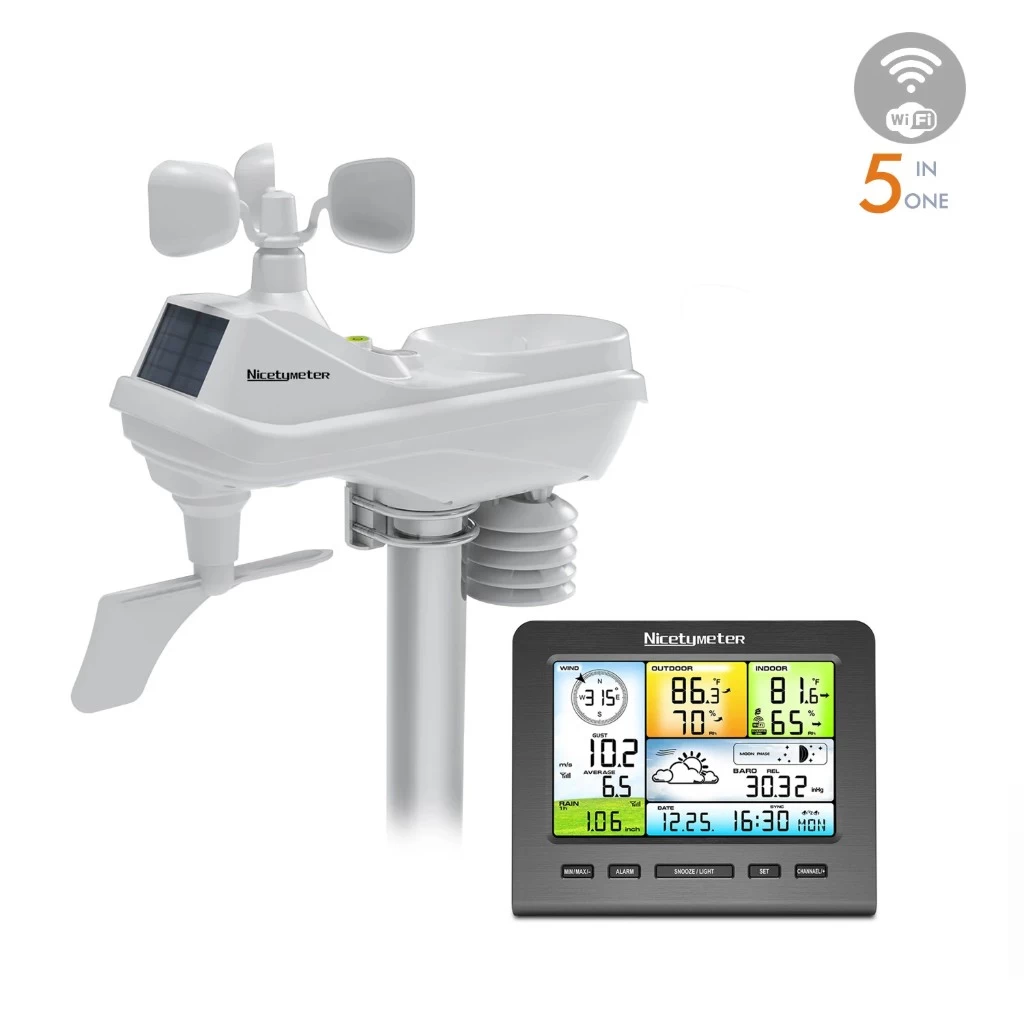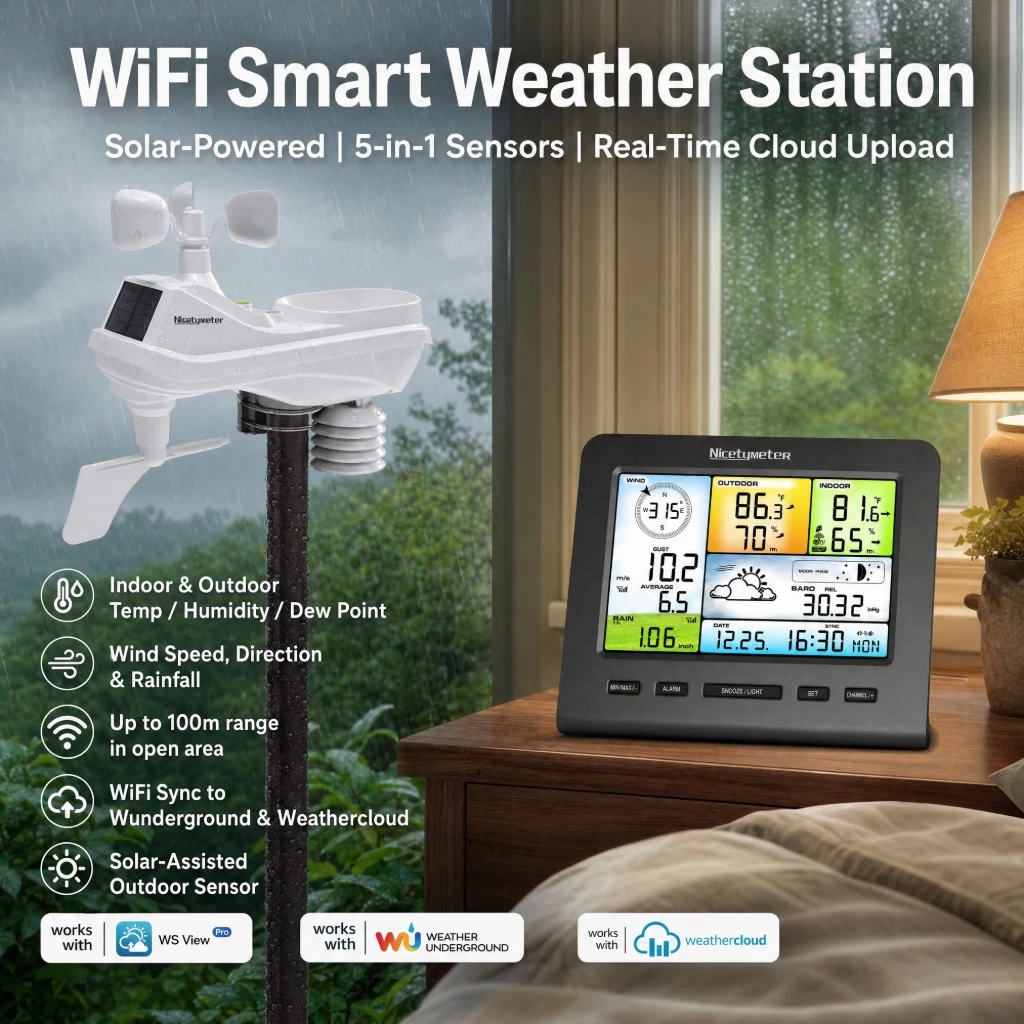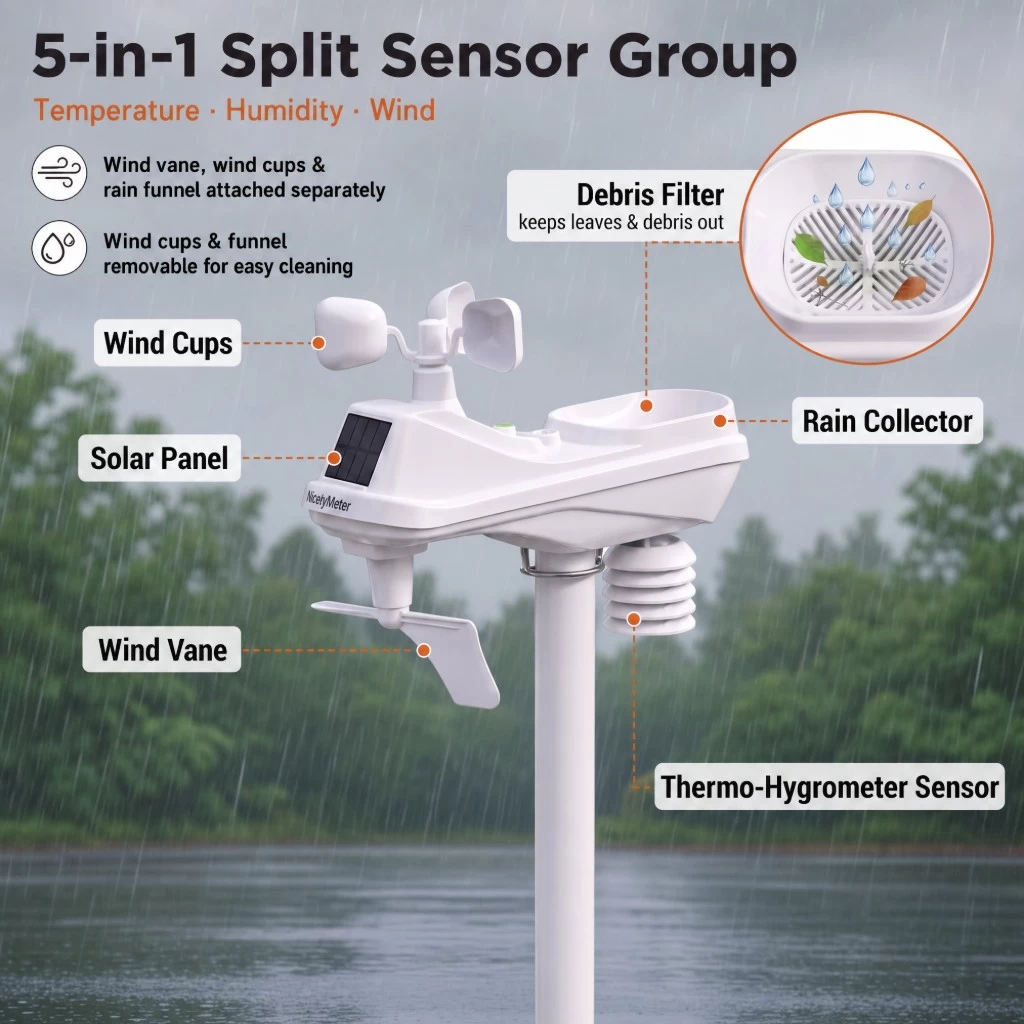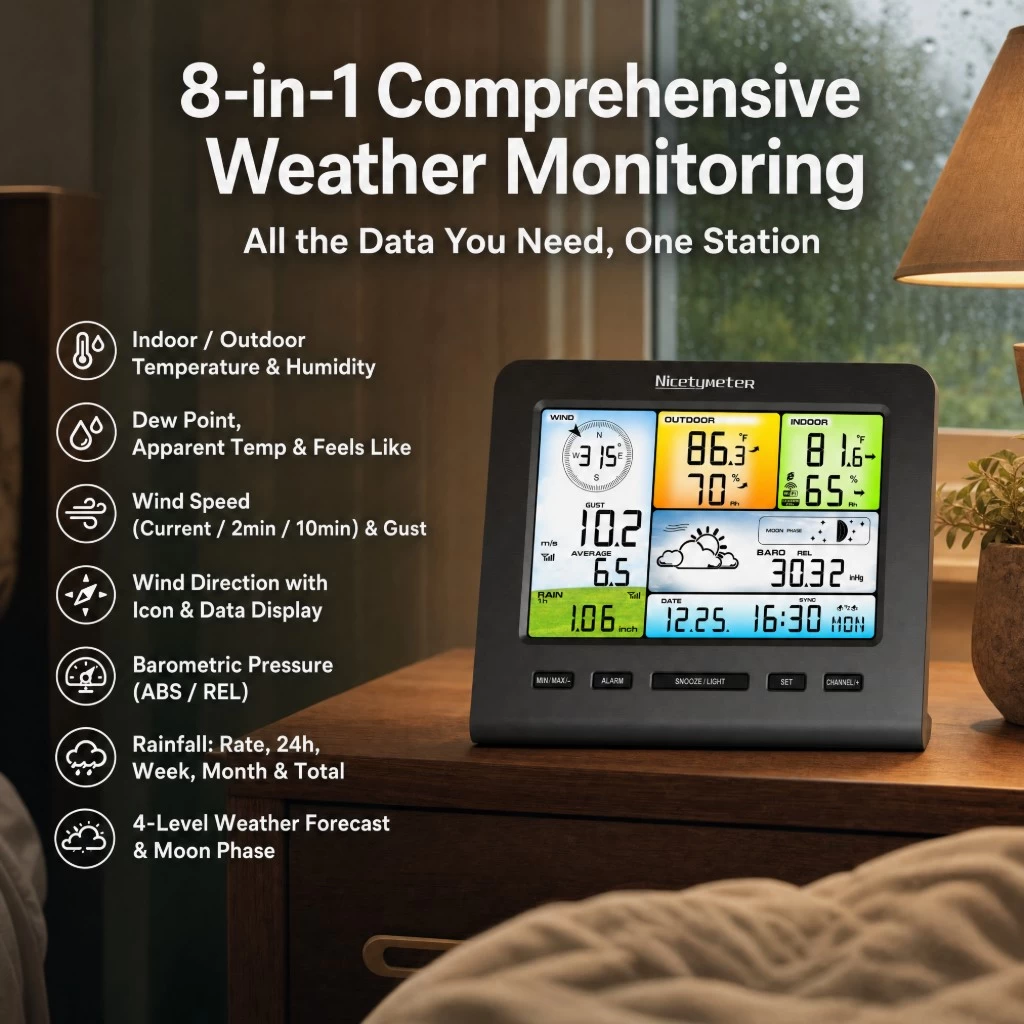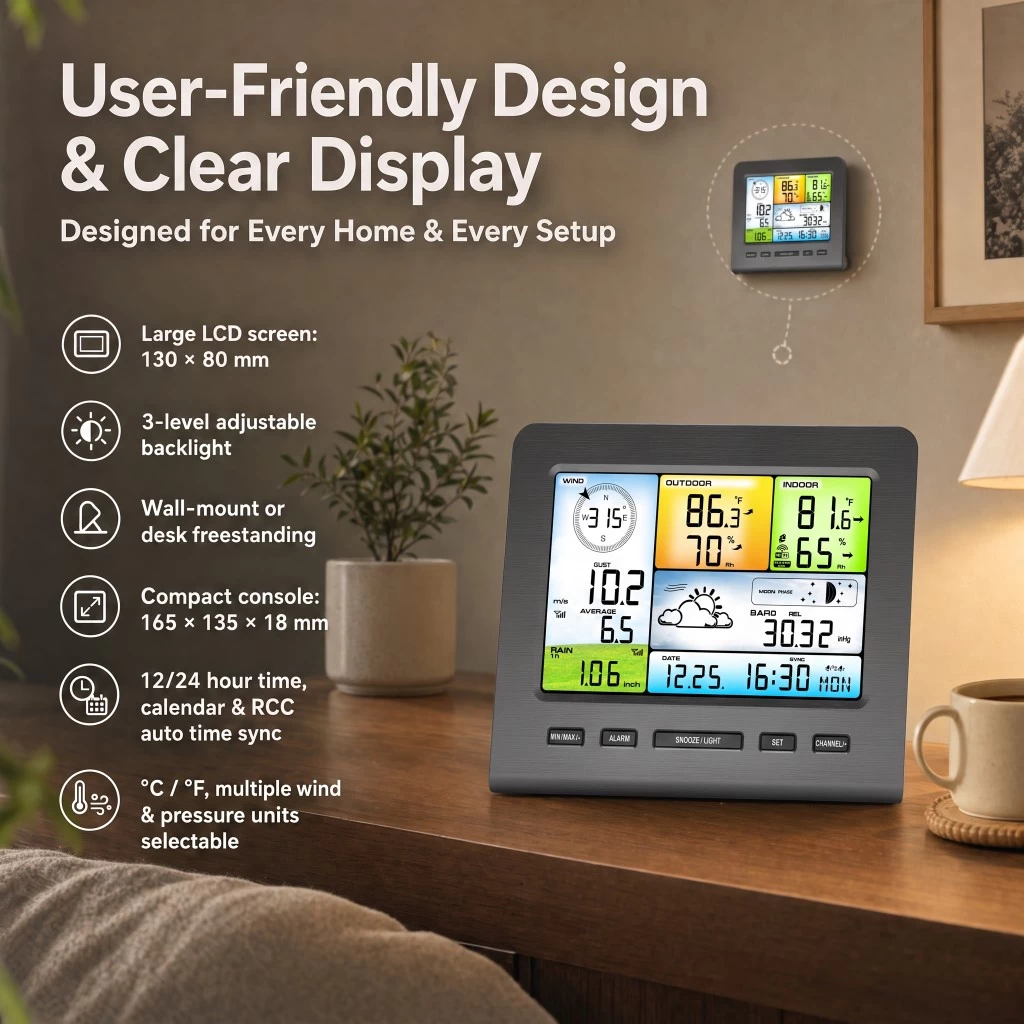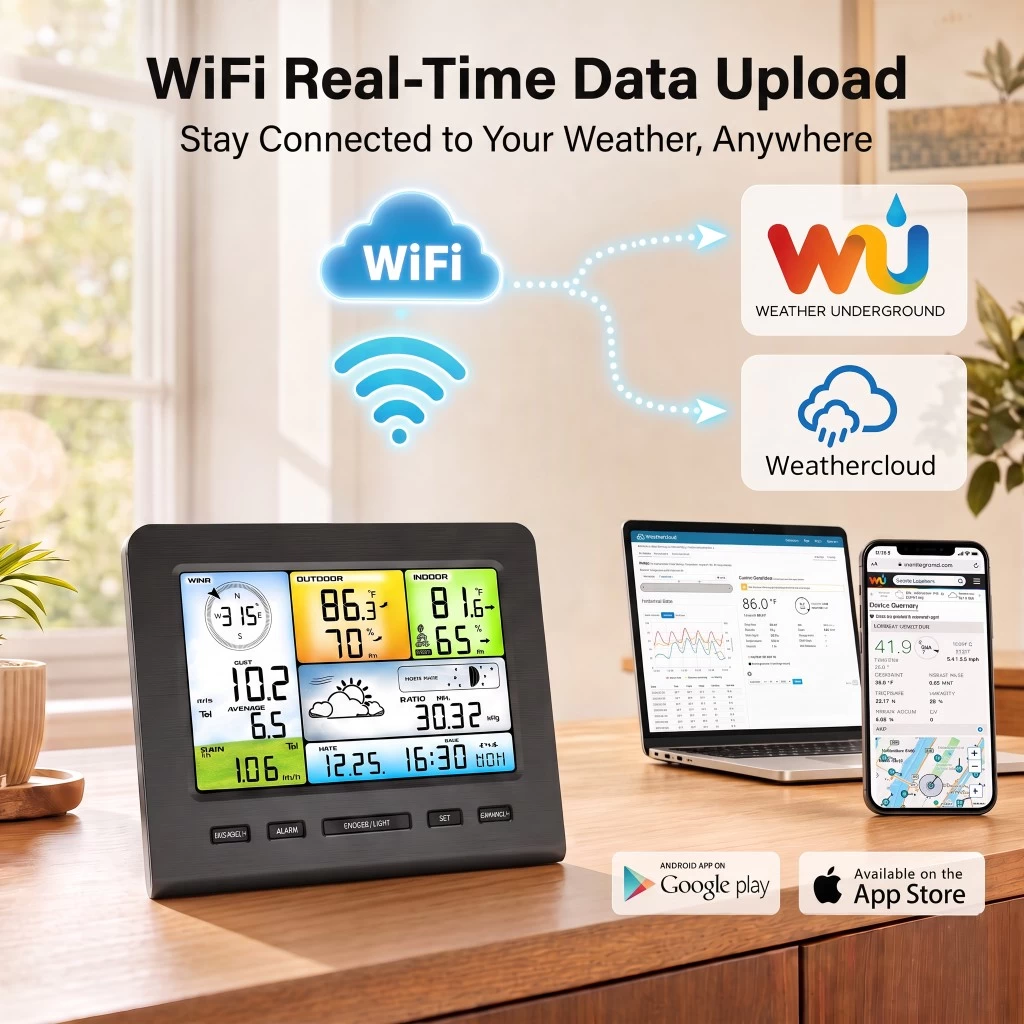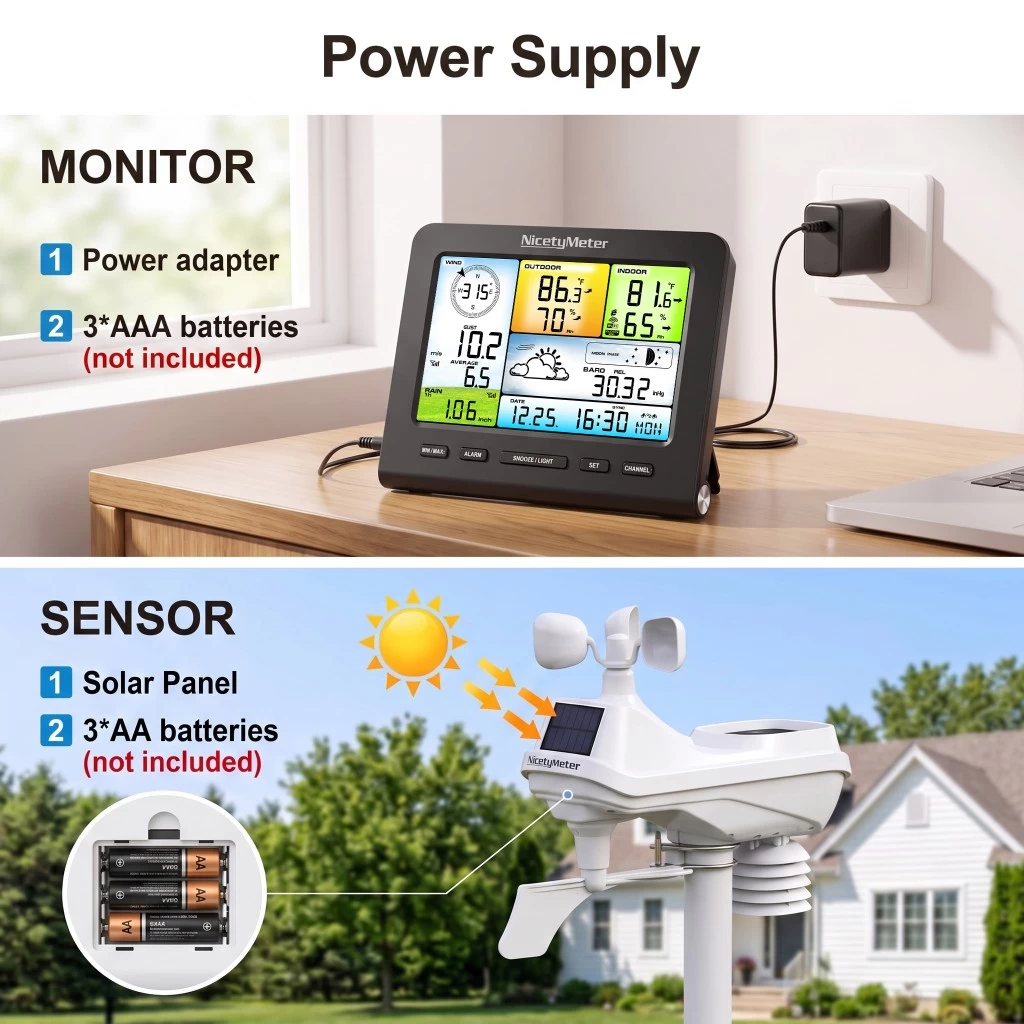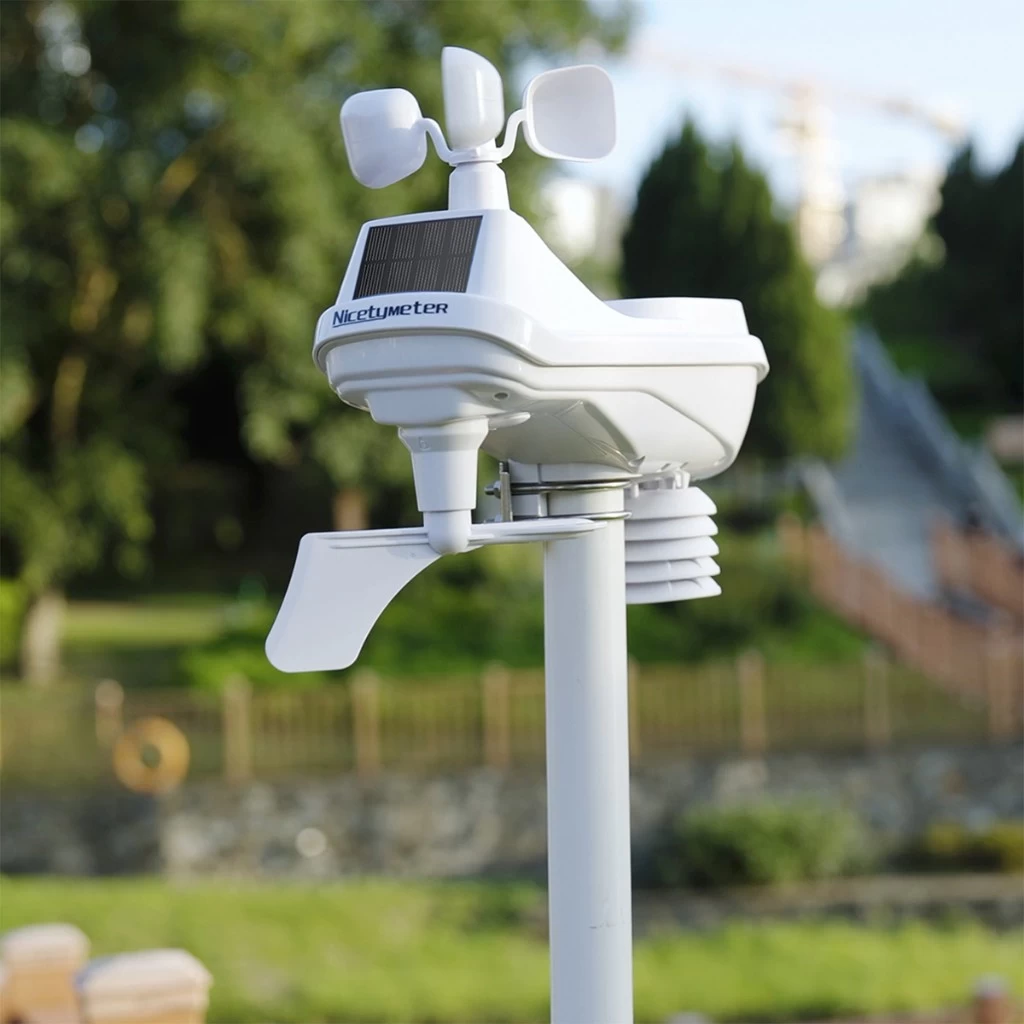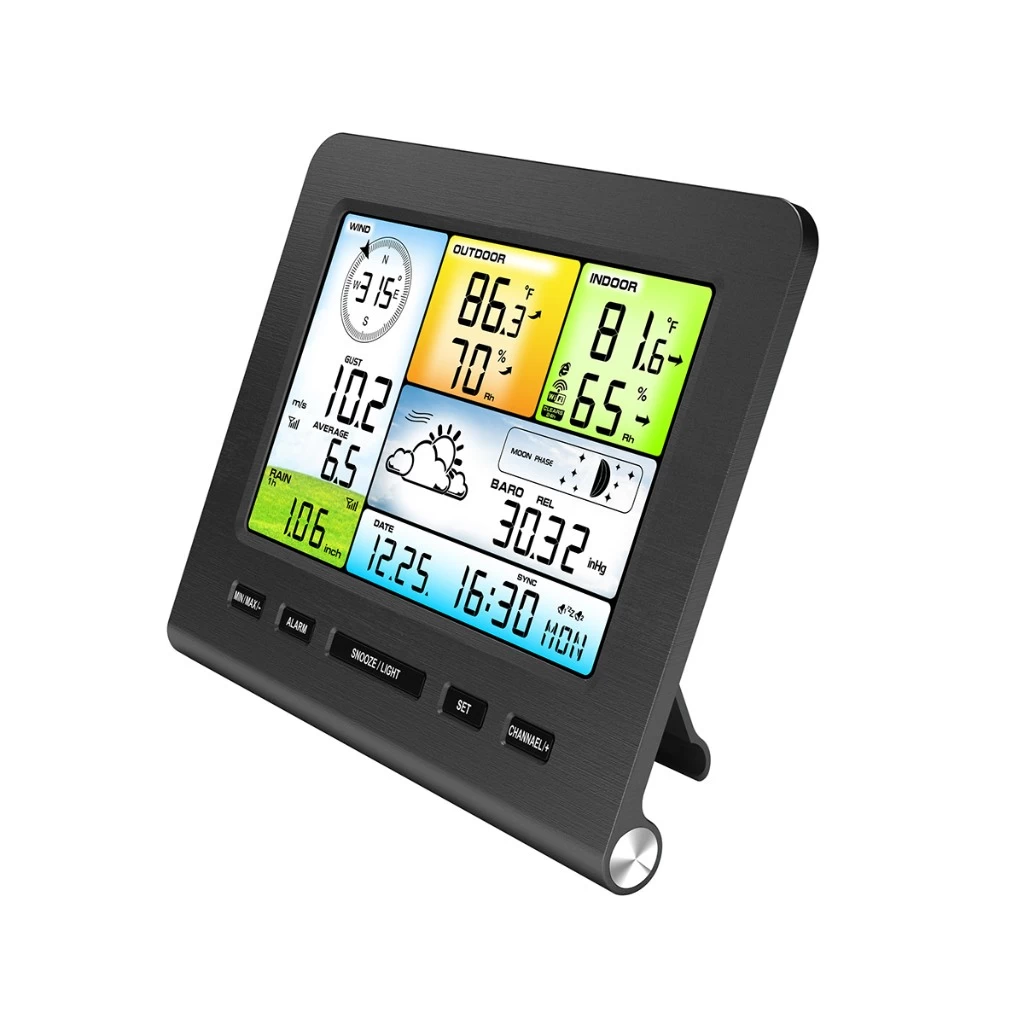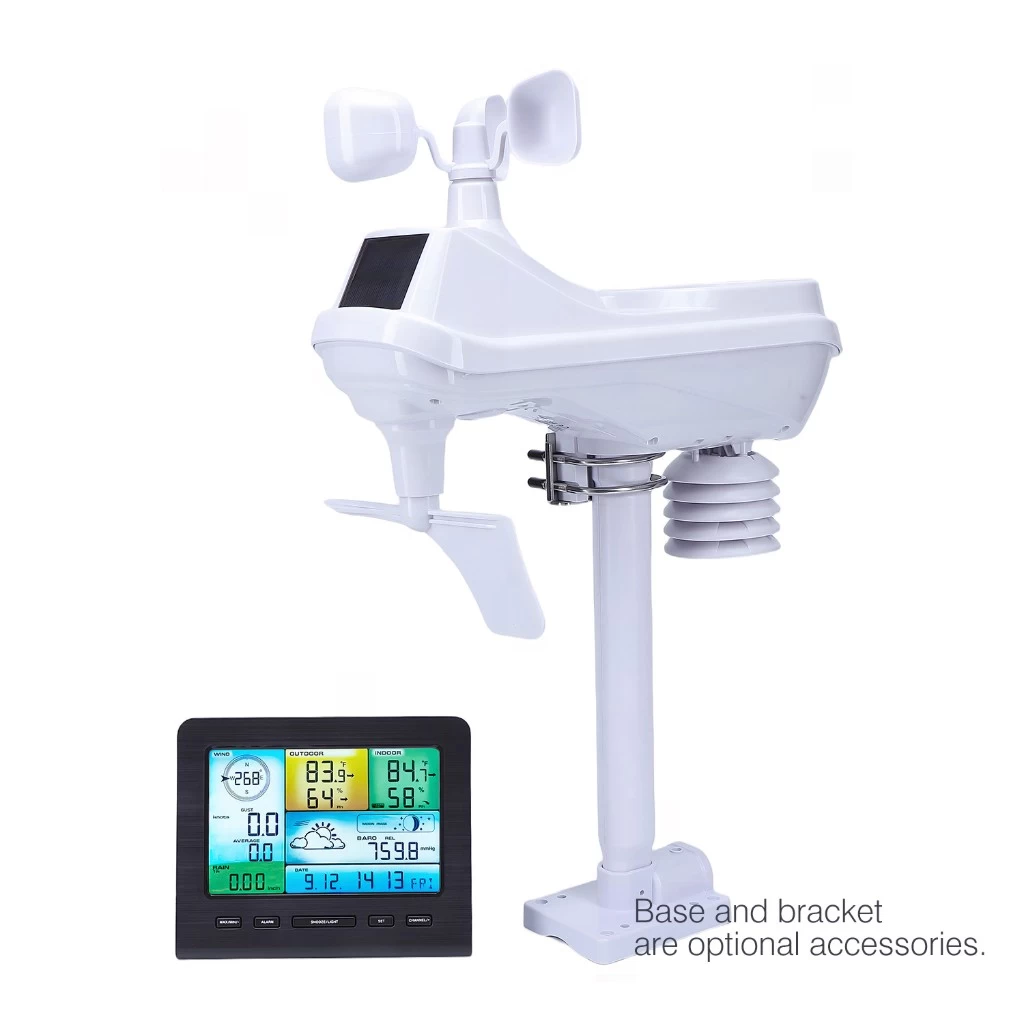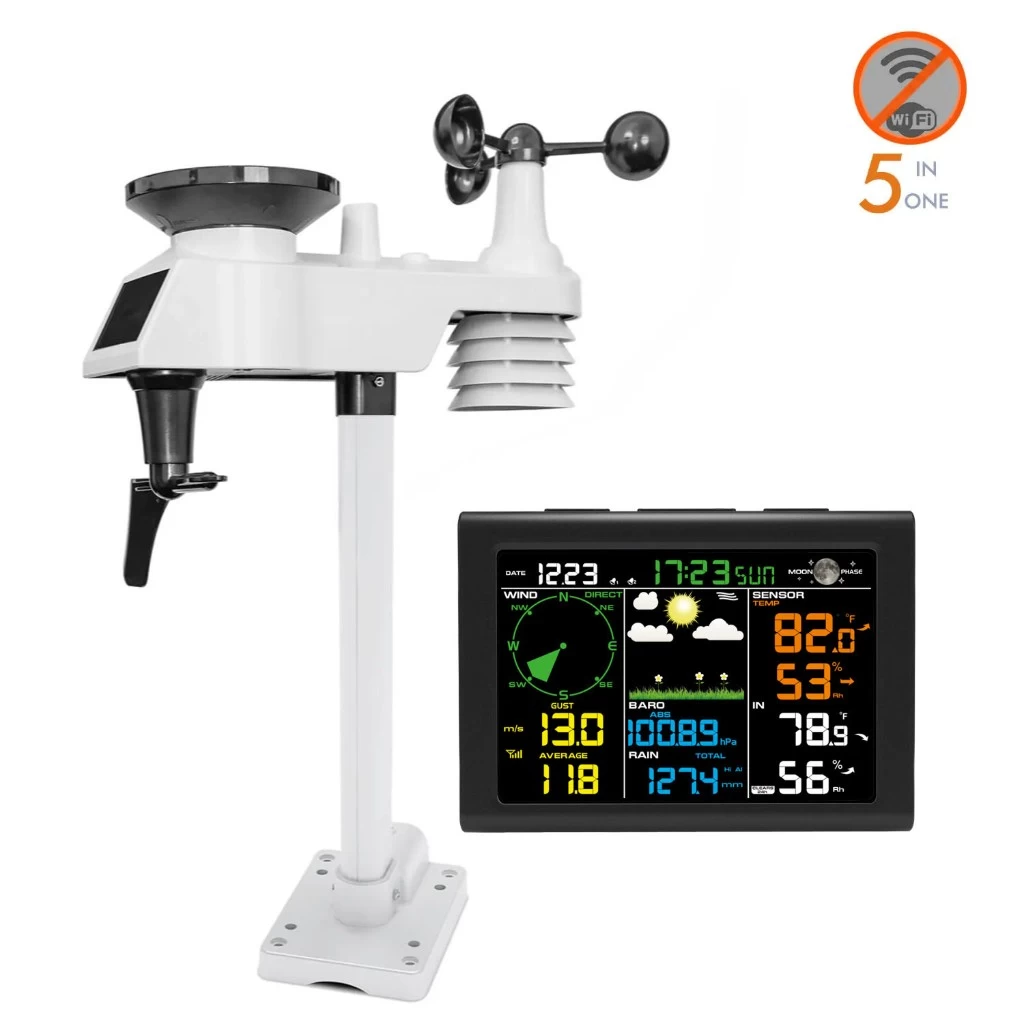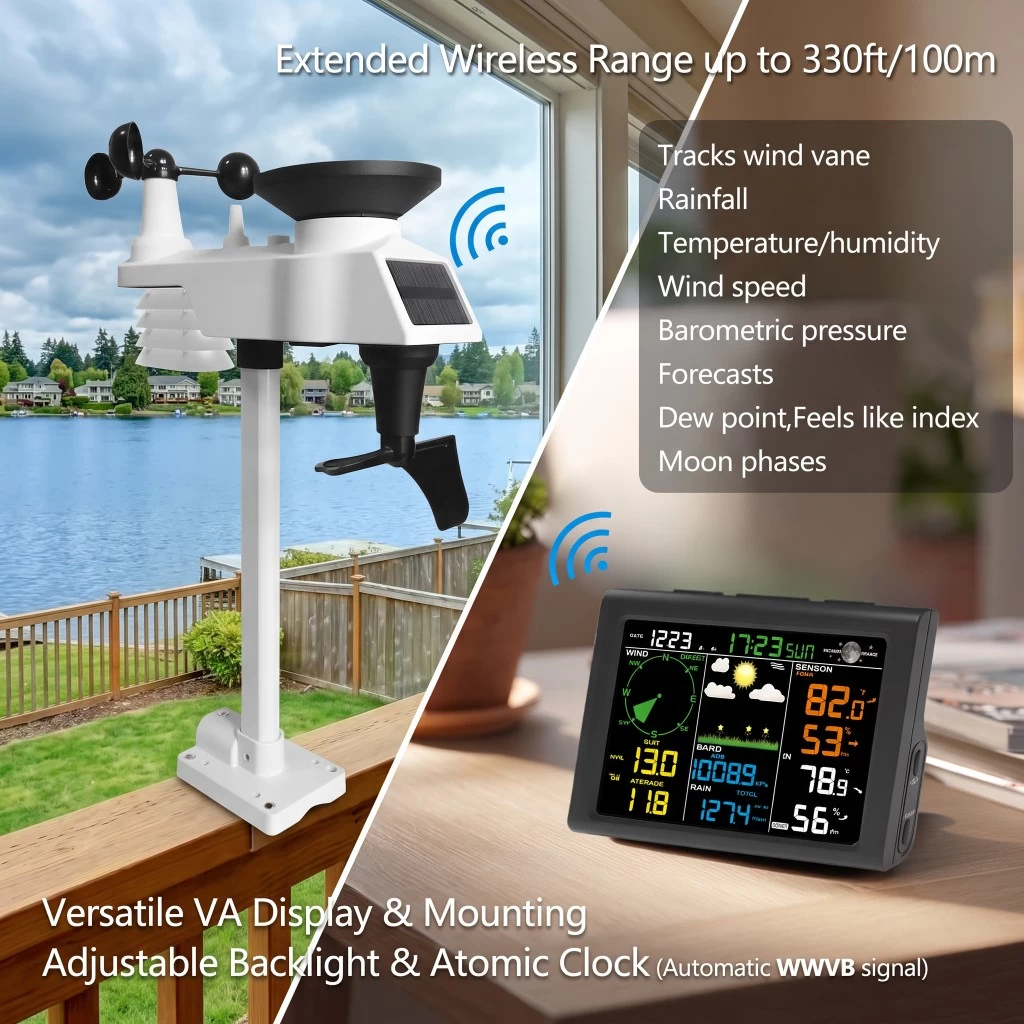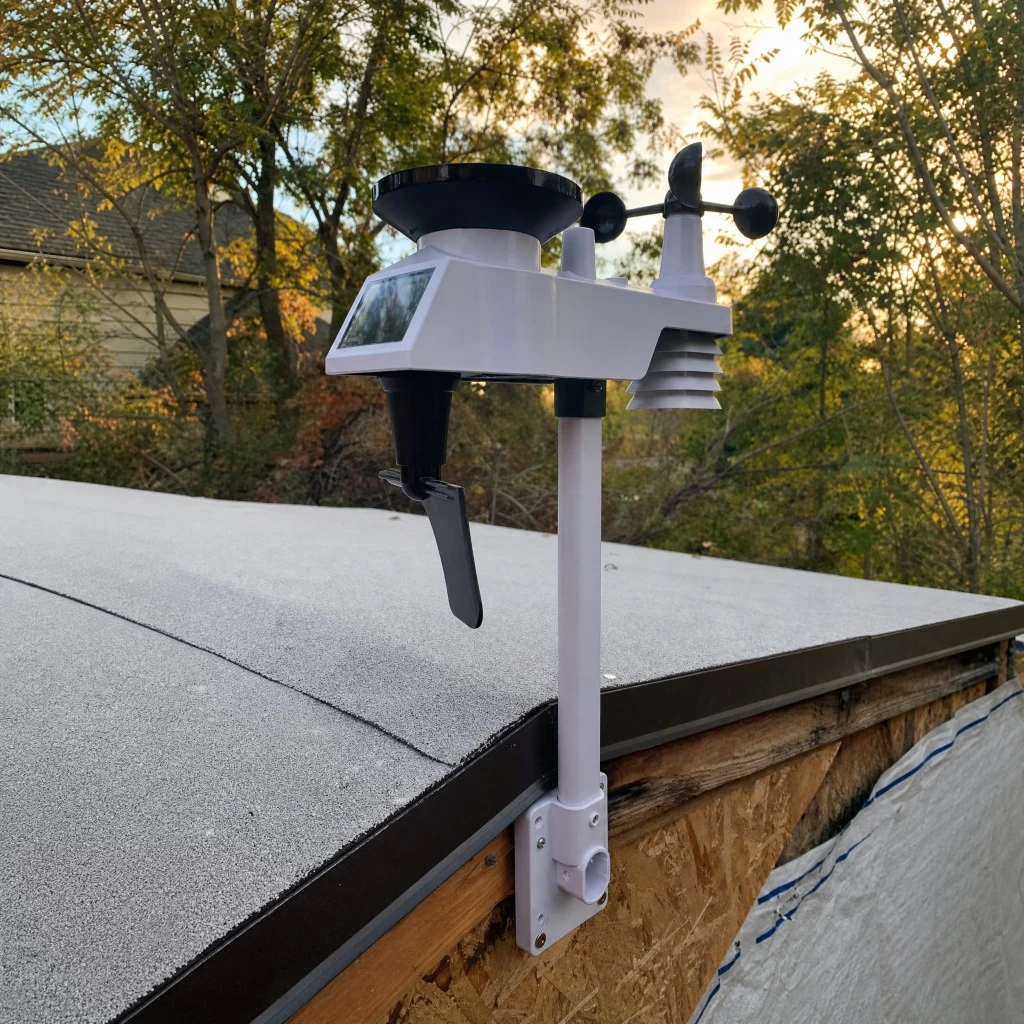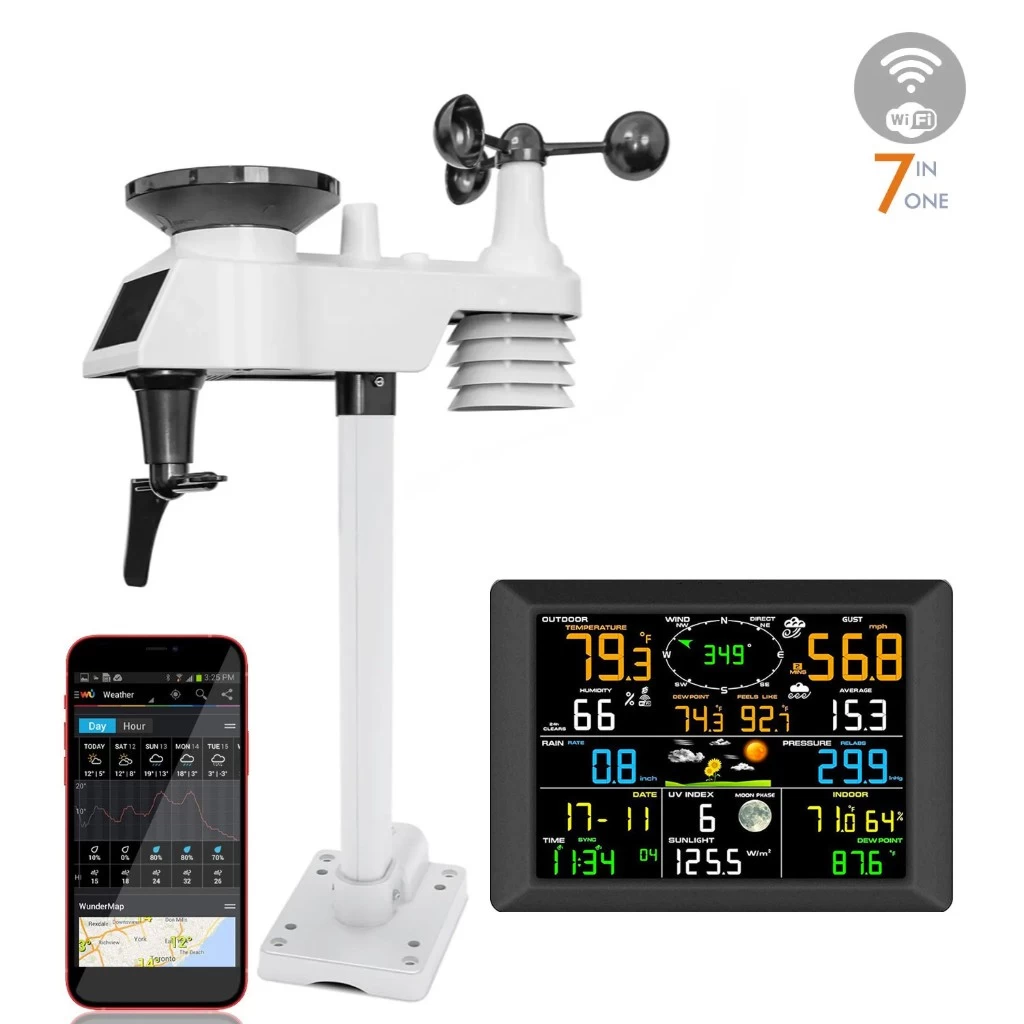
A 5-in-1 and a 7-in-1 weather station measure the same weather. The 7-in-1 adds exactly two things: UV index and light intensity. Everything else — accuracy, sensor quality, console compatibility — is identical.
So this is not a "which is better" question. It is a question about your site: does anything you do depend on knowing how strong the sun is?
What both sensors measure
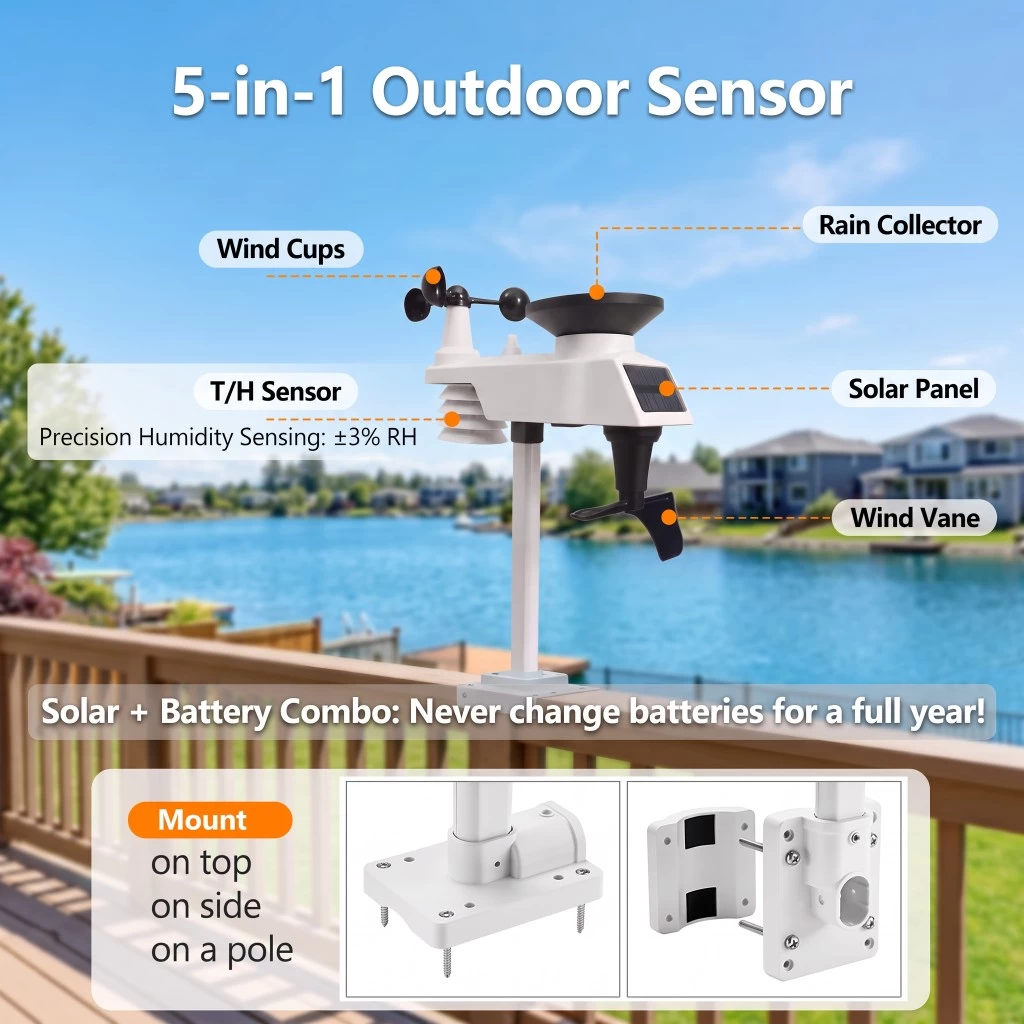
Five elements, to the same accuracy on either version:
- Temperature
- Humidity
- Wind speed and direction
- Rainfall
- Barometric pressure
If that list already covers everything you would look at, stop here — the 5-in-1 is the honest choice and nothing below will change your mind.
What the 7-in-1 adds
UV index tells you the strength of ultraviolet radiation at your location. Light intensity tells you how much usable daylight actually reaches the sensor, in lux.
Both matter for one reason: a station measures your site, not your city. A regional forecast will report "partly sunny" for a garden that has been in shade since 2 pm, and "UV moderate" for a rooftop running two categories higher.
Three cases where the extra channels earn their place
You grow plants, or run a greenhouse
Light decides whether plants get enough usable sun; UV decides whether sensitive crops get scorched. The gap between open sky and a shaded greenhouse is routinely 40–60%, and it shifts through the season as the sun angle moves. Without a light reading you are guessing at a number that directly controls growth.
You own solar panels
Correlating light intensity with panel output is the fastest way to separate a weather problem from a hardware problem. If output drops while lux holds steady, the fault is in the array — soiling, shading, a failing string — not the sky. That one comparison often saves a service call.
You work or exercise outdoors
UV runs higher than the regional forecast suggests at altitude, near water, and on reflective surfaces like concrete or snow. A local reading beats a regional average when you are deciding how long to stay out or how much protection to carry.
The short version: if none of those three describes your site, the 7-in-1 will record two numbers you never act on. Take the 5-in-1 and put the difference towards a larger console or a better mounting position.
Side by side
| Decision | 5-in-1 | 7-in-1 |
|---|---|---|
| Core five elements | Yes | Yes — identical accuracy |
| UV index | — | Yes |
| Light intensity (lux) | — | Yes |
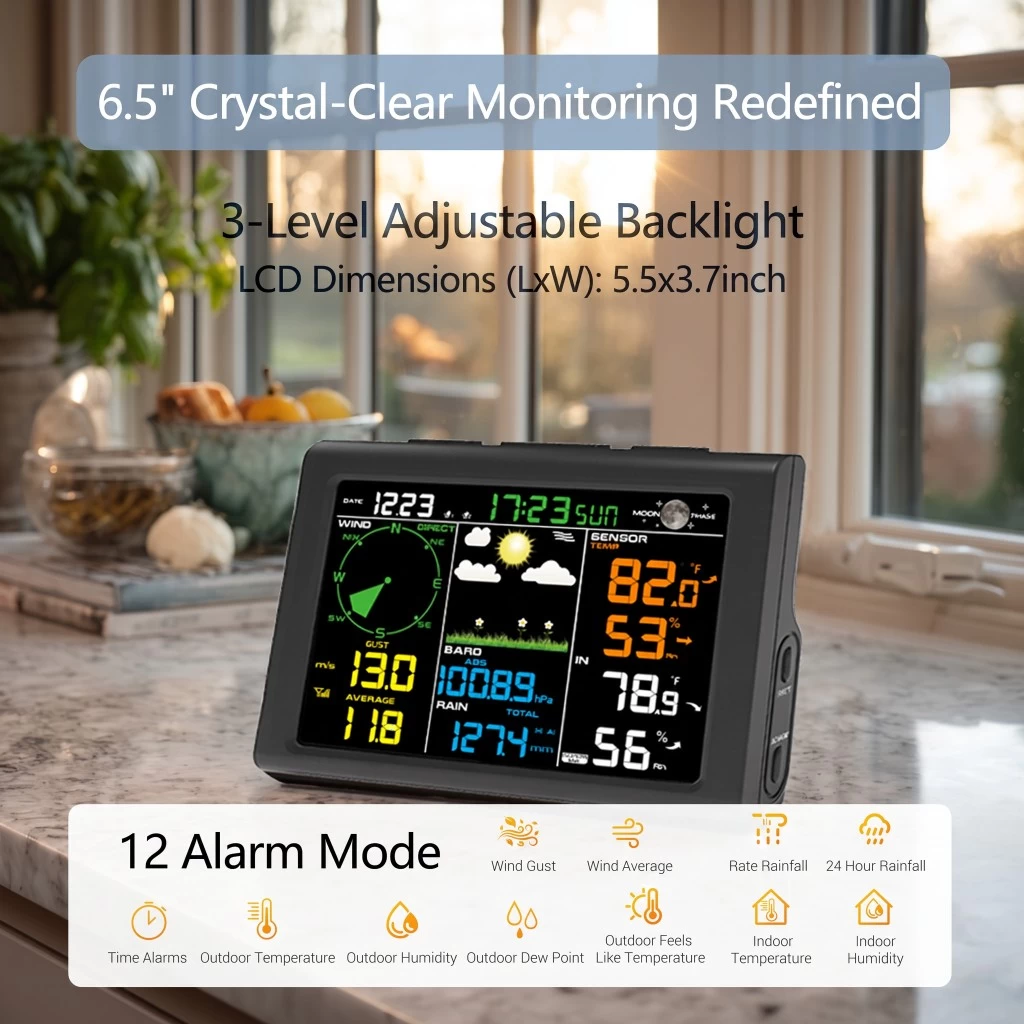
| Console compatibility | Any FT series console | Any FT series console |
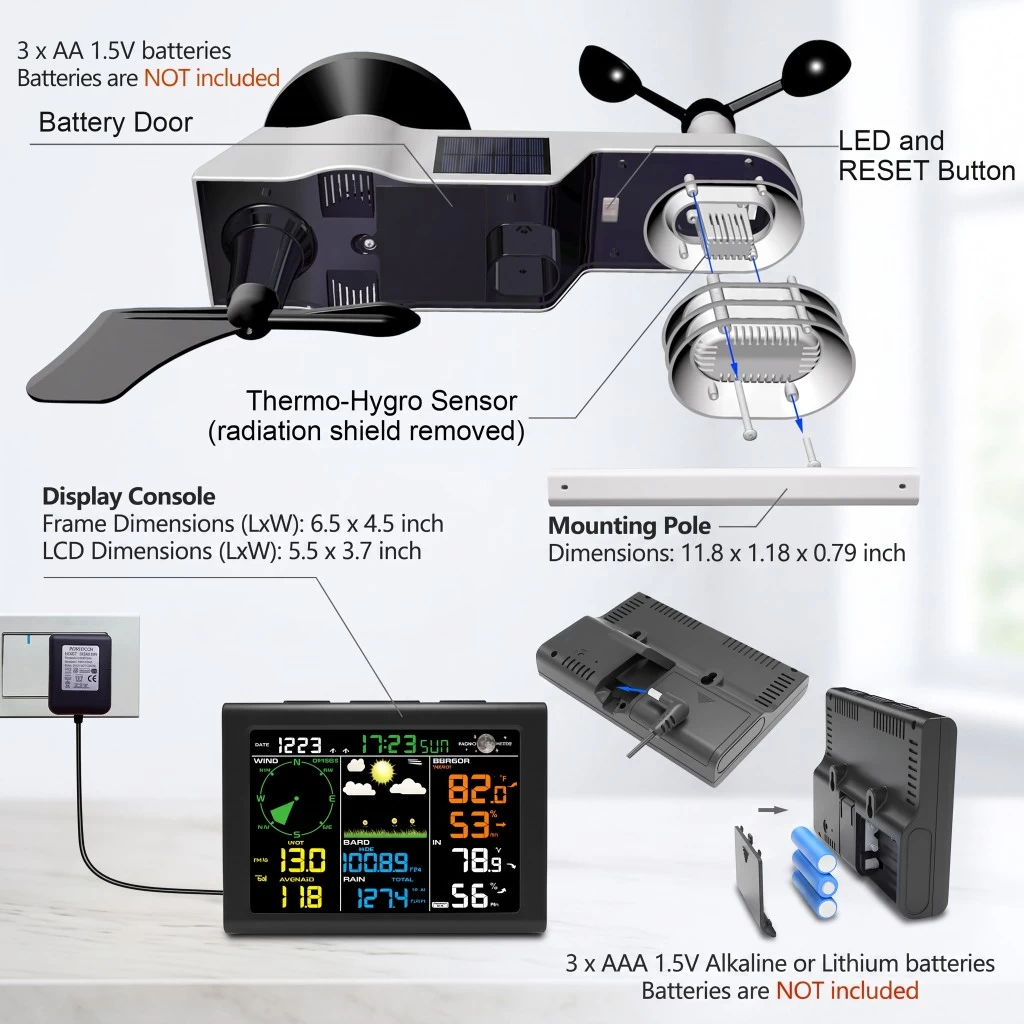
| Battery life | 12+ months | 12+ months (extra channels absorbed by the solar panel) |
| Best for | Home weather watching | Growing, solar, outdoor work |
The assumption that costs people money
Many buyers assume the 7-in-1 spreads its accuracy across more channels, so the basics must be weaker. They are not. Every generation of NicetyMeter outdoor sensor measures temperature, humidity, wind, rain and pressure the same way; the 7-in-1 simply adds two channels on top. UV and light are extra, not a trade-off.
The one thing you cannot do is add them later — both sensors sit inside the outdoor head, so upgrading means replacing the whole unit. If there is a real chance you will want light data in two or three years, it is cheaper to buy it now.
Where this leaves you
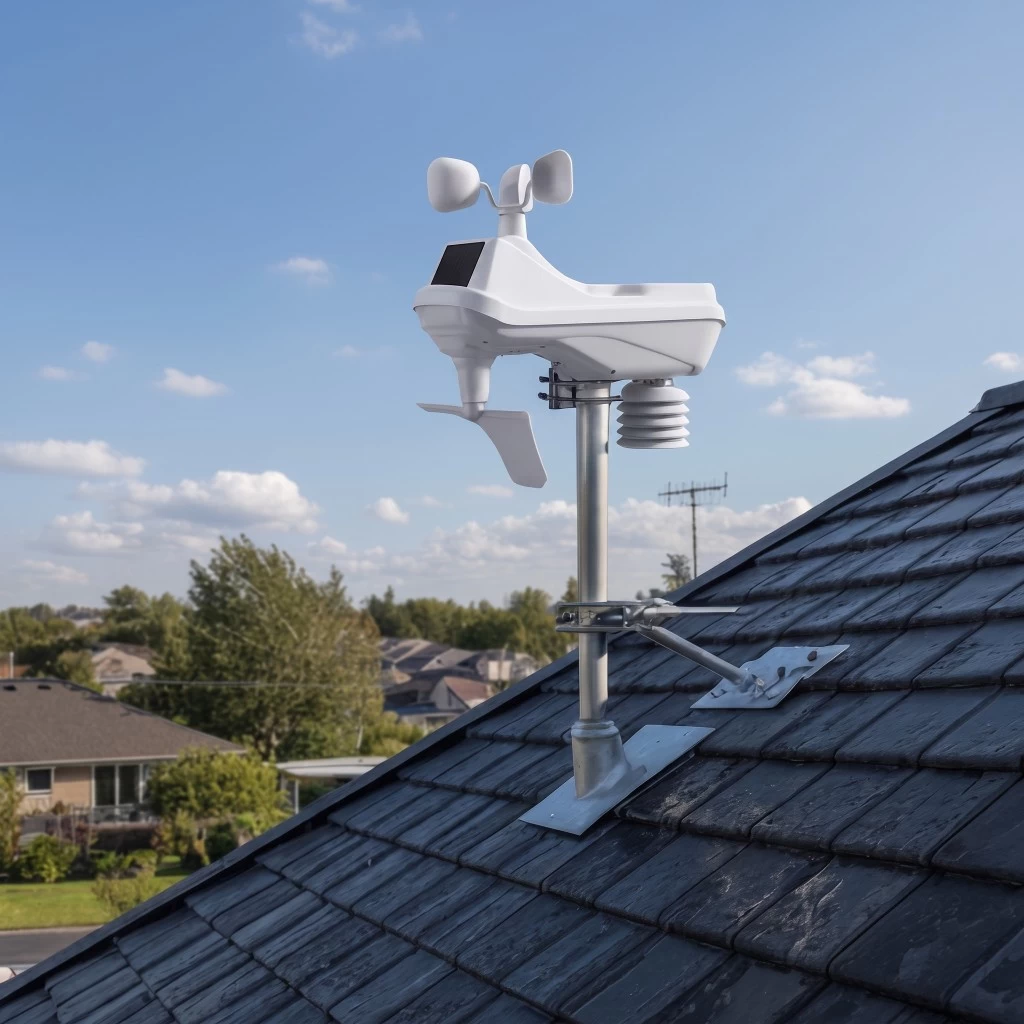
With UV and light settled, the next question is not about measurement at all — it is about how the sensor gets onto your roof or pole. That is a mounting decision, and it decides whether your readings are any good: a sensor tucked behind a wall reads temperature acceptably and wind badly.
The mounting guide compares the bracket and pole-clamp generations and shows where each one sits. If you would rather see the whole range first, the FT series buying guide puts all 13 combinations in one table.
FAQ
Is the 7-in-1 less accurate at the basics?
No. All generations measure temperature, humidity, wind, rain and pressure the same way. The 7-in-1 adds UV and light channels on top rather than dividing its accuracy between them.
Can I add UV and light to a 5-in-1 later?
No. Both sensors are built into the outdoor head, so the choice is made at purchase. Retrofitting means replacing the entire outdoor unit — usually more than the price difference between the two versions.
Do the extra channels drain the battery?
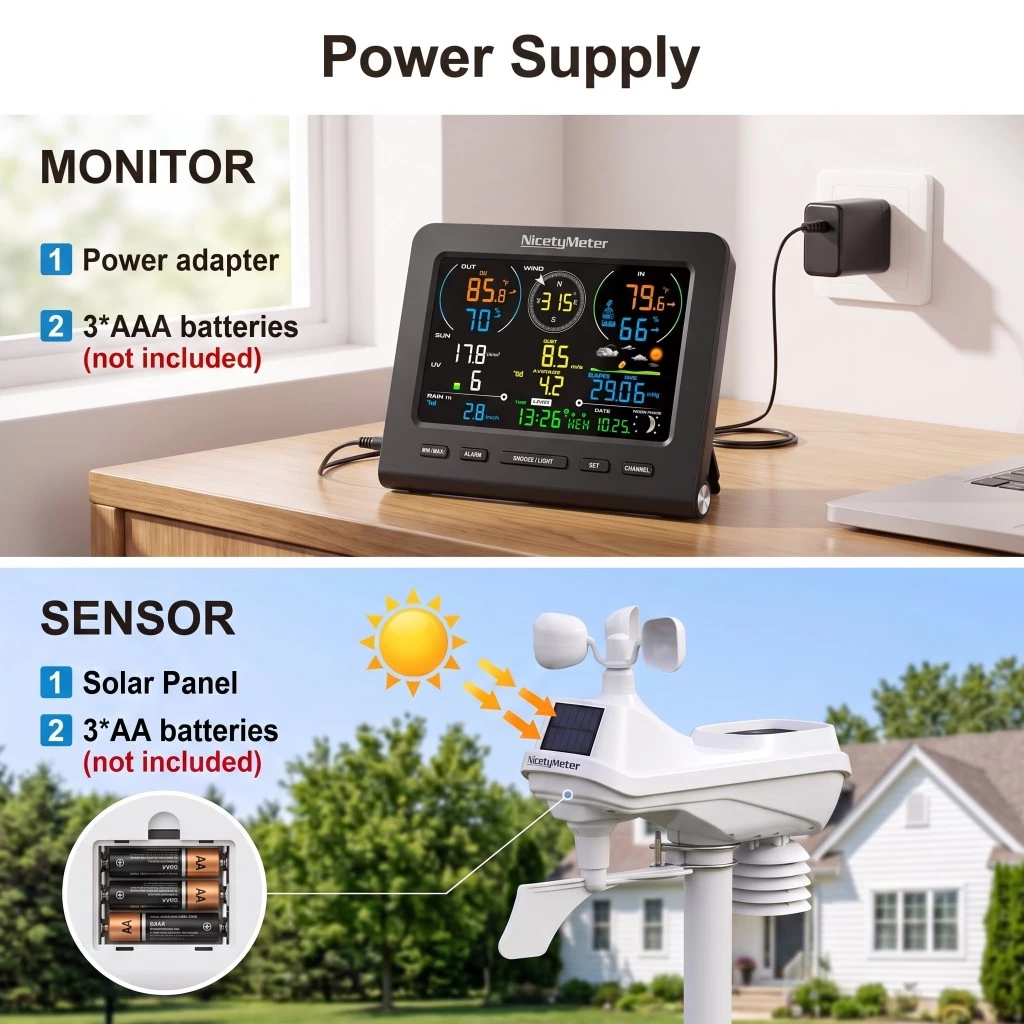
They add a small load, absorbed by the solar panel on assisted models. Both versions are specified at 12+ months on a set of AA cells.
Part of a three-part series on choosing an FT series weather station. The other two cover how the model numbers work across all 13 combinations and where and how to mount the outdoor sensor.