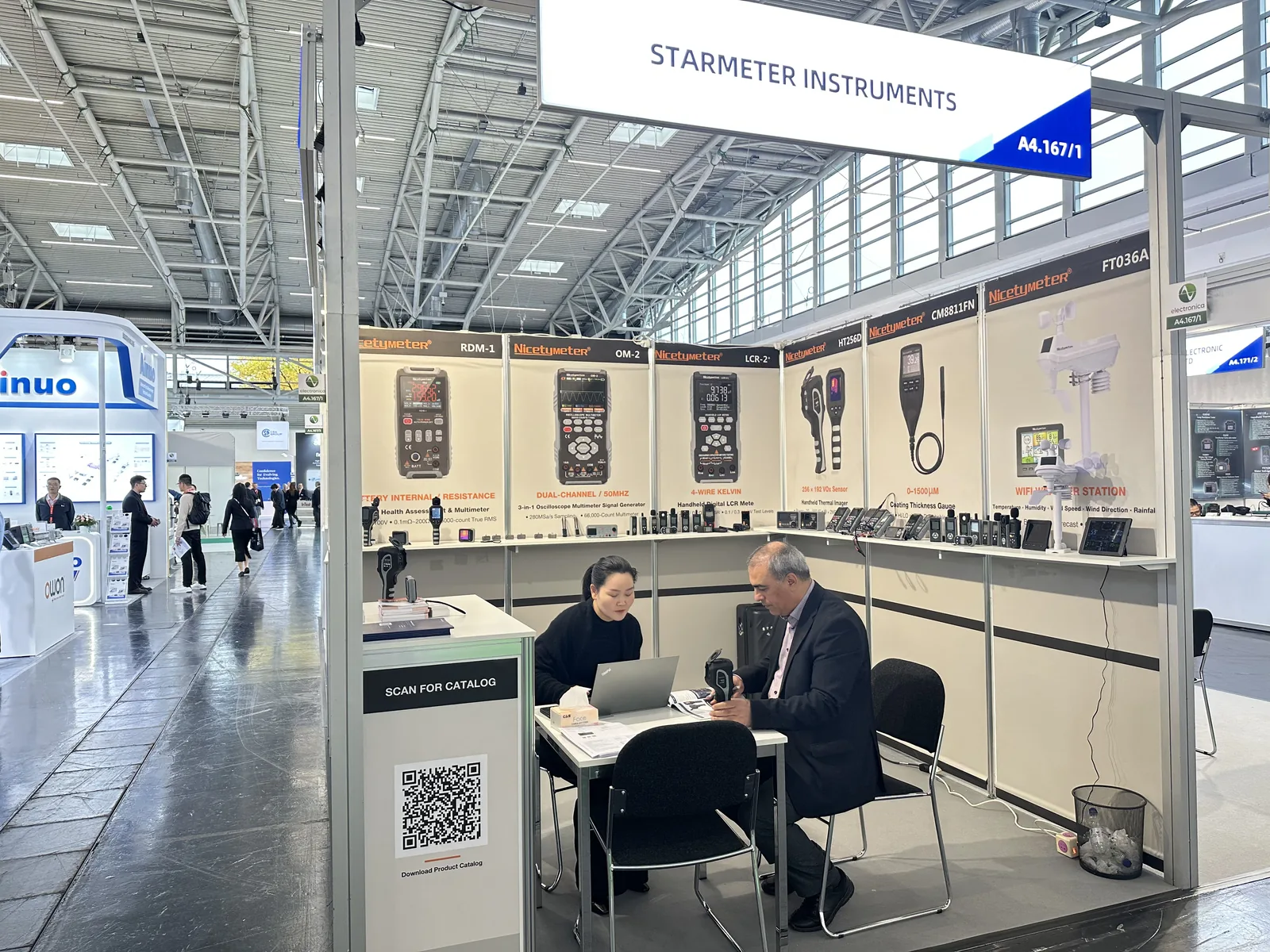
Munich woke up cold and wet this morning. By the time the doors opened at 09:00, the queue at the North Entrance had already backed out past the canopy, umbrellas up. Inside Hall A4, our stand — A4.167/1 — is on its second day, and most of what is on the bench is there to answer one question: is this battery still good?
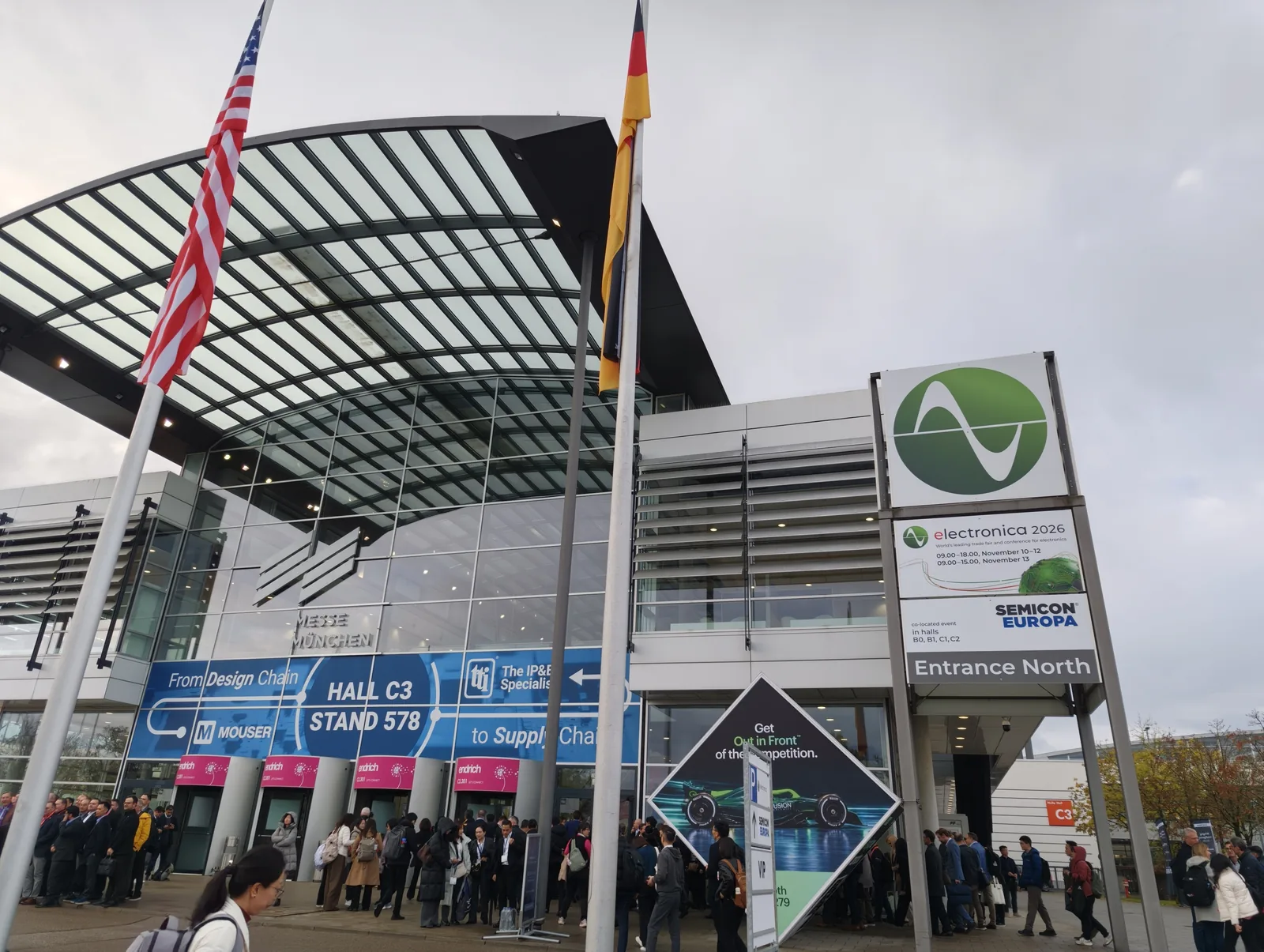
A grey morning, a full queue
November in Munich does this. Grey sky, drizzle, a wind that comes across the open car park and finds every gap in a coat. Nobody here is dressed for it; everybody is standing in it anyway.
What that queue tells you is simple: for this industry, four days every two years is not optional. The people who design the boards, specify the connectors and sign off the test procedures are all in the same four halls this week, and a bit of rain is not going to change that.
What this hall is actually about
electronica shares its week with SEMICON Europa, which takes the halls next door — B0, B1, C1, C2. Read the two shows together and the story of the year is easy to see: more compute, more power, more heat, and a supply chain that has to deliver all three on schedule.
Even the entrance banners give it away. They do not advertise components; they advertise the route from design to production. That is the conversation happening around every coffee stand in A4.
Which is why our bench is full of batteries
Every one of those trends ends in a cell. More compute means more backup power. More power means more packs, more UPS units, more storage cabinets. Electrification means tools, scooters and carts that all run on lithium and all get asked the same question after two or three years of service: keep it or replace it?
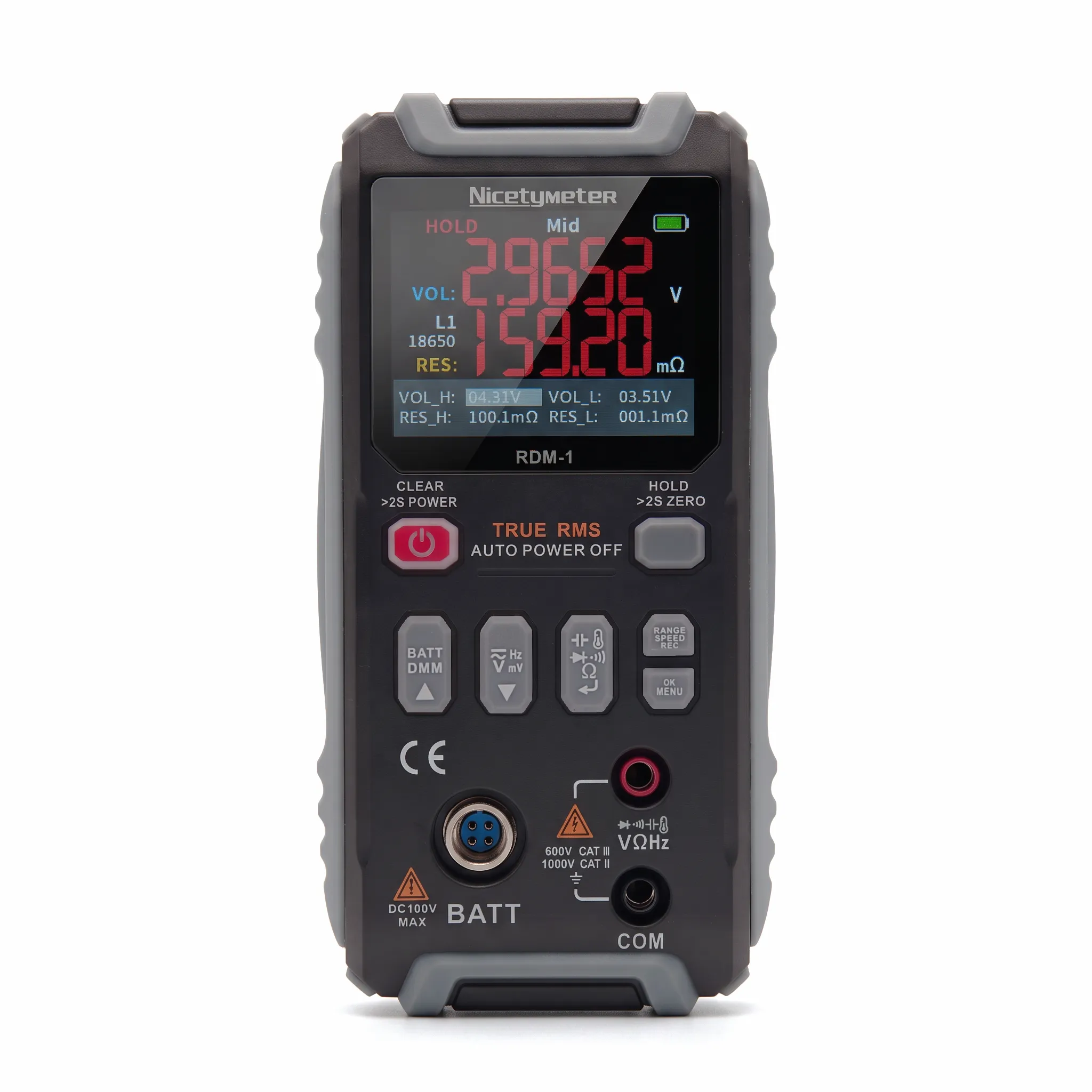
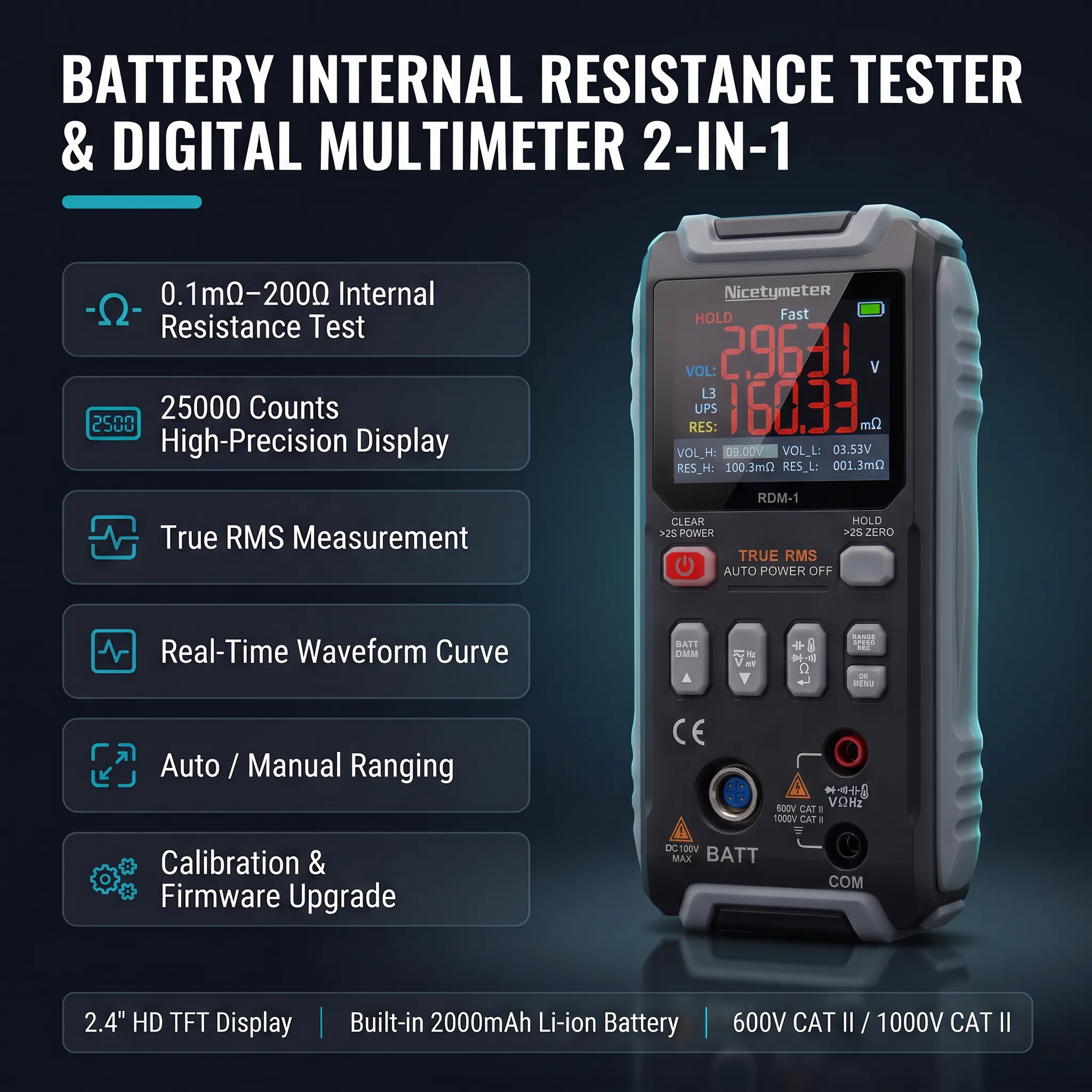
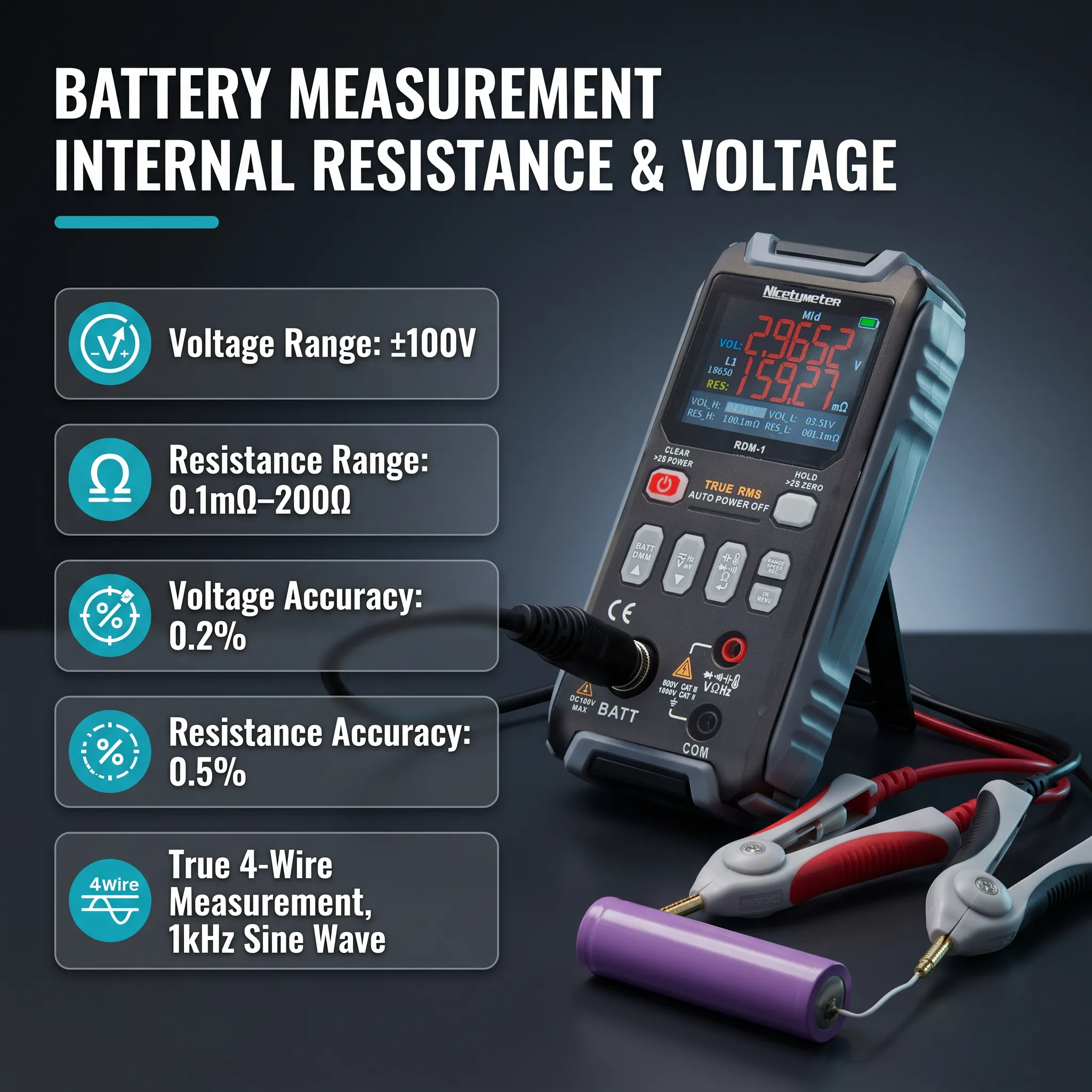
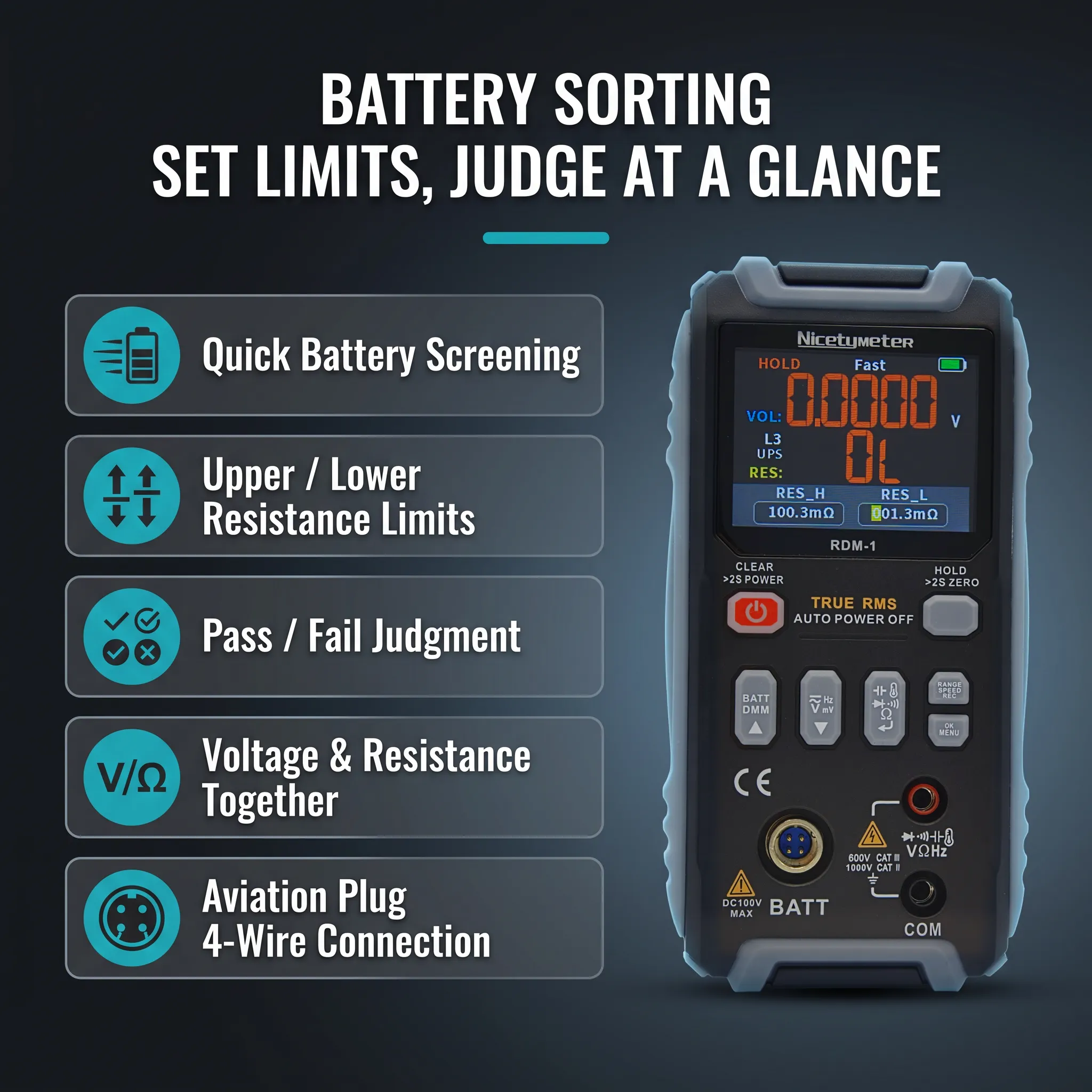
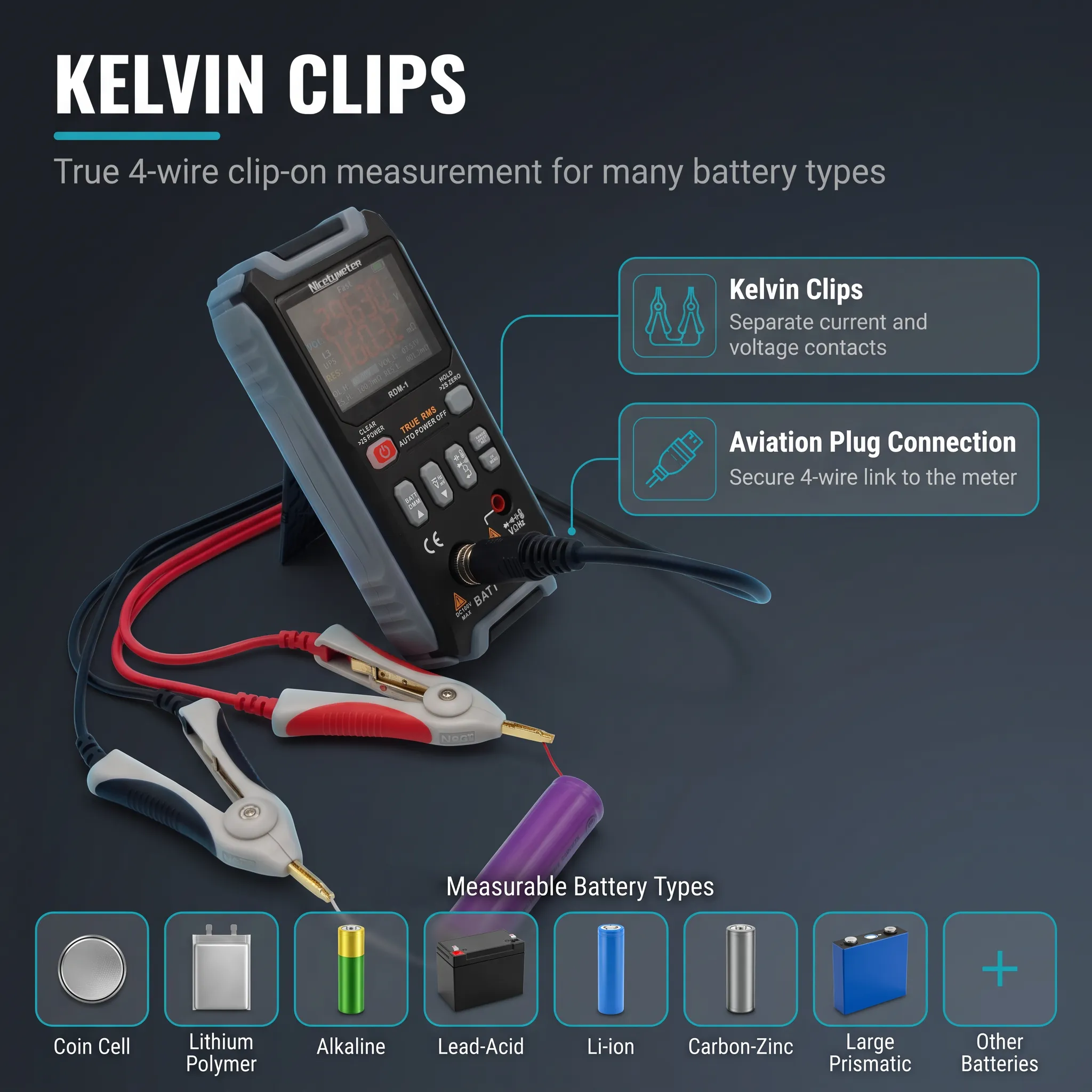
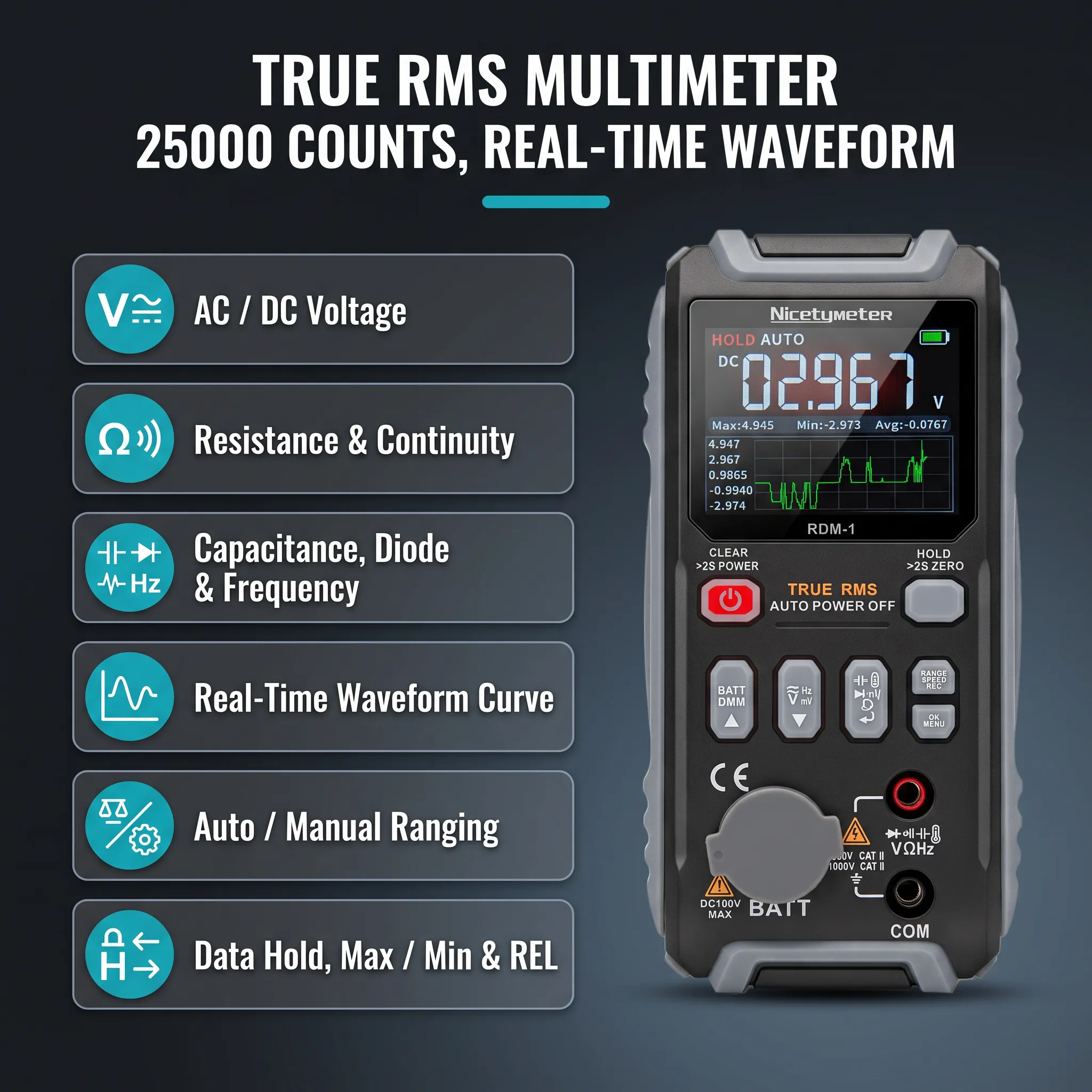
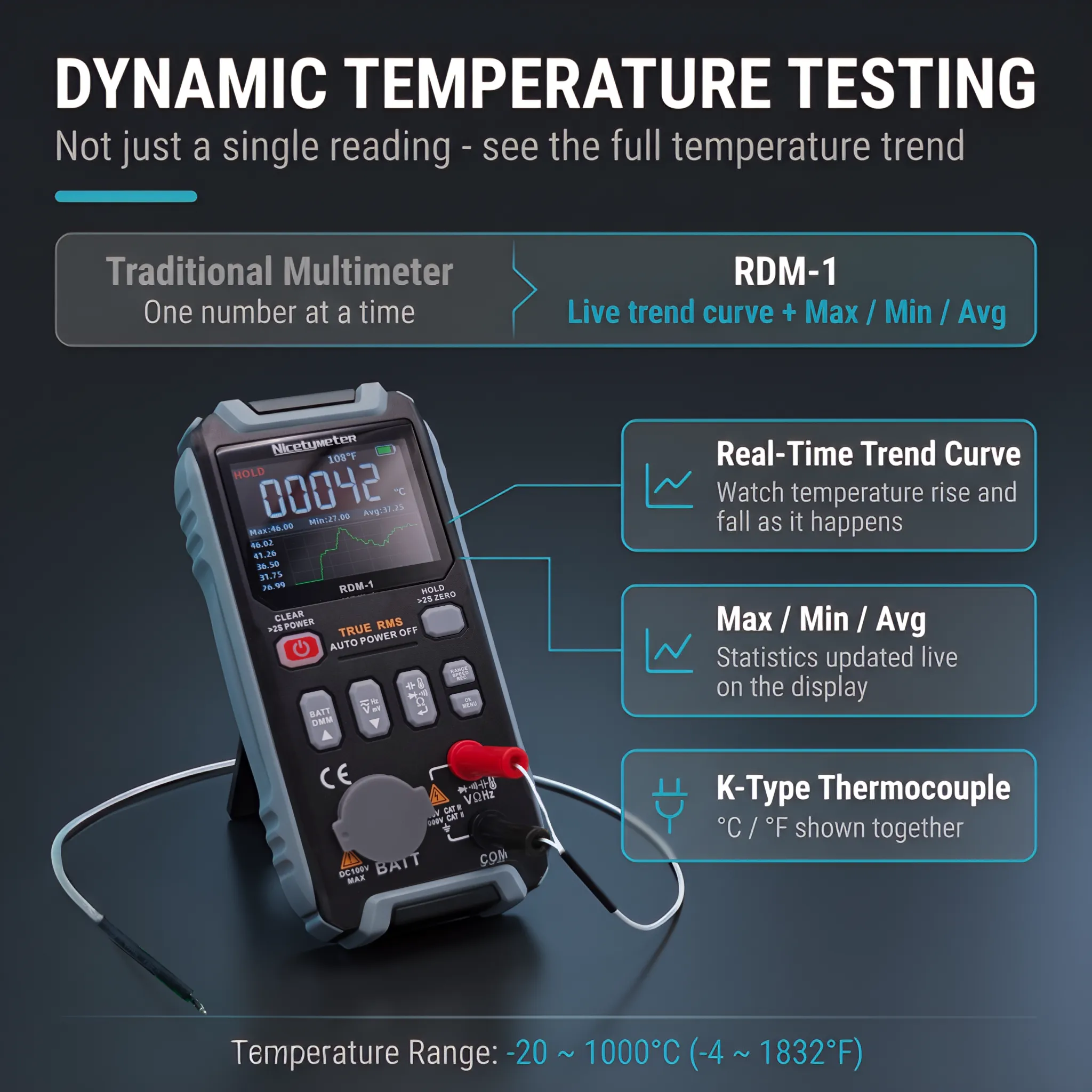
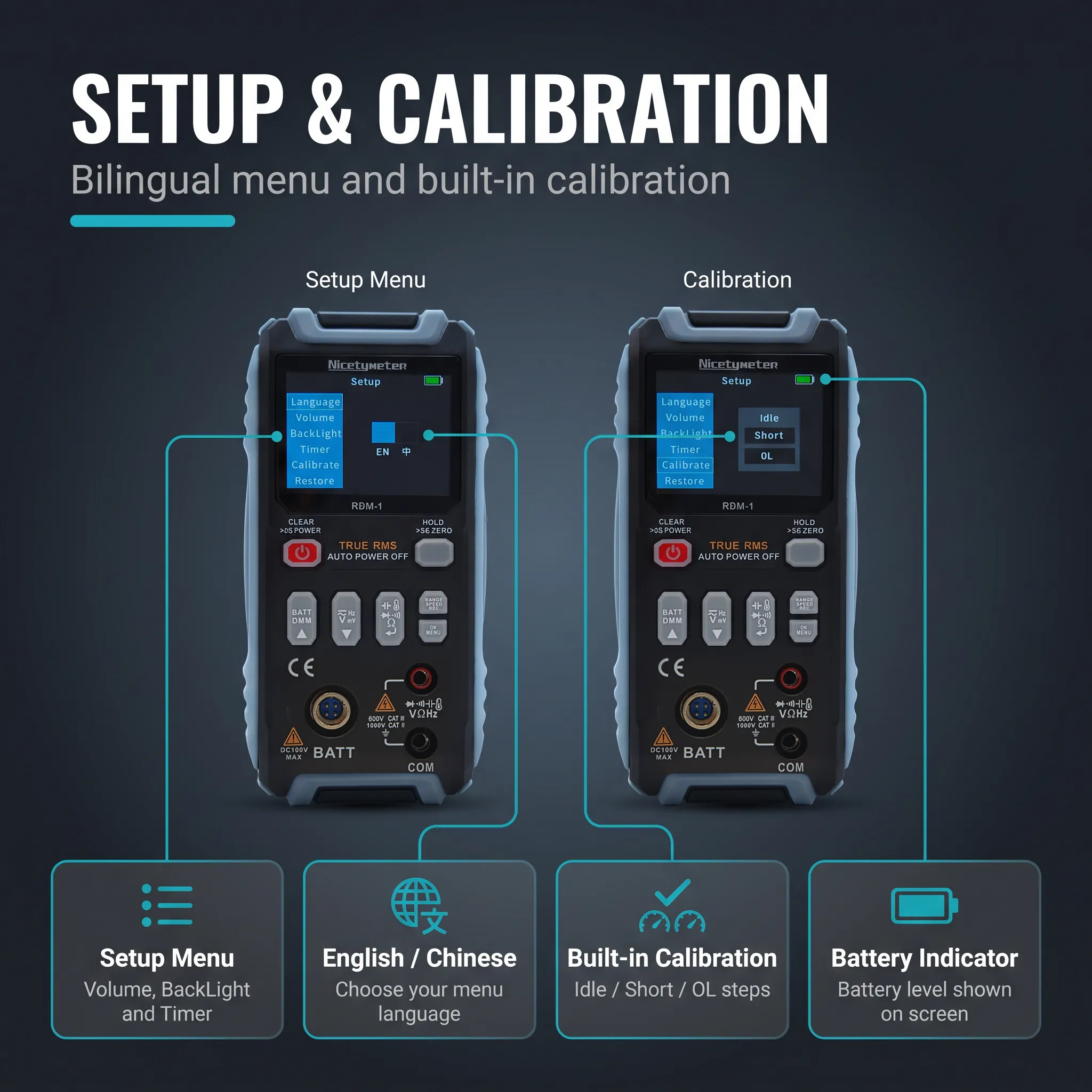
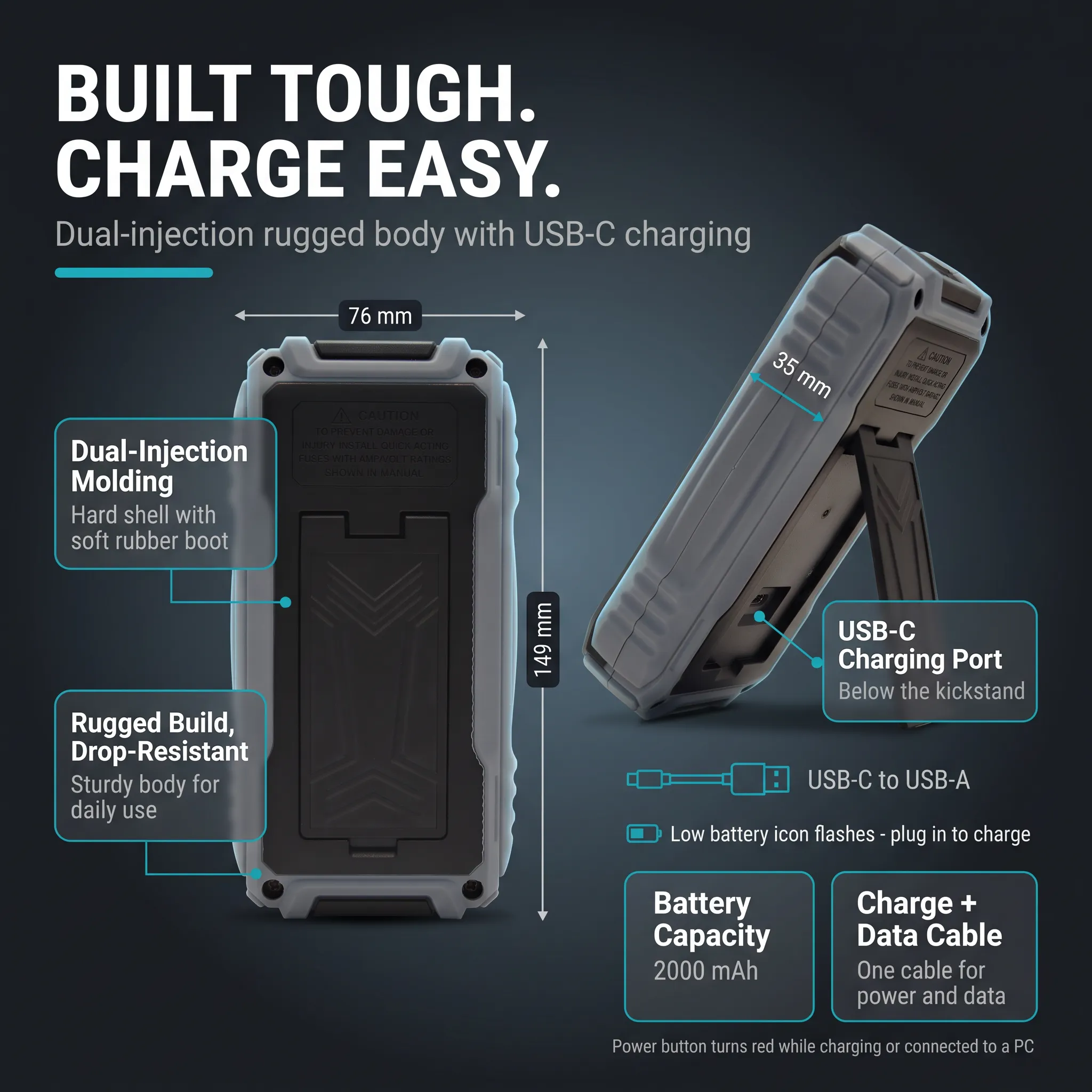
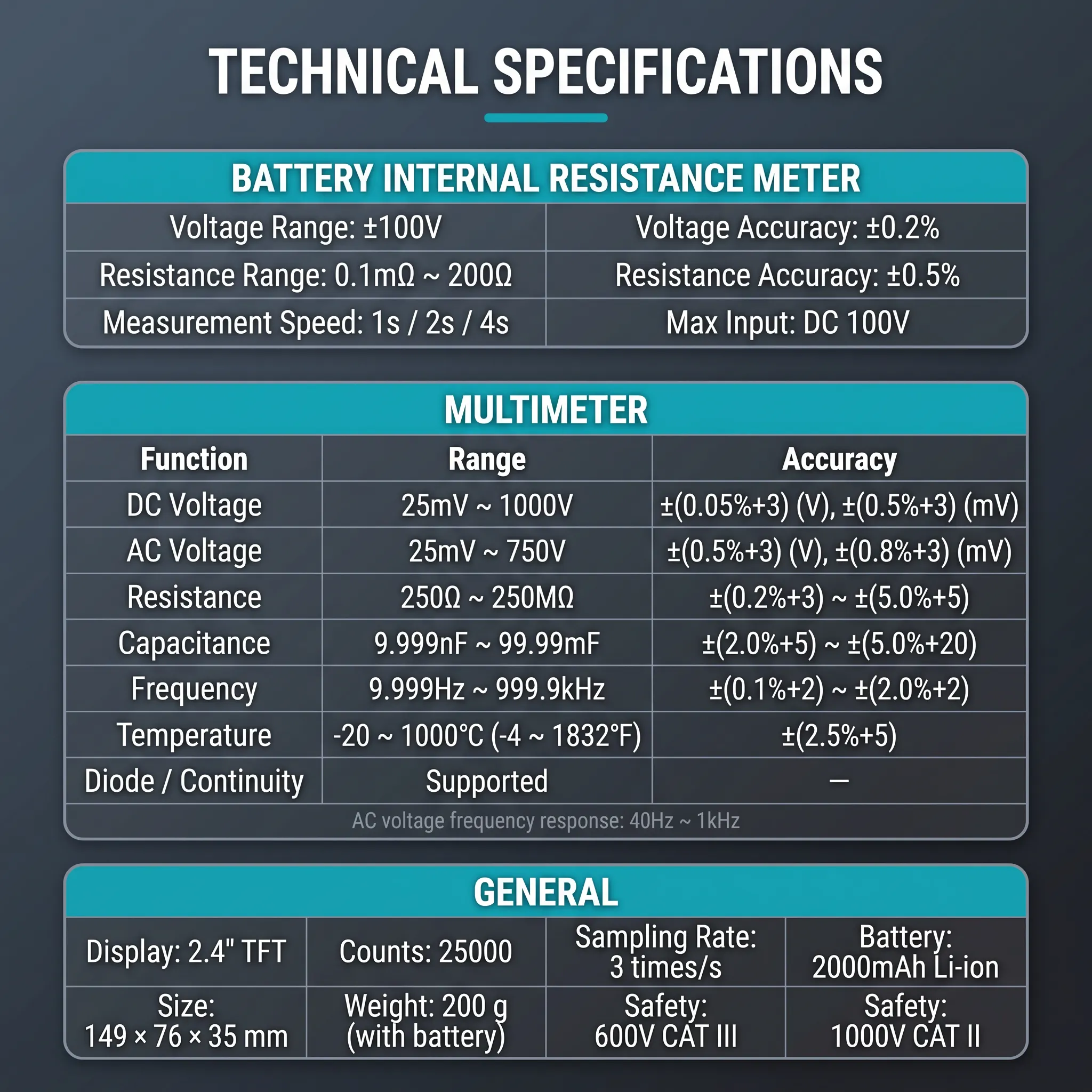
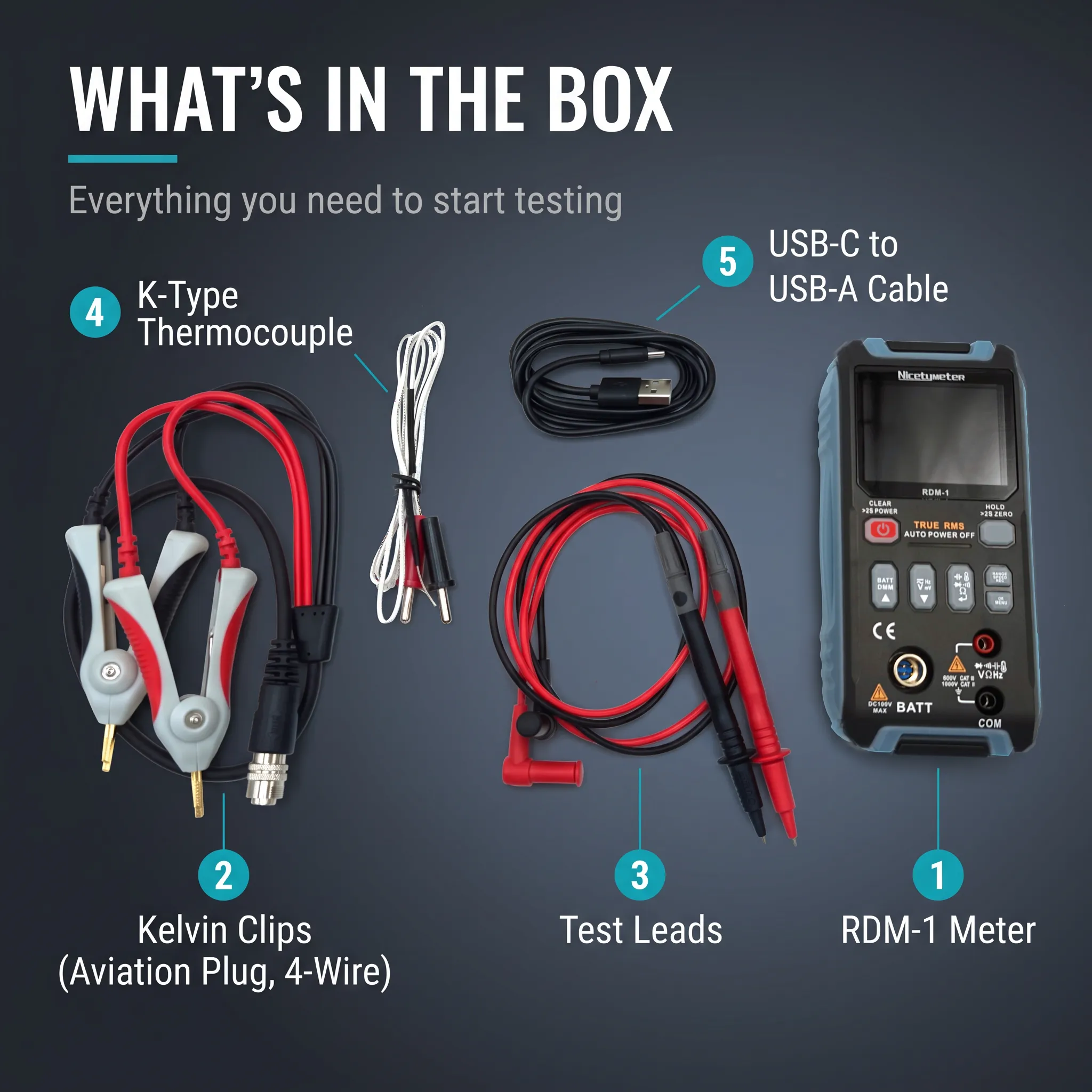
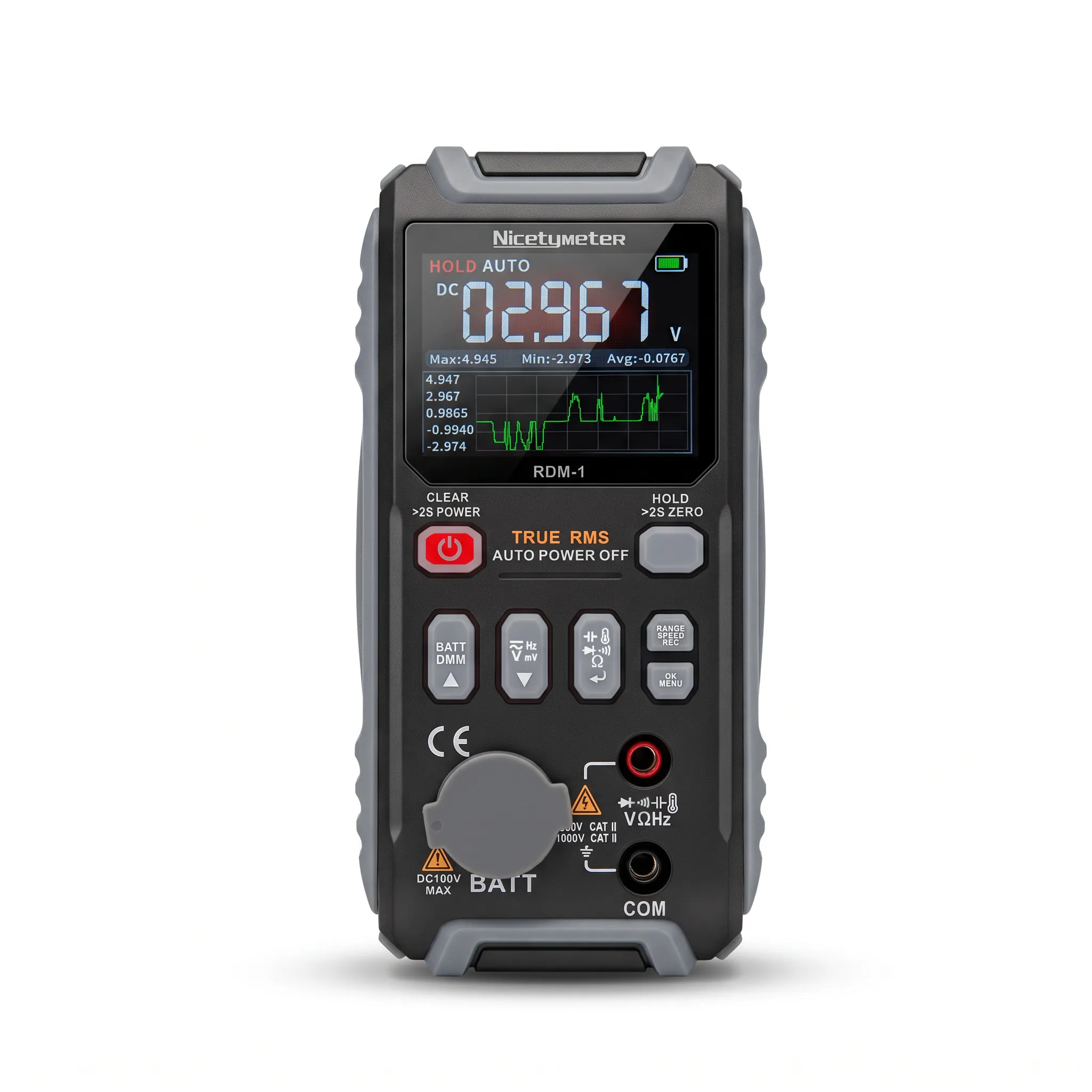
A battery rarely fails suddenly. Its internal resistance climbs long before its runtime visibly drops — that is the early warning, and it is measurable in seconds with the right meter. So the left-hand panel of our wall carries the RDM-1 battery internal resistance meter: a 4-in-1 DC/AC TRMS multimeter with a battery health function, built for exactly this check.
It is the panel people stop at first. Put a cell on it and the answer takes about a minute.
On the wall, left to right
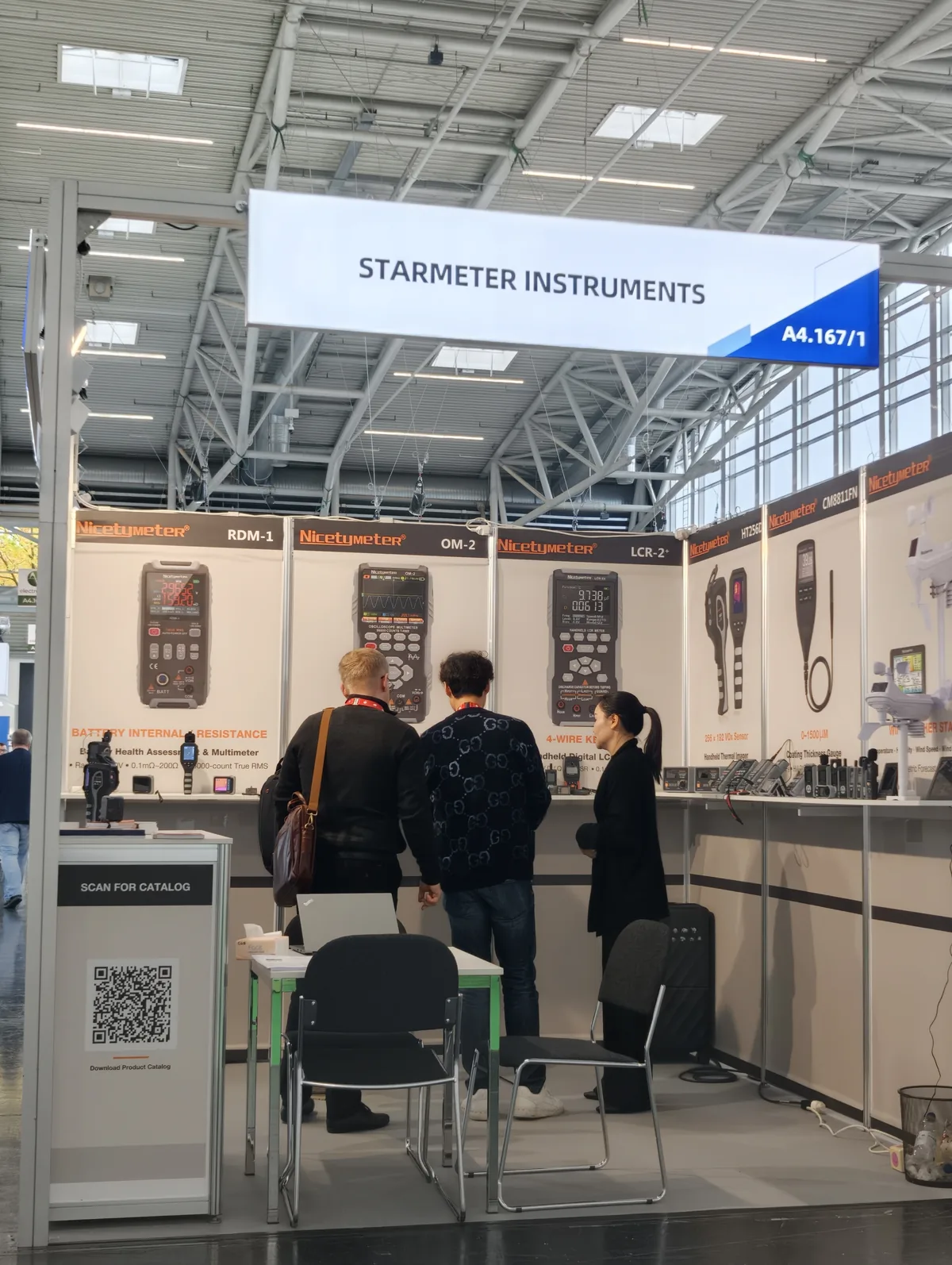
Six panels, all of them powered up on the shelf below so you can put your hands on the actual unit rather than read about it.
| Panel | What it is |
|---|---|
| RDM-1 | Battery internal resistance meter and multimeter — 4-in-1 DC/AC TRMS, battery health assessment for single cells and packs. |
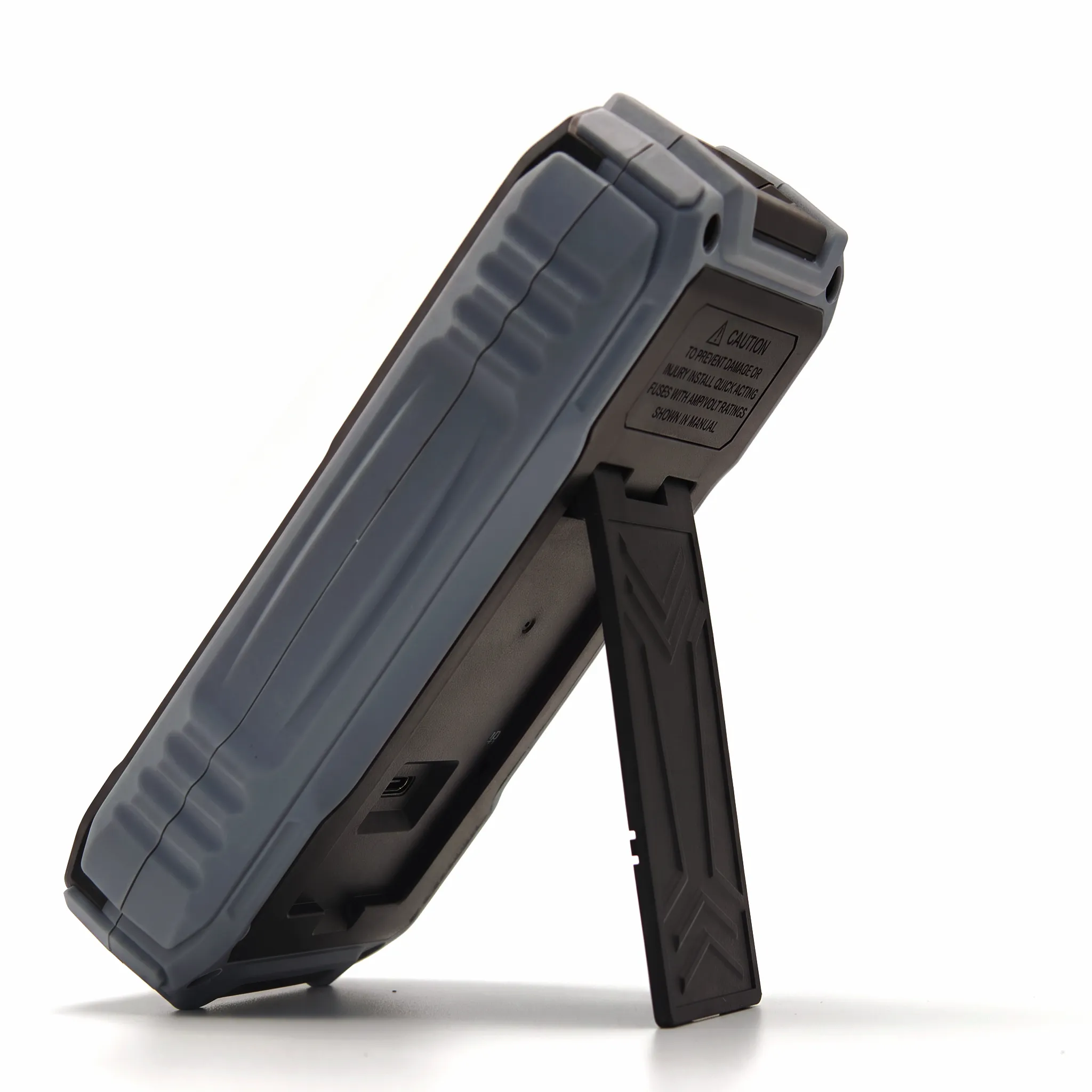
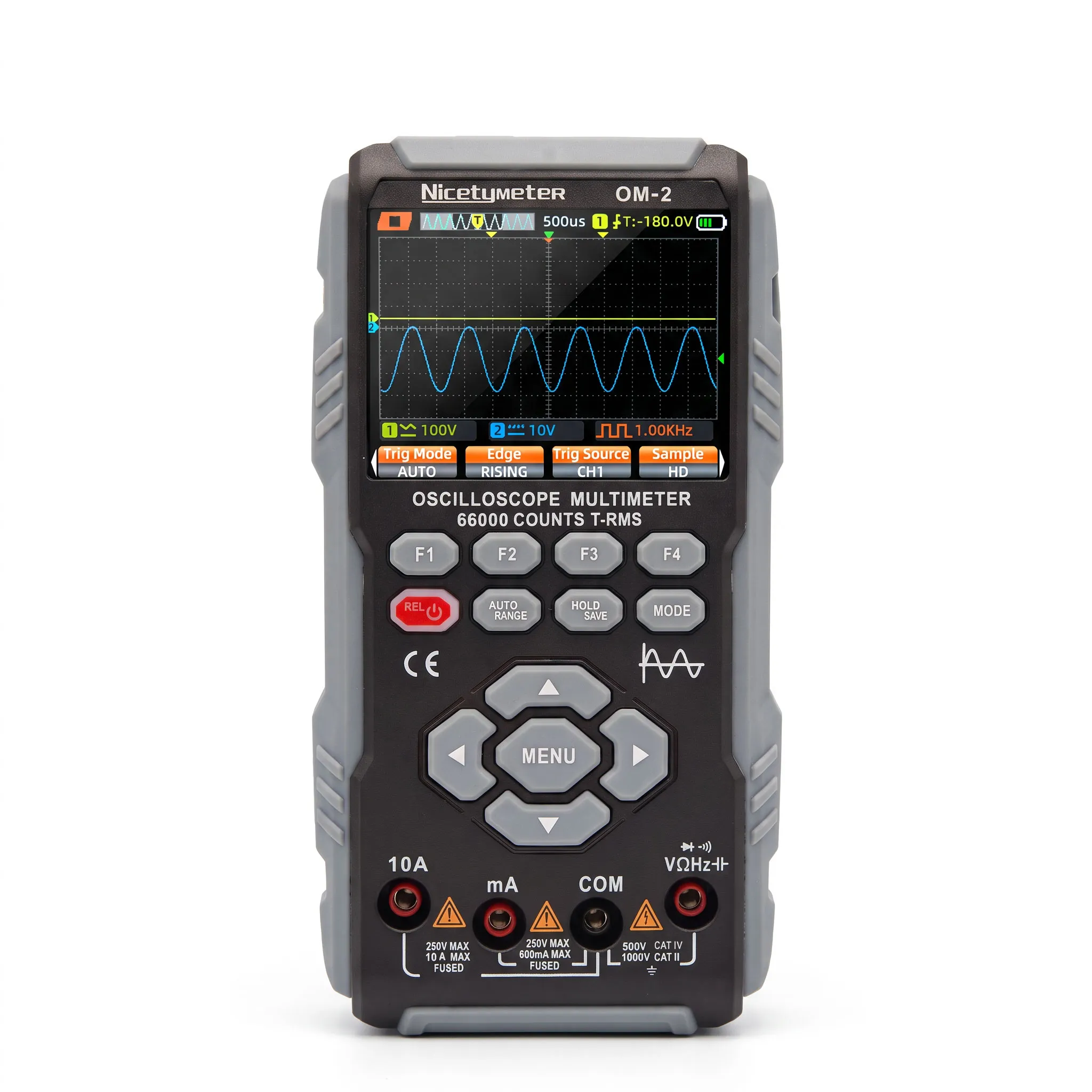
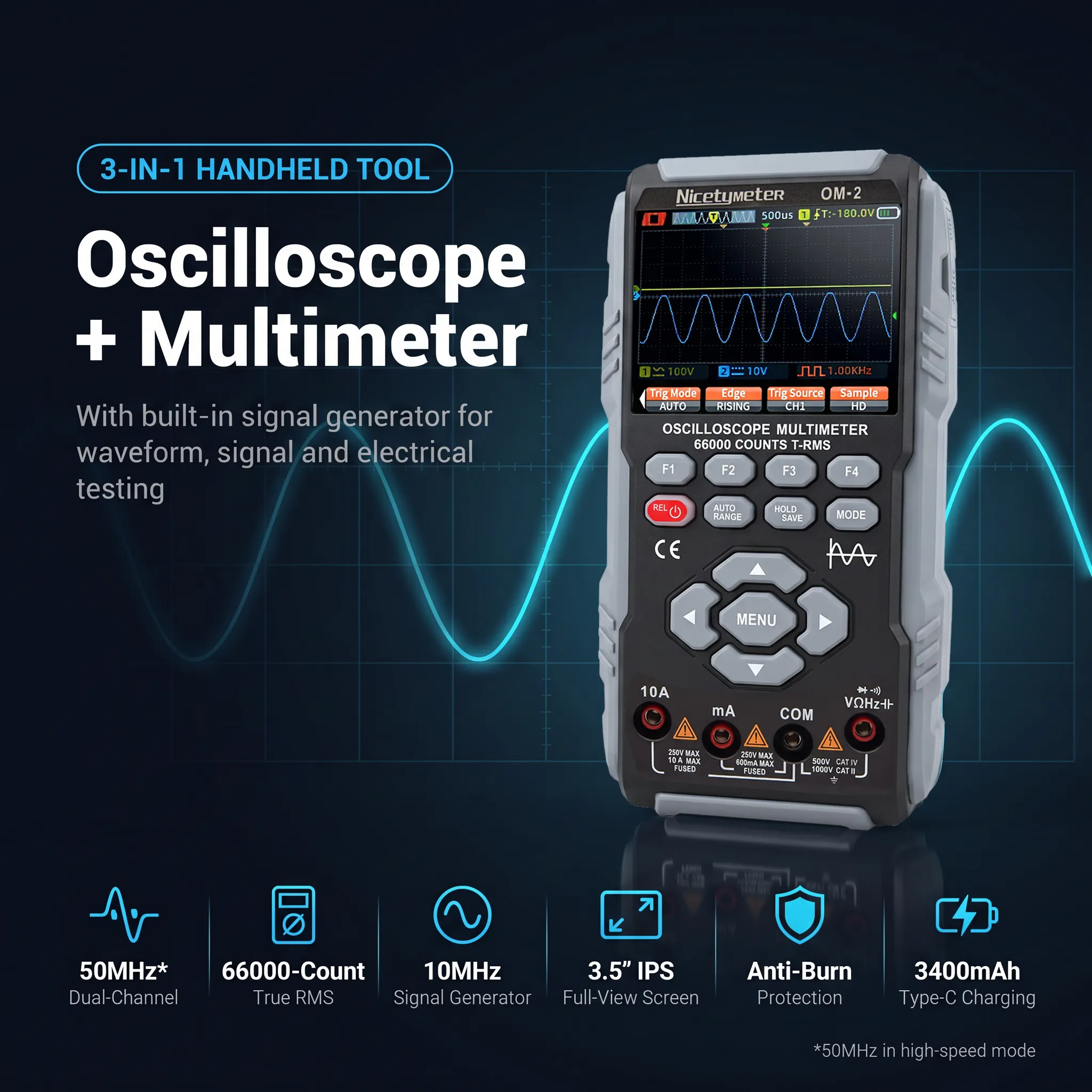
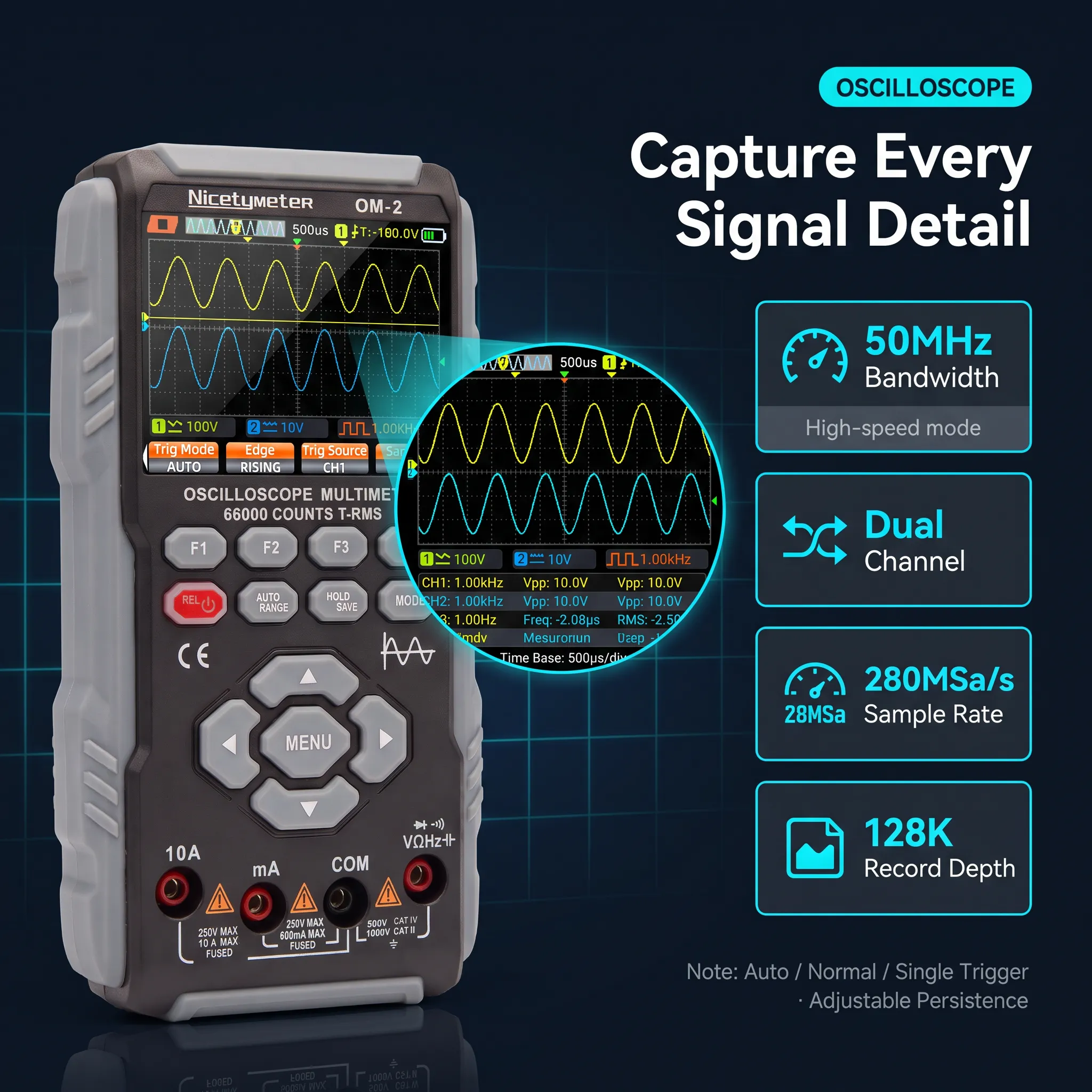
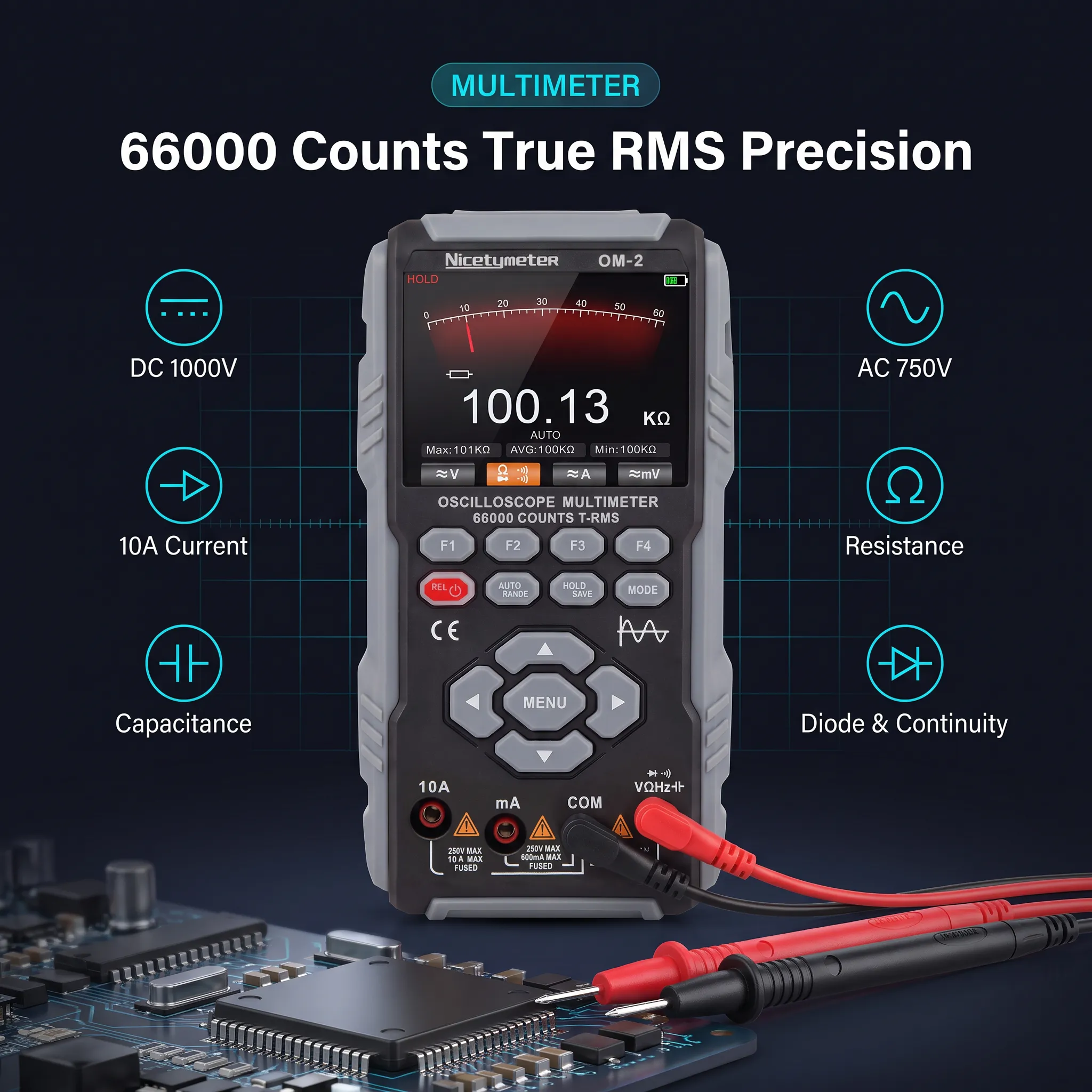
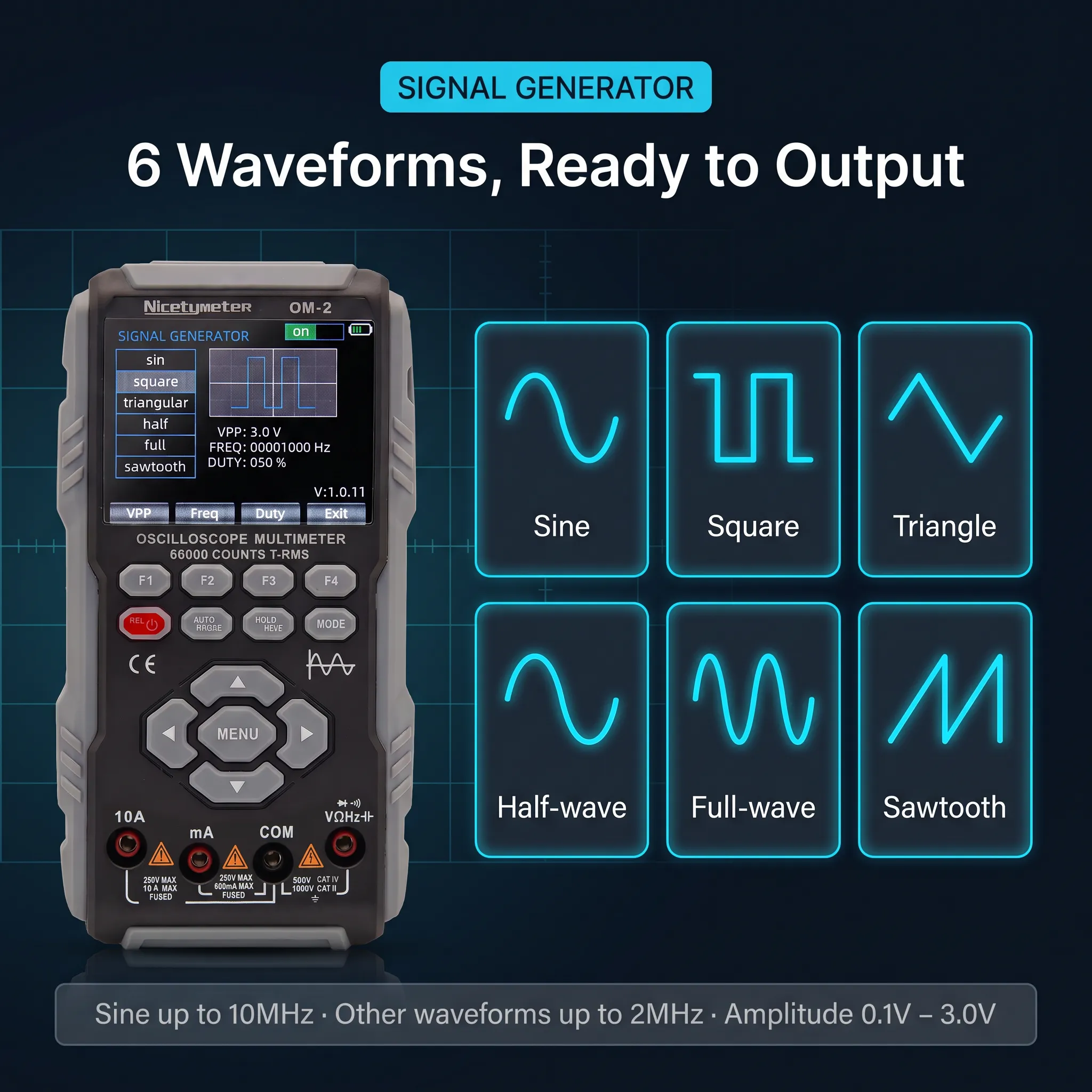
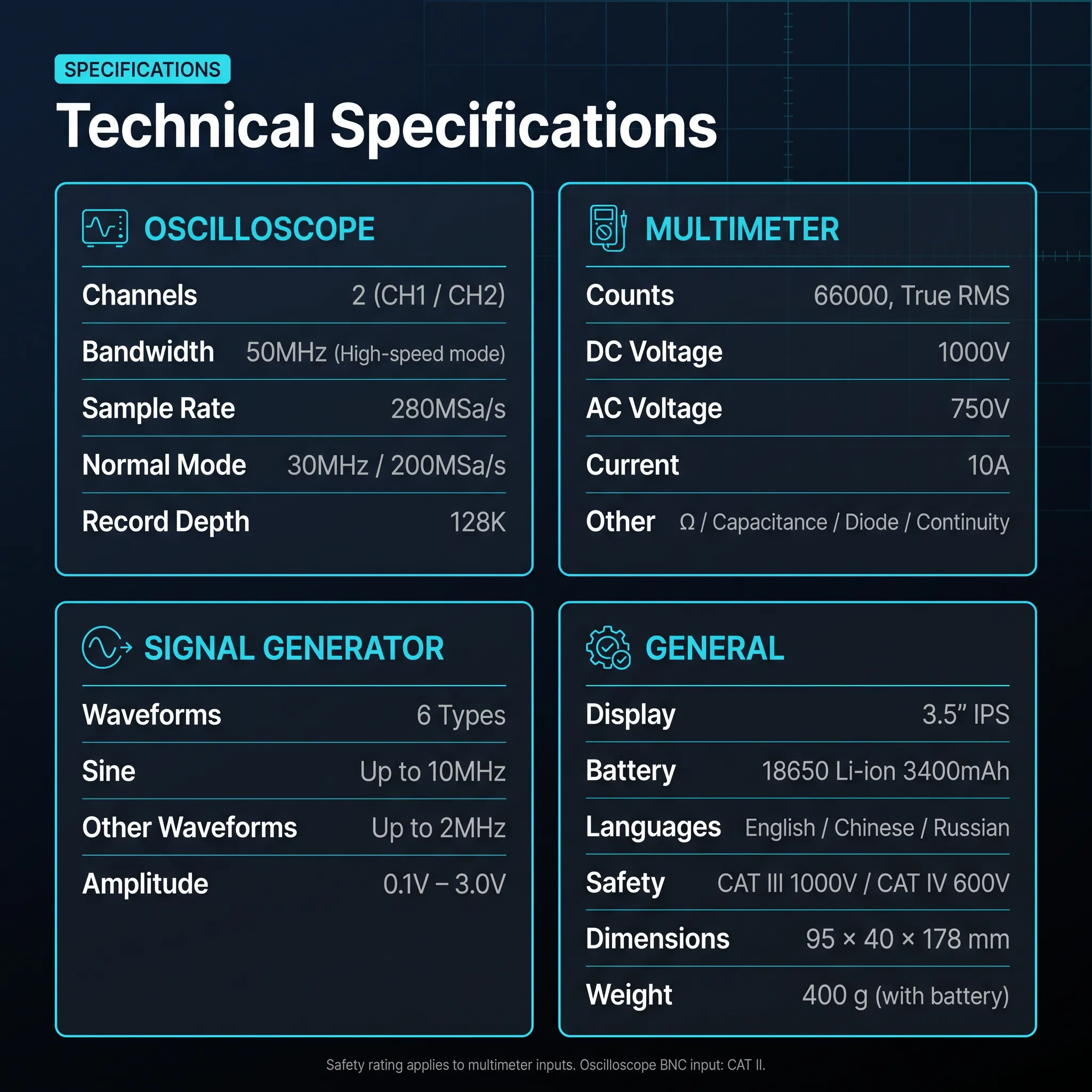
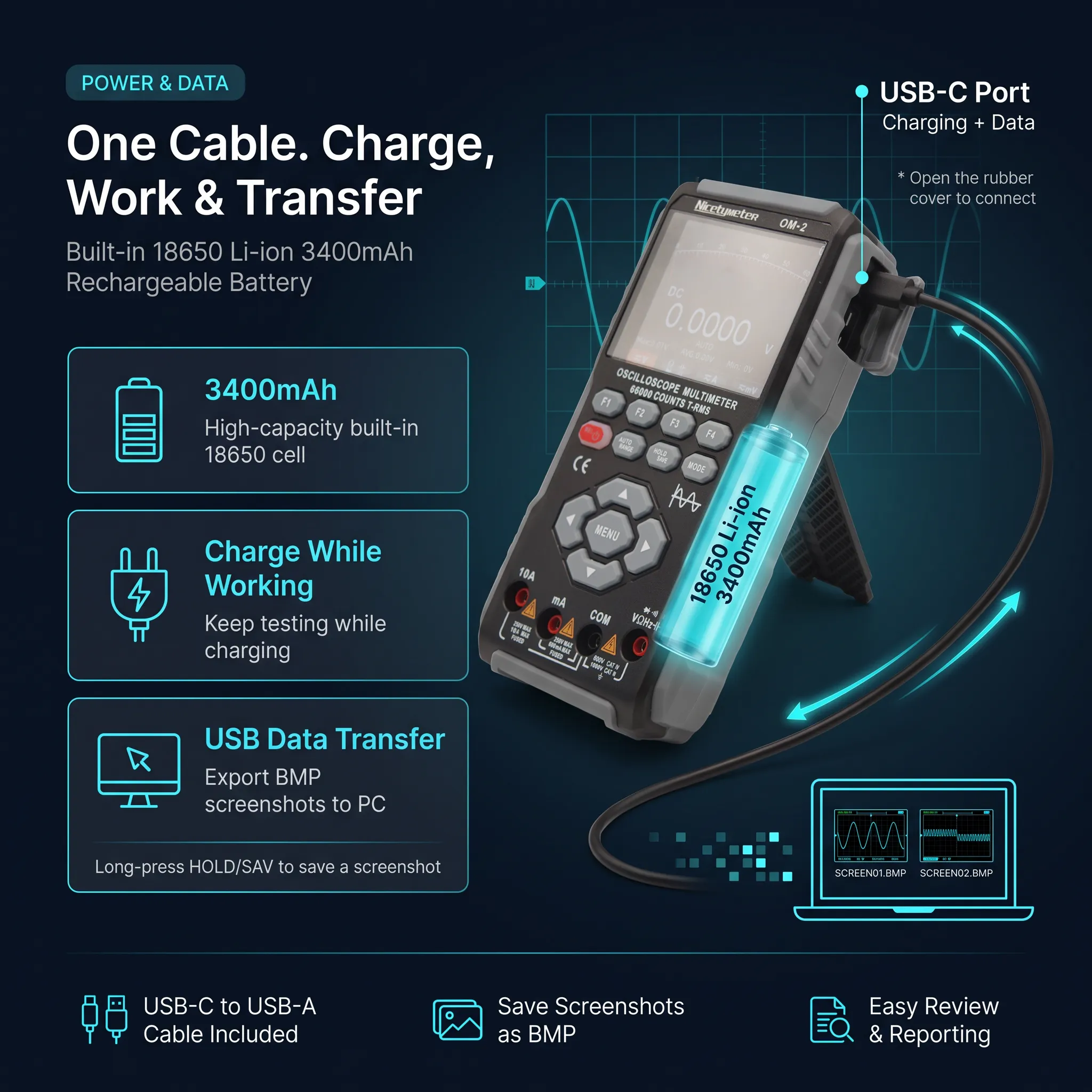
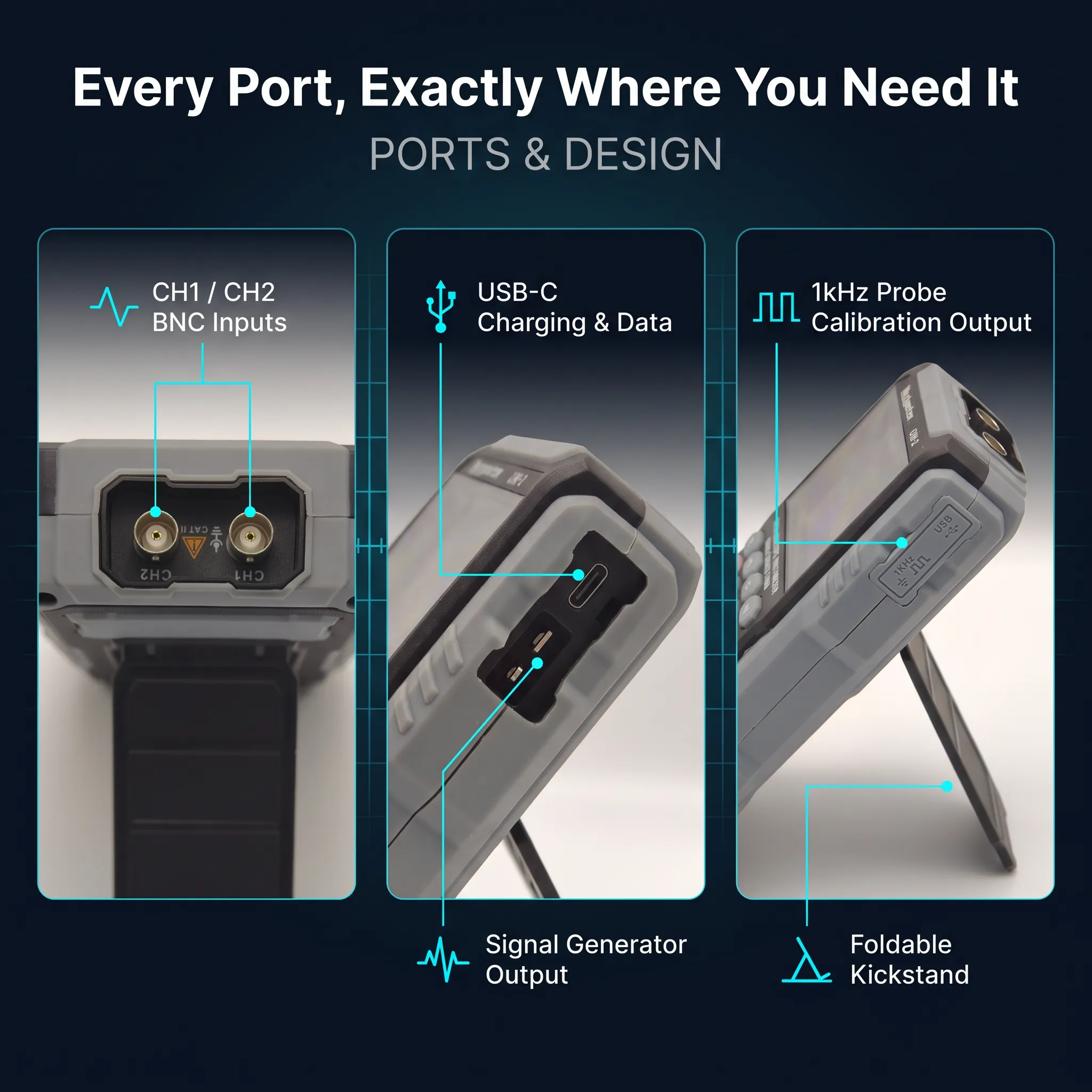
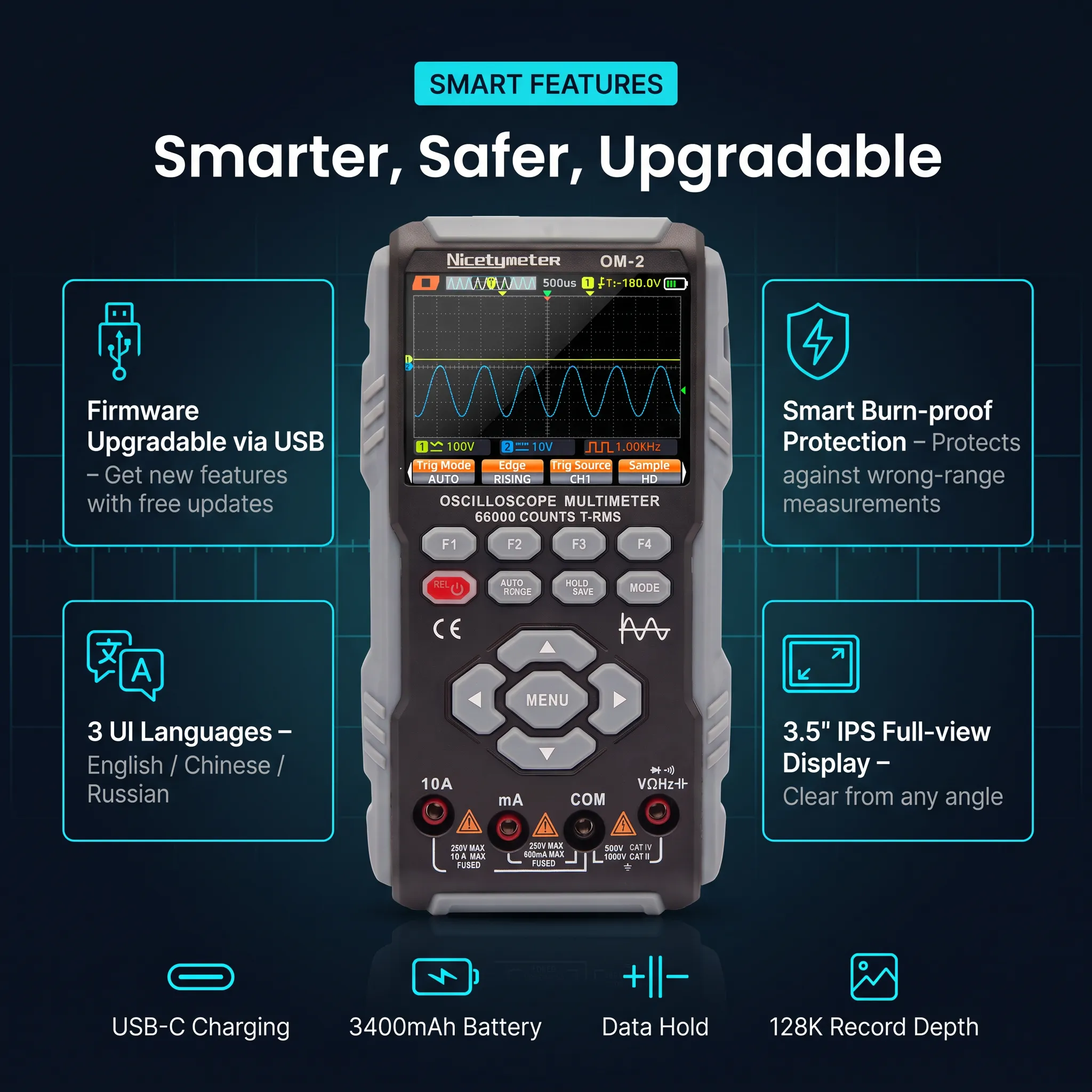
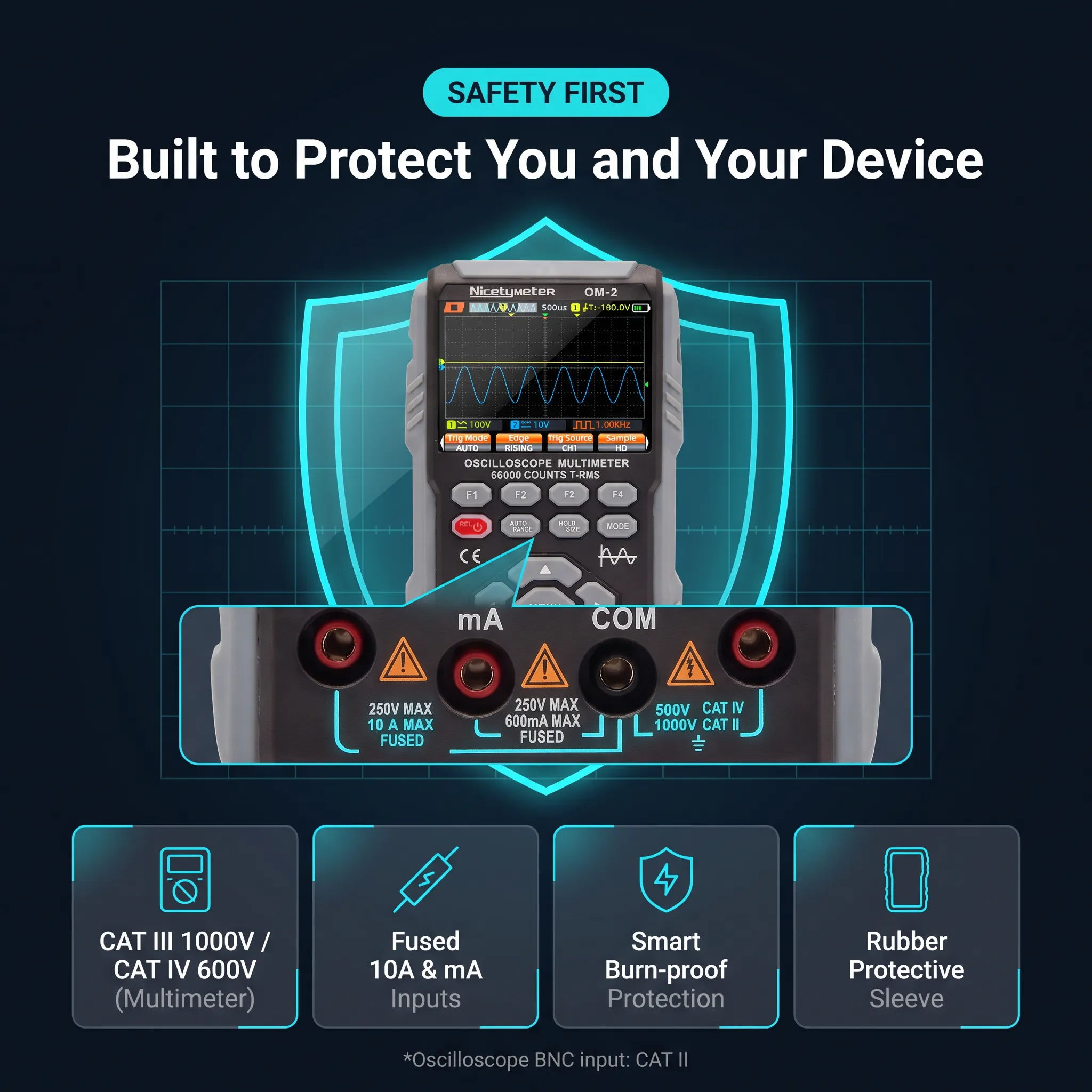
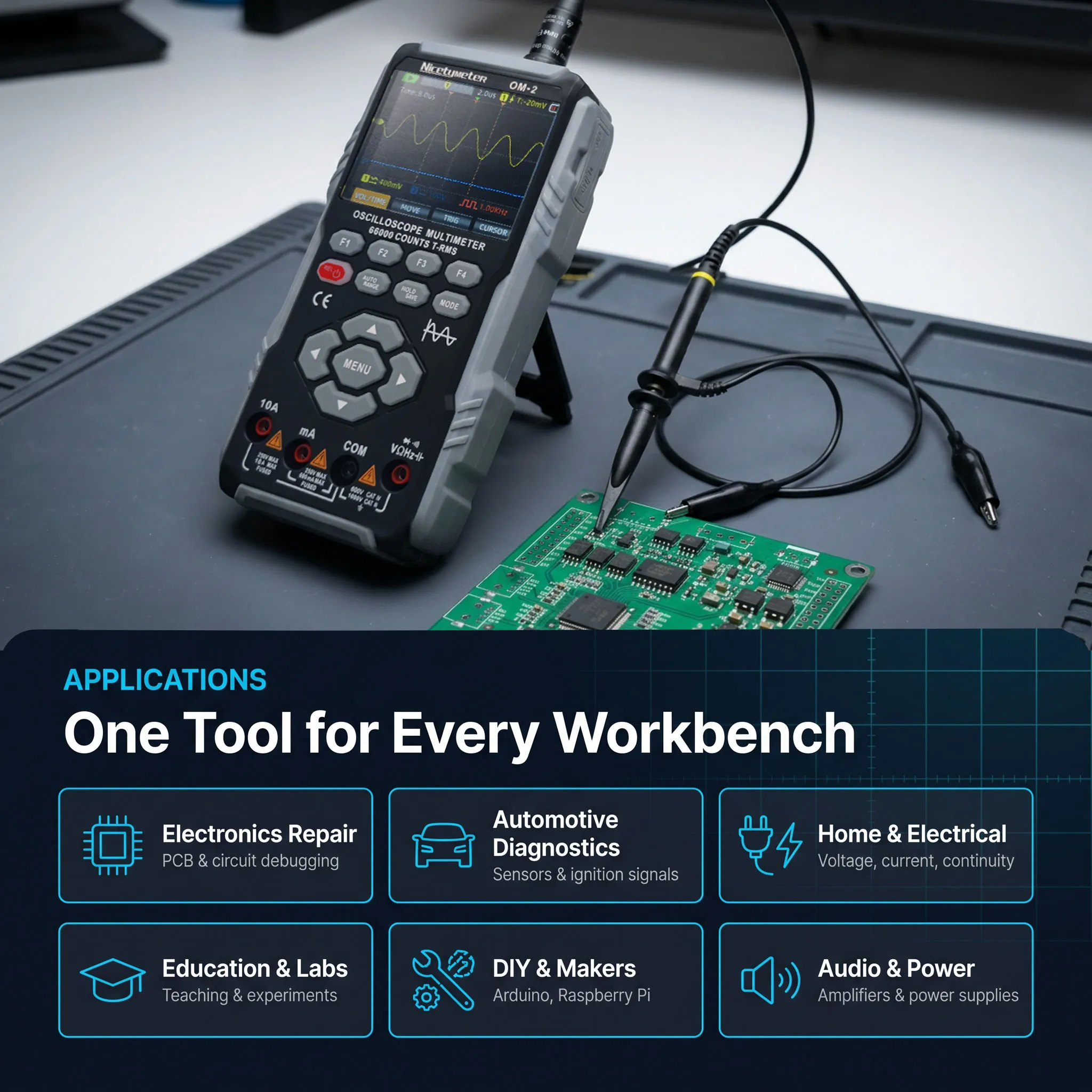
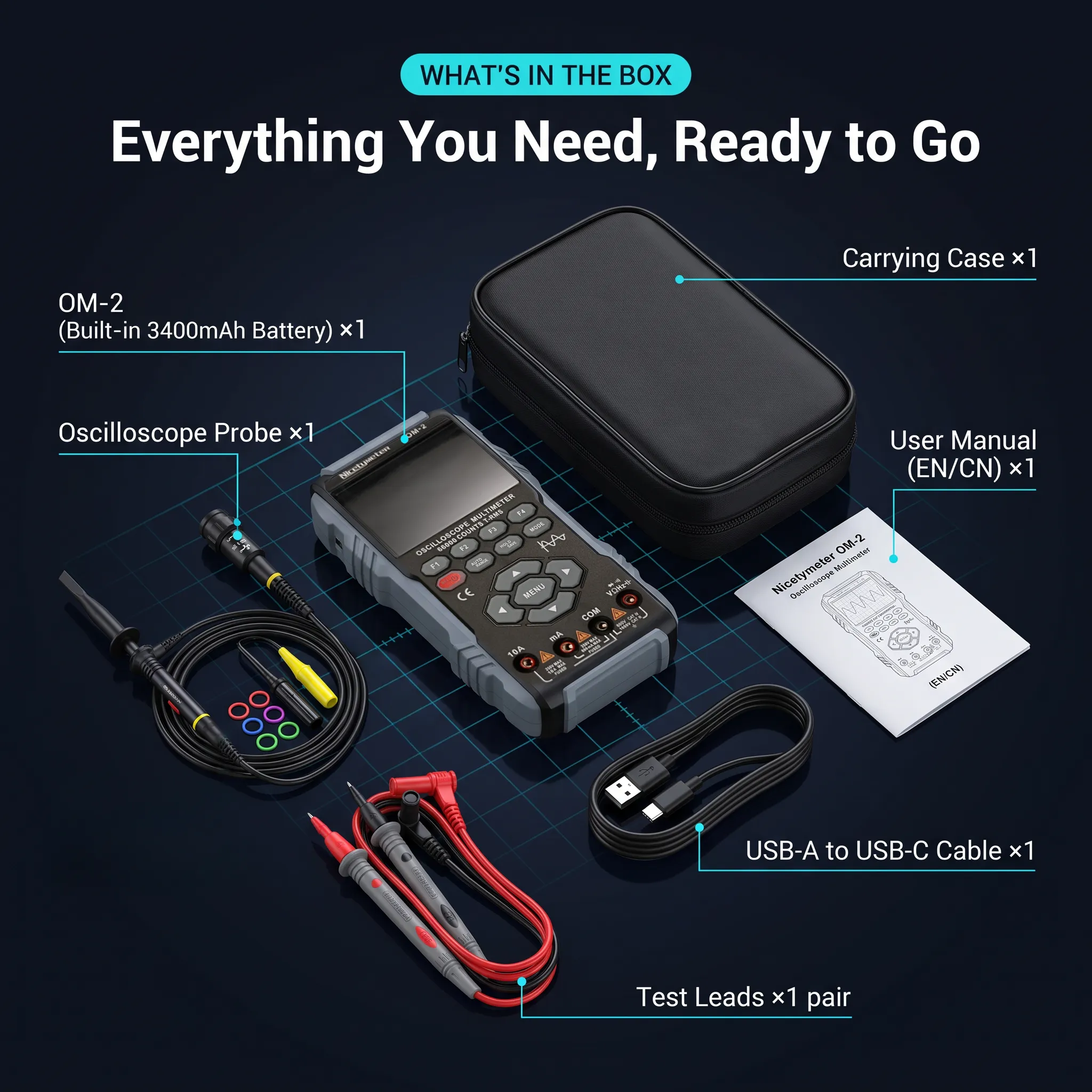
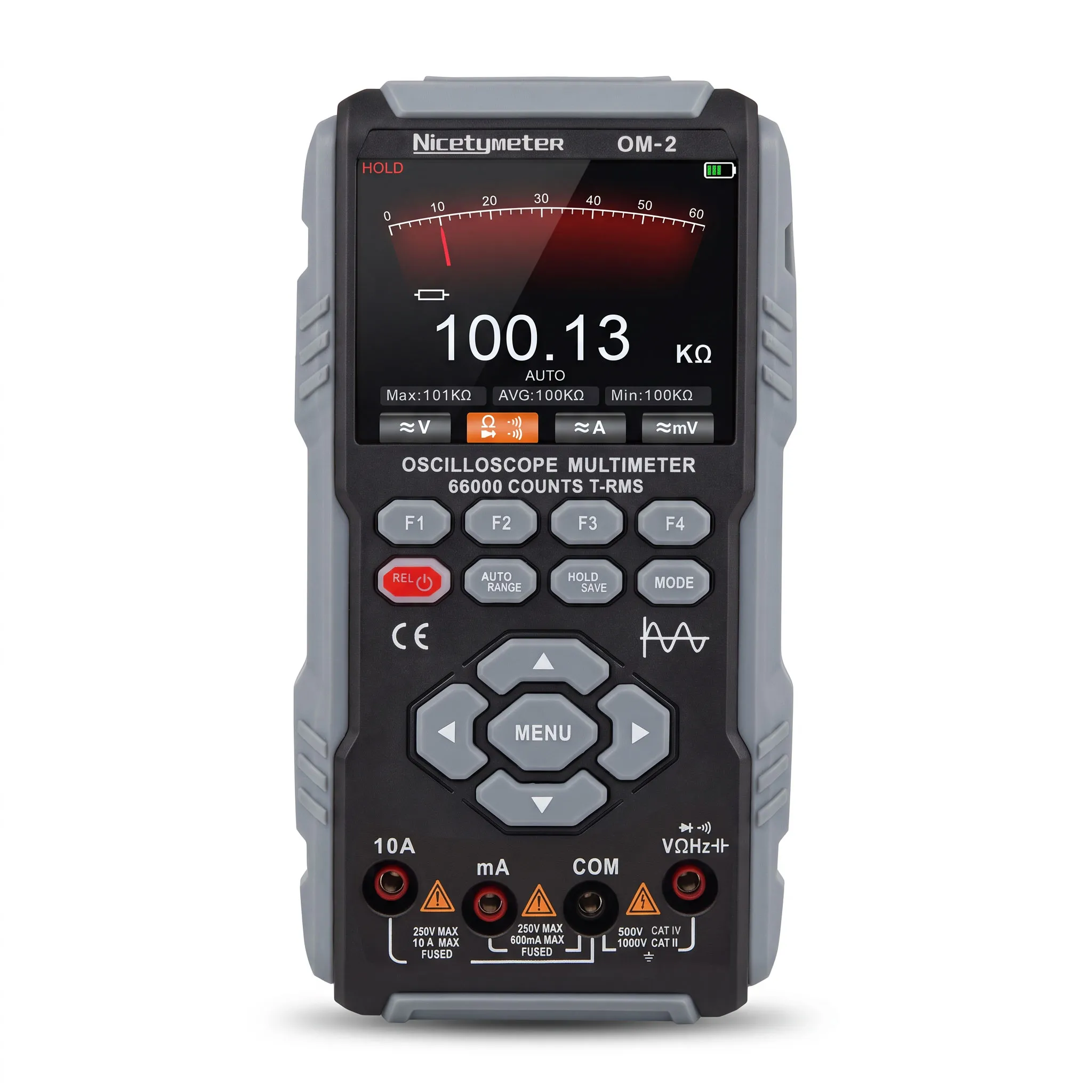
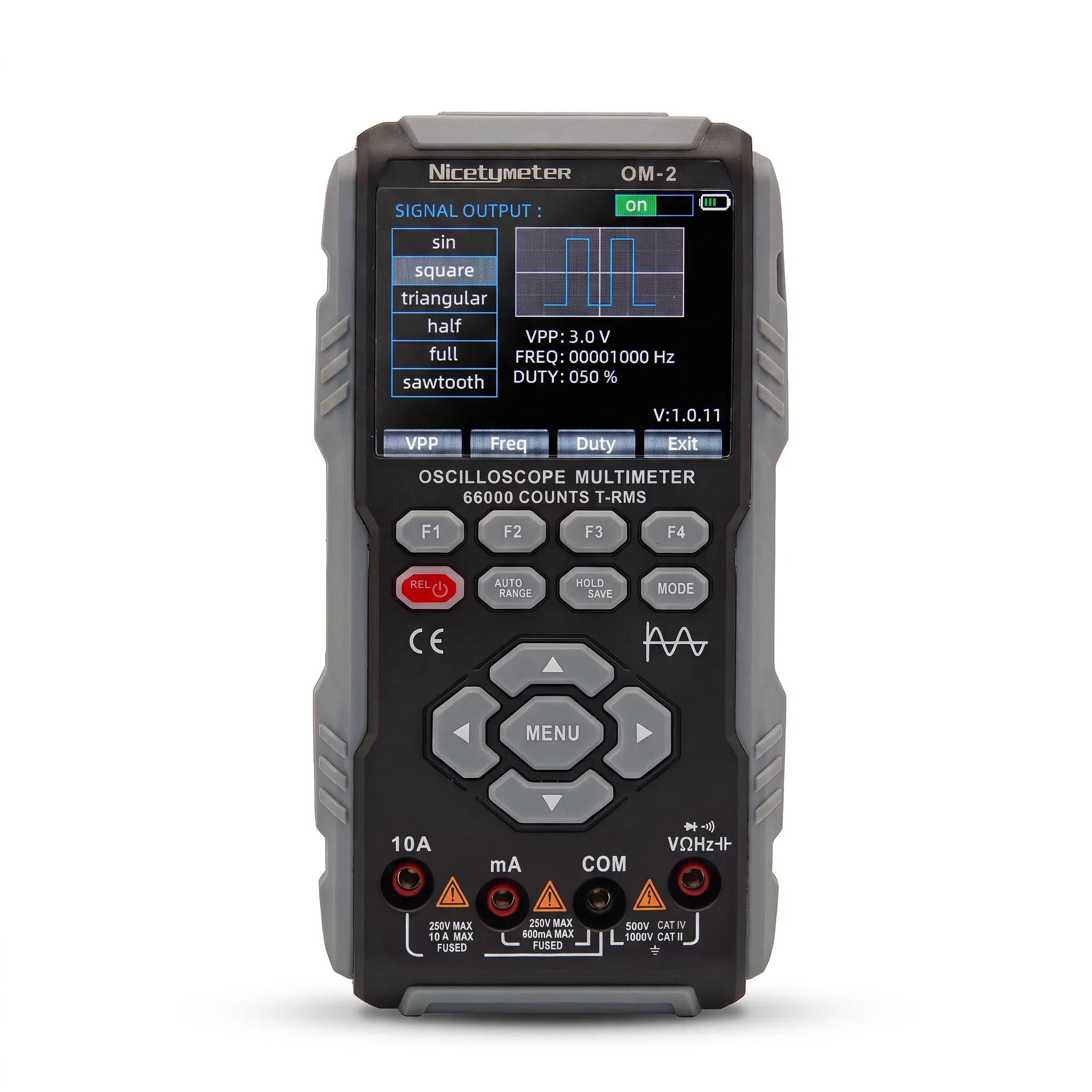
| OM-2 | Dual-channel 50 MHz oscilloscope, signal generator and 8,000-count multimeter in one handheld body. |
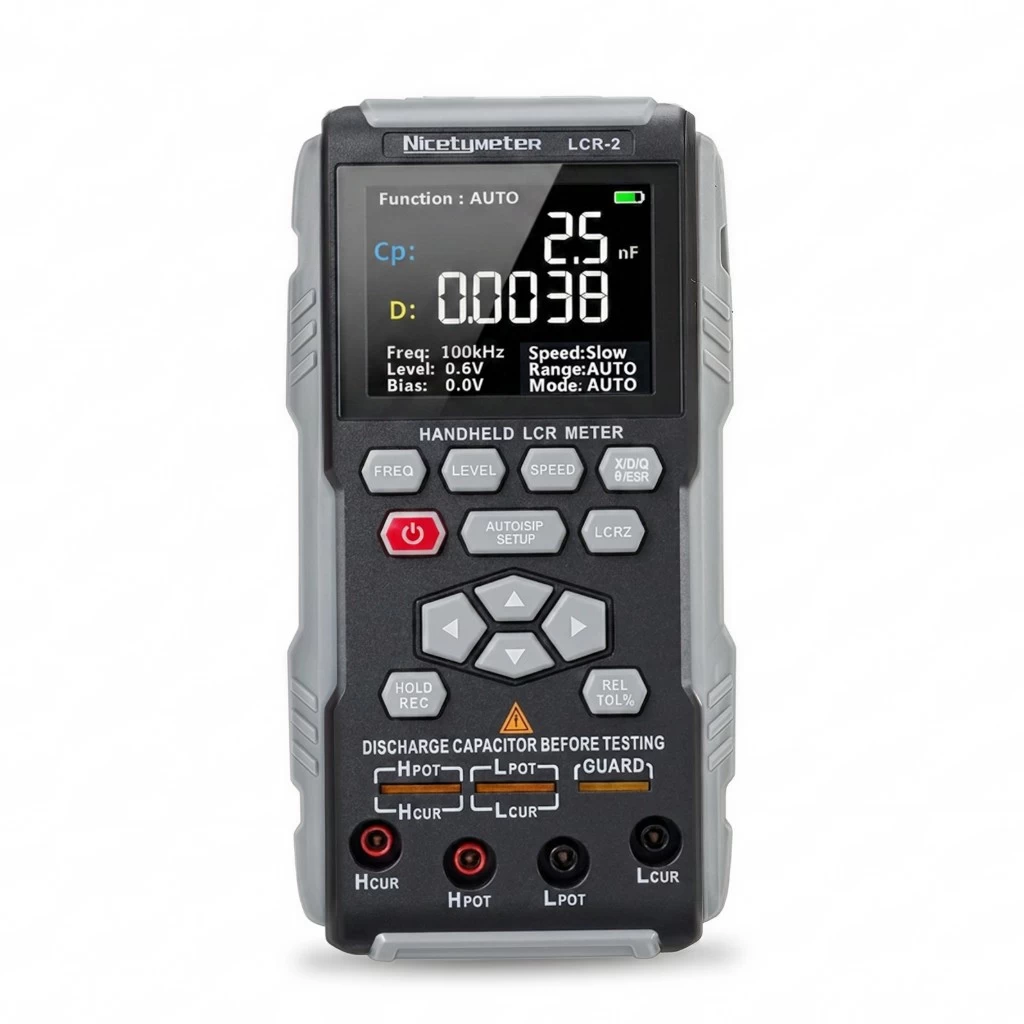
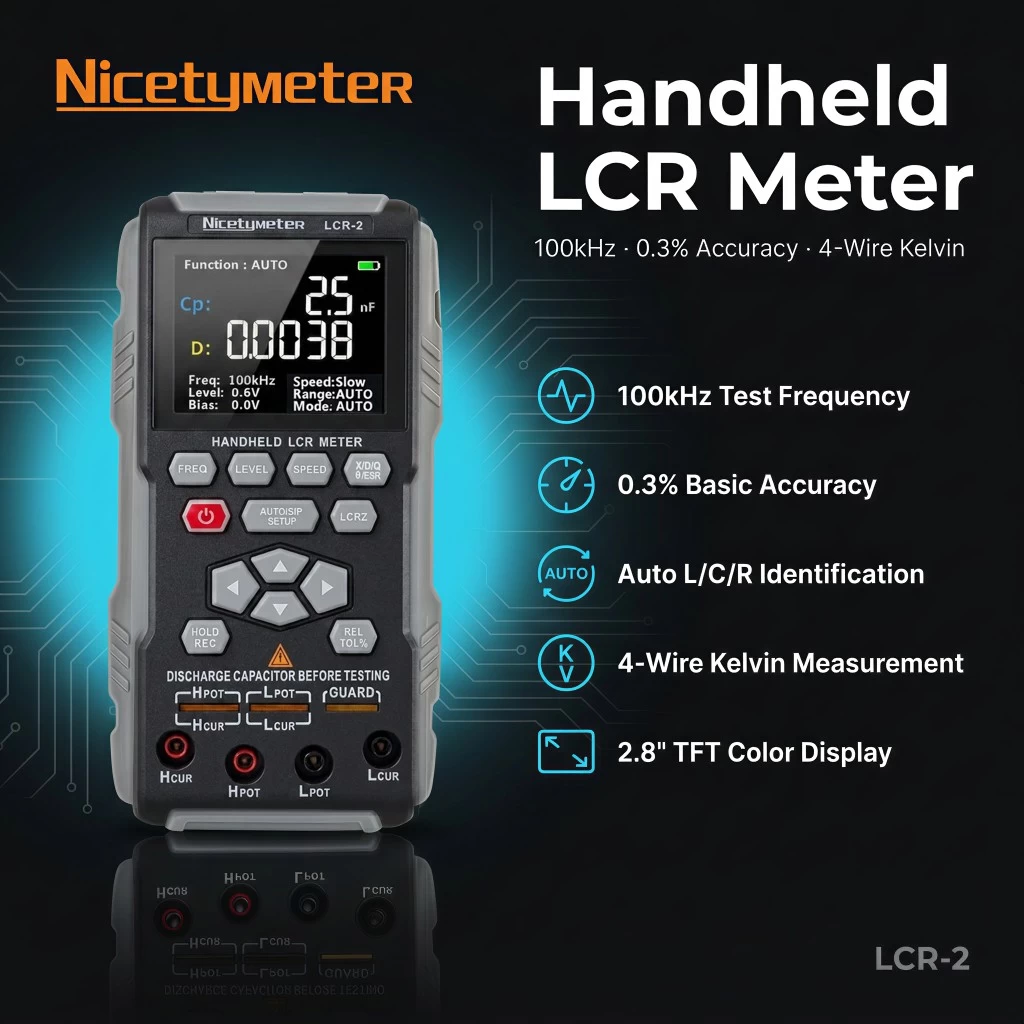
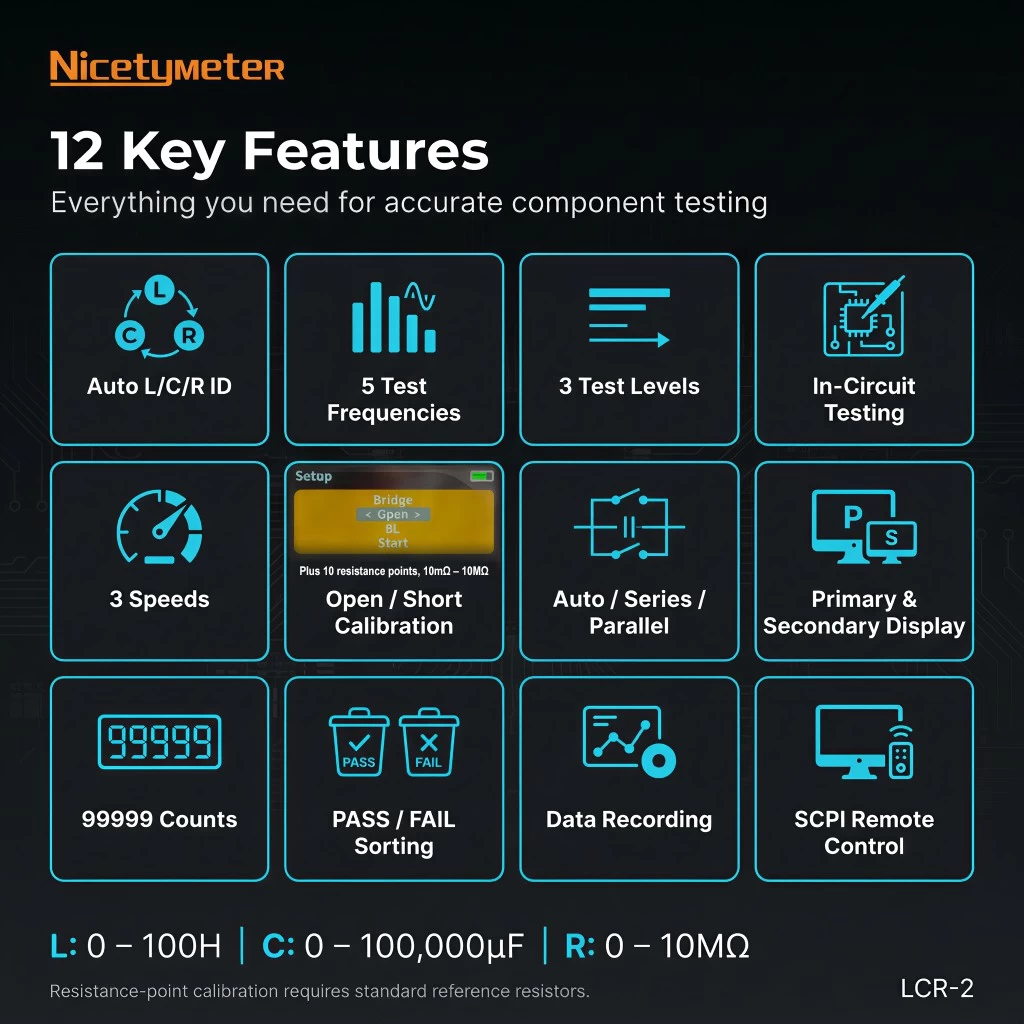
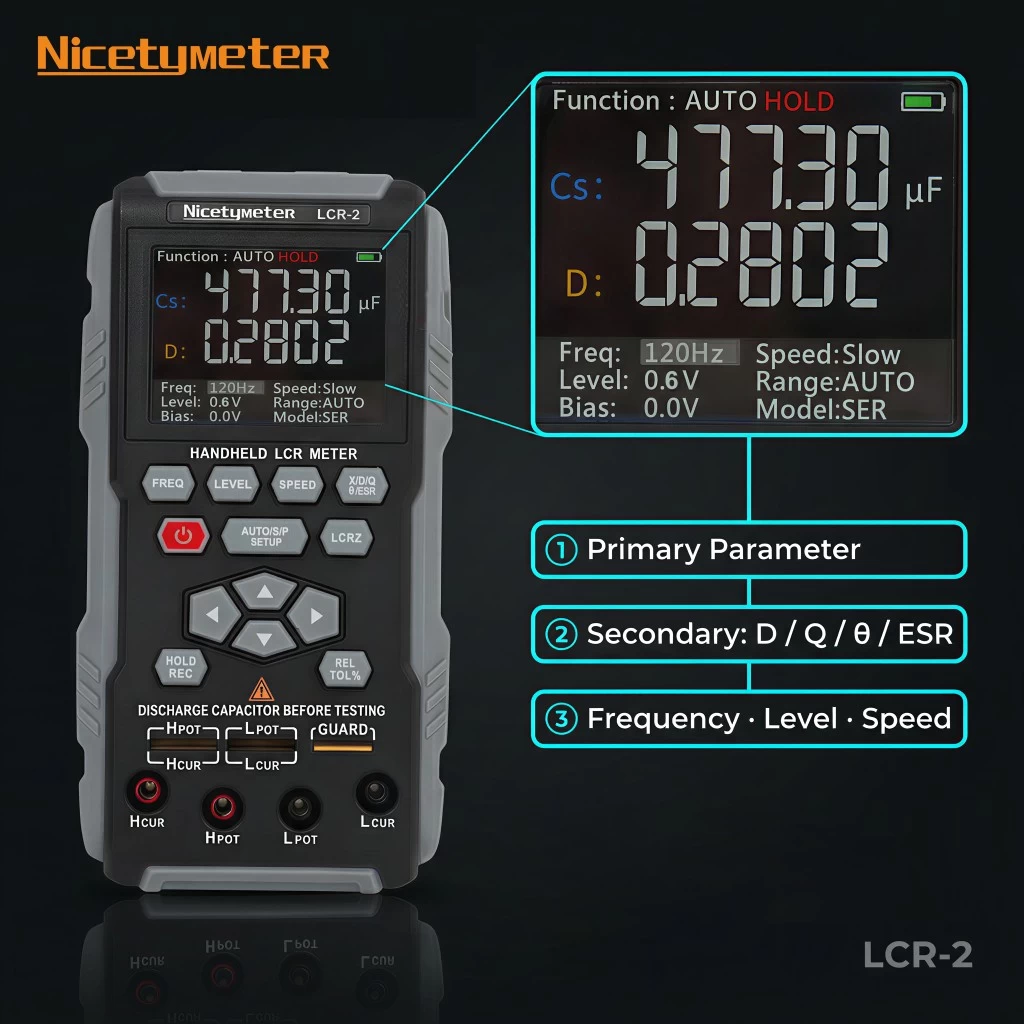
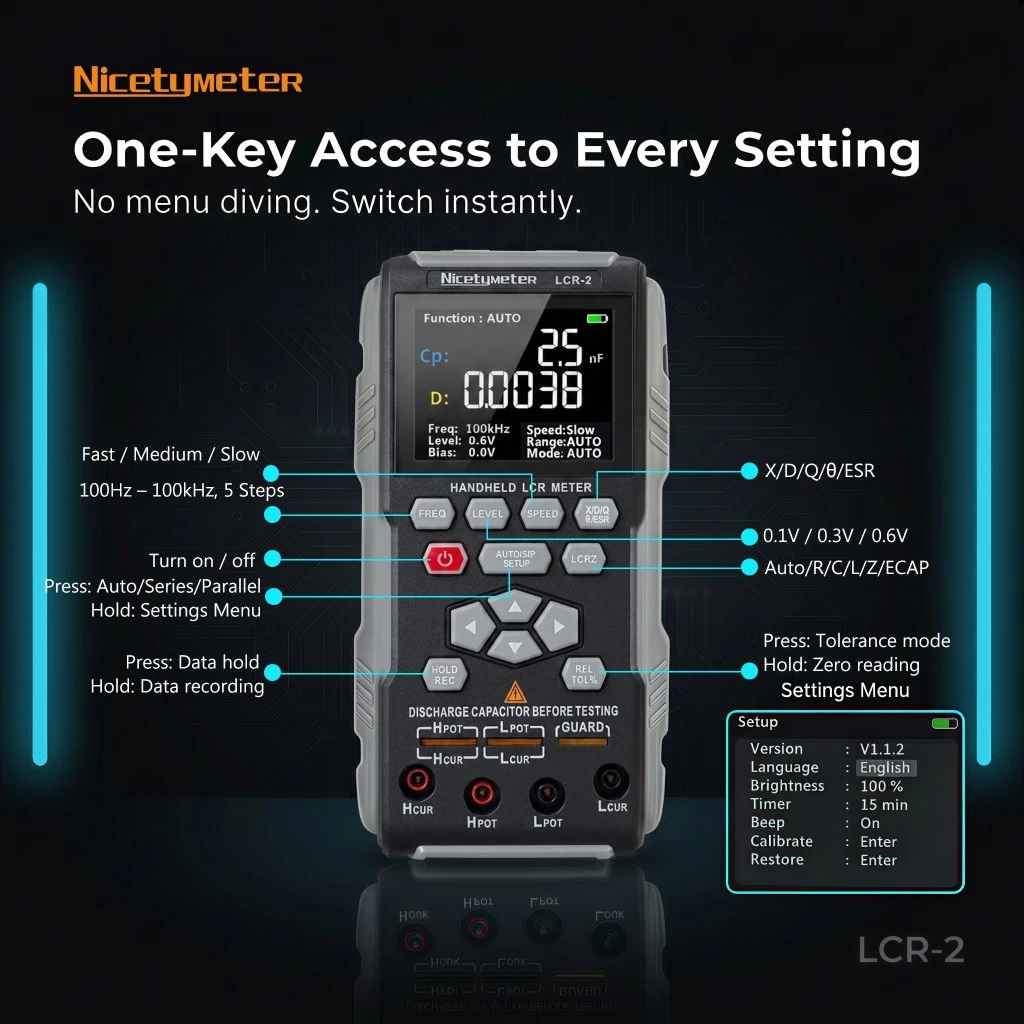
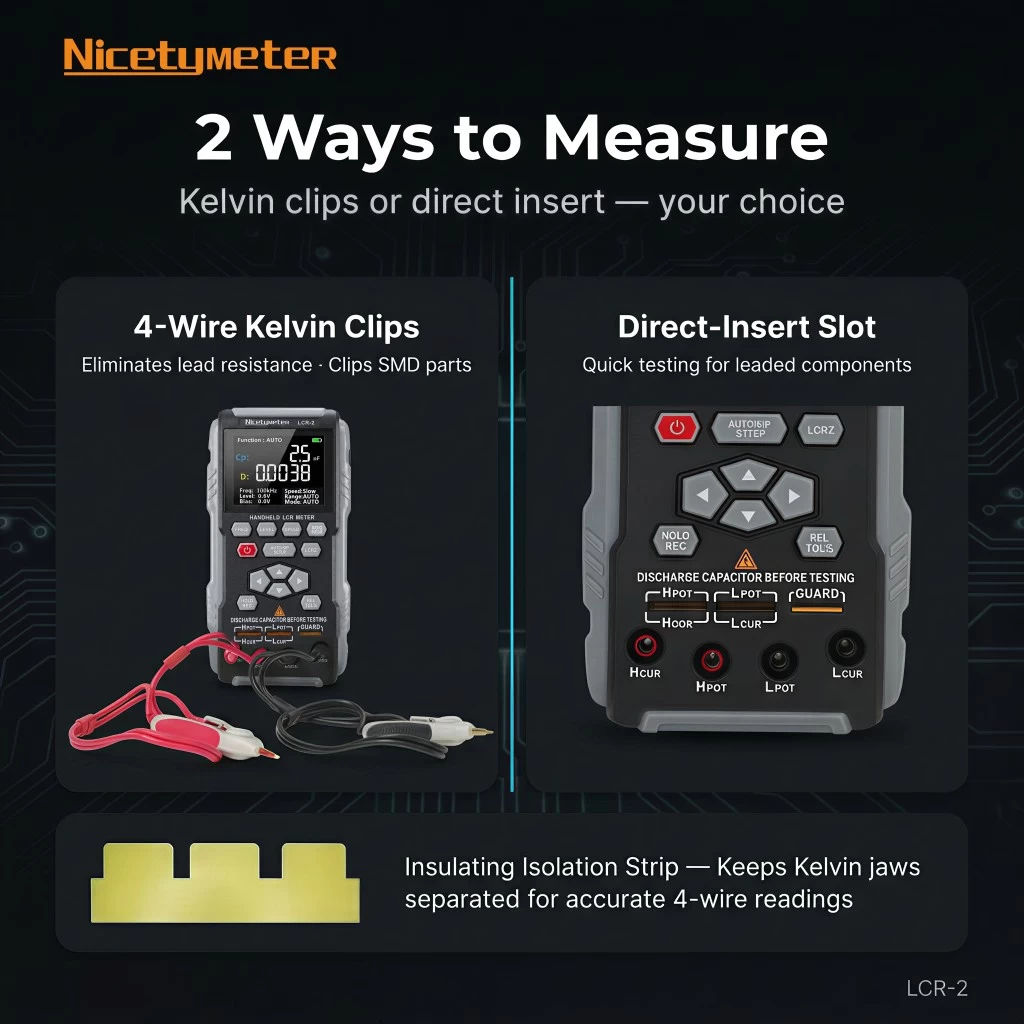
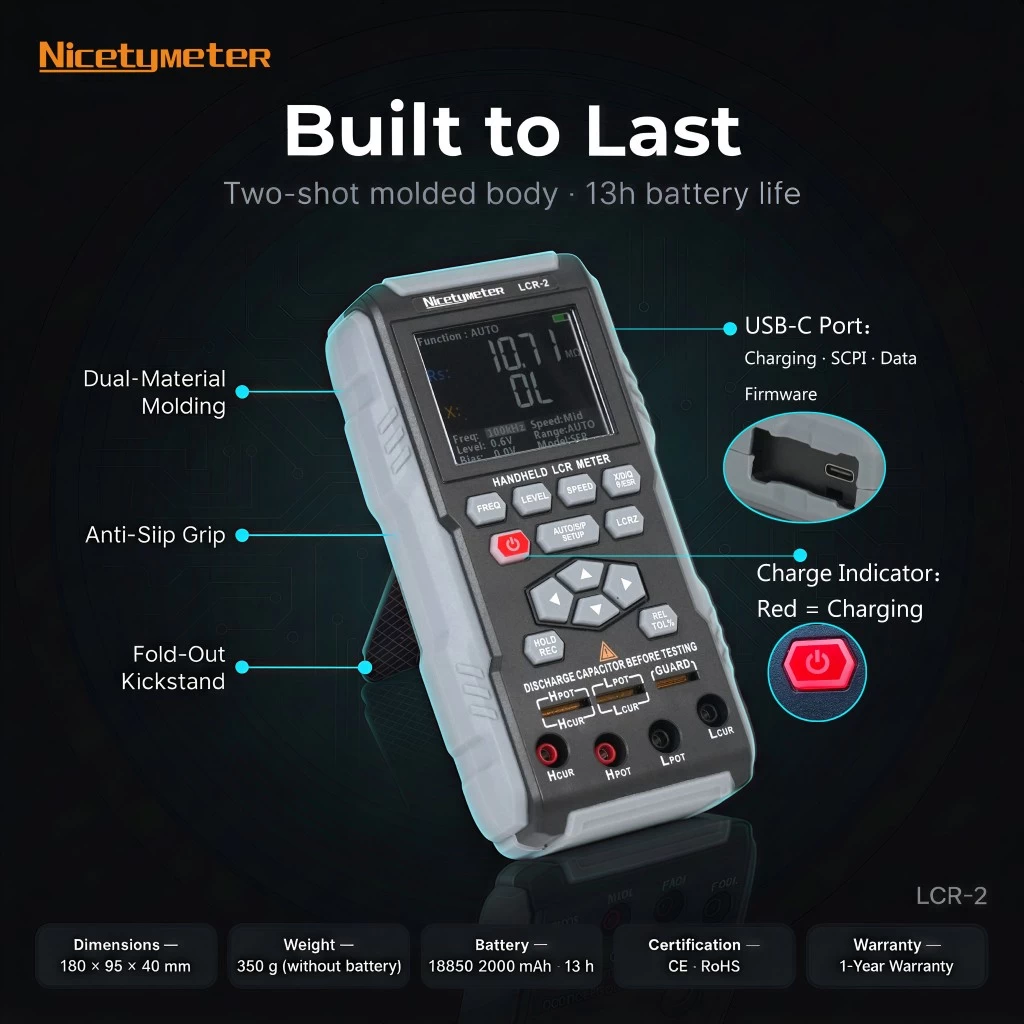
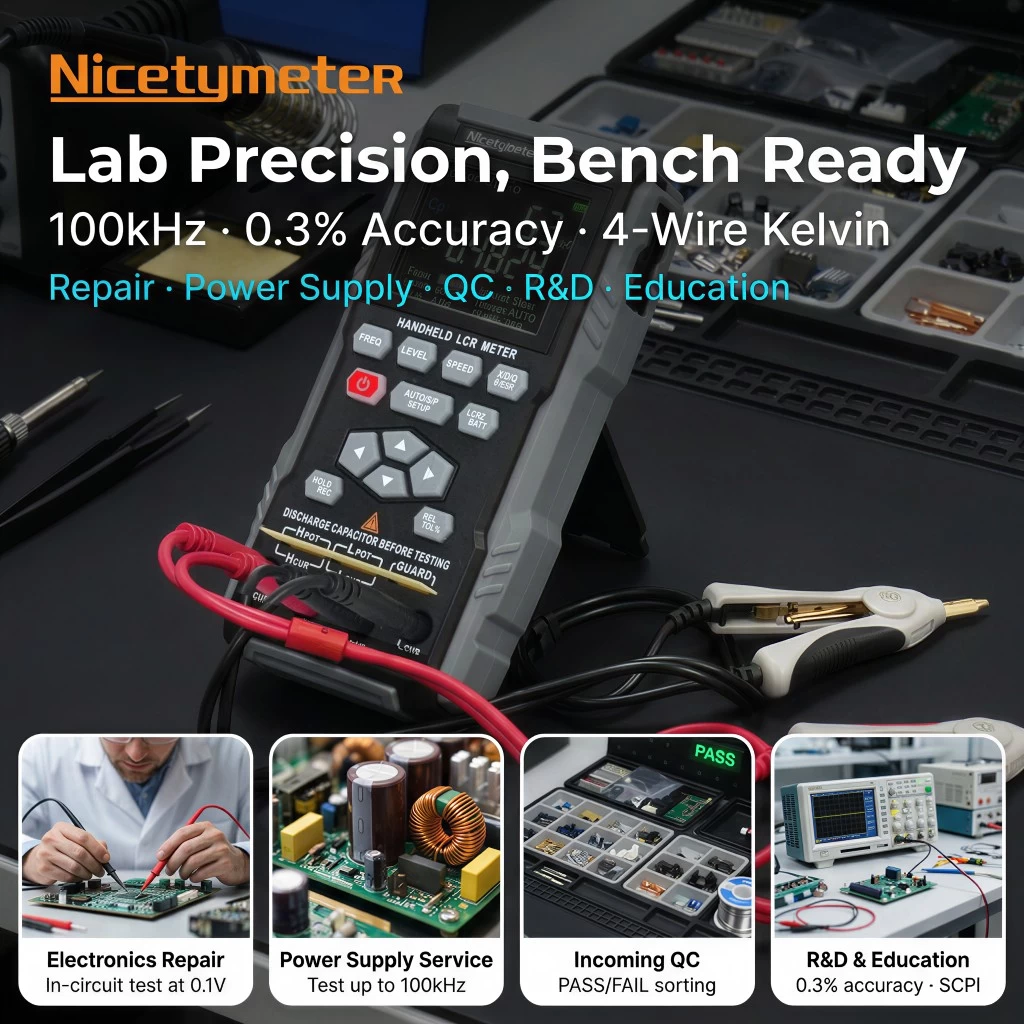
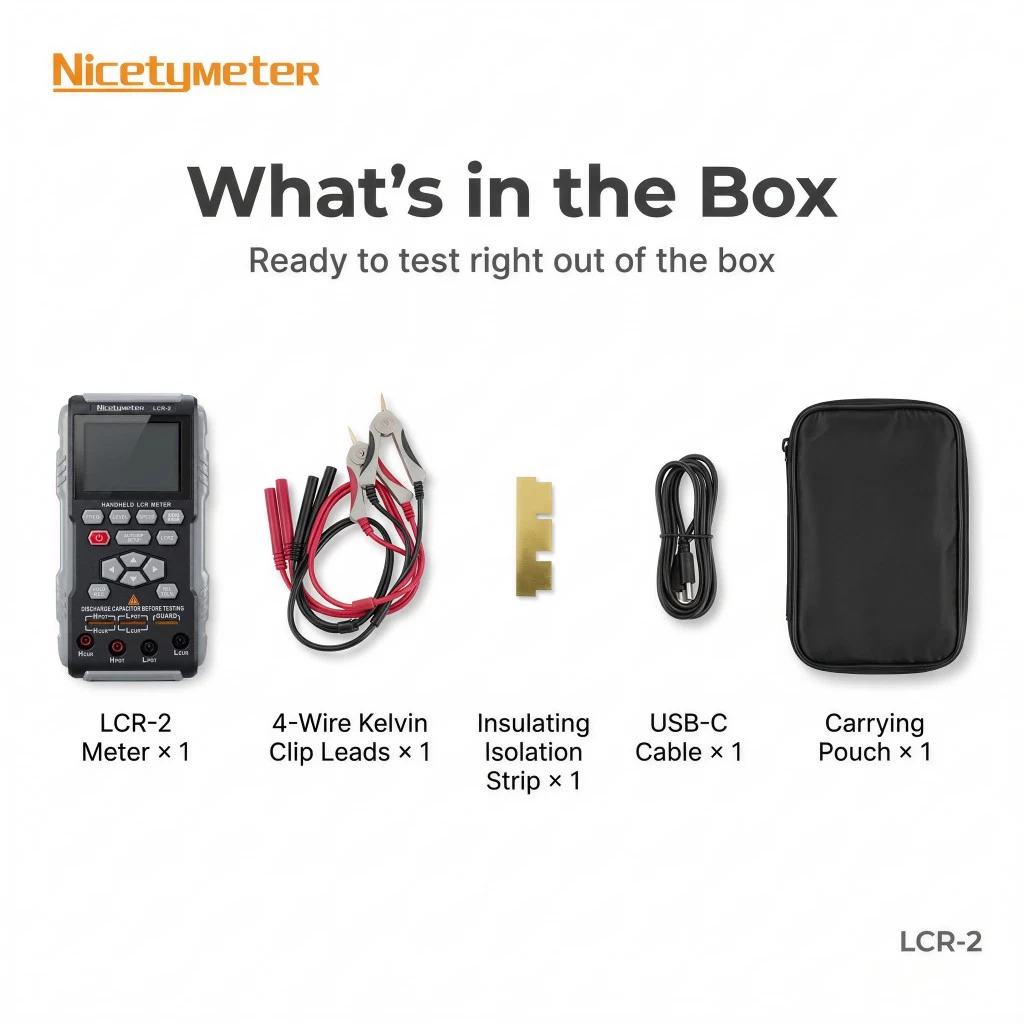
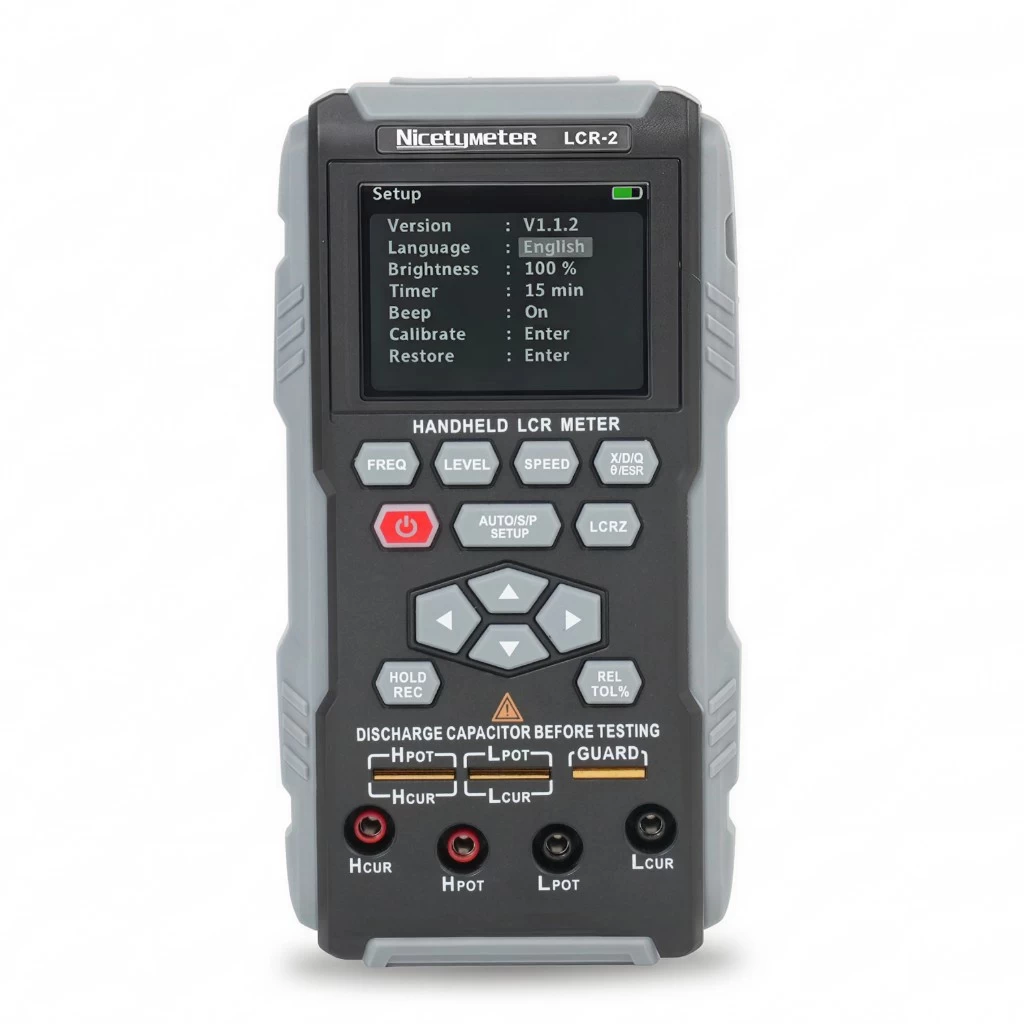
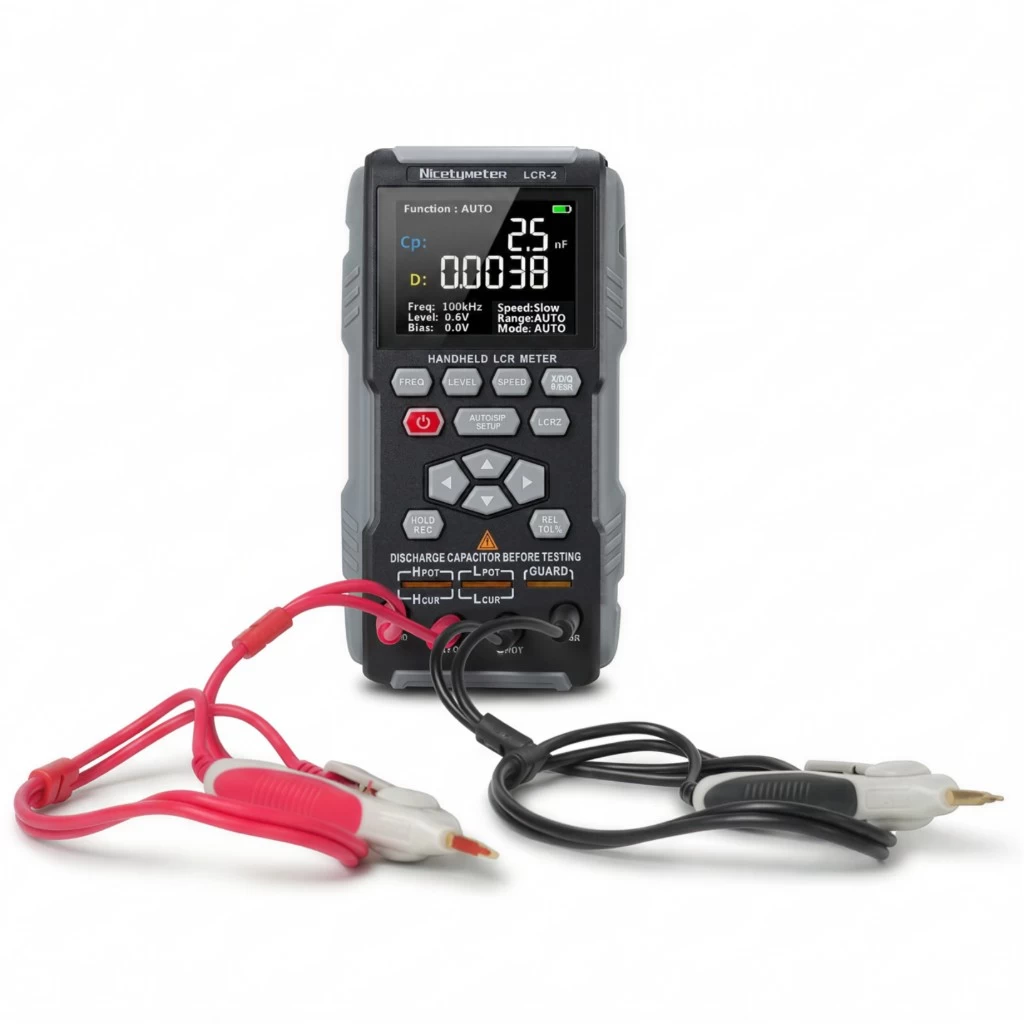
| LCR-2 | Handheld digital LCR meter and bridge — bring a component and compare the reading with its datasheet tolerance. |
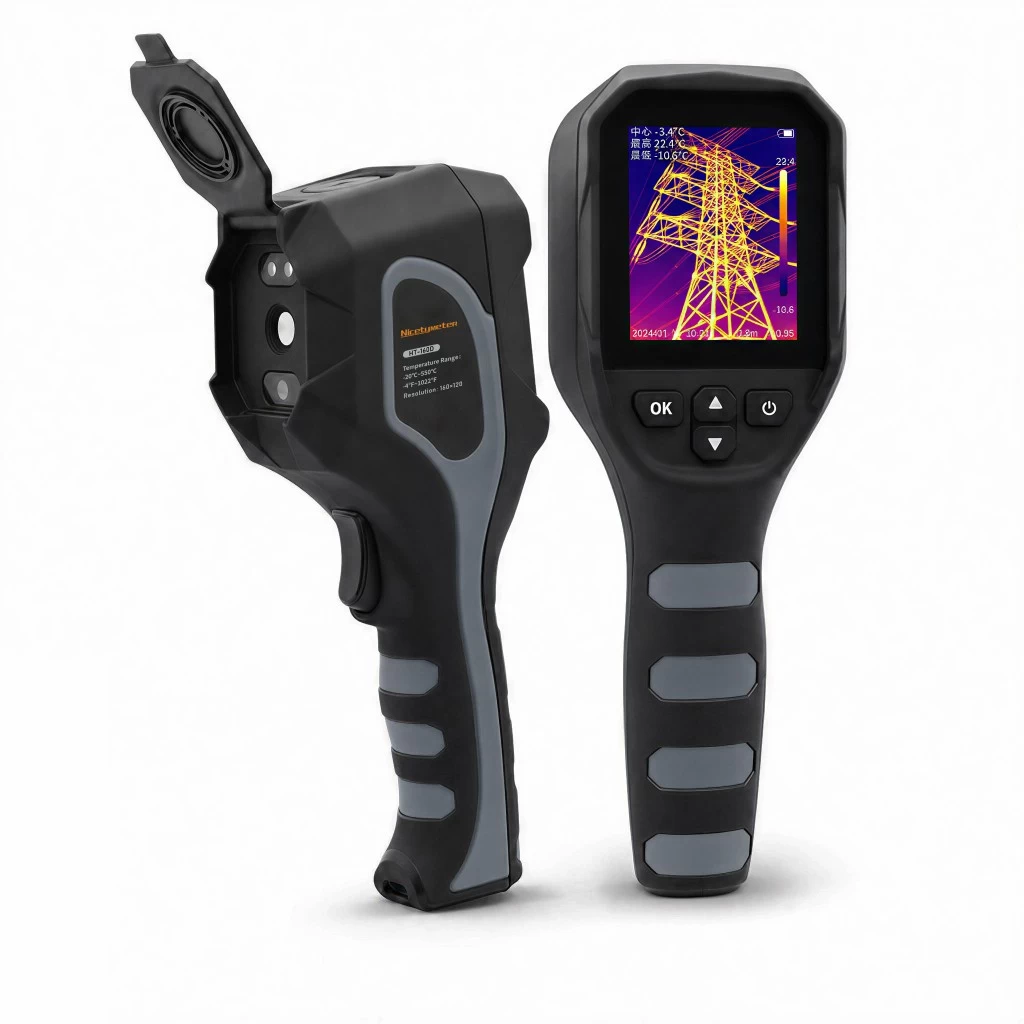
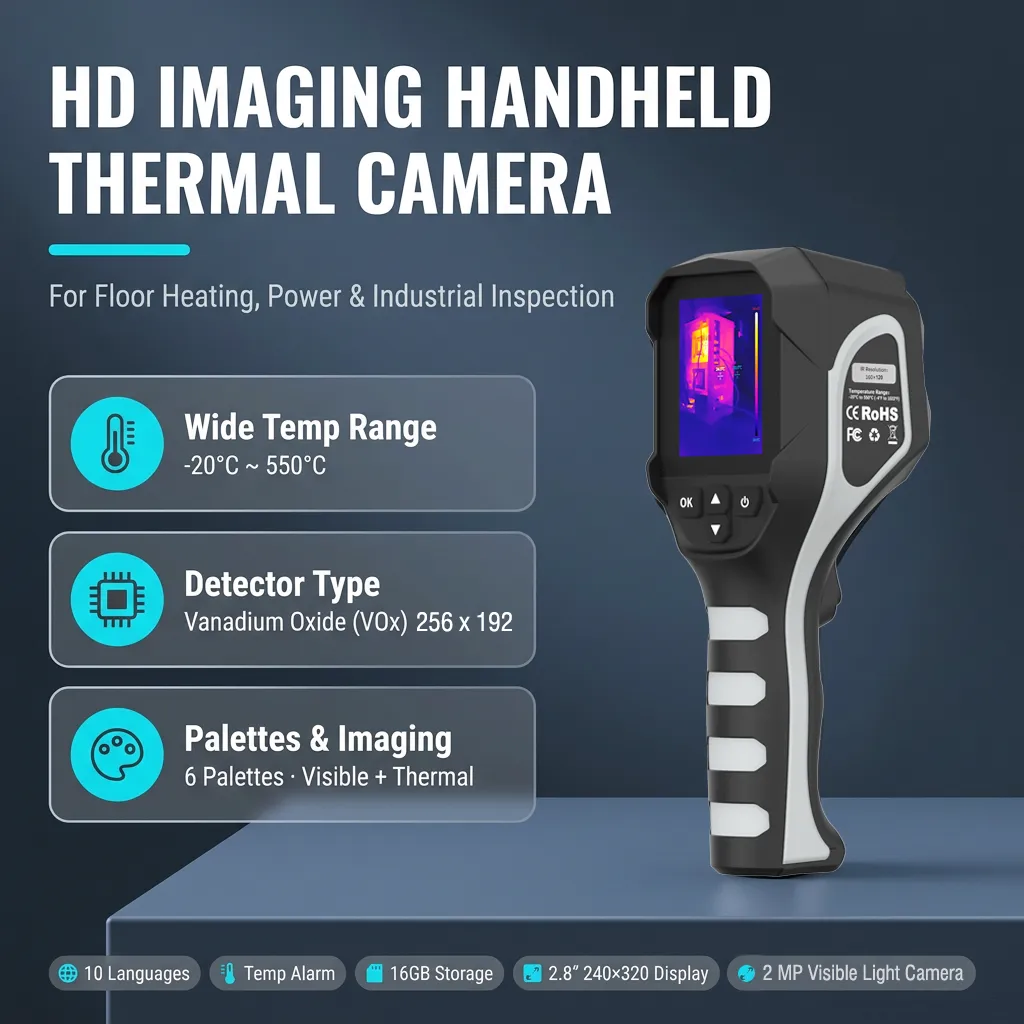
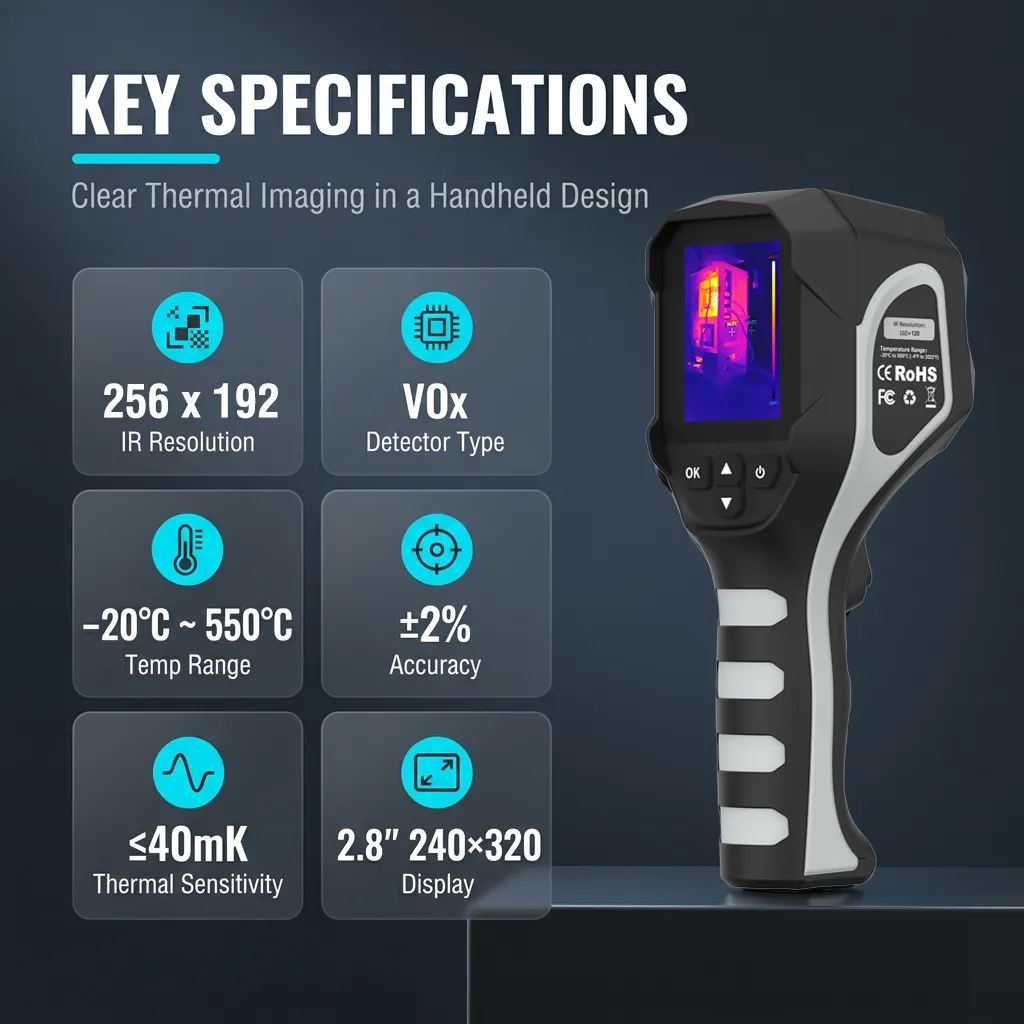
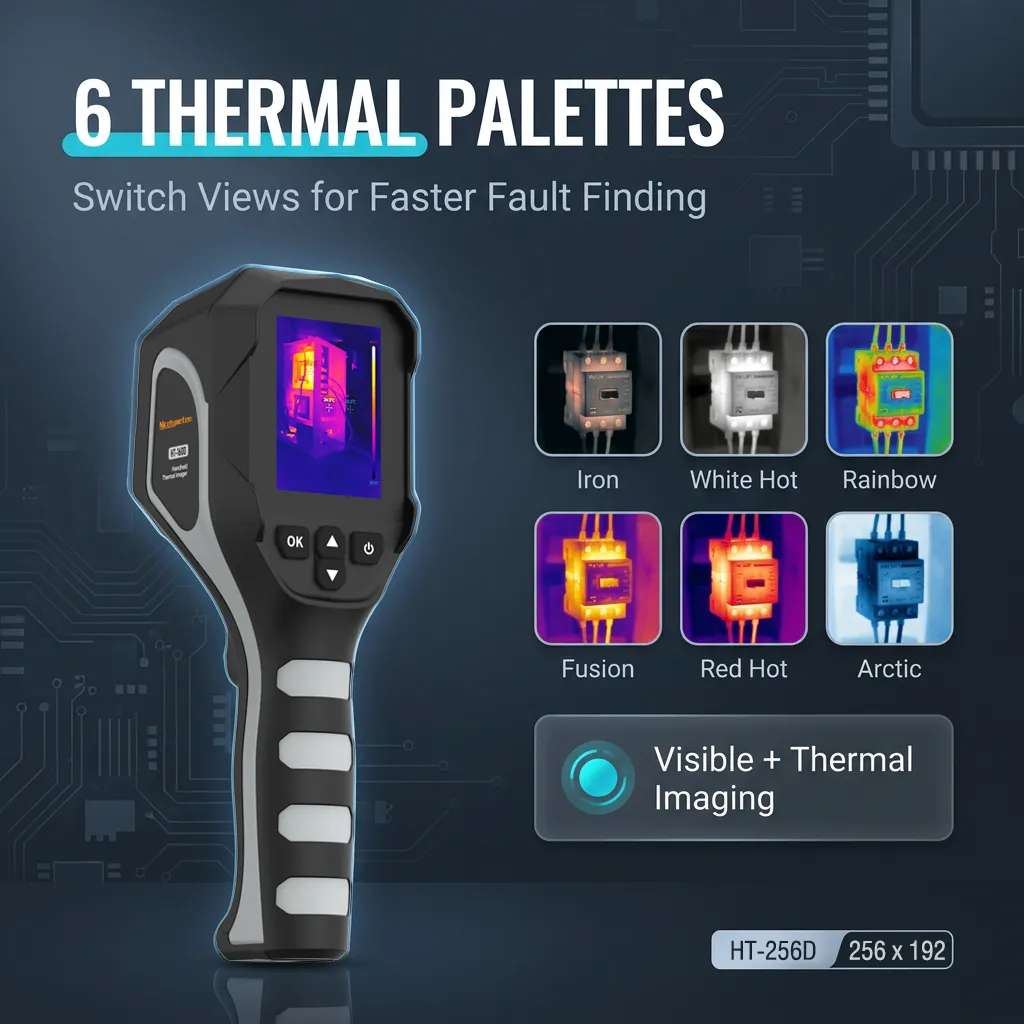
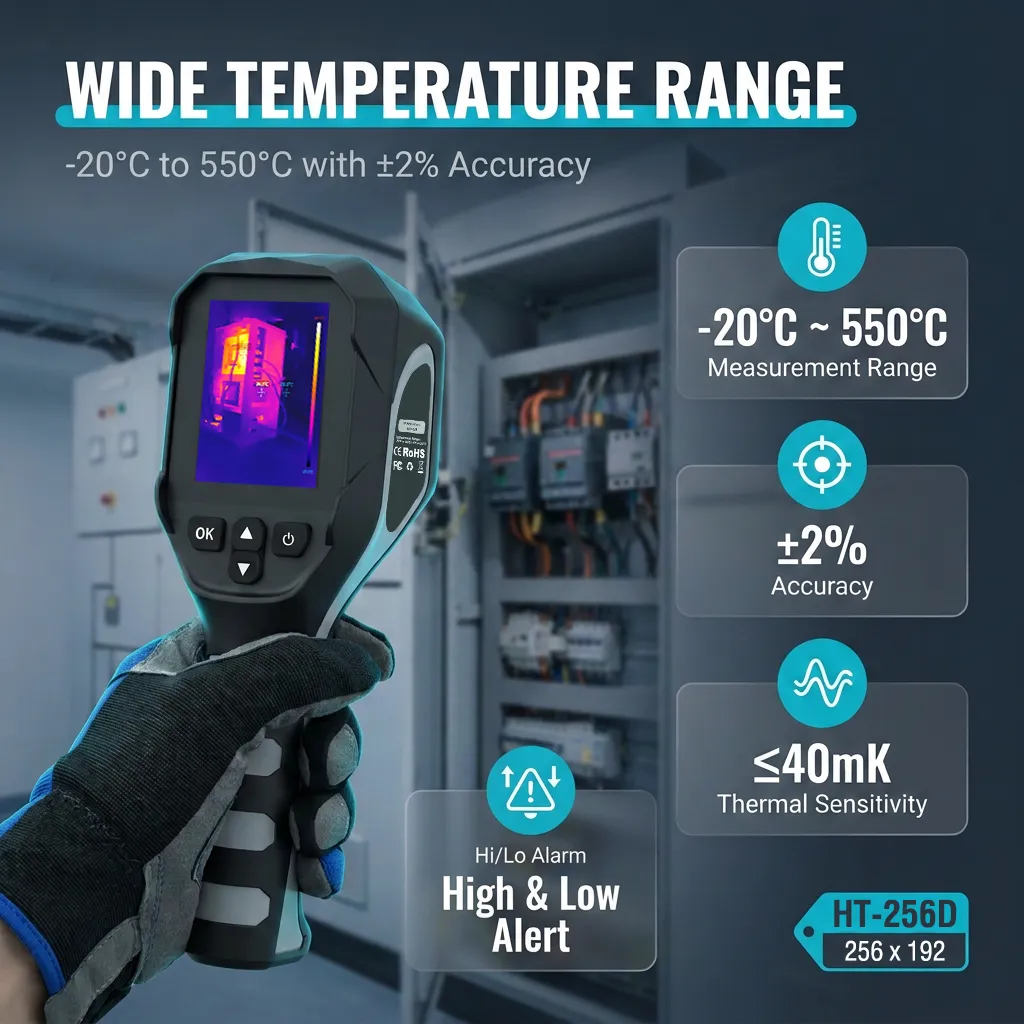
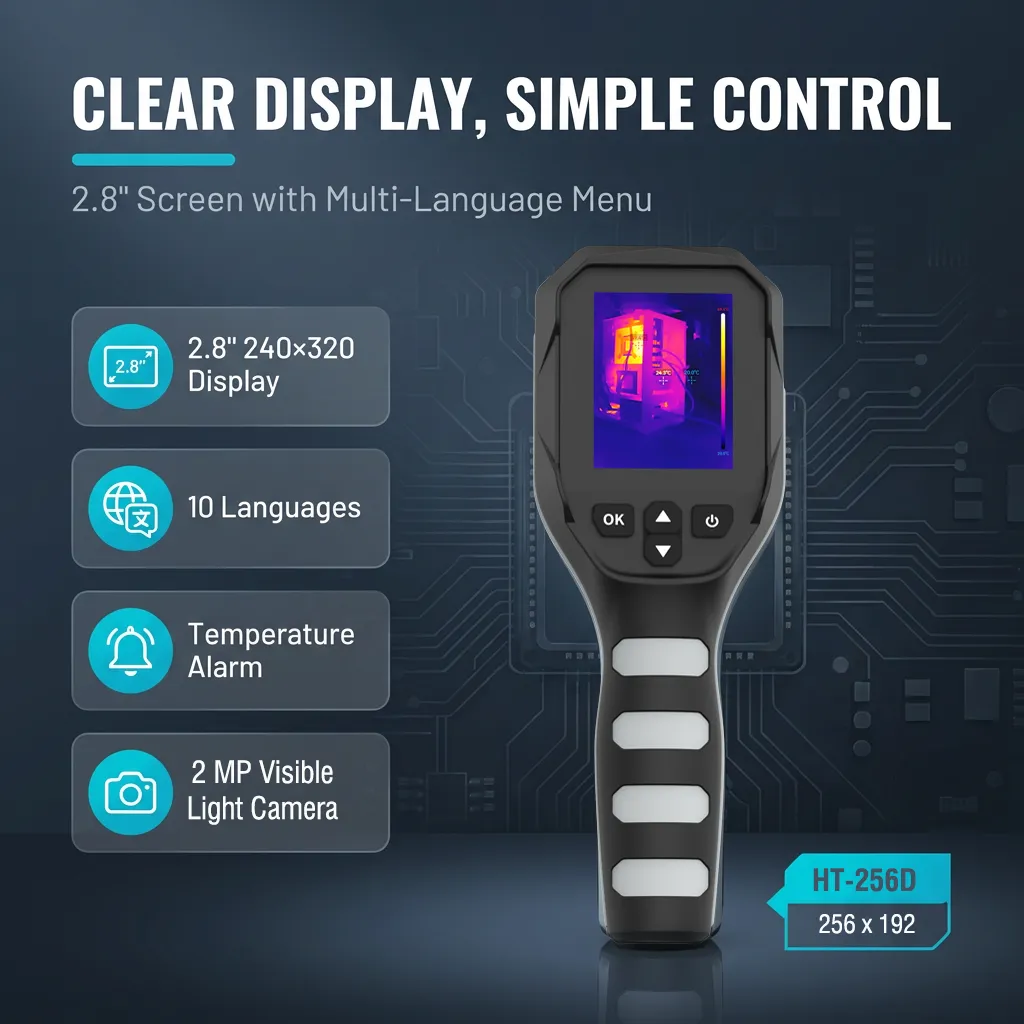
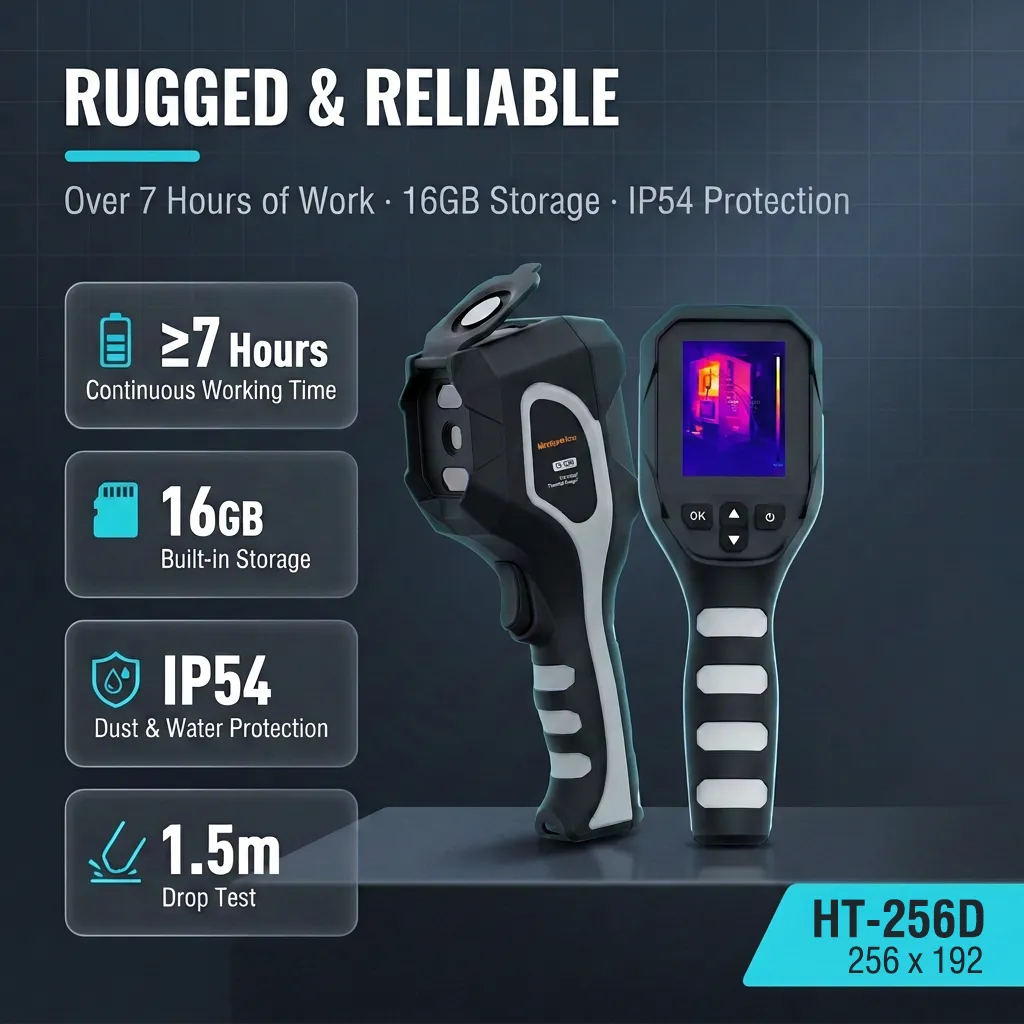
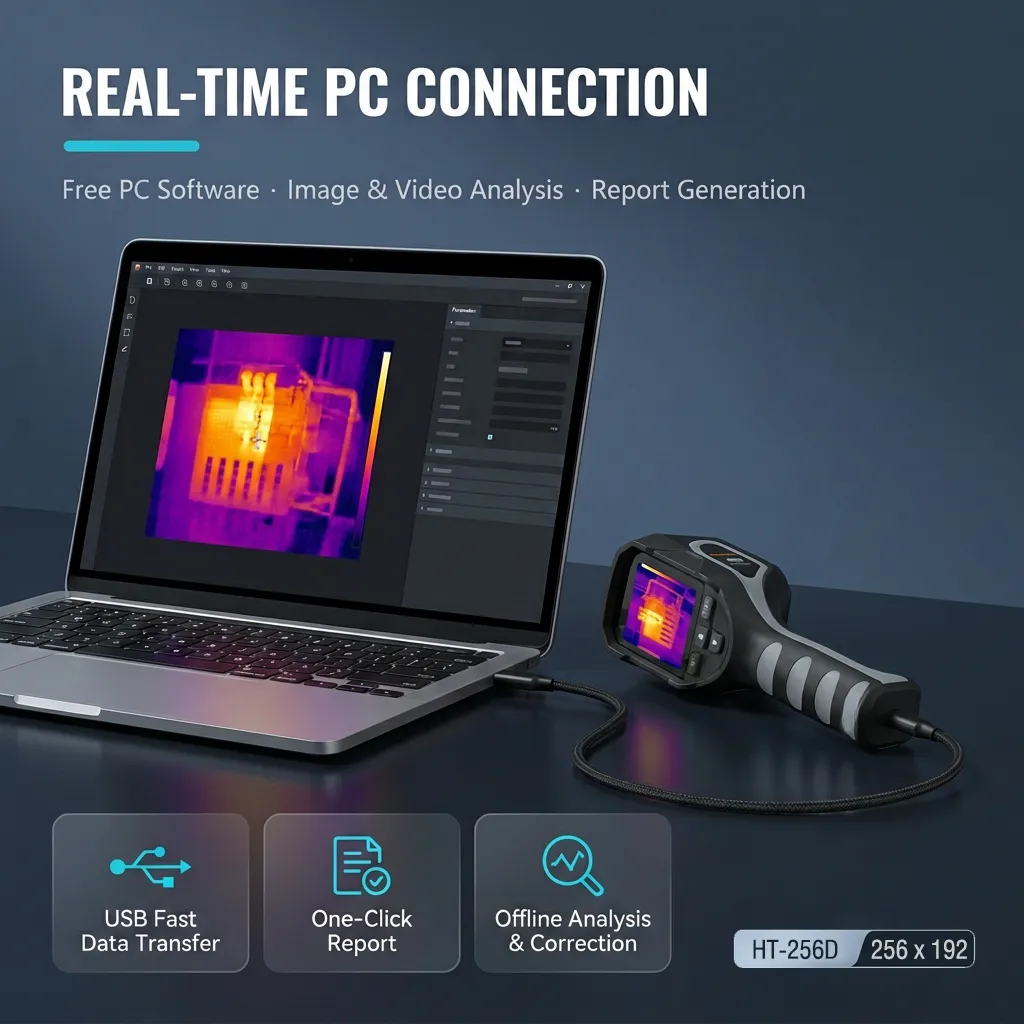
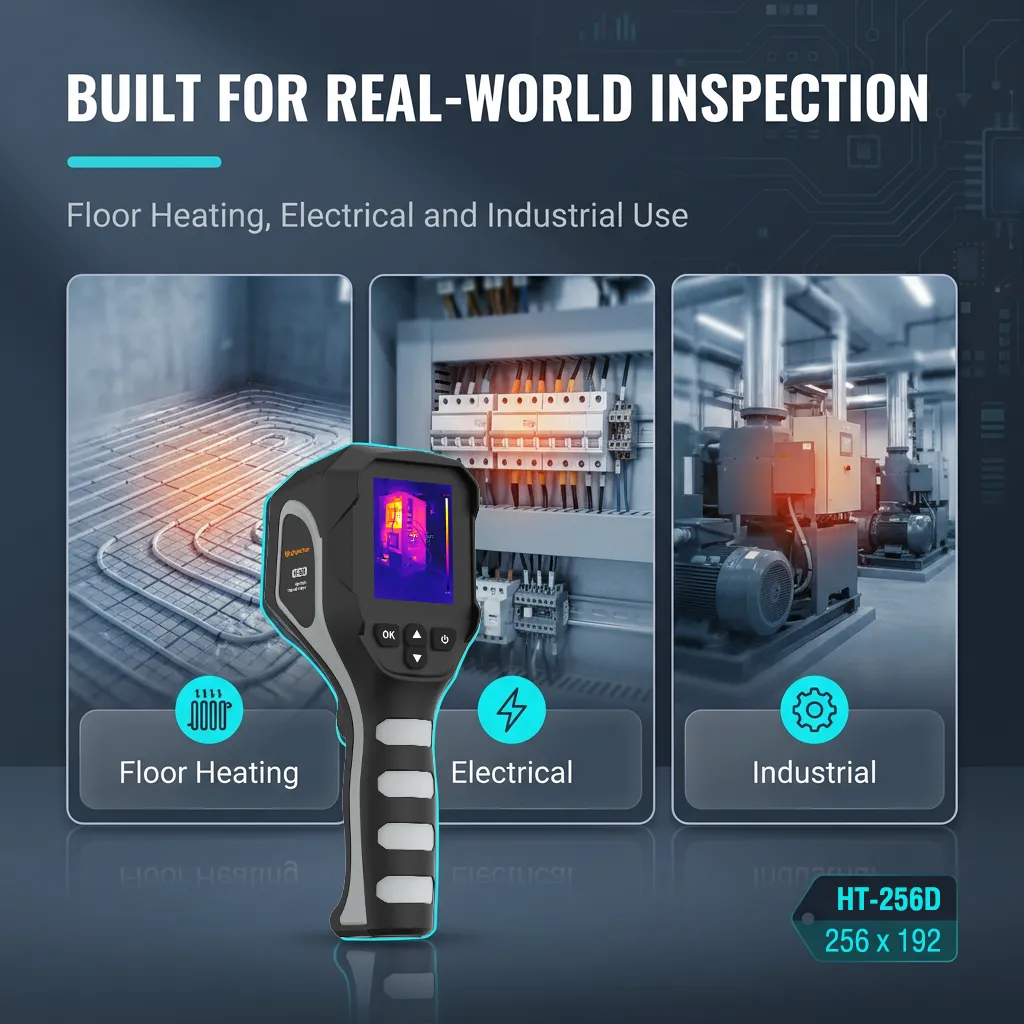
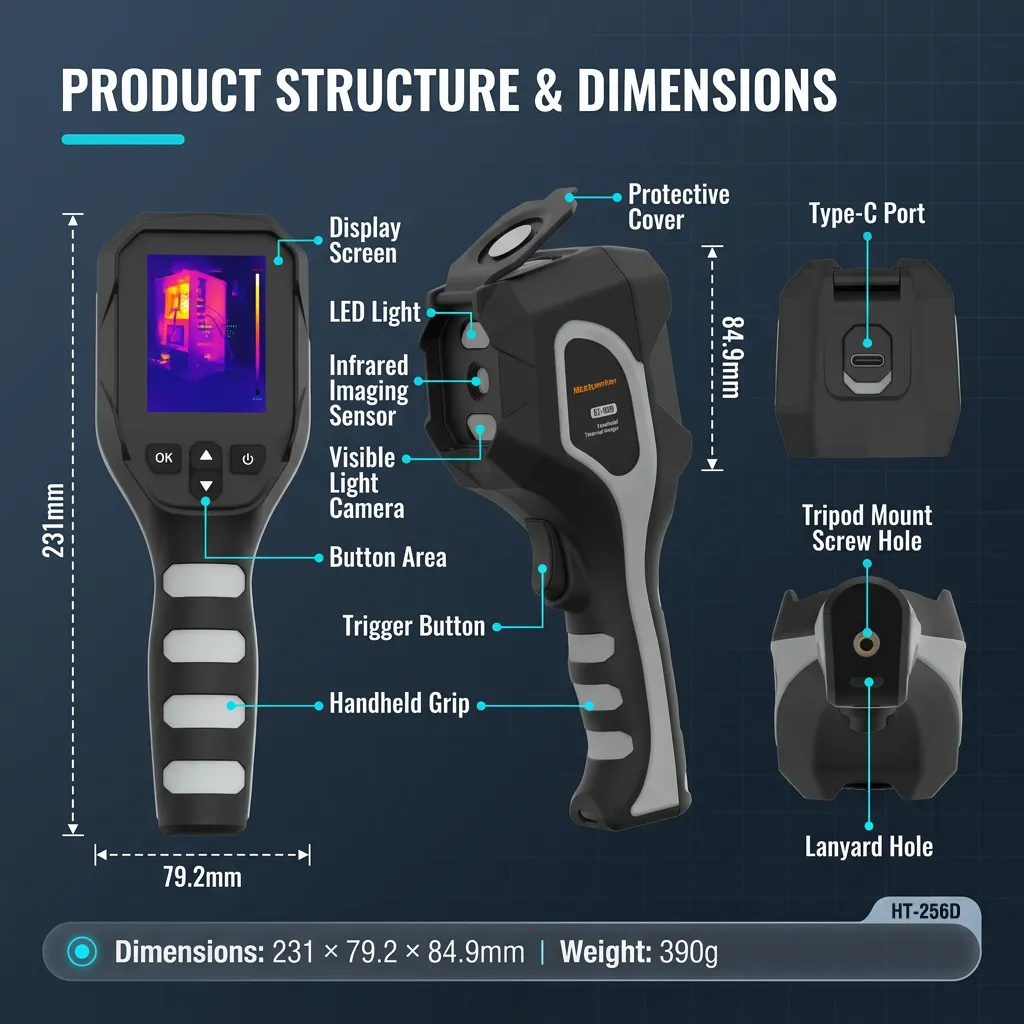
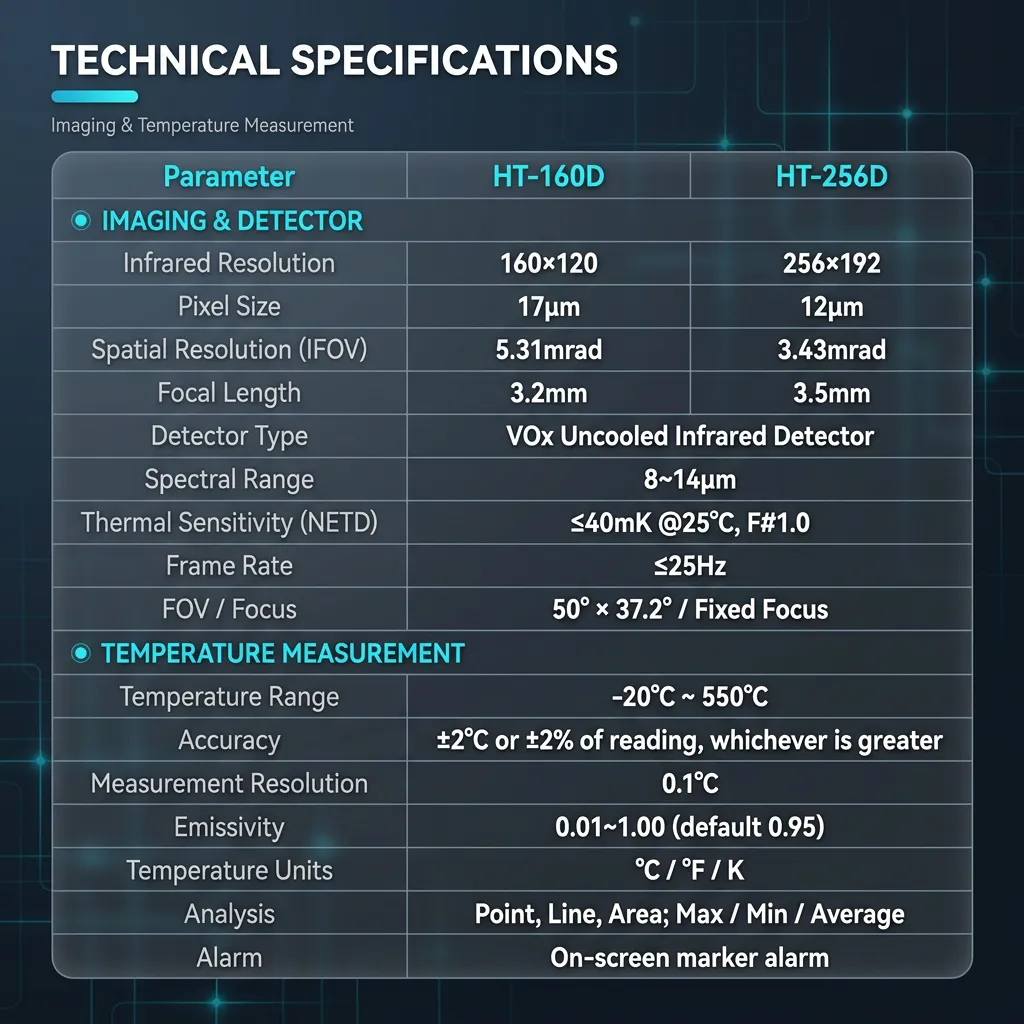
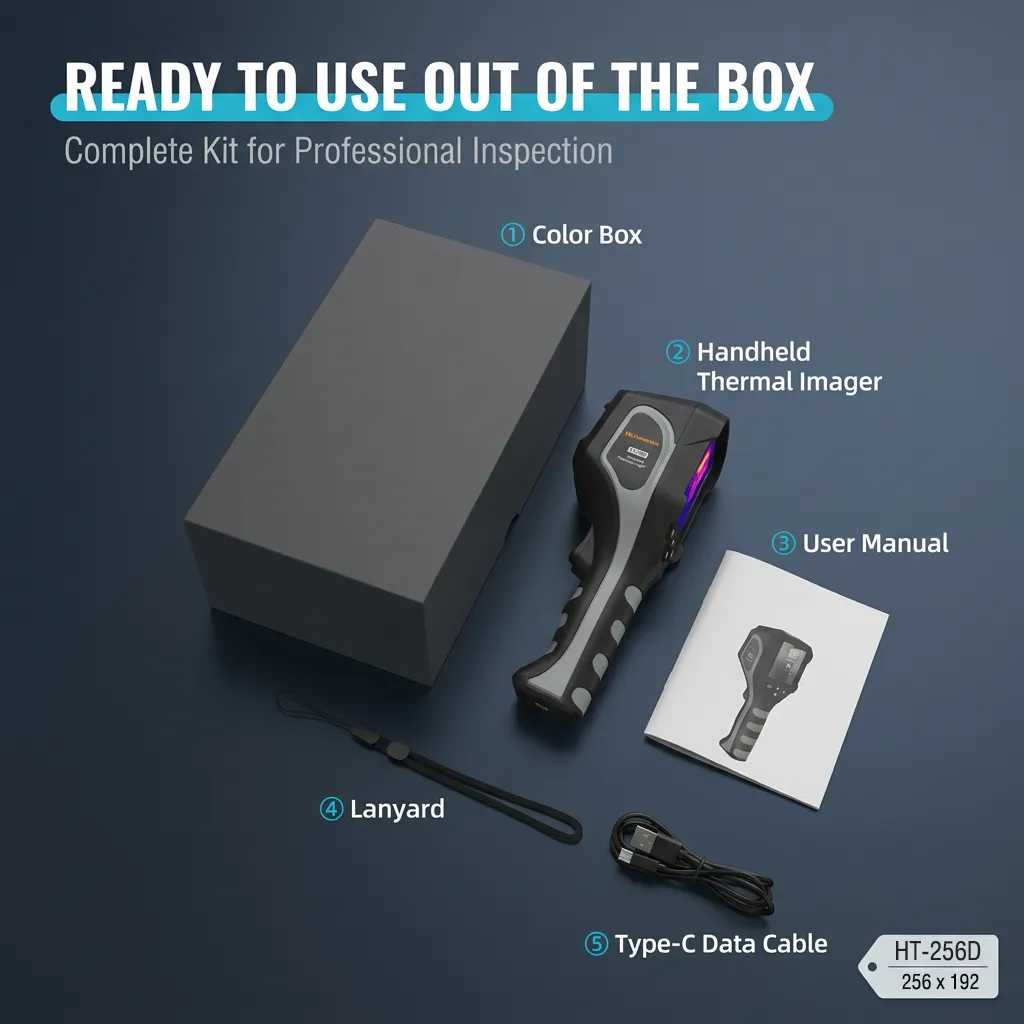
| HT256D | Handheld thermal imager, 256 × 192 VOx sensor, −20 to 550 °C — for finding the warm connector before it becomes a failure. |
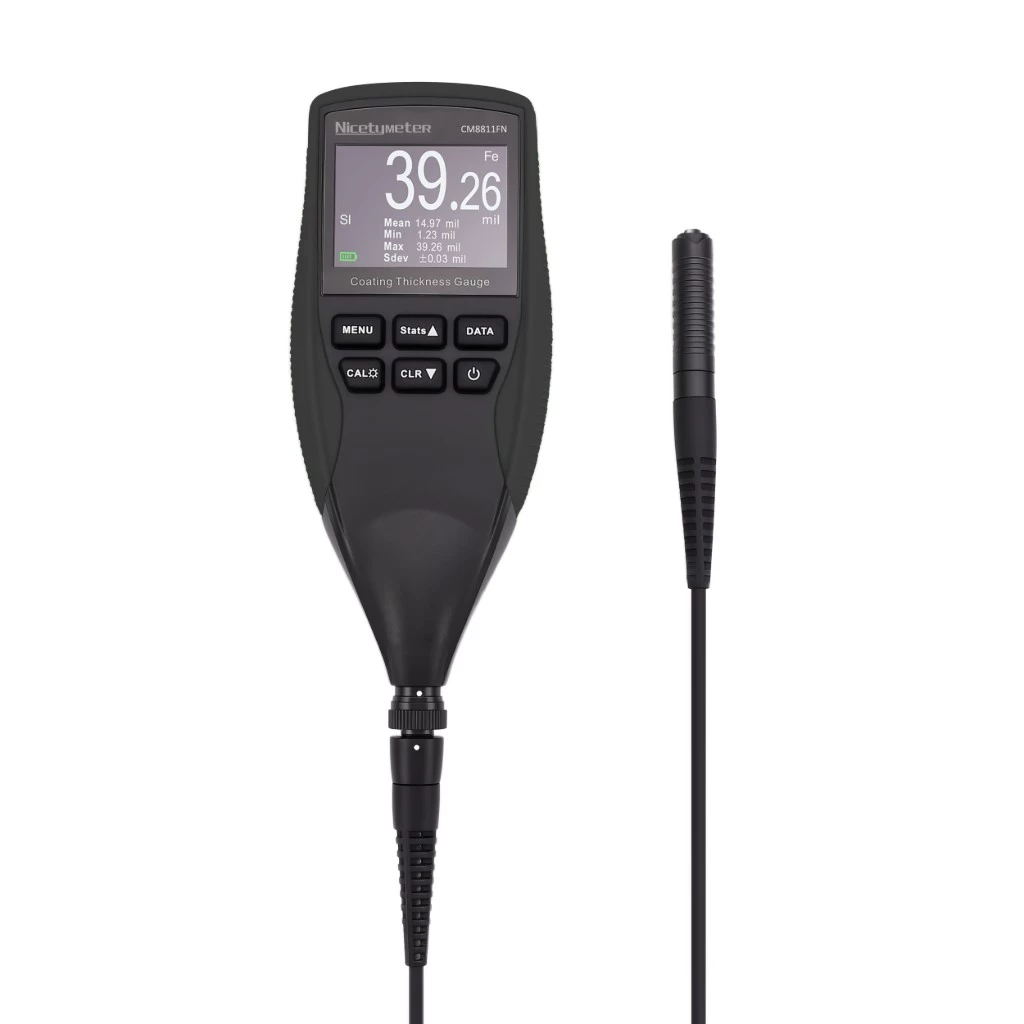
| CM8811FN | Coating thickness gauge, 0–1500 µm, Fe/NFe with a detachable probe. |
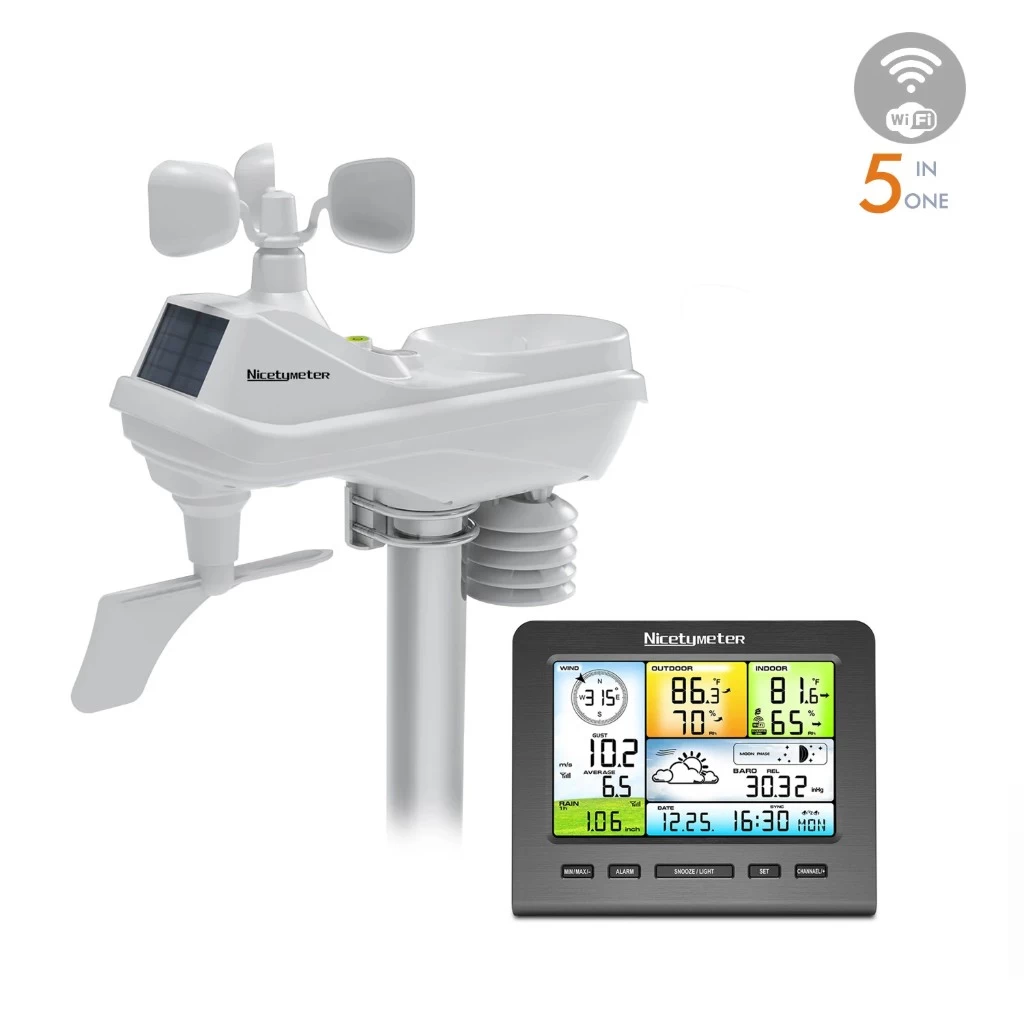
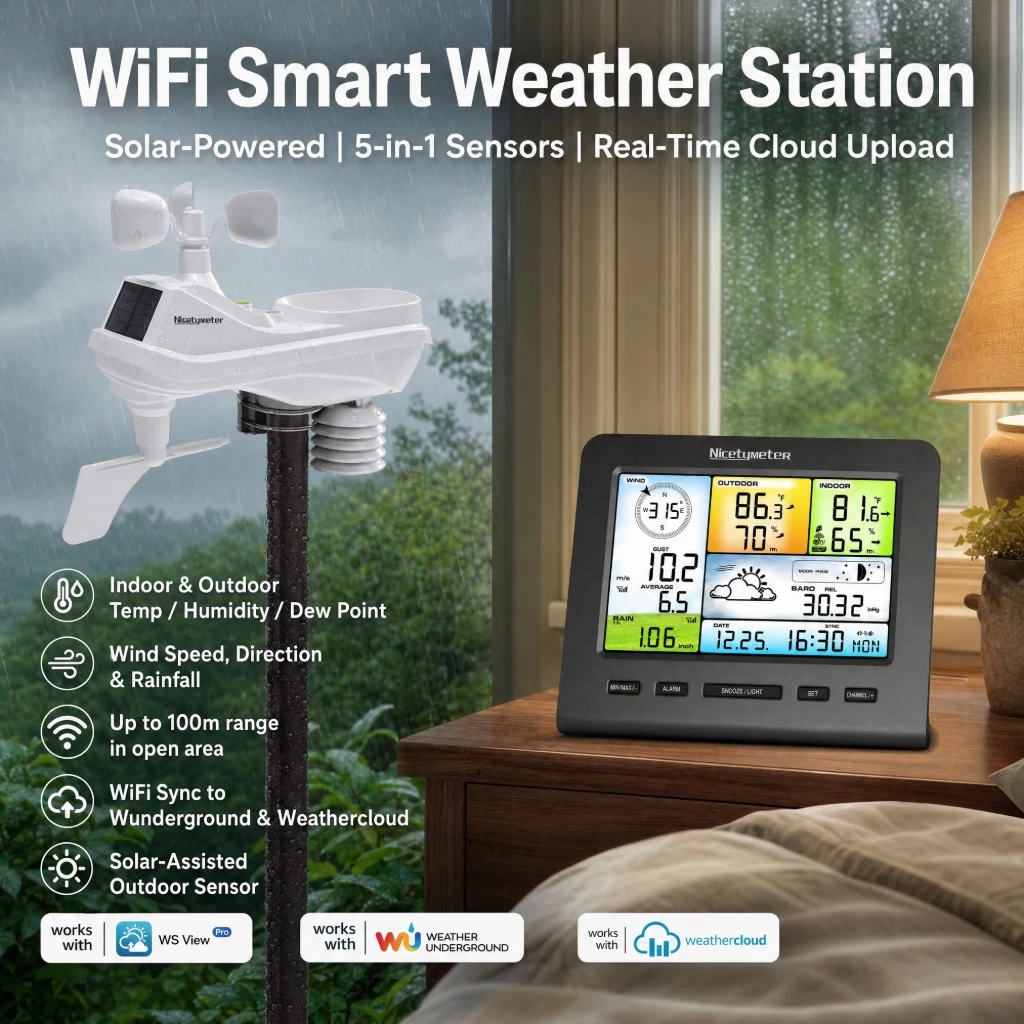
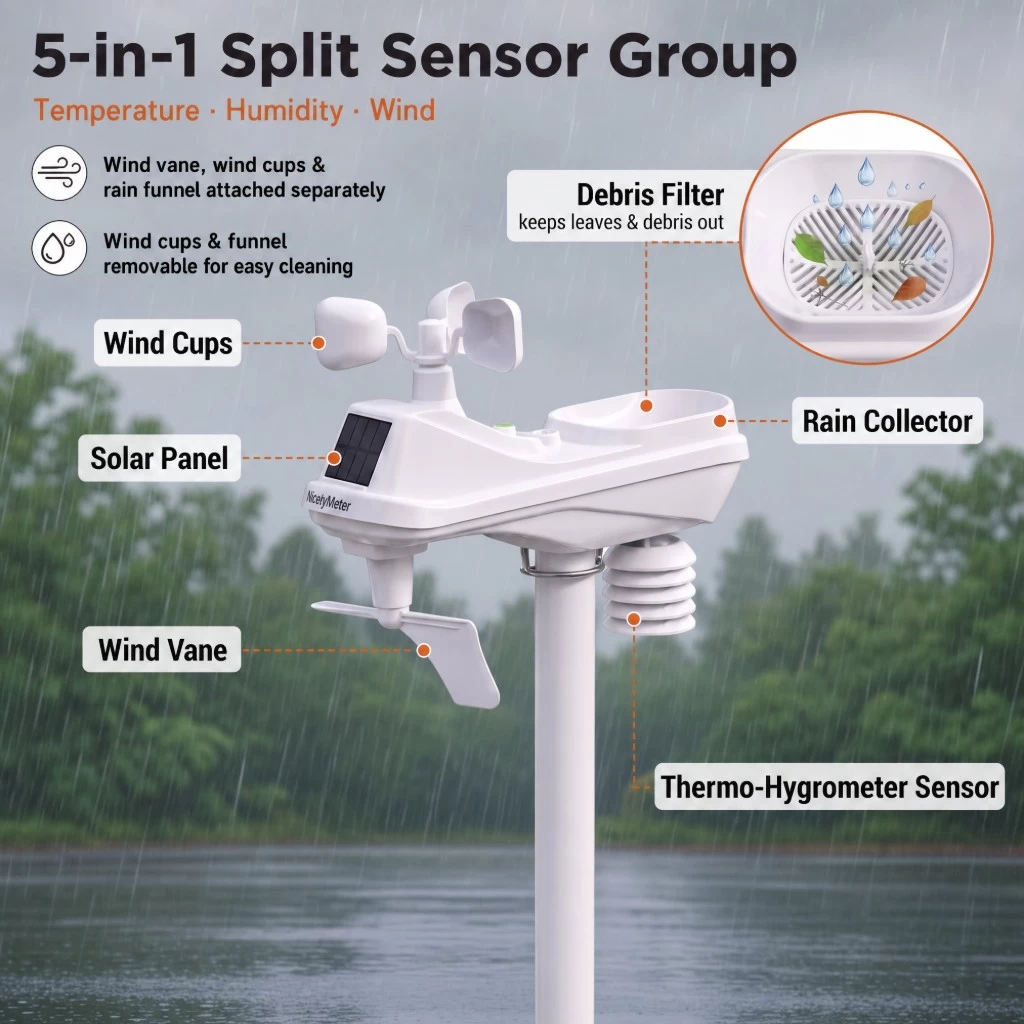
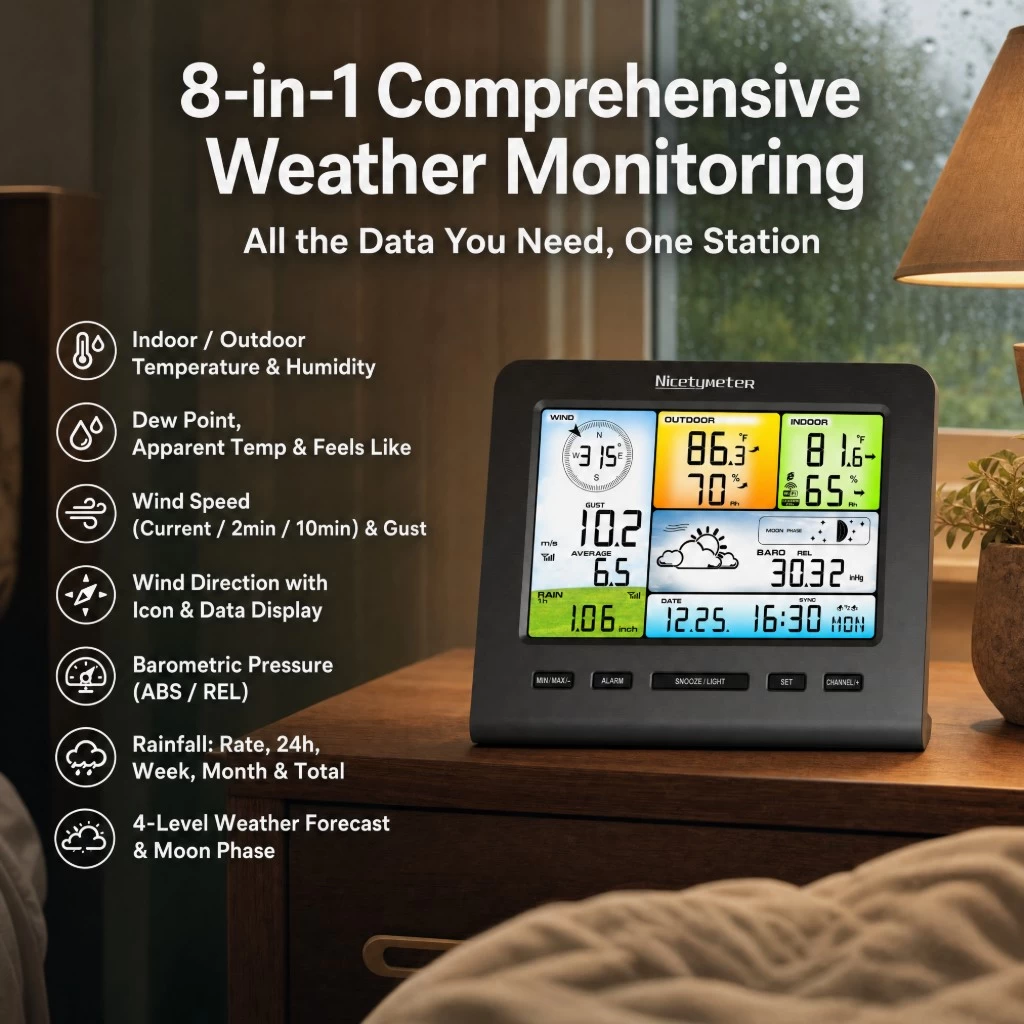
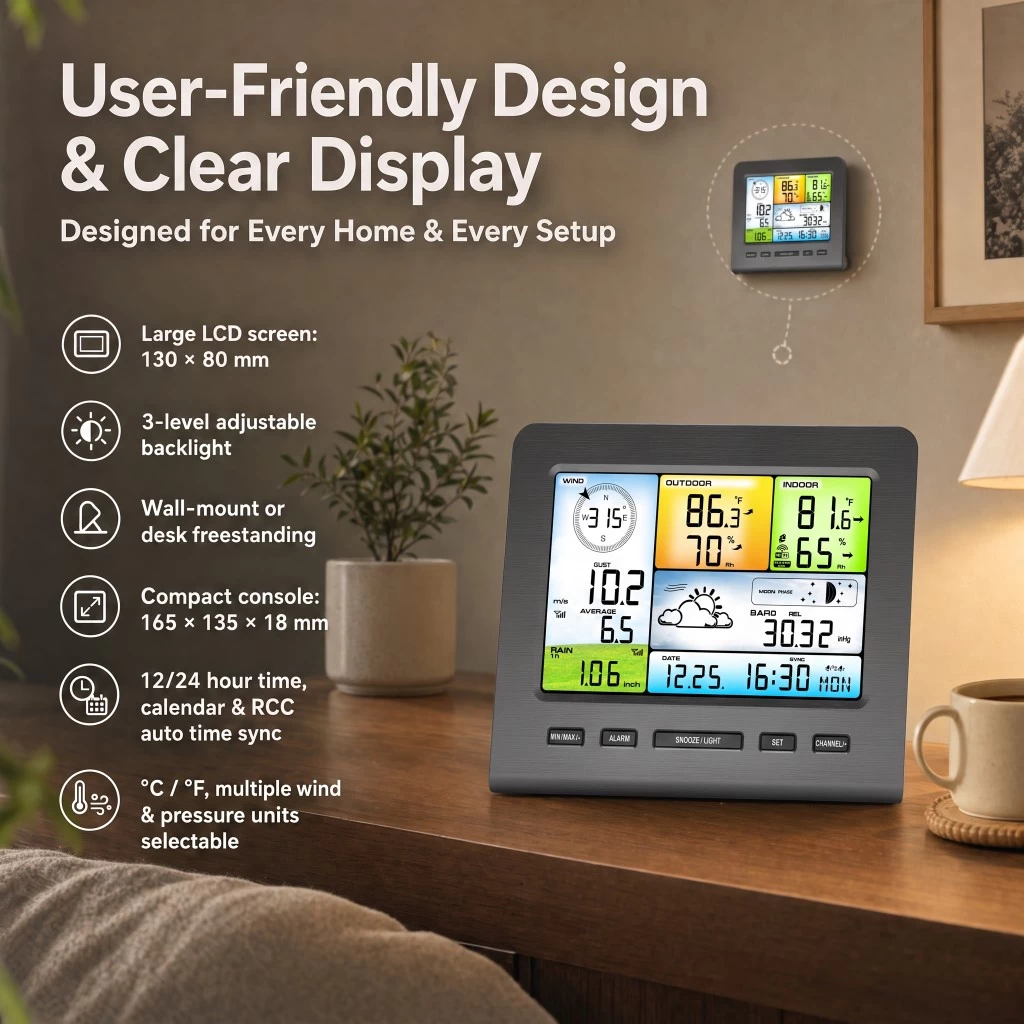
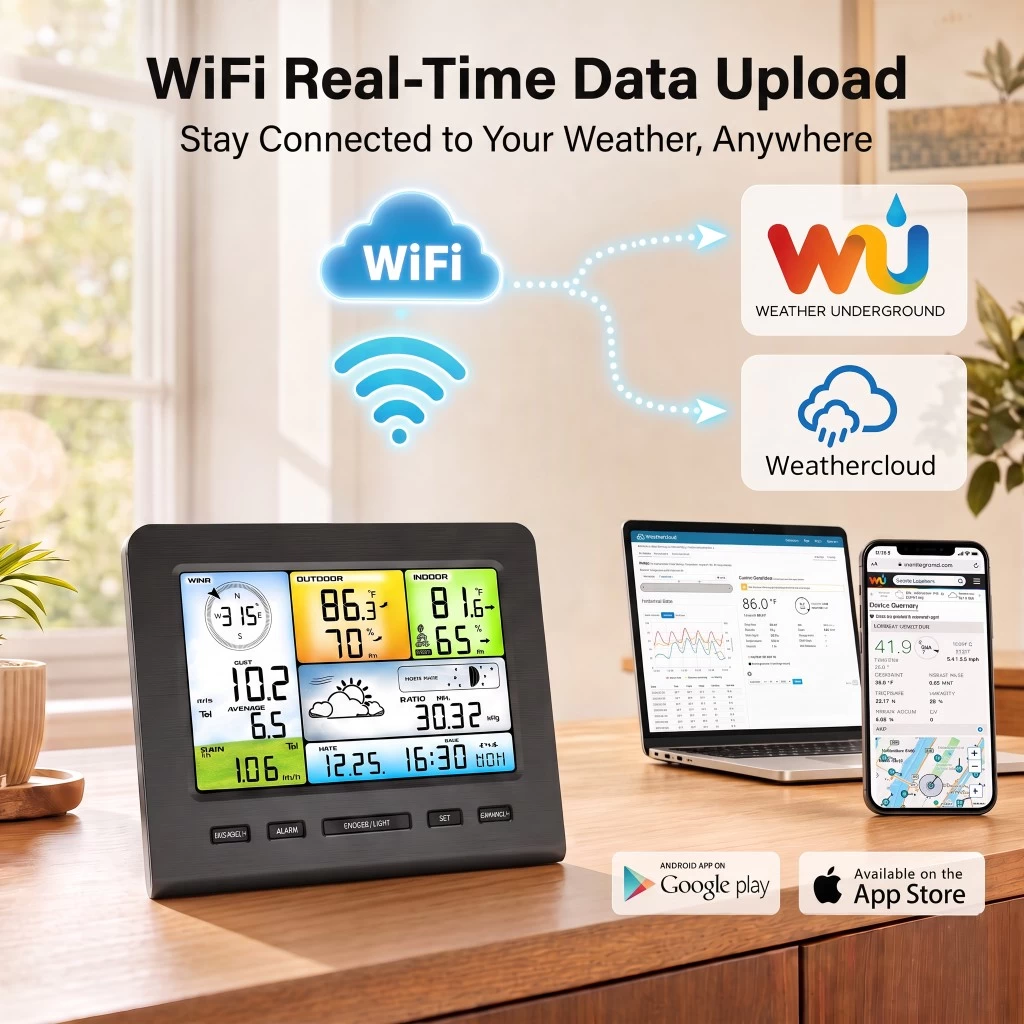
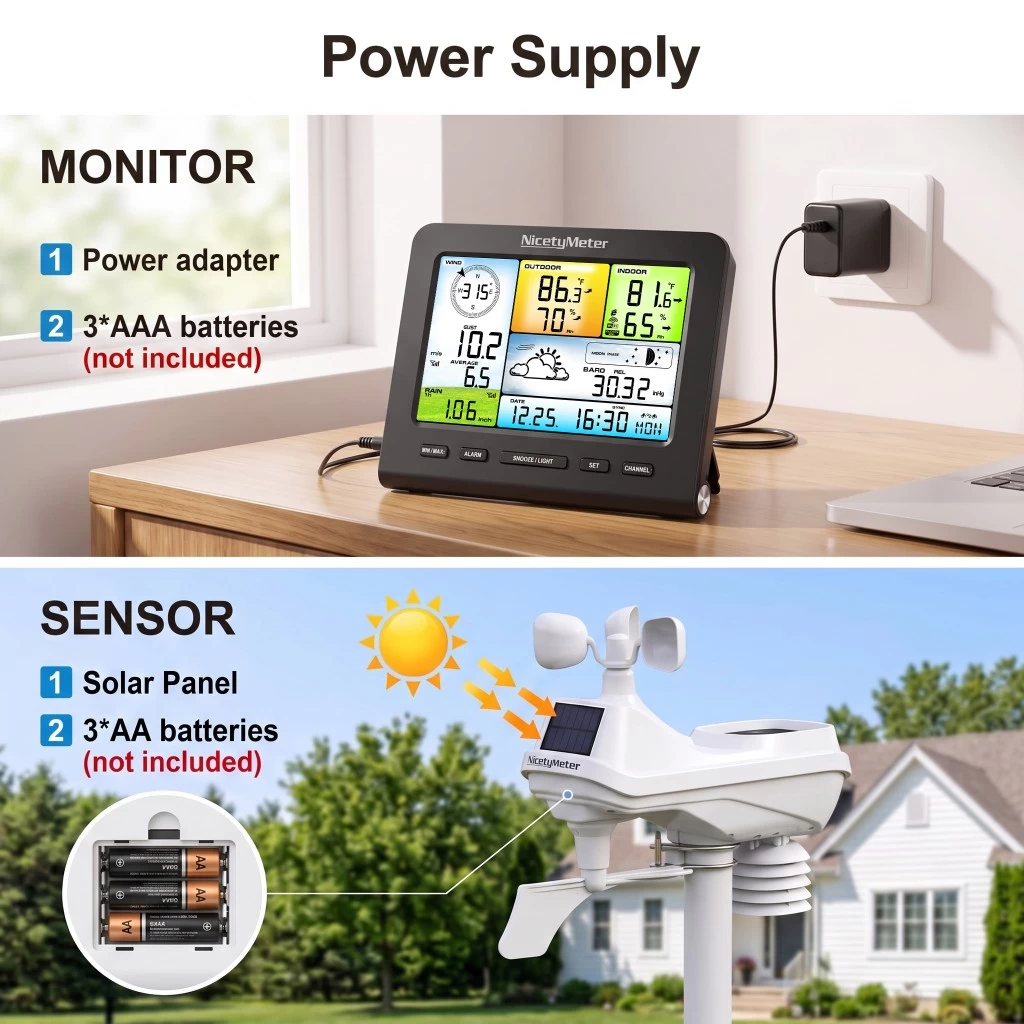
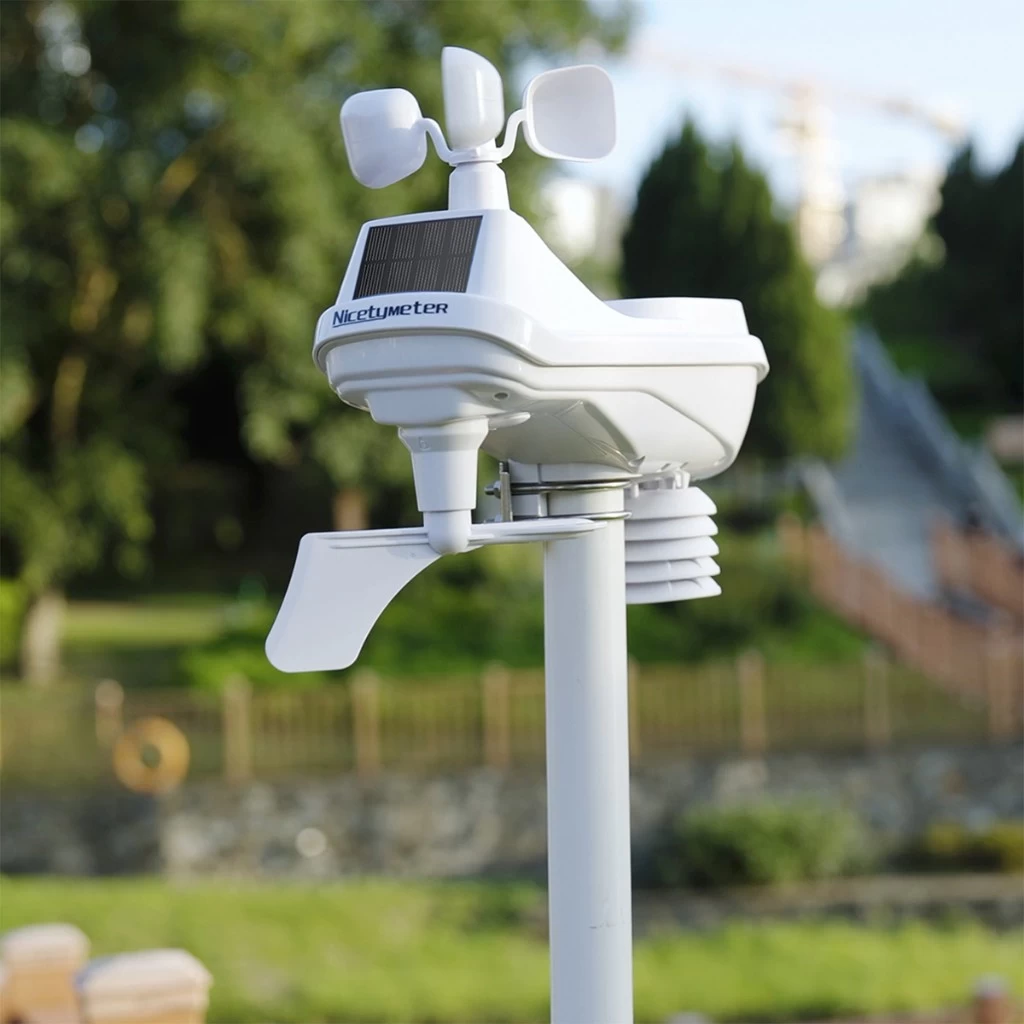
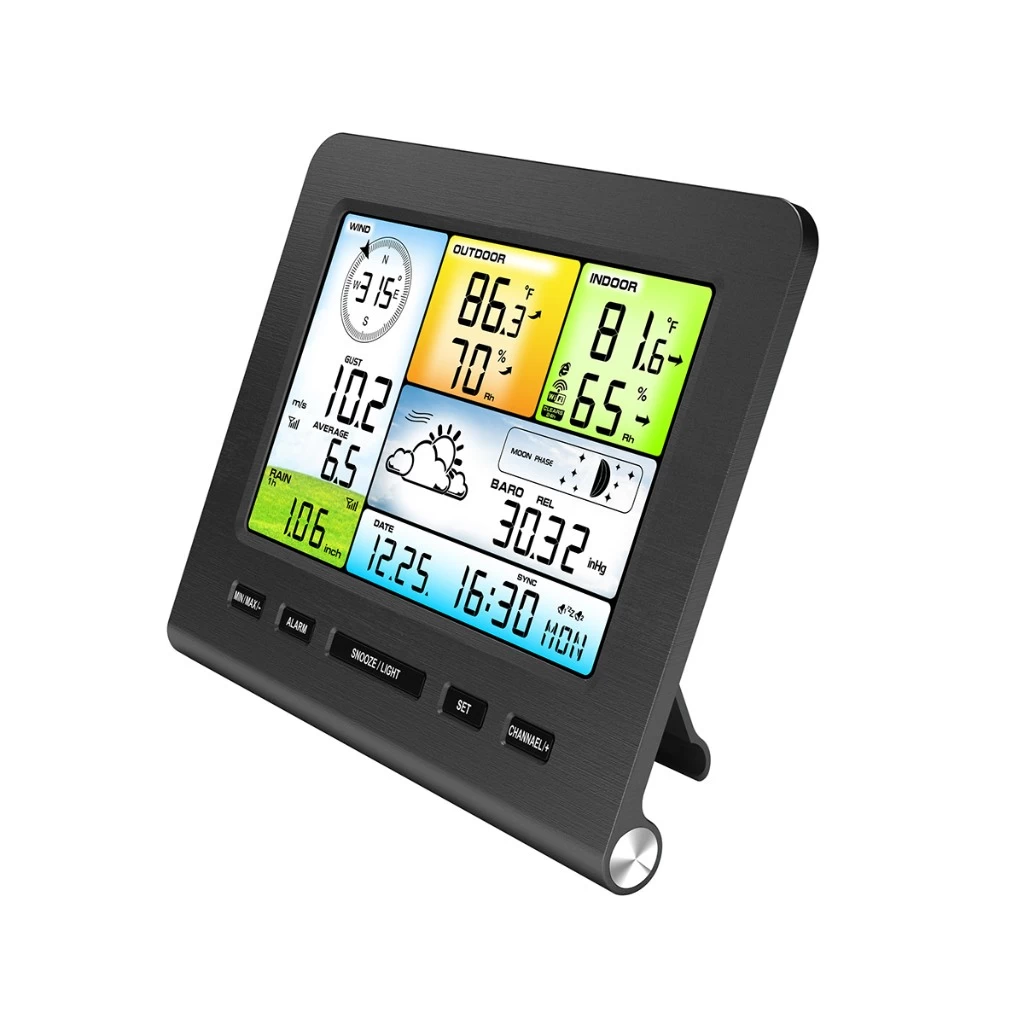
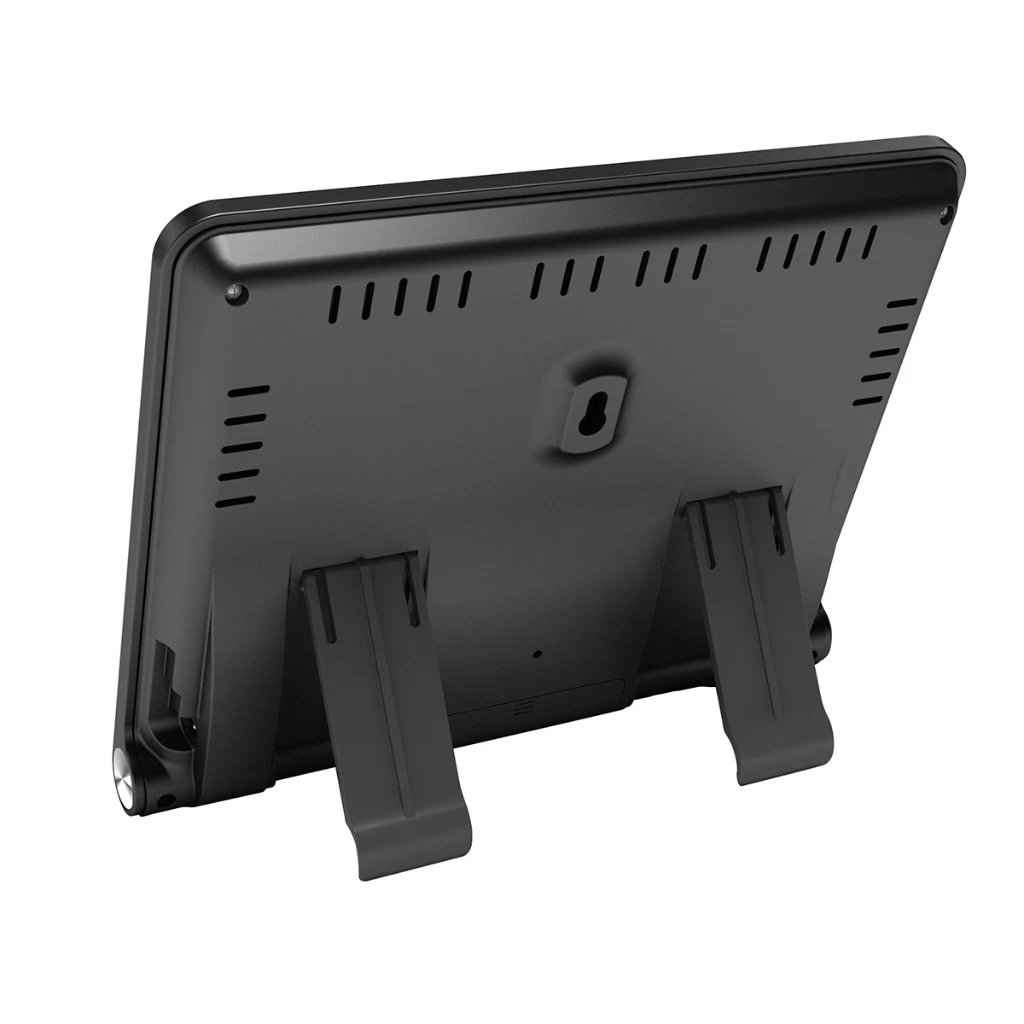
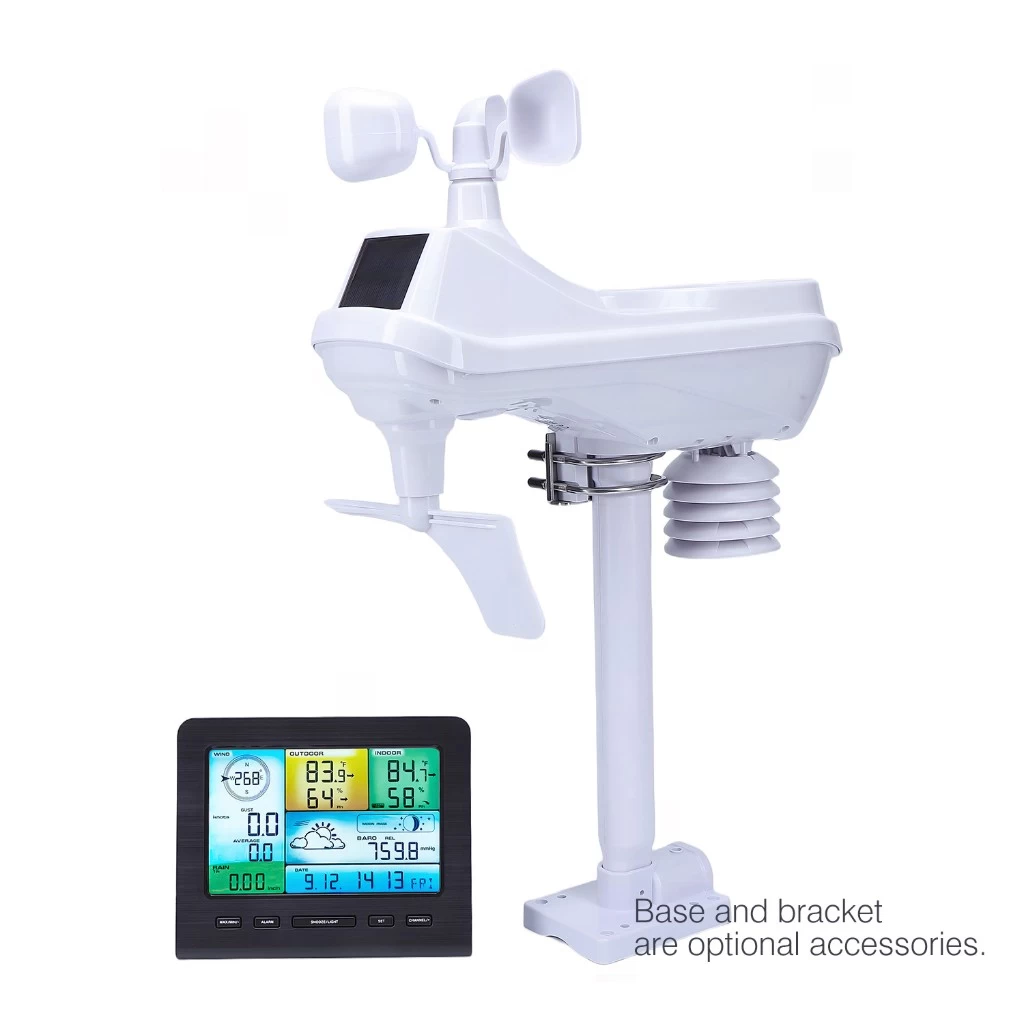
| FT036A | WiFi weather station — temperature, humidity, wind speed, wind direction and rainfall, with a console and online upload. |
Bring a cell
If you are at the show, the fastest way to make the visit worth something is to bring the thing you are unsure about. A cell that no longer holds its charge. A pack you have been told to replace. A board that only misbehaves when warm.
Put it on the bench and we will measure it in front of you. Two minutes of a real reading beats twenty minutes of catalogue.
Where to find us
| Show | electronica 2026 |
|---|---|
| Venue | Messe München, Munich, Germany |
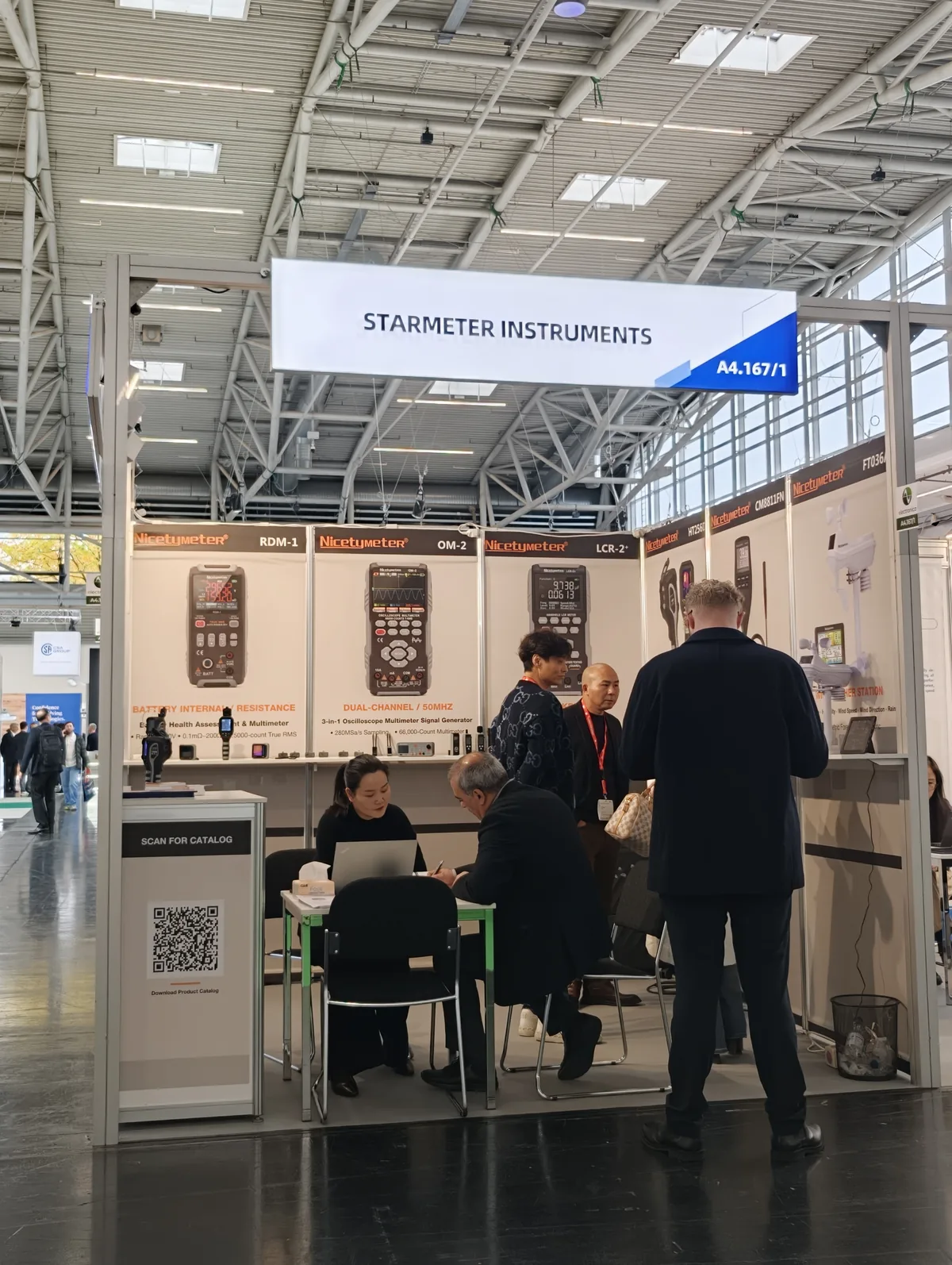
| Hall / Booth | Hall A4, booth A4.167/1 |
| Dates | 10–13 November 2026, daily from 09:00 |
| Also in Munich | SEMICON Europa, halls B0, B1, C1 and C2 |
Two more days to go. If you would rather have a set time than take your chances, message us and we will hold a slot — a walkthrough takes about twenty minutes. If you are not coming, the six instruments above are all on the site with specifications and downloads, and day one at the booth is written up here.
Hall A4, booth A4.167/1, Messe München — until 13 November. Bring the cell you are not sure about.