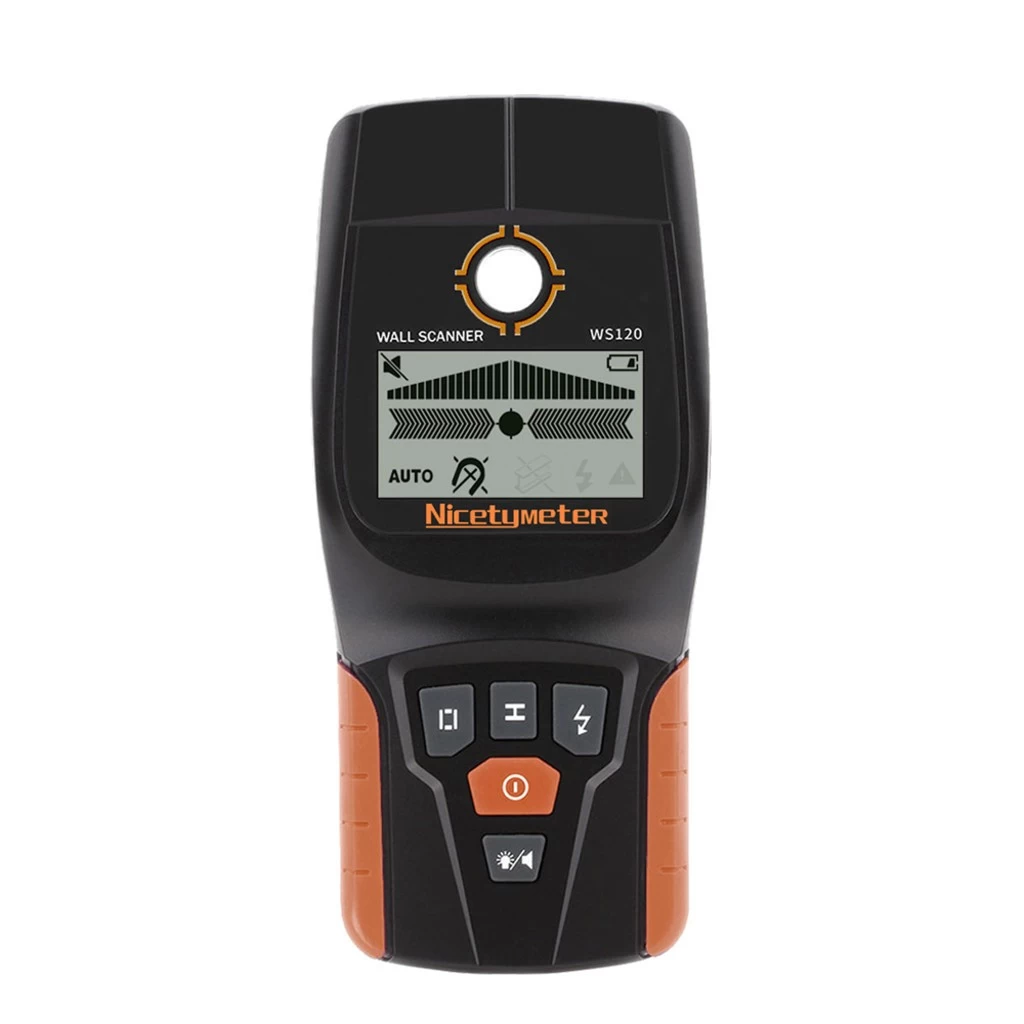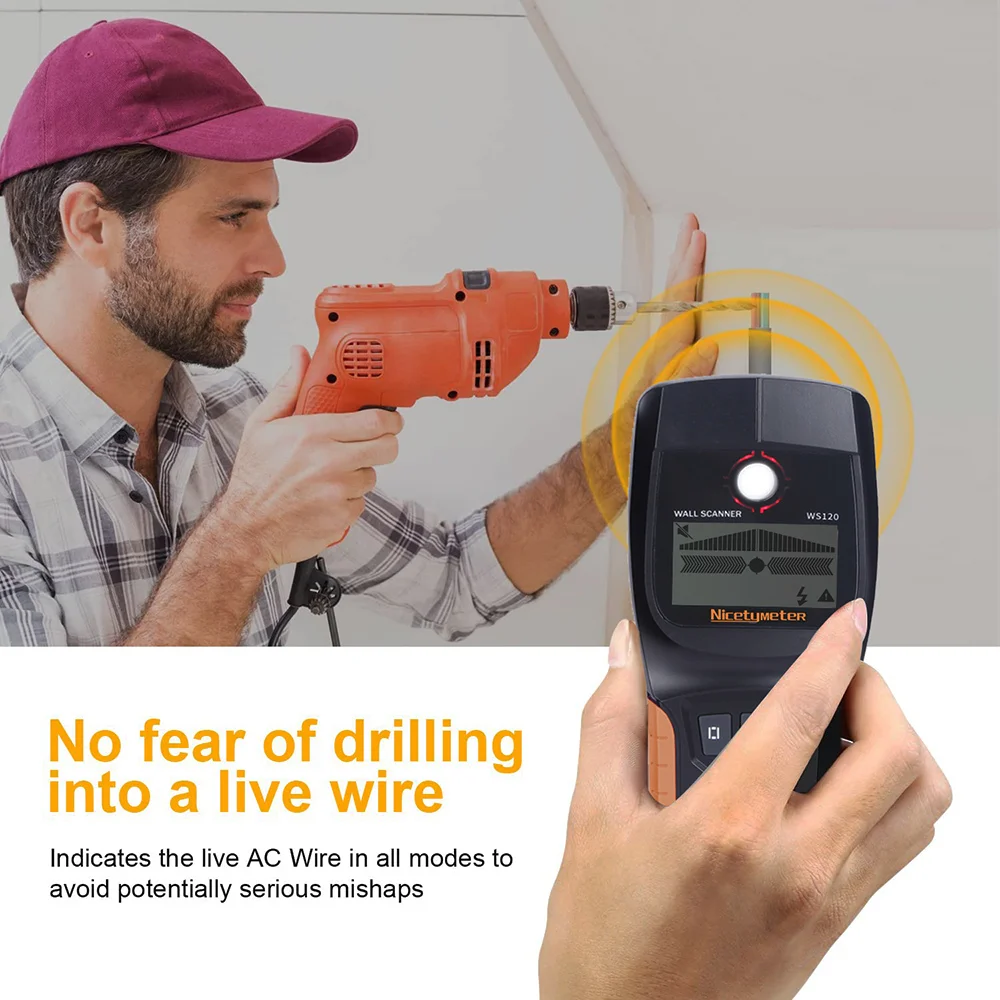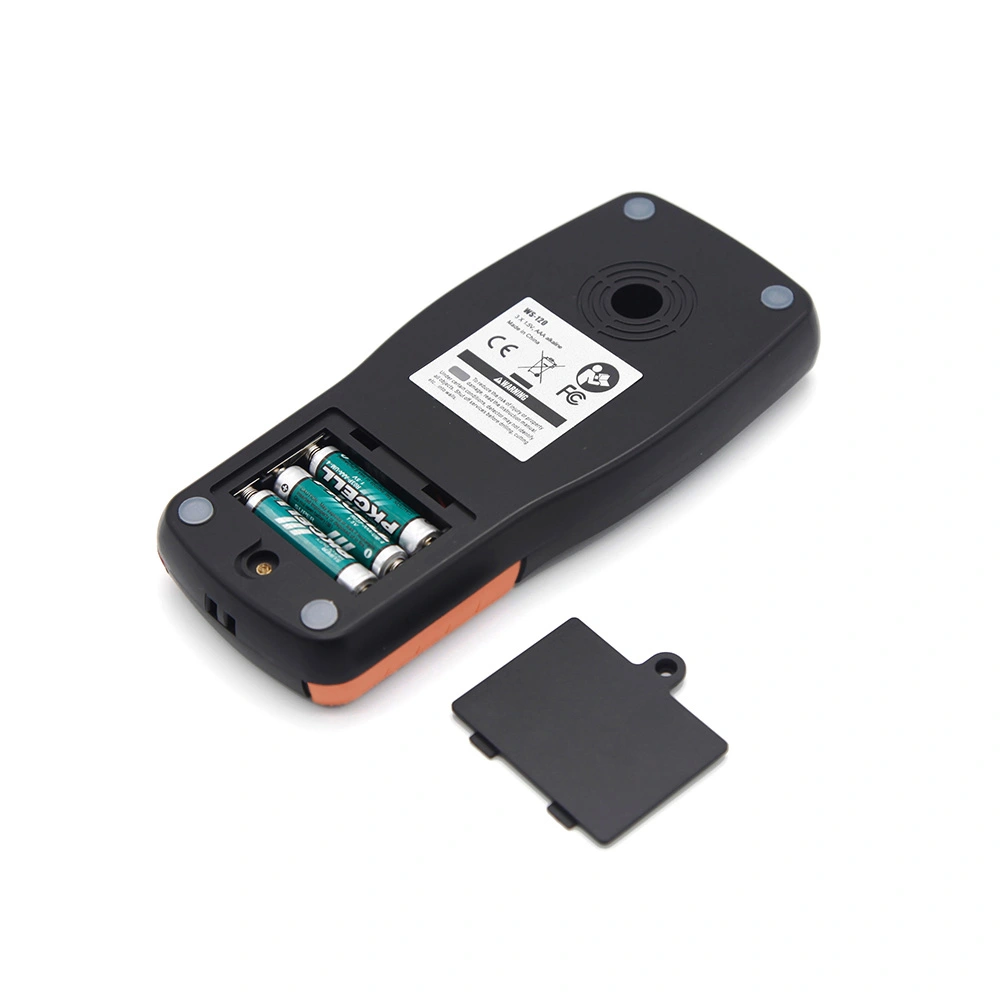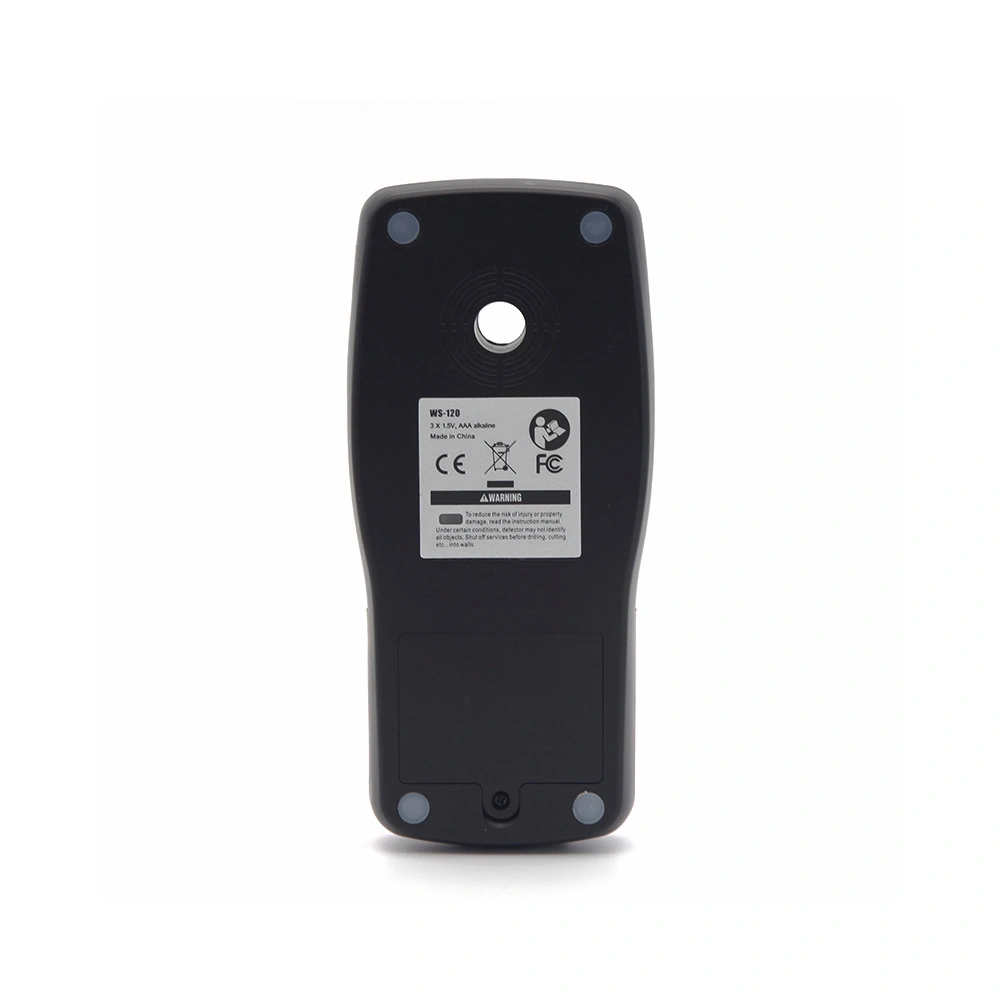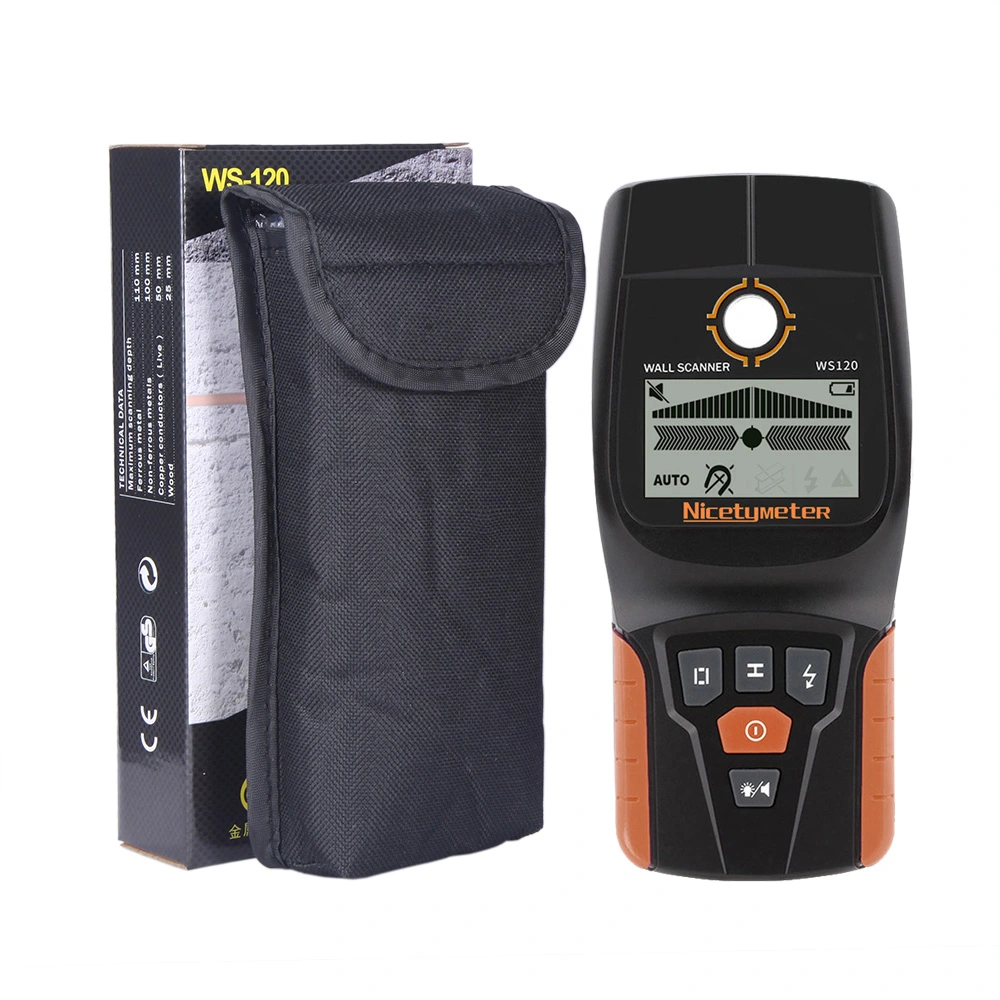
You sweep the wall scanner across the tiled bathroom wall and get nothing. Move it 10 cm and it beeps non-stop. Try again and the reading changes. The scanner isn't broken — it's working exactly as designed, on a wall it was never rated for.
Those detection depths in the manual, and on every product page, are measured on a plain, bare wall. Add tiles, adhesive, moisture or thick paint, and none of the numbers apply any more. This is what we tell friends who borrow the WS120 before they start drilling.
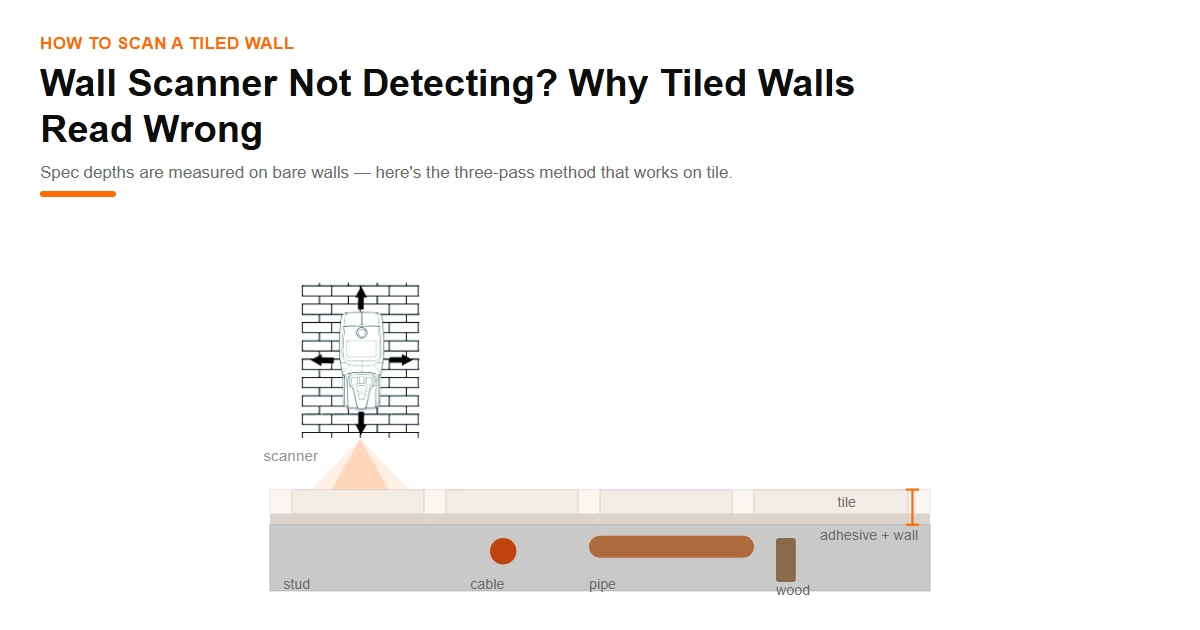
Every layer between the sensor and the target costs you signal: tile and adhesive alone are 8–15 mm of it.
Why a tiled wall reads wrong
- There's more between you and the target. Tiles plus adhesive add 8–15 mm before the sensor even starts measuring. The deeper the object sits, the weaker the signal that comes back.
- Tile blocks live wires. Ceramic, concrete and dense adhesive shield the electric field that live-wire mode listens for. The manual says it plainly: under those surfaces, detection depth can't be guaranteed. So a silent live-wire reading on tile is not proof that the wall is safe.
- The surface fights the sensor. Grout lines, tile edges and a slightly rocking hand break the steady contact the sensor needs — and a fast sweep goes straight past a target without a sound.
None of this means you can't scan a tiled wall. It means one sweep is never enough.
How to use it: the three-pass method
One sweep is one opinion. On a bare wall that may be enough. On tiles, treat the first pass as a rough map and let the next two passes do the deciding. It takes about two minutes.
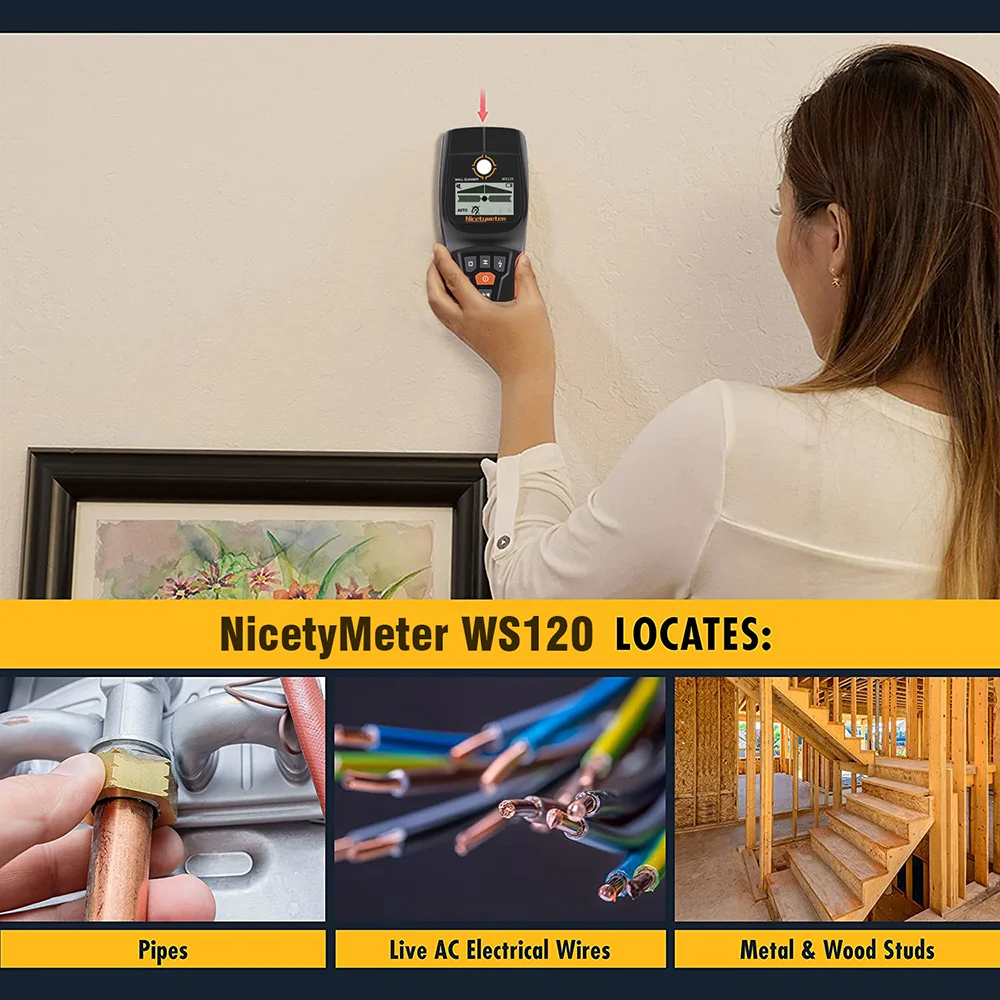
Sweep across
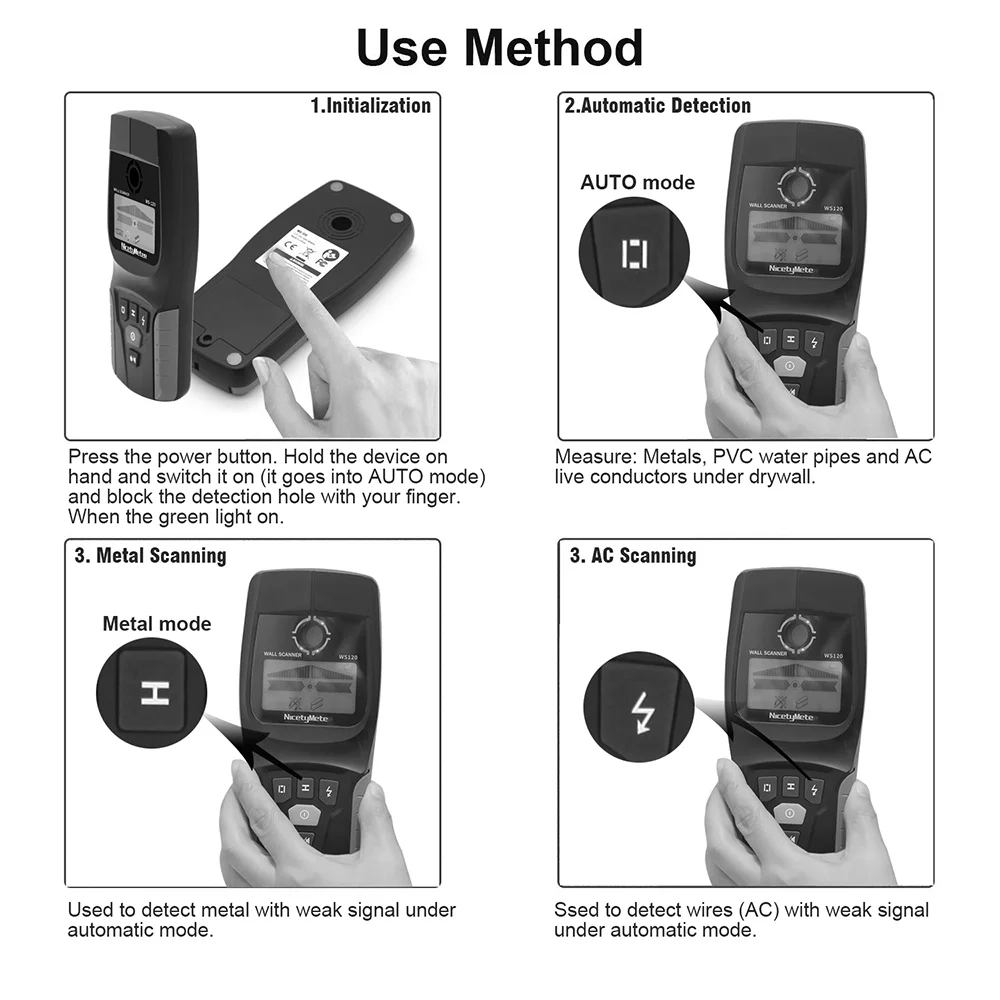
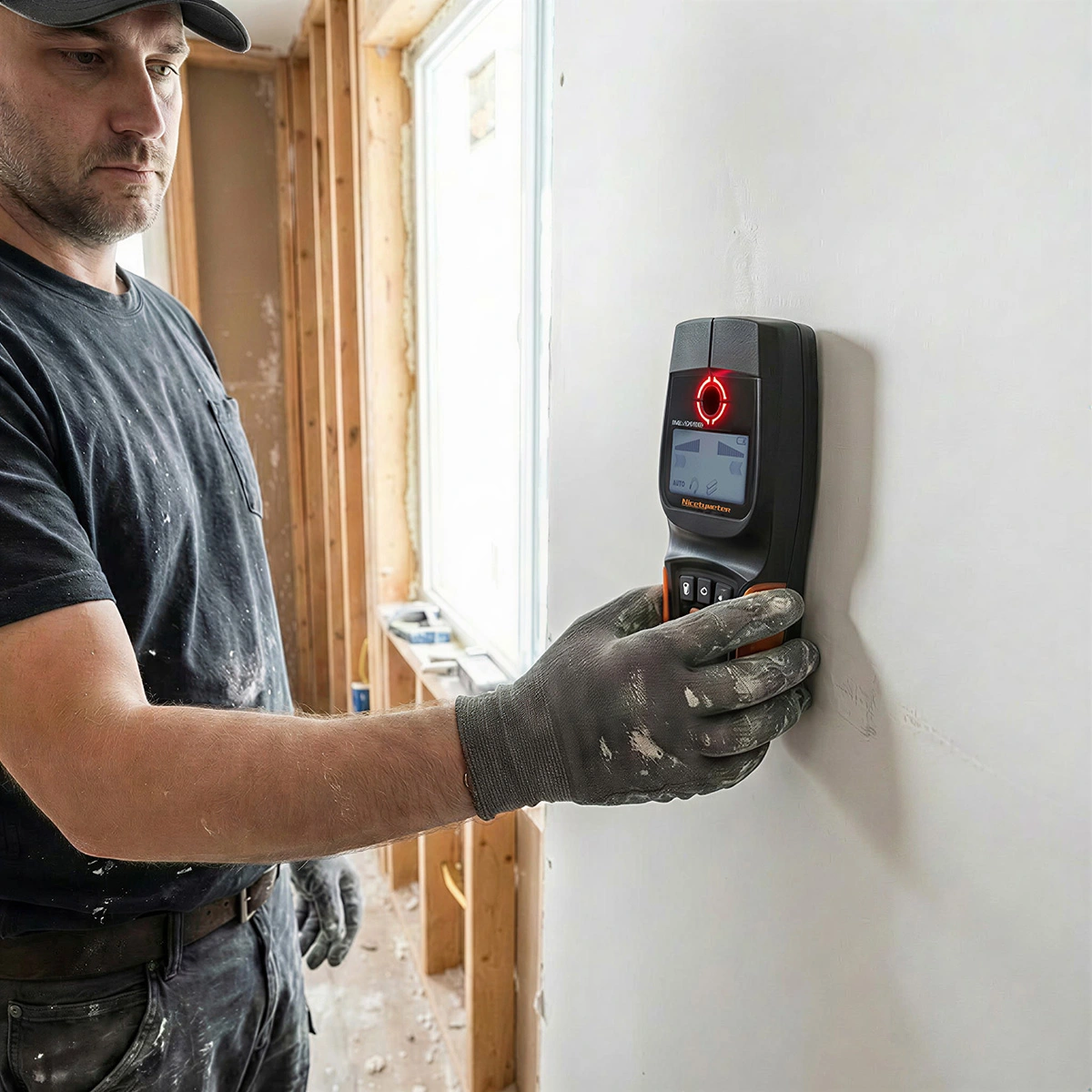
Sweep the whole area slowly, side to side. Every time the ring flashes red, put a pencil mark on the wall through the mark hole. Don't decide anything yet — just collect signals.
Sweep up and down
Now sweep the same area vertically. Real objects show up in both directions. Marks that only appear one way are grout lines, moisture or static — ignore them.
Find the centre
Slide back and forth over each confirmed spot until the scale bar fills and the centre point shows. That's the middle of the object. Mark it, then follow the line to see which way the pipe or cable runs.
Speed is the biggest mistake people make. The scanner reads deepest and most accurately when you move it slowly, keep the contact pads flat on the wall, and never lift it mid-sweep. And take your rings and watch off first — metal near the sensor throws the reading off.
Don't trust one signal
Three passes are what turn a beep into something you can act on:
| What you've got | What it means |
|---|---|
| One mark, one direction | Unknown. Grout line, damp patch or static. Keep sweeping. |
| The same mark in both directions | Real target. Locate the centre with pass 3. |
| Centre marked, and the plans agree | Safe to drill — with the power and water off. |
What the depths really assume
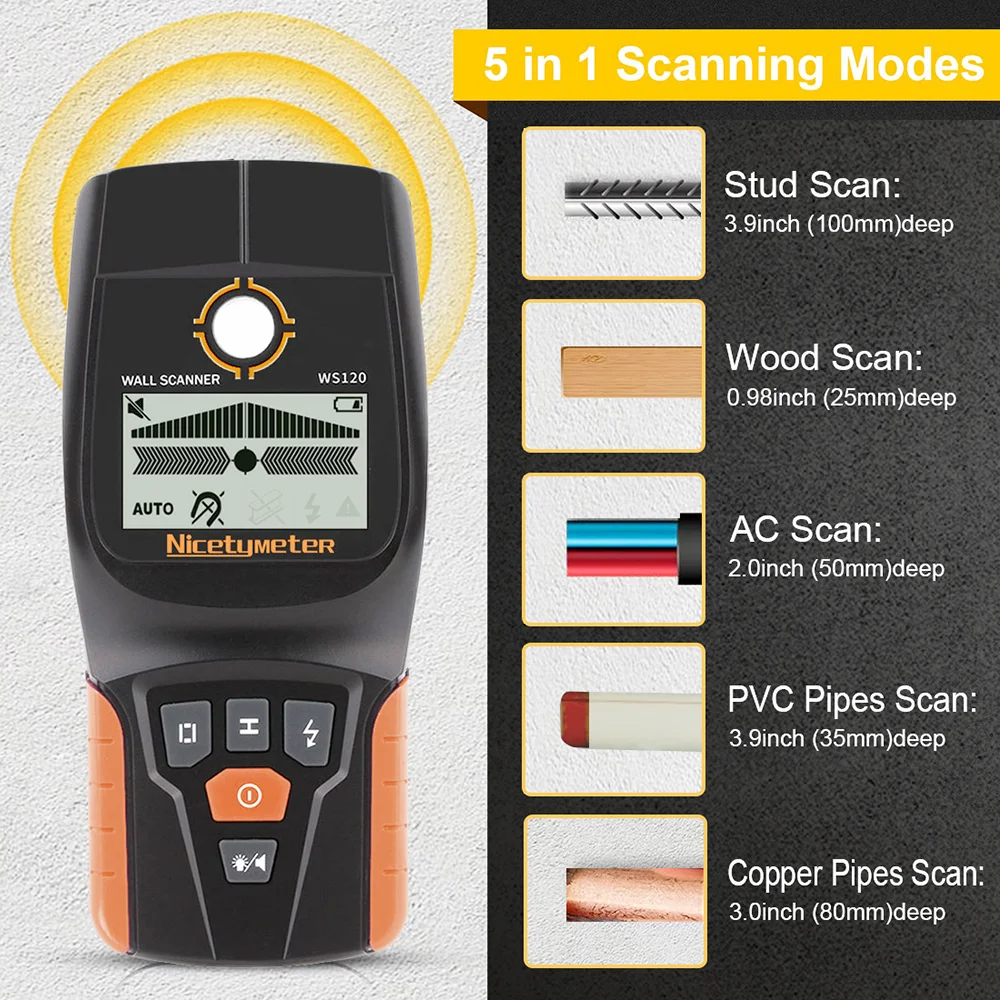
For reference, these are the manual's figures — every one of them measured on a bare wall:
| What you're looking for | Rated depth (bare wall) |
|---|---|
| Iron and steel — rebar, iron pipe | 100 mm |
| Copper and aluminium pipe | 80 mm |
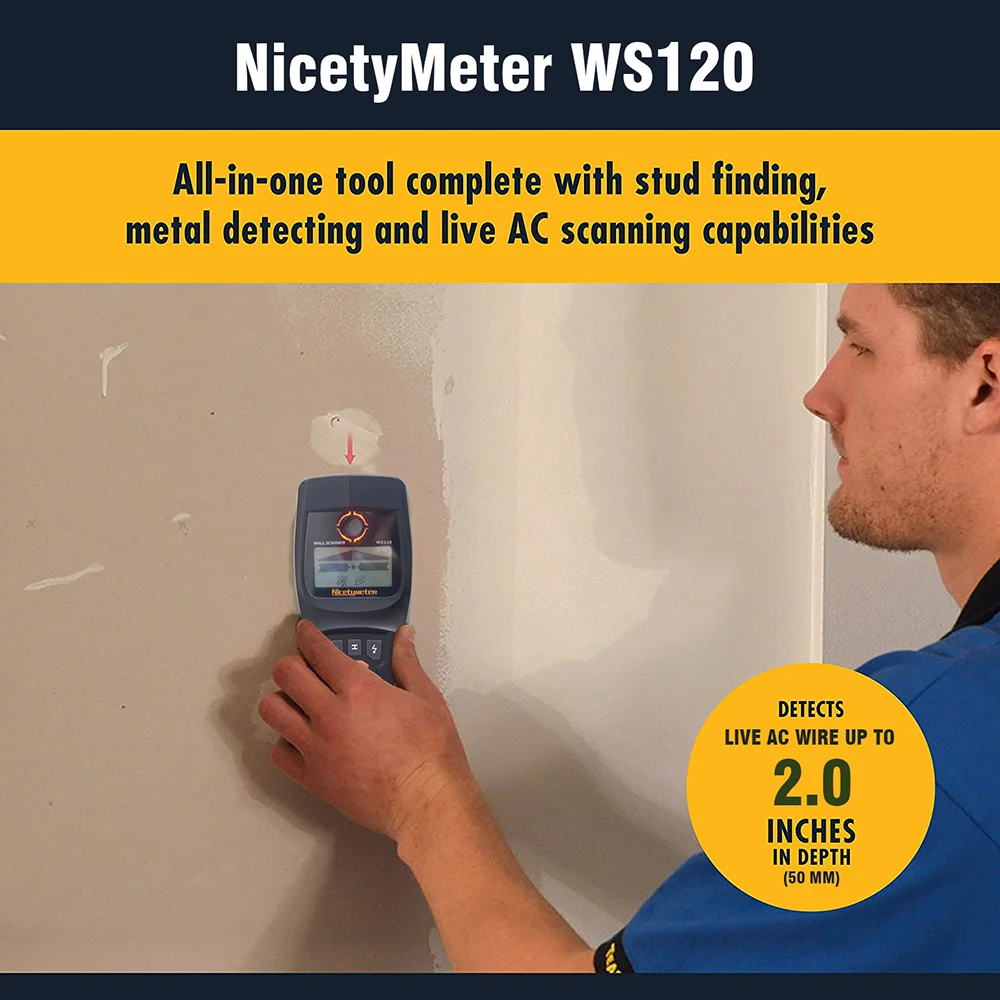
| Live cable (220 V / 110 V) | 50 mm |
| PVC water pipe (filled with water) | 35 mm |
| Wood stud | 25 mm |
When it won't behave
| What you see | What's usually going on | What to do |
|---|---|---|
| Red ring, but nothing there | Damp wall, static, or appliances nearby | Let the wall dry, put your free hand flat on the wall, switch off nearby equipment |
| Nothing on a wall you know has wiring | Tile and concrete shield the signal, or the cable is dead | Try metal mode, and treat it as unconfirmed — never as proof the wall is empty |
| Reads much shallower than the spec | Tiles, dense finish, or a small object | Normal. Slow down and use the three passes |
| Marks appear in one direction only | Surface noise, seams, moisture | Ignore them and re-scan at 90° |
| The self-test fails on power-up | Sensor or battery problem | Fresh batteries; if it still fails, contact the seller |
Before you drill
Two habits keep you out of trouble. First, cross-check: the manual is blunt that the scanner can't be 100% certain, so look at building plans or photos from the construction phase before you commit. Second, before you cut or drill into any wall, switch off the power, gas and water. A reading you can't explain is a reason to move the hole, not to hope for the best.
FAQ
Can it find plastic pipes?
Yes — PVC water pipe up to 35 mm, as long as the pipe is filled with water and at least 15 mm across. An empty plastic conduit is invisible to this class of scanner.
Why is my tiled bathroom so unreliable?
Tile and adhesive shield the field that live-wire mode reads, and the manual states that depth under ceramic or concrete can't be guaranteed. Sweep slowly, use all three passes, and check the plans before drilling.
Do the wires need to be live?
They're easiest to find when something is switched on and drawing current. Dead solid cable may show up as metal — or not at all.
It beeps everywhere on one wall. Broken?
Almost always moisture, static or nearby electrical gear. Dry the wall, put your free hand on it, switch off appliances, and make sure the sensor window is clean.
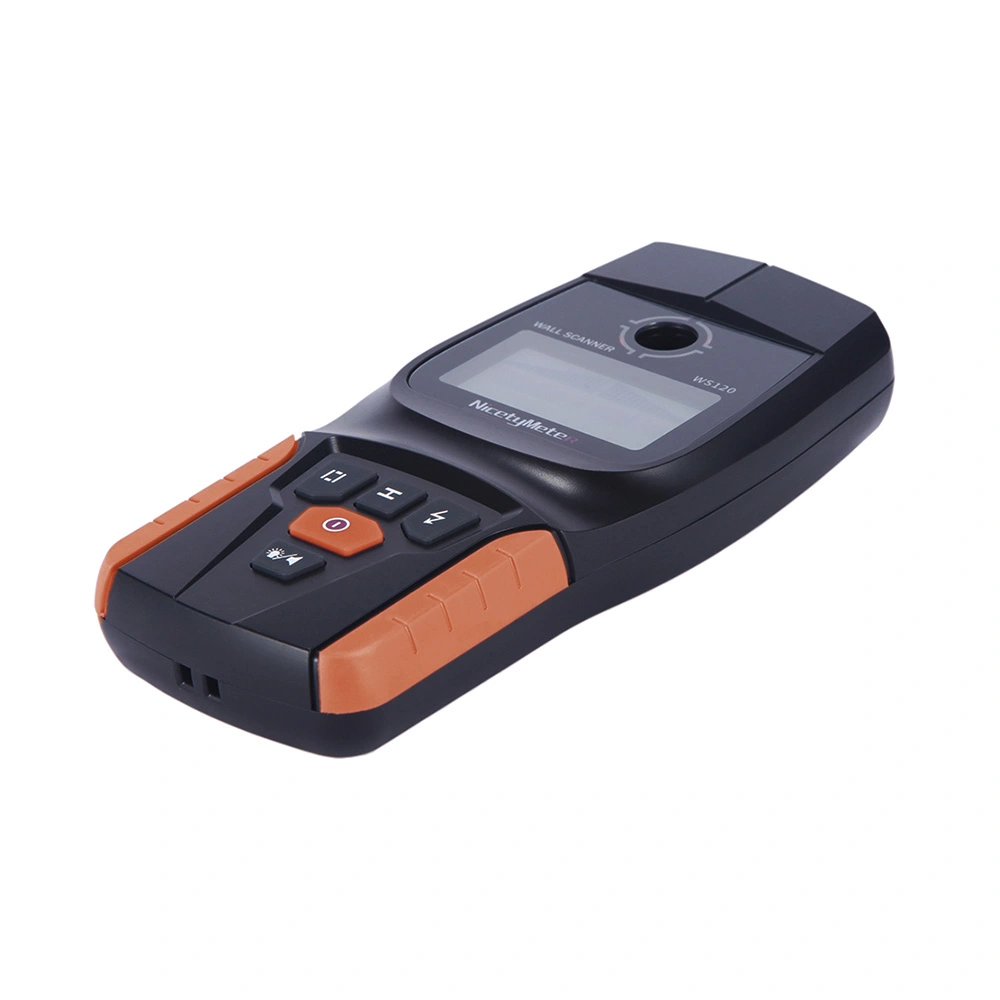
Featured instrument: WS120 4-in-1 Wall Scanner & Stud Finder · Questions before you buy? Contact us.